


The Acropolis Museum is one of Athens’ essential stops, but many visitors are unsure how long to spend there or how to fit it around an Acropolis visit. Whether you have just one hour between other sights or a relaxed afternoon to spare, a bit of planning will help you get the most out of this world-class museum without feeling rushed or overwhelmed.
Get the latest updates straight to your inbox!
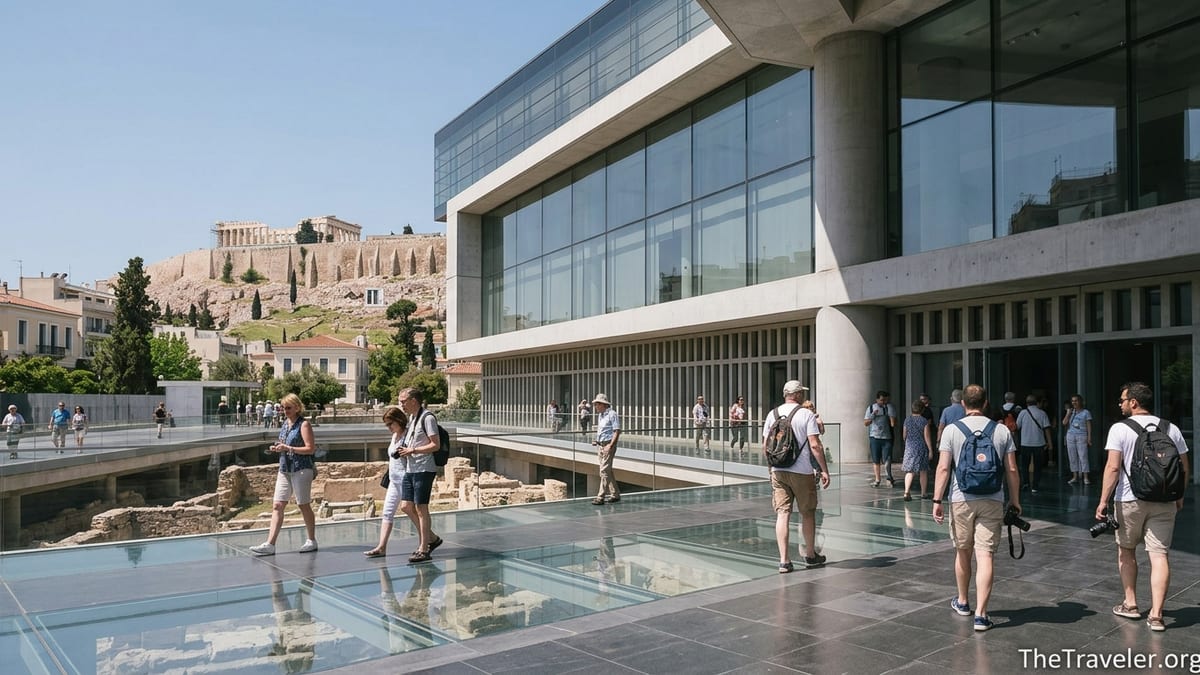
How Much Time Do You Really Need at the Acropolis Museum?
Most travelers find that 1.5 to 2 hours is a comfortable amount of time for the Acropolis Museum, with many guided tours scheduled for around 90 minutes. If you are a casual visitor who mainly wants to see the highlights, you can cover the key galleries in about one hour. If you love archaeology or enjoy reading display labels in detail, you could easily spend half a day, but that is more than most short-stay visitors to Athens can realistically commit.
The museum’s layout makes it easy to tailor the length of your visit. The glass-floored ground level with finds from the slopes of the Acropolis, the Archaic Gallery on the first floor, and the Parthenon Gallery on the top level are the three main areas that most travelers want to see. You can move fairly quickly through the ground level and spend more time upstairs if you are short on time, or linger over the early sculpture and everyday objects if you have a full two hours or more.
In practice, many people pair the Acropolis Museum with the Acropolis itself on the same day. A typical pattern in recent visitor reports is two to three hours on the Acropolis in the morning, followed by 1.5 to 2 hours in the museum in the late morning or afternoon. That kind of schedule allows enough time for a café break or lunch and avoids trying to race through both in a single compressed window.
Remember that the museum’s opening hours are generous compared with the archaeological site. In 2026 the Acropolis Museum typically opens at 9:00 and stays open until at least 17:00, with extended evening hours on some days, especially Fridays. This flexibility makes it easier to fit an unhurried 2-hour visit into your Athens itinerary, even if you are only in the city for one or two days.
A 1-Hour “Greatest Hits” Plan: What to See if You Are in a Rush
If you only have an hour, for example between a morning Acropolis tour and an afternoon ferry, you will need a focused plan. Aim to see three things: the glass floors and early finds at the entrance level, a fast walkthrough of the Archaic Gallery, and then a more in-depth stop in the Parthenon Gallery at the top. This route gives you a sense of the Acropolis as a living hill, a look at the evolution of Greek sculpture, and a powerful encounter with the Parthenon sculptures.
In practical terms, that might mean spending about 10 minutes on the ground floor. Walk straight across the glass sections where you can see the excavation of an ancient Athenian neighborhood below, and have a quick look at the displays of everyday objects from the slopes of the Acropolis: oil lamps, votive offerings, and fragments of domestic pottery. This level helps you picture ancient Athenians living literally under the shadow of the sacred rock.
Next, take the escalator or stairs to the first floor and allow about 20 minutes in the Archaic Gallery. This long, light-filled space holds the famous kore statues with their faint traces of original paint, as well as early kouroi and architectural fragments. Even a quick pass, stopping at a few representative statues like the Peplos Kore and the calf-bearer, gives you a sense of how Greek sculpture developed before the classical era you see in the Parthenon.
Use your last 30 minutes in the Parthenon Gallery on the top floor. The gallery is set up with glass walls framing a direct view of the Parthenon itself across the way, and the frieze and metopes are arranged in the same plan as the original temple. Spend time walking round the perimeter to read the narrative scenes of the frieze, and pause at the reconstructed corners where original blocks are combined with casts. This is the single most important space to prioritize in a short visit, and even with half an hour you will come away with a much deeper understanding of the monument you have just seen outside.
A Relaxed 2-Hour Plan: A Deeper Look Without Feeling Rushed
With two hours, you can follow a similar route but at a more humane pace, and add in rooms you would otherwise skip. A typical 2-hour plan might allocate 20 minutes to the entrance level, 40 minutes to the Archaic Gallery, 45 minutes to the Parthenon Gallery, and a short final stop in the upper-level spaces for later-period finds or temporary exhibitions.
Start again on the ground floor, but this time linger over the topographical models and explanatory panels that show how the Acropolis changed from Mycenaean fortress to classical sanctuary to later Christian and Ottoman phases. If you visited the Acropolis earlier in the day, try matching the modelled buildings to what you saw in person, including the Theater of Dionysus and the Sanctuary of Asklepios on the south slope.
In the Archaic Gallery, two hours gives you time to stop at multiple statues and read the explanations about their original colors, inscriptions, and dedications. For example, you can compare different korai dedicated by aristocratic families and notice the changing fashions in dress and hairstyle. The gallery’s open-plan layout allows you to walk all around the sculptures, so use that to see them from the back and sides, not just head-on.
When you reach the Parthenon Gallery, a relaxed schedule lets you approach the sculptures systematically. Some visitors like to do one complete circuit just admiring the frieze and views, then a second, slower circuit reading more labels. If the museum is not too crowded, you might sit for five to ten minutes on one of the benches, watching the light change on the marbles and on the Parthenon outside. With the remaining time, you can briefly explore the top-floor displays about the Erechtheion, the Propylaia and the Temple of Athena Nike, including the original Caryatids that once held up the Erechtheion’s porch, now displayed in a way that lets you see details impossible to notice on the windy hill.
Guided Tours, Audio Guides and When They Make Sense
For many travelers, especially on a first visit to Athens, a guided tour of the Acropolis Museum turns what can feel like a dense collection into a coherent story. Common products offered by major operators in 2025 and 2026 include 1.5 to 2 hour small-group tours of the museum alone, as well as 4 to 5 hour combined Acropolis and Acropolis Museum tours. These often start with the hill at 8:00 or 8:30 in the morning, then move down to the museum late morning before the midday heat, or reverse the order in very hot months.
Prices vary by season and group size, but it is common to see shared Acropolis plus museum tours from roughly 70 to 90 euros per adult including skip-the-line ticketing, with cheaper options if you handle your own tickets. Cruise lines that dock in Piraeus sometimes sell a half-day “Acropolis and Museum” excursion in a similar format, bundling coach transport, licensed guide and timed museum access. In those cases, you will usually have around 60 to 75 minutes inside the museum, which corresponds closely to the 1-hour “greatest hits” plan above.
If you prefer to move at your own pace, an audio guide can be a good compromise. Third-party apps and tour platforms offer downloadable museum audio tours that last roughly 60 to 90 minutes and highlight a curated set of objects in each gallery. You can bring your own headphones and smartphone, pause when you like and skip sections that do not interest you. This works especially well on a 2-hour visit when you want structure but also value the freedom to stop for photos or a coffee break without keeping up with a group.
On the other hand, if you dislike crowds or fixed schedules, you may be happier visiting without any guiding at all. The museum’s explanatory texts are bilingual in Greek and English and are generally clear and concise. For many independent travelers who have done a little background reading, one or two hours of unguided wandering is both affordable and satisfying, particularly in shoulder season when the galleries are calmer.
Café Breaks, Restaurant Stops and Smart Use of the Building
The Acropolis Museum is as much a pleasant public space as a collection of artifacts, and factoring in a short café stop can make even a packed day in Athens feel less frantic. On the ground-floor terrace, just beyond the ticketed area, there is a café that many visitors use for a quick espresso and pastry before or after their visit. If you are on a 1-hour schedule, you might plan to arrive ten minutes early, have a coffee while looking up at the Acropolis, and then enter the exhibitions on the hour.
Upstairs, the second-floor restaurant offers full meals as well as lighter dishes, with large windows and a broad terrace that directly faces the Parthenon. In recent seasons, typical main courses such as grilled fish or lamb have been priced at levels comparable to mid-range restaurants in central Athens, and many visitors choose to time their visit so they can have a late lunch here after a 2-hour tour of the galleries. Importantly, the museum allows non-ticketed access to the restaurant with a separate free admission slip from the ticket desk, so companions who are not visiting the exhibits can still join for a meal.
If you only have 90 minutes total and do not want to sacrifice gallery time, consider a short break rather than a full sit-down meal. Ten minutes on the restaurant terrace with a cold drink in summer or a coffee in winter can be enough to rest your legs and appreciate the view, especially if you have just spent the morning on the Acropolis. In the cooler months, when evening openings run later, some travelers plan a 2-hour museum visit followed by dinner in the restaurant as part of a relaxed night in the city.
The building itself is also part of the experience. The large glass walls and floors connect you visually back to the hill and down to the buried neighborhood beneath. On your way out, if time allows, pause again by the excavated houses visible through the ground-floor glass. It is a powerful reminder that the ancient Athenians whose offerings you have just seen in the galleries lived in homes not unlike the ones beneath your feet.
Combining the Museum with the Acropolis: Realistic Daily Timing
Because the Acropolis is exposed and often very hot and crowded by late morning in high season, many itineraries start on the hill and continue to the museum afterwards. A classic pattern looks like this: 8:00 to 10:30 on the Acropolis and its slopes, walk or tram down the pedestrian Dionysiou Areopagitou street, then 11:00 to 13:00 in the Acropolis Museum. In summer, this puts you indoors during the strongest heat of the day, with the option to stay for lunch in the museum restaurant or head back to your hotel for a siesta.
Another popular option, especially outside of peak summer, is to reverse the order. You might schedule a 10:00 to 12:00 visit to the museum, including a short break in the café, then climb the Acropolis for a 16:00 entry when the afternoon light is softer and day tours have started to thin out. Travelers who have tried this report that seeing the sculptures and explanatory models first makes the outdoor site much more meaningful, because you know where the missing pieces are and can visualize the painted decoration and original context.
If you prefer guided tours, look for combined Acropolis plus museum products that clearly specify how much time is spent at each location. A typical half-day tour advertised in 2026 might run from 8:00 to 13:00, with around two hours on the hill, 15 to 20 minutes walking between the sites, and 90 minutes inside the museum. When booking, check whether your tickets are included and whether your group uses headsets, as that can make it easier to hear commentary in busy galleries.
For visitors on a tight schedule, such as cruise passengers docking in Piraeus for part of a day, tour operators often design a compact bundle that covers both the Acropolis and the museum in four to five hours including transport. These programs usually allocate about one hour inside the museum. If you book one of these, study the museum map in advance and be ready to prioritize the Parthenon Gallery and Caryatids as soon as you enter.
Sample Itinerary Ideas for Different Types of Traveler
For a one-day visitor to Athens who wants both the Acropolis and the museum without rushing, a realistic schedule might be: early breakfast, 8:00 Acropolis entry, leave the site around 10:30, walk slowly down to the museum with a short photo stop on Dionysiou Areopagitou, and enter the museum around 11:00. Spend two hours following the relaxed 2-hour plan, then have a late lunch in the museum restaurant at 13:00. The afternoon can be left open for a stroll through Plaka or a siesta before an evening in the Psyrri or Monastiraki neighborhoods.
If you have two full days in Athens, you can spread things out more. On day one, you might visit the Acropolis early, then explore the Ancient Agora, Roman Forum and surrounding streets. On day two, devote a morning or late afternoon to the Acropolis Museum with an unhurried 2-hour visit, followed by coffee on the terrace and a walk through the nearby Makrygianni district. This pacing suits travelers who prefer to digest one major site per half day rather than stacking everything together.
Families with school-age children often do better with a shorter, structured visit. One family-friendly plan is a 60 to 75 minute museum visit sandwiched between snack breaks. For example, arrive at 10:00, see the ground-floor excavations and a few standout statues in the Archaic Gallery, take a brief rest in the café, then head straight to the Parthenon Gallery for a guided or self-guided storytelling circuit before leaving by 11:15 or 11:30. Some independent guides in Athens offer kid-focused tours that use myths and simple comparisons to keep younger visitors engaged.
History enthusiasts with more stamina can fold the Acropolis Museum into a broader archaeology day. A committed traveler might spend two hours at the museum in the morning, take a break for lunch nearby, then visit the National Archaeological Museum in the afternoon. While that makes for a long day, it allows you to see how the Acropolis material fits into the wider story of Greek art. In such cases, careful planning around opening hours and pre-purchased tickets becomes essential to avoid wasting time in lines or transit.
FAQ
Q1. Is one hour really enough for the Acropolis Museum?
One hour is enough to see the main highlights if you follow a focused route, but most visitors find 90 minutes to 2 hours more comfortable and less rushed.
Q2. How long do combined Acropolis and museum tours usually last?
Most guided packages that include both the Acropolis and the Acropolis Museum run for about 4 to 5 hours total, with roughly 1.5 to 2 hours on the hill and around 60 to 90 minutes inside the museum.
Q3. Should I visit the Acropolis or the Acropolis Museum first?
Both orders work, but many travelers either start on the Acropolis early to beat the heat then continue indoors, or visit the museum first to understand the sculptures and layout before climbing the hill later in the day.
Q4. Can I visit the museum café or restaurant without a ticket?
Yes. The museum provides a free admission slip from the ticket desk that allows access to the second-floor restaurant, and the ground-floor café terrace is accessible without entering the paid exhibition spaces.
Q5. Do I need to book Acropolis Museum tickets in advance?
Outside of peak summer weekends you can often buy tickets on arrival, but in July and August or on free-admission days it is sensible to purchase timed tickets in advance to avoid queues and uncertainty.
Q6. What is the best time of day to visit the Acropolis Museum?
Mornings right after opening and late afternoons or evenings tend to be quieter, while late morning and early afternoon are busier as many tours arrive after visiting the Acropolis.
Q7. Is the museum suitable for children and teens?
Yes. Wide galleries, clear signage and striking pieces like the Caryatids and Parthenon frieze appeal to older children, though most families prefer to limit visits to around an hour to keep attention levels high.
Q8. Can I take photos inside the Acropolis Museum?
Photography is generally allowed in many areas for personal use, but some exhibits have restrictions and flash is often prohibited, so always check and follow the posted signs and staff instructions.
Q9. How does the Acropolis Museum compare to the National Archaeological Museum for time needed?
The Acropolis Museum is more compact and focused, so 1.5 to 2 hours is often enough, whereas many visitors spend 2 to 3 hours or more in the larger National Archaeological Museum.
Q10. Is the Acropolis Museum accessible for visitors with limited mobility?
Yes. The museum is housed in a modern building with elevators, ramps and accessible restrooms, making it much easier to navigate than the uneven paths and steps of the Acropolis itself.