


For expats and foreign residents, the practical feasibility of living in Mexico depends heavily on how navigable the country’s bureaucracy is in day-to-day life. Understanding how Mexican administrative systems work in practice, where bottlenecks occur, and how digitalization is changing procedures is essential to evaluating whether relocation is manageable without excessive friction.
Structural Overview of Mexican Bureaucracy Affecting Foreign Residents
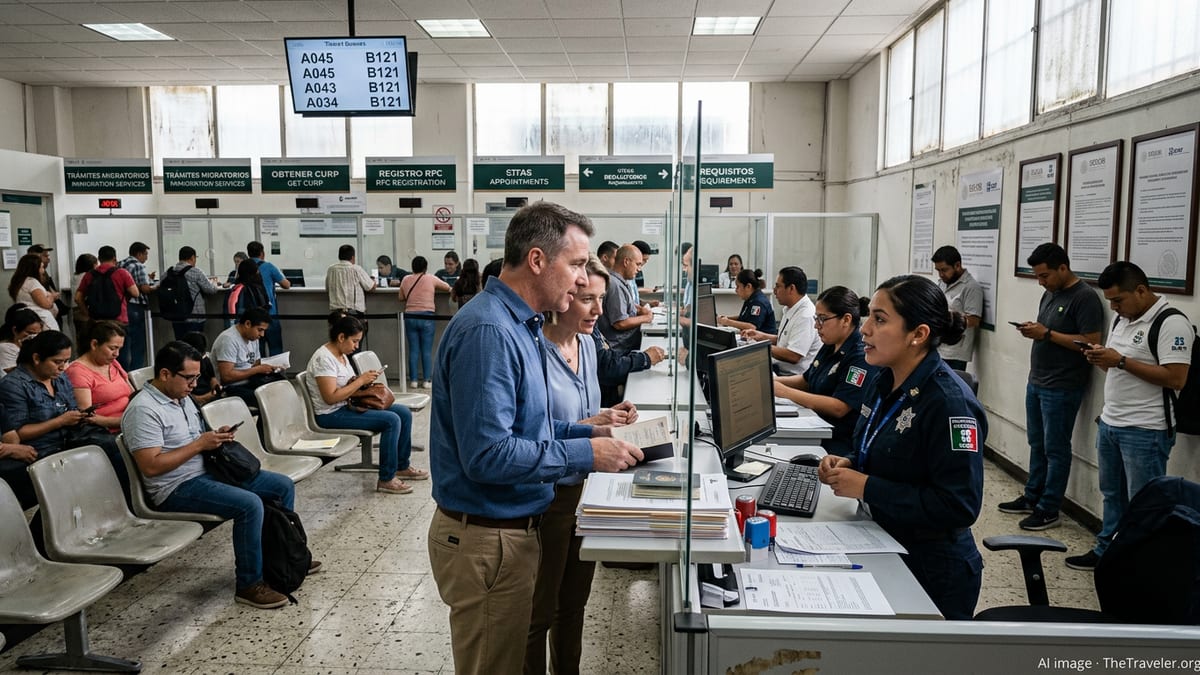
Mexican bureaucracy relevant to expats is highly fragmented, with responsibilities divided among federal, state and municipal entities. Foreign nationals commonly interact with the National Migration Institute for immigration status, the civil registry for vital records, the tax authority for identification numbers, municipal offices for land use and services, and a range of regulatory agencies for driving, business activity and utilities. Each operates with its own systems, appointment mechanisms and documentation standards, leading to a complex administrative landscape.
In operational terms, most procedures are governed by nationally defined legal frameworks but administered locally. This means that two expats undertaking the same type of trámite in different states can experience different documentation requests, waiting times and degrees of formality. While the core legal requirements are broadly uniform, local interpretation and workload create significant variation in the practical burden of bureaucracy.
Historically, Mexican public administration has been paper-heavy and face-to-face. Over the last several years, a policy push toward digitalization has led to many procedures being moved partly or fully online, especially for identity, tax and appointment booking. However, implementation is uneven, and digital platforms often coexist with legacy in-person processes. For expats evaluating relocation, this dual system creates both new efficiencies and new points of confusion.
For foreign residents, the most consequential feature of Mexican bureaucracy is that many unrelated procedures rely on a small set of cross-cutting identifiers and documents. Once those core elements are in place, navigating further trámites typically becomes noticeably easier. Conversely, delays or errors in obtaining them can cascade into obstacles in banking, utilities, employment and property-related processes.
Key Identity and Registry Systems: CURP, RFC and Local Records
Three pillars underpin most bureaucratic interactions for expats: a migration document issued by the National Migration Institute, the Unique Population Registry Code and the Federal Taxpayer Registry. The migration document establishes legal stay, while the other two function as cross-agency identifiers for both Mexicans and eligible foreigners. Without at least some of these, access to many public and private services is constrained or requires workarounds.
The Unique Population Registry Code is Mexico’s national identity code. Foreigners can obtain a CURP once they have initiated a recognized process to remain in the country under a regular status. A CURP issued to foreigners is used in a wide array of procedures including tax registration, social security affiliation, certain banking procedures and enrollment in many online government systems. Authorities have also announced reforms toward a more secure, biometric CURP designed to support digital identity verification across platforms, which is expected to gradually strengthen online interactions with bureaucracy.
The Federal Taxpayer Registry is the tax identification number administered by the national tax authority. In practice, the RFC functions far beyond taxation. It is increasingly requested for activities such as formal employment, property transactions, importing goods through customs and signing some utility or telecom contracts. For expats who only need a basic fiscal identity, the main impact of the RFC is not tax liability by itself but access to systems that assume an RFC exists.
At the local level, state civil registries manage vital records such as marriage certificates, birth registrations of children born in Mexico, and some name or status changes. Municipalities, in turn, manage local permits and provide proof-of-address documents recognized by other agencies. Because federal identifiers like CURP and RFC often must be paired with local comprobantes de domicilio, expats are exposed simultaneously to federal and municipal bureaucratic styles, which can differ significantly in responsiveness and digital capacity.
Typical Process Dynamics: Appointments, Trámites and Timelines
Mexican bureaucracy for expats is built around discrete trámites, each with defined documentary requirements, a formal submission step and either immediate resolution or a waiting period. A common structural element is the reliance on proof-of-identity, proof-of-address and certified copies for most processes. Many agencies require both original documents and photocopies, and will not make copies on-site, which can lead to procedural delays and repeat visits when applicants arrive underprepared.
Appointment systems are a central feature of institutional interaction. Immigration offices, tax offices and consulates increasingly require digital pre-booking rather than walk-in visits, using centralized portals. High-demand urban offices can show fully booked calendars for weeks, creating timing risks for expats with short windows to complete a process. In contrast, smaller regional offices may still use manual booking or same-day tokens, requiring early in-person arrival and queueing. The same type of trámite can therefore involve either a multi-week pre-scheduled appointment or a same-day, first-come-first-served experience depending on location.
Processing times are variable but generally measured in hours for simple front-counter updates, days for document issuance and several weeks for complex adjudications. For identity-related trámites like CURP corrections or initial RFC registration, same-day or single-visit resolution is sometimes possible when documentation is complete and systems are functioning normally. More complex or discretionary processes can extend to several weeks, particularly when background checks, central office approval or printing of secure physical cards is involved.
Missed, cancelled or system-generated appointment errors are a recurring feature of interaction. Government portals occasionally show no available dates, fail to send confirmation emails or reset data mid-process. In such cases, informal best practice often involves trying alternative browsers or times of day, using different office selections or attending the office in person to clarify status. From a relocation feasibility standpoint, these dynamics mean that bureaucracy is rarely impossible to navigate, but it demands flexibility in scheduling and contingency planning.
Digitalization, Online Platforms and Practical Limitations
Over the past several years, Mexico has accelerated digitalization of public services. Many procedures that previously required multiple in-person visits have shifted key steps online, including account creation, document upload and appointment booking. Identity systems, tax administration and some immigration and consular services have been particular priorities for digital transformation, with the stated goal of simplifying administration and reducing queues.
For expats, the practical effect is a mixed environment. On one hand, core identifiers like CURP and RFC can increasingly be consulted or, in some situations, requested or verified online. Appointment portals allow planning without physically visiting offices. Downloadable digital documents and receipts are often accepted as valid proof, reducing reliance on paper originals for routine verifications. Recent reforms point toward further expansion of electronic visas, digital identity credentials and interoperable databases across agencies.
On the other hand, digital systems frequently exhibit technical and design limitations. Online portals sometimes require data formats aligned with Mexican identification documents that foreign residents do not possess, such as national voter IDs, which can block profile creation. Some systems treat foreign identification fields inconsistently, or assume that every user has a CURP from the outset, complicating initial access for new arrivals. In addition, government websites occasionally experience outages, frozen calendars or incomplete English-language versions that lag behind Spanish-language instructions.
The result is that digitalization reduces friction for routine, repeat interactions once a foreign resident is fully integrated into identity systems, but it can increase complexity at the entry stage of the bureaucratic lifecycle. Expats who are comfortable reading Spanish interfaces, scanning and uploading documents and troubleshooting basic web issues tend to experience smoother interactions. Those who rely heavily on English interfaces and expect high system stability may find the digital layer a source of uncertainty.
Language, Documentation Culture and Use of Intermediaries
Language and document culture play a central role in how Mexican bureaucracy functions for expats. The overwhelming majority of official interactions, forms and system prompts are in Spanish, and staff at front-line offices are not guaranteed to speak functional English, even in major cities. While some central agencies and consulates provide limited bilingual materials, the operative reality at local offices is Spanish-first. For decision-grade planning, this means that either Spanish proficiency or reliable translation support becomes a practical prerequisite for navigating more complex trámites.
Documentation expectations are conservative and formal. Authorities typically require valid passports, migration documents, proof-of-address in the applicant’s name or a household member’s, and where foreign documents are involved, legalization or apostille and certified translations by court-approved translators. Even when rules allow discretion, staff often prefer documents that are recent, clearly legible and formatted in ways they recognize. Seemingly minor inconsistencies in names, dates or address spelling can trigger requests for corrections before the trámite can proceed.
In this context, the use of intermediaries such as gestores or facilitators is widespread among both Mexicans and expats. These intermediaries specialize in navigating specific offices, understanding local unwritten practices and securing appointments, sometimes through informal networks. For foreign residents with limited Spanish or tight time constraints, facilitators can significantly reduce the practical burden of bureaucracy. However, quality and pricing are highly variable, and reliance on intermediaries can obscure the underlying rules and create information asymmetries.
From a relocation-planning perspective, expats should assume that handling most bureaucratic interactions independently is feasible but will demand preparation, documentation organization and willingness to engage in Spanish. Those who anticipate frequent or complex interactions with regulatory bodies may benefit from budgeting for professional support, while still retaining copies of all documents and understanding the basic logic of each trámite to avoid overdependence on third parties.
Risk Factors, Regional Variation and Practical Workarounds
Several structural risk factors shape how burdensome Mexican bureaucracy will feel to a foreign resident. These include geographic location, office workload, staff turnover, political changes and the stage of implementation of new digital reforms. Large urban areas can have more complete service offerings and better-trained staff but also heavier demand, resulting in longer waits for appointments. Smaller cities may provide faster direct access but rely more on manual systems and local discretion, increasing variability in outcomes.
Another important variable is alignment between different agencies’ databases. When an expat’s CURP, RFC and migration data are consistent and up to date, procedures tend to flow more smoothly. When discrepancies exist, such as name variations, outdated address information or legacy records from prior stays in Mexico, bureaucratic friction increases, sometimes requiring separate correction processes before a new trámite can be finalized. These corrective procedures may not be complex in law but can involve multiple visits or online submissions.
System reforms introduce both opportunities and transitional risks. Efforts to expand digital identities and online services aim to reduce red tape, but during rollout phases, rules may change quickly, websites may not align with updated legislation and front-line staff may interpret new guidelines inconsistently. For expats evaluating relocation, this means that information found even a year earlier can become partially obsolete, and that checking the current version of procedural instructions close to the time of action is advisable.
In practice, expats and long-term foreign residents often develop a set of workarounds that reduce the operational burden of bureaucracy. These include maintaining multiple forms of recent proof-of-address, keeping certified copies and digital scans of all key documents, arriving early in the day for walk-in systems, using less congested regional offices where feasible, and planning buffer time around procedural deadlines. As a result, while the bureaucratic environment can be demanding, it is generally manageable when approached with structured preparation and realistic expectations.
The Takeaway
For expats and foreign residents, Mexican bureaucracy is neither uniformly obstructive nor fully streamlined. It is characterized by fragmented institutional responsibilities, reliance on a limited set of cross-cutting identifiers, growing but uneven digitalization and a conservative documentation culture. Experiences vary widely by location, language ability and preparedness, but the overall pattern is one of incremental modernization layered onto legacy administrative practices.
From a relocation decision standpoint, the key question is whether the bureaucratic demands are predictable and controllable enough to support long-term plans. For individuals who are comfortable operating in Spanish, organizing comprehensive documentation and allowing for procedural lead times, Mexico’s bureaucracy tends to be time-consuming but tractable. For those expecting highly standardized, fully digital, English-accessible public administration, the adjustment curve can be steep.
Ultimately, Mexican bureaucracy should be viewed as a manageable but non-trivial component of relocation. It rarely presents insurmountable barriers, but it does require strategic planning around identifiers such as CURP and RFC, careful document management and, in many cases, selective use of intermediaries for complex or time-sensitive trámites. Incorporating these realities into relocation planning allows prospective expats to form a more accurate picture of day-to-day life and administrative effort in Mexico.
FAQ
Q1. Is Mexican bureaucracy significantly more difficult for expats than for locals?
In most cases, expats face the same core procedures as locals, but with added layers related to immigration status and foreign documents. This means more steps and potential translation or legalization requirements, though the underlying systems and offices are the same.
Q2. How important are CURP and RFC for daily life as a foreign resident?
They are highly important. Once a foreign resident has both a CURP and, where applicable, an RFC, many other trámites become easier, from opening certain service accounts to interacting with tax, social security and some municipal systems.
Q3. Can most bureaucratic procedures be handled online in Mexico?
Many steps, especially appointments, consultations and some registrations, are now online, but complete end-to-end digital processing is still not universal. Complex or identity-sensitive trámites often still require at least one in-person visit.
Q4. Do Mexican government offices typically provide services in English?
Some central offices and consular services may offer limited English support, but most local offices operate primarily in Spanish. Expats should plan on using Spanish or obtaining translation assistance for more complex interactions.
Q5. How long should expats expect routine trámites to take?
Simple updates can be resolved in a single visit, while more complex procedures can take several weeks from appointment booking to final resolution. Timelines vary widely by office, demand and completeness of documentation.
Q6. Are appointment systems reliable for planning time-sensitive procedures?
Appointment systems are essential but not perfectly reliable. Calendars can show no availability, and occasional technical glitches occur. Expats should build in time buffers and, when necessary, verify status directly with offices.
Q7. Is it necessary to hire a facilitator to deal with Mexican bureaucracy?
It is not strictly necessary. Many expats handle trámites independently, especially with sufficient Spanish and preparation. Facilitators can reduce time and uncertainty for complex or urgent matters, but quality and cost vary.
Q8. How consistent are bureaucratic procedures across different Mexican states?
Legal frameworks are national, but application varies. Documentation requests, waiting times and staff practices can differ between states and even between offices in the same city, affecting the overall burden on expats.
Q9. What are the main documentation challenges foreign residents face?
Common challenges include ensuring names and dates match across all documents, securing accepted proof-of-address, and obtaining properly legalized and translated foreign documents when required for local procedures.
Q10. How are recent digitalization efforts likely to change bureaucracy for expats?
Digitalization should gradually reduce queues and make routine interactions more efficient, particularly once expats are fully registered in identity systems. During transition periods, however, mixed online and offline processes can create additional confusion and require closer attention to current procedures.