


Shopping for travel insurance can feel like learning a new language. Policy documents are dense, benefits sound similar, and every provider claims to offer the “best” protection. Squaremouth, a US-based travel insurance comparison site, is designed to strip away the confusion by putting dozens of policies side by side and letting you compare them on the details that matter most for your trip. Understanding how Squaremouth works can help you move from guesswork to informed choice in just a few minutes.
Get the latest updates straight to your inbox!
What Squaremouth Is – And How It Fits Into Your Trip Planning
Squaremouth is a travel insurance marketplace, not an insurer. Think of it as the travel insurance equivalent of a flight meta-search site: it gathers policies from more than 20 vetted insurers and over 100 plans into a single platform, then lets you filter, sort, and buy directly through the site. When you purchase, your contract is with the underlying insurance company, but Squaremouth remains your point of comparison and support during the shopping stage.
For travelers, this setup matters because travel insurance pricing is generally regulated at the state level. In practice, that means a Berkshire Hathaway Travel Protection or Tin Leg policy you see on Squaremouth should cost the same as if you bought it directly from the insurer. What changes is the visibility and context you get: on Squaremouth you can see that same Berkshire policy next to alternatives from providers like Seven Corners or WorldTrips, with coverage limits and conditions laid out in the same format.
Imagine you are planning a 12-day Italy trip in September with a total prepaid cost of 5,000 dollars for two travelers in their forties. Instead of opening six different insurer websites and retyping details each time, you can enter your trip dates, destination, ages, and trip cost once on Squaremouth and instantly see a page of side-by-side policy options from multiple insurers tailored to that trip profile.
Squaremouth also positions itself as an advisor of sorts. The site publishes plain-language guides on comprehensive, medical-only, and adventure sports coverage, and calls out which plans are best for certain needs, such as value or high medical limits, based on internal review of benefits and historical claims experience. This editorial layer helps narrow down options before you dive into the detailed comparisons.
How the Quote and Comparison Process Works Step by Step
Using Squaremouth begins with a quote. You enter your destination or region, departure and return dates, the nonrefundable cost of your trip, and the ages of all travelers. A couple in their sixties taking a 7-day cruise to Alaska with a 7,000 dollar combined trip cost will get a very different set of recommended policies than a 25-year-old backpacker flying to Thailand with no prepaid hotels. Once you click to get a quote, the platform pulls in policies that match your profile and the state where you live.
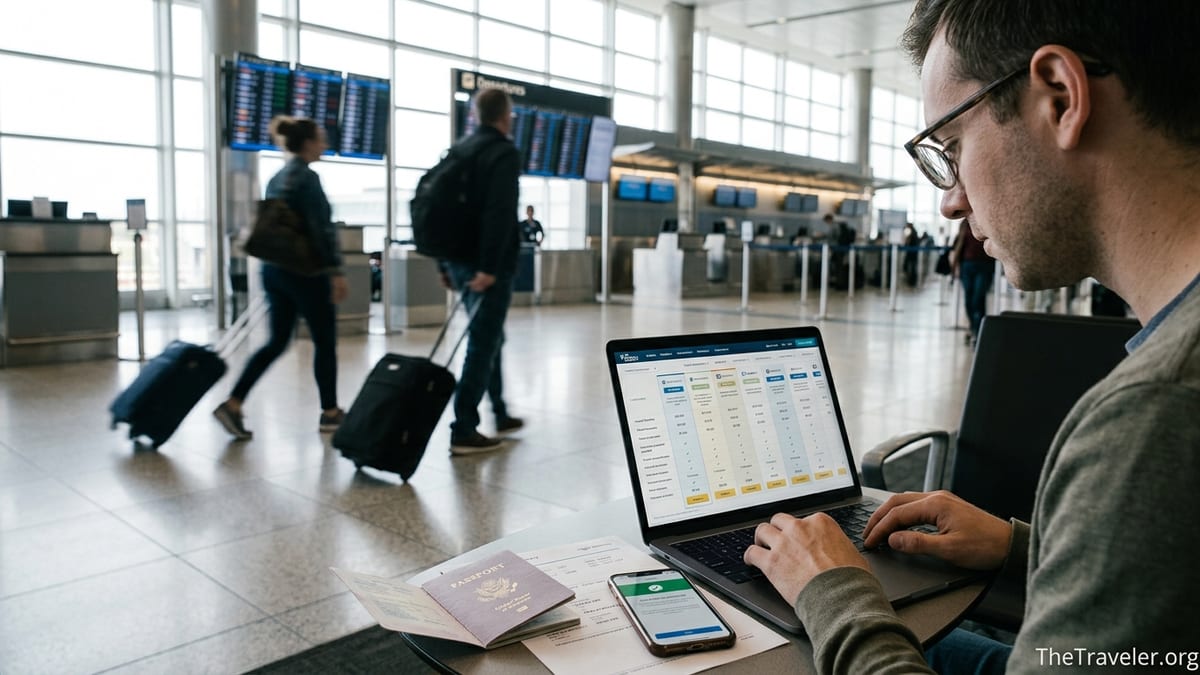
The quote results page is where Squaremouth’s comparison engine becomes useful. Each product is shown in a consistent layout: you see the insurer name, plan name, price per trip, and core benefits such as trip cancellation limit, emergency medical coverage, medical evacuation limits, and baggage protection. If you scroll, you can often see whether pre-existing medical condition waivers are available and whether the policy is primary or secondary medical coverage.
Squaremouth also lets you choose several policies and add them to a comparison grid. There you will see benefits aligned in columns so you can check that one plan offers 100,000 dollars in medical coverage and 500,000 dollars for evacuation, while another at a similar price offers only 25,000 dollars and 200,000 dollars. For example, for that 7,000 dollar Alaska cruise, you might see one comprehensive policy priced at about 450 dollars with 100 percent trip cancellation, 100,000 dollars in medical, and a waiver for pre-existing conditions, next to a value policy closer to 300 dollars with lower medical limits and no waiver.
When you click into a plan, Squaremouth provides a summary and links to the full certificate of insurance so you can see the exact legal wording. The site highlights key definitions, such as what counts as a covered medical emergency or a covered reason for trip cancellation, and flags important timing rules like early purchase windows. This information is pulled directly from the insurer’s official documents, so you are reading the same language you would see if you bought directly from them.
Understanding Filters, Coverage Types, and Real-World Use Cases
The power of Squaremouth lies in its filters, which can be tailored to match your risk profile. You can set minimum coverage amounts for emergency medical and evacuation, indicate whether you need trip cancellation benefits, and filter for optional add-ons like Cancel for Any Reason, rental car damage, or coverage for adventure sports. Each toggle reshapes the list of policies shown, removing plans that do not meet your criteria.
Consider a couple planning a two-week safari and beach holiday split between Kenya and Zanzibar with a 10,000 dollar trip cost and some pre-existing medical conditions. Using the filters, they might first require at least 100,000 dollars in medical coverage and 500,000 dollars in evacuation, given the distance from major hospitals. They can then filter for policies that offer a pre-existing condition waiver if purchased within, say, 14 to 21 days of their initial trip deposit. The result is a curated list of plans from several insurers that all meet those stricter medical and timing requirements.
In another scenario, a solo skier headed to Colorado in January might use Squaremouth’s specific sports-related pages. The platform publishes sample pricing for adventure sports plans, such as snowboarding and ski coverage, based on internal sales data. While figures change over time, these examples give travelers a ballpark: a week-long ski trip policy might run in the low hundreds of dollars for generous medical limits and off-piste coverage, while basic plans that exclude many ski-related injuries are considerably cheaper but may not be suitable.
Squaremouth also helps businesses and groups. For instance, a company organizing a 20-person incentive trip to Cancun can look at group policies that bundle coverage for all travelers at a potential discount compared to buying 20 separate policies. The group section of the site explains when a group policy makes sense, and the quote engine adjusts accordingly once you indicate multiple travelers under one booking.
How Pricing Works on Squaremouth and What Affects Your Quote
Although Squaremouth provides the technology, pricing is controlled by the underlying insurers. For the same plan, you should see identical premiums whether you purchase through Squaremouth or directly from the insurance company, assuming the same traveler details and coverage amounts. That said, not every insurer offers every policy through every channel, so the set of plans available through the marketplace may differ from what you find on a single insurer’s site.
Several factors drive your quote. Age is one of the biggest: travelers over 60 will usually see steeper pricing because the risk of medical claims rises. Trip cost matters as well, especially for policies that include trip cancellation and interruption. A 2,000 dollar long weekend in New York might attract a policy price around 60 to 100 dollars for a healthy traveler in their thirties, while a 15,000 dollar luxury cruise for a retired couple could easily generate quotes between 400 and 1,000 dollars depending on coverage and add-ons like Cancel for Any Reason.
Destination also influences premiums. Trips to regions with higher medical costs or more complex evacuation logistics, like remote islands or expedition cruises, often come with higher recommended medical and evacuation limits. On Squaremouth’s medical-only pages, for example, you can see that policies for international travel with 250,000 dollars in medical coverage and 1,000,000 dollars in evacuation are common for long-haul trips, whereas domestic-only policies might cap out at lower levels because your existing health insurance may still apply.
Timing is another subtle but important factor. Many of the more flexible features, like waivers for pre-existing conditions or coverage for financial default of a travel supplier, require you to buy within a set window, often 14 to 21 days after your first trip deposit. Squaremouth’s plan details make that clear. If you book a 5,000 dollar Mediterranean cruise in January for a September departure and wait until July to buy insurance, the site will still show policies, but several may no longer include those early purchase benefits, which is reflected in both coverage and price.
The Role of Squaremouth’s Zero Complaint Guarantee and Customer Support
One of Squaremouth’s most distinctive features is its Zero Complaint Guarantee. Any policy bought through the site is backed by this promise: if a traveler files a claim with the insurer and believes the outcome is unfair, Squaremouth’s internal team of licensed claims professionals will review the case and, if necessary, mediate with the provider. If Squaremouth concludes that a provider is not handling claims reasonably, it can remove that insurer’s products from the marketplace altogether.
In practical terms, this gives travelers an extra layer of advocacy. Imagine a family whose child breaks an arm while on a covered trip and incurs hospital bills overseas. They submit all documentation to the insurer, but the claim is denied on a technicality they do not understand. If the policy was purchased on Squaremouth, the family can open a Zero Complaint case. A Squaremouth specialist will help interpret the certificate wording, assess whether the denial aligns with the policy, and advocate for reconsideration if the decision appears inconsistent with the contract.
Squaremouth’s customer service also supports travelers earlier in the process. Before purchase, you can call or email to ask about particular scenarios, like whether a specific type of adventurous activity is covered or if a chronic medical condition might fall under a pre-existing exclusion. Post-purchase, the site provides instructions on how to start a claim directly with the insurer named on your certificate, recognizing that claims administration always rests with the insurance company itself.
For frequent travelers, this support and the guarantee can be a deciding factor in choosing to shop through a marketplace versus going directly to an insurer. The reassurance that policies are continuously monitored based on actual complaint patterns adds a quality filter beyond what you see in brochures and marketing copy.
Practical Example: Comparing Policies for Different Types of Trips
To see how Squaremouth works in real life, consider three very different itineraries. First, a 30-year-old digital nomad from Chicago booking a 6-week trip to Portugal and Spain with only one prepaid flight of 900 dollars. Their main concern is overseas medical expenses rather than trip cancellation. On Squaremouth, they can set trip cost to 900 dollars, choose medical-only or low trip-cancellation policies, and filter for at least 250,000 dollars in medical coverage. The results might show robust medical plans from international insurers priced under 100 dollars, which would be impractical to find one by one on individual sites.
Second, imagine a retired couple from Florida booking a 10,000 dollar river cruise through Europe with substantial prepayments and several pre-existing medical conditions. For them, the must-haves are strong trip cancellation coverage for the full 10,000 dollars, a pre-existing condition waiver, generous emergency medical and evacuation coverage, and possibly Cancel for Any Reason if they are nervous about global events. Within Squaremouth, they can filter for comprehensive policies, set high minimum medical limits, and require a waiver. The comparison grid might reveal two or three standout plans clustered around 600 to 900 dollars total, each with slightly different strengths on missed connection or baggage coverage.
Third, a family of four booking a 4,500 dollar Caribbean cruise might be torn between the cruise line’s in-house protection plan and a third-party policy. On Squaremouth they can enter the full family details and see quotes that include medical evacuation limits of 500,000 dollars or more, along with coverage for missed connections if a flight delay causes them to miss the ship. They may find that a third-party plan offering primary medical coverage and better evacuation benefits costs only slightly more than the cruise line’s own product, which often leans heavier on trip credit rather than cash reimbursement.
These examples show how the same interface adapts to different priorities. The medical-focused traveler can safely downplay cancellation coverage, the cruise couple can emphasize pre-existing conditions and cancellation, and the family can strike a balance between price and comprehensive emergency protection. In each case, Squaremouth’s tools help surface the trade-offs explicitly.
The Takeaway
Squaremouth’s value lies in reducing complexity at a moment when travelers are making high-stakes decisions about nonrefundable trips and potential overseas medical costs. By bringing together many insurers on a single platform, standardizing how benefits are displayed, and allowing highly specific filters, the site turns a once opaque process into a structured comparison.
It is still essential to read the full certificate of insurance, pay attention to early purchase rules, and be realistic about the risks your trip entails. Squaremouth cannot change the underlying contract, and it does not handle claims payments. What it can do is help you find a suitable policy faster, at the same price you would pay elsewhere, and offer an additional layer of oversight through its Zero Complaint Guarantee.
If you think about travel insurance the way you think about booking flights, using a dedicated comparison engine makes sense. Squaremouth helps you narrow the field to a few strong choices and understand why one plan might be a better fit than another for your specific itinerary, budget, and health situation. Used thoughtfully, it becomes a planning tool that lets you focus less on fine print and more on the trip itself.
FAQ
Q1. Is Squaremouth itself an insurance company?
Squaremouth is not an insurance company. It is a comparison marketplace that sells policies on behalf of licensed travel insurers. When you buy a plan, your contract is with the insurer named on the policy, while Squaremouth provides the platform and shopping tools.
Q2. Does it cost more to buy travel insurance through Squaremouth?
In most cases, the price of a given plan is the same whether you buy it through Squaremouth or directly from the insurer, because travel insurance pricing is regulated and based on factors like age, trip cost, and destination. The advantage of using Squaremouth is being able to compare many plans at once without paying extra.
Q3. How accurate are the quotes I see on Squaremouth?
The quotes are generated in real time from insurers based on the information you enter, such as traveler ages, trip dates, and trip cost. If you change those details, your quote will change. The final price is set by the insurer, but what you see on Squaremouth should match the price you would receive through that company for the same inputs.
Q4. What is Squaremouth’s Zero Complaint Guarantee?
The Zero Complaint Guarantee is Squaremouth’s promise to monitor how partner insurers handle claims from customers who bought through the site. If you believe a claim was denied unfairly, you can open a case and Squaremouth’s team will review your situation and, if appropriate, mediate with the insurer. If patterns of unfair handling emerge, Squaremouth can remove that insurer’s plans from the marketplace.
Q5. Can Squaremouth help me file or manage a claim?
Claims are always filed directly with the insurance company listed on your policy documents, not with Squaremouth. However, Squaremouth offers guidance on how to start a claim and what documentation you may need, and its Zero Complaint process can step in if there is a serious dispute about a claim decision.
Q6. How do I know which policy on Squaremouth is right for my trip?
The best approach is to start by defining your priorities: do you mainly need medical coverage, strong cancellation protection, or special features like adventure sports or Cancel for Any Reason? Then use Squaremouth’s filters to set minimum coverage levels and required benefits, and compare two or three shortlisted policies side by side. Reading the full certificate of insurance for those finalists is an important final step.
Q7. Does Squaremouth offer policies for group or business travel?
Yes. Squaremouth can quote group policies that cover multiple travelers under one plan, which can be useful for school trips, destination weddings, or corporate incentives. The platform also supports standard single-trip policies for individuals and families, and you can indicate the number of travelers during the quote process to see which option is most cost effective.
Q8. Are pre-existing medical conditions covered by policies found on Squaremouth?
Some, but not all, policies on Squaremouth can cover pre-existing conditions if specific requirements are met, such as buying within a set number of days after your first trip payment and insuring the full trip cost. The site clearly lists whether a pre-existing condition waiver is available for each plan, and you should always verify the exact conditions in the policy document.
Q9. Can I buy travel insurance on Squaremouth after I have already started my trip?
Generally no. Most travel insurance policies must be purchased before you depart on your trip, and many benefits are tied to how long before departure you buy. While a few products may allow purchase closer to departure, you should plan to buy coverage soon after making your first major trip payment to maximize available benefits.
Q10. What happens if I need to change or cancel my policy bought through Squaremouth?
Changes and cancellations are handled according to the rules of the insurer that issued the policy. Many plans include a short free look period, often around 10 to 14 days after purchase, during which you can cancel for a refund if you have not departed and have not filed a claim. Squaremouth’s support team can direct you to the correct contact and explain your options based on the specific policy you purchased.