


For UK travelers who are tired of mystery fees and poor exchange rates every time they cross a border, Starling Bank has become a popular companion. Its app-based current account promises no foreign transaction fees on card spending, access to Mastercard’s exchange rate, and simple international transfers directly from your phone. This guide explains in practical terms how Starling works when you are abroad, what it really costs, and how to make the most of it on your next trip.
Get the latest updates straight to your inbox!
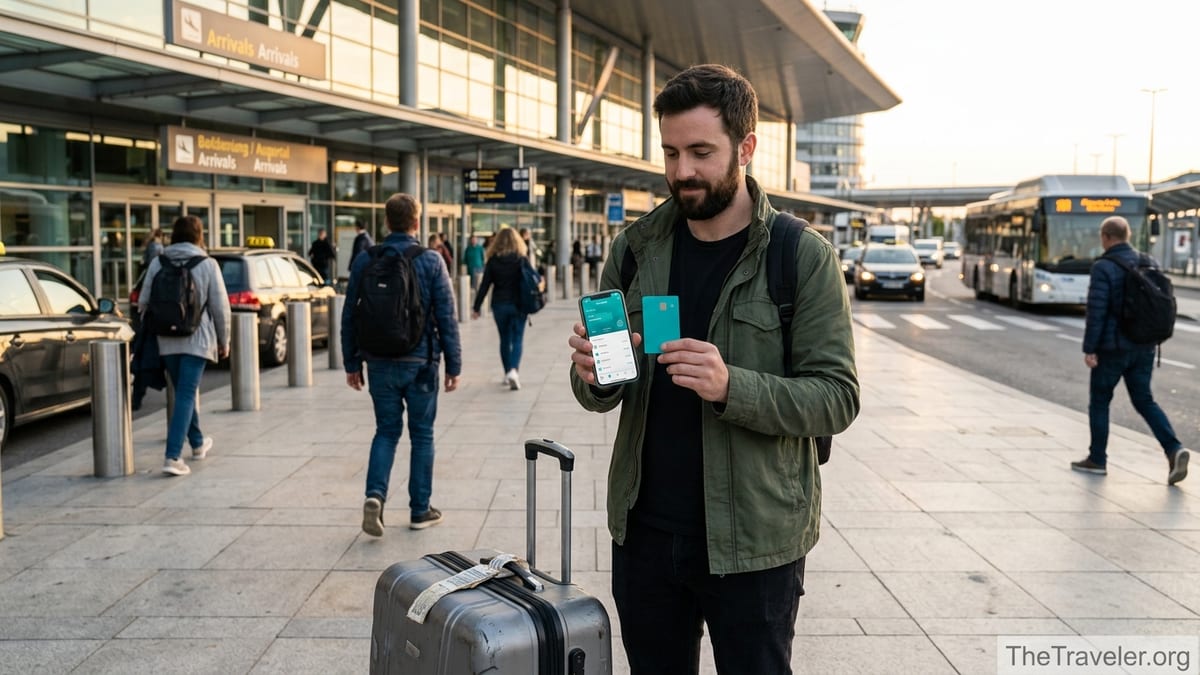
Starling’s basic promise: a travel-friendly UK current account
Starling Bank is a UK digital bank built around a mobile app, with a Mastercard debit card attached to its personal and joint current accounts. For international use, the headline attraction is that Starling does not add its own foreign transaction fee when you pay in a non-sterling currency. When you tap your card in a Paris cafe or book a hotel in New York online, your pounds are converted at the Mastercard exchange rate, with no percentage markup from Starling on top according to its account documents and travel information pages.
In practice, that means if the Mastercard rate on a given day is roughly 1 GBP to 1.15 EUR and you spend 23 EUR on a museum ticket in Rome, about £20 will be deducted from your account, plus or minus a few pence depending on the exact live rate at the time your transaction is processed. There is no added 2 to 3 percent fee that many traditional banks charge on top of the exchange rate, which can easily add several pounds to a dinner bill or a hotel stay.
Starling’s travel pages stress that you can use the card almost anywhere you see the Mastercard logo, which covers most card-accepting merchants worldwide. The bank passes through Mastercard’s rate, and its rate and fee tables confirm it does not charge an extra fee for foreign currency card payments, whether in the UK or abroad. This is a key difference from many high street banks that still treat foreign spending as a premium service rather than a routine part of modern life.
From a traveler’s perspective, this turns your normal current account into a de facto travel card. Instead of applying for a separate prepaid or specialist travel product, you can simply keep your regular spending money in Starling and use it in the same way in London, Lisbon or Los Angeles, checking everything from the same app.
How card payments abroad actually work day to day
When you use your Starling debit card abroad, the process at the till or online checkout will feel familiar. In a Barcelona restaurant, the server brings a card machine, enters the bill in euros, and you tap or insert your card. The card network checks your balance, authorises the transaction, and your Starling app usually pings within seconds with a notification showing both the local amount, for example 48.60 EUR, and the converted amount in pounds, perhaps around £41, based on the Mastercard rate.
The crucial choice comes when a terminal asks whether you want to pay in GBP or in the local currency. Starling’s own help and travel guidance recommend choosing the local currency. If you choose to pay in pounds, the restaurant’s bank or payment provider applies its own exchange rate, often significantly worse than Mastercard’s, and may add an extra margin. If you choose local currency, Mastercard handles the conversion and Starling does not add its own fee, so you typically get a more competitive effective rate.
Consider booking a hotel at a US chain in New York from the UK. The website might offer the option to charge your card in GBP. It can be tempting to see a familiar currency, but if you let the hotel or booking platform convert, you may lock in an inflated rate. By instead choosing to pay in USD and letting the Mastercard network and Starling handle the conversion, you avoid that extra layer of hidden markup. For a £700 week-long stay, the difference between a competitive card rate and a tourist-focused “guaranteed” rate can easily be £20 or more.
Starling’s current account terms explain that if you make a payment in a foreign currency and let Mastercard do the conversion, the network’s prevailing exchange rate will be used. If, on the other hand, you allow a merchant or ATM to convert the amount to pounds, that provider sets the rate and may add its own fee. That is why experienced Starling users consistently decline so-called dynamic currency conversion at shops, hotels and cash machines abroad.
ATM withdrawals overseas: costs, limits and real examples
One of Starling’s main selling points for travelers is that it does not charge its own fee for foreign currency cash withdrawals at ATMs outside the UK, according to its service information and fee schedule. If you are in Thailand and withdraw the equivalent of £150 worth of Thai baht from a local bank ATM, Starling will convert the amount at the Mastercard rate and will not add a foreign cash fee.
However, many overseas ATMs charge their own fixed fee, regardless of which UK bank you use. In parts of the United States, for example, it is common to see machines charging the equivalent of 3 or 4 US dollars per withdrawal for foreign cards. In tourist areas of Spain or Greece, certain independent ATM brands may charge a few euros per withdrawal and also try to convert the amount into pounds at a poor rate. Starling cannot control these local charges, and its help pages highlight that any fee shown on the ATM screen belongs to the machine operator, not to Starling.
In practice, this means that in a city like Bangkok, where individual ATMs often charge a substantial local fee, you might choose to withdraw larger amounts less frequently to spread out the flat machine fee. Travelers commonly withdraw, for instance, the rough equivalent of £200 in one go rather than £40 five times. Starling does not add its own usage fee on top, so your cost is the foreign bank’s ATM charge plus whatever rate they offer if you allow them to convert. To minimise costs, you again select to be charged in the local currency at the ATM screen so that Starling handles the currency conversion at Mastercard’s rate.
Starling also sets its own card and cash limits in pounds, which apply globally. Its help pages for euro accounts, for example, indicate a daily card spending limit in the tens of thousands of euros equivalent and an ATM withdrawal limit of a few hundred pounds equivalent per day, with a cap on the number of withdrawals. Third party guides that summarise Starling’s fees and limits in 2026 note similar figures and point out that you can view and adjust some cash limits within the app, giving you control over how much you can take out in a day for security and budgeting reasons.
Exchange rates and why “no fees” does not always mean “best deal”
When Starling says it has no foreign transaction fees on card spending, it means it does not add an extra percentage markup on top of the card network’s rate in its own right. That is different from how many traditional UK banks operate, where you may pay, for example, a 2.75 percent non-sterling transaction fee plus a separate cash fee for using an ATM abroad. Starling’s approach aligns it more closely with specialist travel cards that also avoid this surcharge.
The underlying exchange rate you get with Starling is the Mastercard rate on or around the day your transaction is processed. Card network rates tend to sit not far from the so-called market or mid-market rate, though they can be slightly better or worse at different moments. Informal comparisons shared by card users often show that withdrawing or spending through Starling abroad produces a rate close to what you would see from currency calculators that assume a zero percent bank fee, especially compared with bureau de change counters at airports or high street cash changers.
However, “no Starling fee” does not shield you from other costs. If an ATM imposes a fixed 5 EUR fee on a 50 EUR withdrawal, your effective cost of accessing cash is still 10 percent, regardless of how transparent Starling is. Similarly, if you accept an in-store conversion to pounds with a poor rate, you could lose several percent in hidden exchange markups. The benefit of Starling is that it removes one important layer of bank fees, but you still need to be attentive to prompts and on-screen messages abroad.
As a practical example, imagine buying a 90 EUR train pass in Germany. The ticket machine offers to charge your card 80 GBP instead of 90 EUR. At first glance, that might seem better than guessing the euro to pound rate. Yet if the Mastercard rate that day would have produced a charge of only £77 when billed in euros, you are effectively paying £3 more by accepting the convenience option. When you leave the transaction in euros, Starling and Mastercard handle it without adding a foreign usage fee, so that hidden premium disappears.
Using Starling’s app features while you travel
Part of what makes Starling attractive for frequent flyers is the control the app gives you over your card in real time. You can lock and unlock your card, change certain limits, and get instant notifications for card activity. Starling’s help pages and product descriptions emphasise that customers can manage card settings directly in the app, including turning on or off online payments, contactless, and cash withdrawals, which is useful if you are concerned about fraud in a particular country.
In a real travel scenario, this might look like turning off magnetic stripe payments before visiting the United States, where swipe transactions are more common in some smaller shops and can be more vulnerable to skimming. If you later need to pay at a self-service petrol pump that still uses the stripe, you can re-enable the feature in seconds. If your wallet goes missing on a metro in Paris, you can freeze your card immediately from your phone and then request a replacement, avoiding the delay and uncertainty that often come with traditional banks.
The app also provides a clear breakdown of foreign spending, showing the transaction in both currencies and updating your balance instantly. When you pay for a boat tour in Croatia or a theme park ticket in Florida, you can see precisely how much it cost in pounds without doing mental arithmetic. Over the course of a long trip, this transparency helps you stay on budget and spot unusual activity quickly.
For those who travel regularly within the eurozone, Starling’s euro account adds another layer of flexibility. You can hold euros directly, get a dedicated euro IBAN, and spend from your euro balance with your debit card. The bank’s limit information for euro accounts notes substantial daily card and cash limits in euro terms. If you are paid in euros by a client in Berlin and then use that balance on a work trip to Amsterdam, you avoid repeated currency exchanges between pounds and euros.
Sending and receiving money across borders with Starling
Beyond everyday card use, Starling lets you send money abroad from within the app using its international payments service. Its help centre explains that it offers payments through different routes, including SWIFT for bank-to-bank transfers worldwide, with a flat delivery fee for SWIFT payments and transparent conversion costs baked into the exchange rate shown before you confirm.
In practice, if you are renting an apartment in Portugal and need to send a 900 EUR deposit to a local landlord, you can open the international payment section in the app, choose euros as the currency, and select the recipient’s bank details. Before you tap send, Starling shows the total you will pay in pounds, the approximate arrival amount in euros, any flat transfer fee for the chosen route, and the exchange rate used. Compared with many traditional UK banks, where fees can include both a sending fee and a poorer exchange rate, this can work out cheaper, particularly for medium sized payments.
The bank’s own pages about sending money abroad emphasise that it aims to be competitive with non-bank transfer services while keeping everything inside the same banking app. That can be useful for digital nomads and long term travelers who want to pay overseas rent, tuition, or medical bills from their main current account rather than juggling several specialist apps. International payments are usually processed on business days, so if you need to pay a deposit for a flat in Berlin or a language course in Madrid, you should avoid leaving it until a weekend or UK bank holiday.
Receiving money from abroad into Starling is usually treated like any other incoming transfer, but if funds arrive in a foreign currency into a sterling account, they are converted, often with a stated conversion fee. For regular inflows of euros, dollars or other currencies, travelers may find it more convenient to maintain dedicated foreign currency accounts where Starling offers them, or to use specialist services set up specifically for receiving overseas income.
Comparing Starling with traditional banks and other travel cards
To understand how Starling works for international spending, it helps to compare it with the status quo. Many UK high street current accounts still charge a non-sterling transaction fee of around 2.75 to 3 percent for card payments abroad, plus a separate fee for foreign ATM withdrawals. On a two week holiday where you spend £1,200 equivalent on hotels, food and attractions, that percentage fee alone could cost more than £30, before considering any ATM or dynamic currency conversion charges.
By contrast, Starling’s fee information and independent 2026 overviews of its charges note that it does not levy a foreign transaction fee on card spending and does not add its own charge for cash withdrawals abroad. You still pay the Mastercard rate and any fees charged by the local ATM operator, but the bank’s own pricing is simpler and more transparent than that of many legacy institutions.
When measured against other modern app-based banks or travel cards, Starling sits in a competitive cluster. Some rivals also provide fee-free foreign spending but may introduce weekend exchange markups, caps on fee-free ATM withdrawals each month, or charges for holding multiple currencies. Others specialise in prepaid travel cards that require you to move money across manually before trips. Starling’s advantage for many UK residents is that it remains a full current account, with direct debits, salary payments and FSCS protection, while still offering attractive overseas usage.
For a frequent traveler flying from London to Europe once a month, a simple pattern might emerge. Day to day spending from a Starling card abroad costs no extra at bank level, whereas an older high street debit card would quietly add several percent to each bill. For larger international transfers such as a 2,000 EUR tuition payment to a university in France, Starling’s international payment service offers a clear fee structure and rate, whereas using a traditional bank might involve several layers of charges and paperwork.
The Takeaway
Starling Bank has built a strong reputation among UK travelers by doing something simple: removing the bank’s own foreign transaction fees on card spending and keeping cash withdrawals abroad free on its side. When you pay in local currency and let Mastercard handle the conversion, you get a competitive exchange rate without the extra percentage charges that many high street banks still apply.
For real journeys, from city breaks in Europe to extended backpacking in Southeast Asia, that can translate into tangible savings on every restaurant bill, museum ticket and train fare. The app’s instant notifications and card controls add a sense of security and help you keep track of costs in pounds even as you move between currencies and time zones.
There are still pitfalls to avoid. Overseas ATMs may charge their own fees, and shops or hotels may offer to convert your payment to pounds at poor rates, eroding the benefit of a fee-free card. International transfers through Starling are generally competitive and transparent but are still subject to network fees and business day processing times.
If you are a UK-based traveler who wants a straightforward way to spend abroad with minimal hassle, Starling is worth considering as your primary or backup card. Used thoughtfully, with a habit of always paying in local currency and watching for ATM surcharges, it can make international spending feel more like using your account at home, rather than a series of small financial penalties for having crossed a border.
FAQ
Q1. Does Starling Bank charge foreign transaction fees when I use my card abroad?
Starling does not add its own foreign transaction fee on card payments made in a non-sterling currency. Your spending is converted at the Mastercard exchange rate, although local merchants or ATM operators may still add their own charges or poor exchange rates if you allow them to convert the transaction to pounds.
Q2. Is it really free to withdraw cash with Starling Bank at overseas ATMs?
Starling does not charge a fee for foreign cash withdrawals, but many overseas ATMs apply their own fixed fee per withdrawal or offer a poor currency conversion if you choose to be charged in pounds. To minimise costs, select to be charged in the local currency and try to use ATMs from major local banks rather than independent machines in tourist areas.
Q3. Should I choose to pay in local currency or in pounds when using my Starling card abroad?
In most situations it is better to choose to pay in the local currency. If you allow the shop, hotel or ATM to convert the payment into pounds, they can use their own exchange rate and add a margin, which often makes the transaction more expensive than letting Mastercard and Starling handle the conversion.
Q4. How good are Starling’s exchange rates compared with airport exchanges or high street bureaux?
Starling uses the Mastercard exchange rate without adding its own foreign usage fee on card spending, which usually makes it significantly more competitive than airport or high street currency exchanges that build in wide margins. While exact differences vary by day and currency, many travelers find that paying by card with Starling often beats buying cash in advance at typical walk-up rates.
Q5. What happens if I lose my Starling card while traveling?
If your card is lost or stolen abroad, you can immediately freeze it in the app to stop new transactions. You can then request a replacement, and Starling may charge a modest fee for issuing a new card while you are overseas according to its fee documents. In the meantime, you can usually continue using mobile wallet versions of your card if they are still installed and active on your devices.
Q6. Can I use Starling Bank for larger international payments like rent or tuition?
Yes, you can send international bank transfers directly from the Starling app using its international payments service. The app shows the exchange rate, any flat transfer fee for the chosen network, and the total amount you will pay in pounds before you confirm. This can be useful for paying overseas rent, tuition or deposits without needing a separate money transfer provider.
Q7. Are there limits on how much I can spend or withdraw abroad with Starling?
Starling sets daily and per-transaction limits for card spending and ATM withdrawals, expressed in pound equivalents and applied worldwide. Public information about its euro accounts, for example, points to relatively high daily card limits and a daily cash withdrawal cap of a few hundred pounds equivalent. You can view or adjust certain limits within the app, which helps balance convenience with security.
Q8. Is Starling better than a prepaid travel card for holiday spending?
For many UK travelers, using Starling as a full current account with no foreign transaction fee on card spending is simpler than juggling a prepaid travel card. You avoid topping up separate balances and still get competitive card rates. However, some prepaid or specialist cards may offer additional perks or slightly different fee structures, so the best choice depends on how often you travel and whether you need features like multiple currency wallets.
Q9. Can I hold foreign currencies with Starling, such as euros?
Starling offers certain foreign currency accounts, including a euro account, which allow you to hold and spend in that currency. With a euro account you can receive euro payments, keep a balance in euros and spend abroad without repeated conversions between pounds and euros. This can be helpful for people who are frequently paid in euros or who spend a significant part of the year in the eurozone.
Q10. Is Starling Bank safe to use as my main account while I travel?
Starling is a fully licensed UK bank, and eligible balances in its personal current accounts are protected up to the standard UK deposit guarantee limit through the national compensation scheme. Security features in the app, such as instant card freezing and configurable payment controls, add further protection. Many travelers still choose to carry a backup card from another provider in case of network outages or local acceptance issues, but using Starling as a primary travel account is a common and practical approach.