


For UK travellers who are tired of surprise bank fees every time they pay in euros or withdraw cash from a foreign ATM, the Caxton currency card has become a popular alternative. It is a prepaid Mastercard designed specifically for spending overseas, with no overseas transaction or ATM fees charged by Caxton itself in most cases, and an app that lets you control your travel money from your phone. To use it effectively though, you need to understand how it works in practice: how you load money, what happens to the exchange rate, and where the hidden costs can still creep in when you are travelling.
Get the latest updates straight to your inbox!
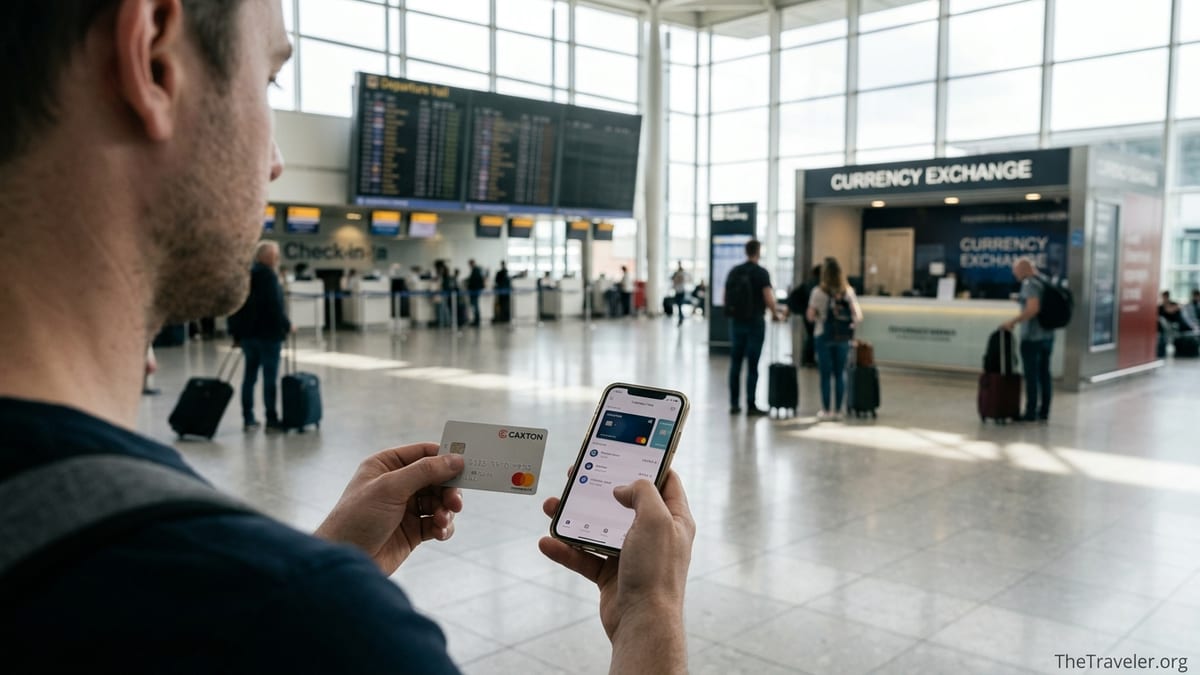
What Is the Caxton Card and Who Is It For?
The Caxton card is a prepaid Mastercard issued by Caxton Payments, a UK-based foreign exchange and payments provider. It is designed for overseas spending and ATM withdrawals, so instead of using your usual debit card from a high street bank, you move money onto a Caxton card and spend from that balance. Because it is prepaid, you can only spend what you have loaded, which many travellers find useful for budgeting a holiday or work trip.
In practical terms, you order the card online or via the Caxton app, wait for the physical card to arrive, then activate it and load funds before you travel. The same card can be used across multiple trips rather than being a one-off. Once loaded, you can pay anywhere you see the Mastercard logo, whether that is a metro ticket machine in Paris, a restaurant in New York or a hotel in Dubai. Caxton promotes that it does not charge a fee for international point-of-sale purchases and does not add its own fee for overseas ATM withdrawals on the currency card, which differentiates it from many UK banks that may charge currency conversion fees or foreign cash withdrawal charges for every transaction abroad.
The card is primarily aimed at UK residents who travel regularly for leisure or business and who want more predictable costs than traditional bank cards typically offer. It also suits parents sending teenagers on school trips, retirees spending winters in Spain, or freelancers who occasionally bill or spend in other currencies but do not want to maintain a fully fledged multi-currency bank account. Because the card is prepaid rather than a credit line, it can be easier to obtain than a credit card, although you still need to meet Caxton’s eligibility checks and terms.
Importantly, the Caxton card is not a full bank account. You cannot use it as a salary account or to receive general inbound payments like a standard current account. Caxton’s own materials and independent fee breakdowns emphasise that it is a spending card built for travel and foreign card payments, not a replacement for a high street bank account for everyday domestic banking.
How Loading and Currency Conversion Work
To use the Caxton card, you first have to move money from your UK bank to your Caxton balance. You can load via debit card or bank transfer in pounds sterling, both of which Caxton currently lists as free from its side, although your bank may have its own charges for certain transfer types. The app and website allow you to top up at any time, so you can add more money mid-trip for example if you extend your stay or under-budgeted your original load.
Historically Caxton offered dedicated “wallets” in multiple currencies, but in its current form the personal travel card is built around loading pounds and letting Caxton convert automatically at the point of purchase. The company’s help pages explain that you can load GBP and spend internationally, with conversions happening automatically at Mastercard locations worldwide. In practice, that means if you have £500 on your card and pay for a 120 euro dinner in Rome, the card debits the equivalent in pounds using Caxton’s rate for euros at the time the transaction is processed.
Travellers will most often see Caxton describe its pricing as good exchange rates with 0 percent commission. Behind the scenes, like most card providers, Caxton earns revenue primarily through the margin it builds into its exchange rates rather than a separate visible fee line for every purchase. Independent fee analyses in 2026 suggest an effective foreign exchange markup for Caxton card spending of roughly the low single digits, around the 1.5 percent range on average, compared with the mid-market interbank rate. That is lower than the 3 percent or more that many traditional UK debit and credit cards still charge for non-sterling transactions, but a little higher than some specialist app-based competitors.
If you make a transaction in a currency that is not one of the card’s supported currencies, or in a way that requires extra conversion steps, Caxton’s terms set out that an additional foreign exchange markup can apply. The small print refers to a markup of around 2.49 percent where a transaction is carried out in a currency different from the card’s available currencies. In practice, this scenario might apply if you managed to make a purchase direct in a niche currency instead of letting the terminal convert to a major one such as euros or dollars. For most mainstream destinations like the euro area, United States, Australia or Japan, you will simply see the standard Caxton rate for that local currency applied when your pounds are converted.
Fees, Limits and the Fine Print You Should Know
On headline marketing, Caxton emphasises that there are no Caxton fees for overseas card payments and no Caxton fees for overseas ATM withdrawals on the travel card. If you withdraw the equivalent of £200 in euros from an ATM in Barcelona using your Caxton card, Caxton itself does not add an ATM fee or an overseas transaction fee on top of the amount withdrawn. That stands in contrast to typical UK high street debit cards that often combine a foreign usage fee of around 2.75 to 3.25 percent with a separate cash withdrawal charge per transaction when used abroad.
There are still costs to be aware of. First, the bank or independent company that operates the foreign ATM can charge its own flat fee or percentage surcharge. For example, an ATM in a Lisbon tourist district might display on-screen that it will charge 3 euros or a percentage of the transaction if you proceed. Caxton cannot control that operator fee; whether you use Caxton or a high street bank card, that local charge applies if you accept it. Second, the Caxton exchange rate usually contains a modest margin compared with the mid-market rate. Even though there is no explicit overseas ATM fee from Caxton, you are still paying for the service through that spread.
The card also has limits that matter in real trips. Caxton currently details a maximum daily ATM withdrawal limit of around £300 or the equivalent in another currency. So if you are in Thailand and plan to withdraw the equivalent of £600 in Thai baht to pay a guesthouse that only accepts cash, you would need to do that over at least two days or combine it with other payment methods. There are also overall balance and annual load limits set out in the terms, which are unlikely to trouble most holidaymakers but may be relevant if you are funding a long-term stay or large business expenses through the card.
Another cost in the fine print is the “account management fee” or inactivity fee. According to Caxton’s current terms, if your card has seen no activity for 12 consecutive months, such as spending, loading or switching balances, Caxton charges a small monthly fee against any remaining balance until the account is active again or the balance is drained. Independent reviews in 2026 quote a figure of around £2 per month for this dormancy fee. For example, if you return from a trip with £40 still on the card and then do not touch it for more than a year, that balance would gradually reduce by that amount each month. The straightforward way to avoid this is either to spend or withdraw what is left at the end of a trip, or to ensure you make at least a small transaction once in a while to reset the inactivity timer.
Using the Caxton Card Day-to-Day Abroad
In daily use, the Caxton card works almost exactly like a standard chip-and-pin or contactless Mastercard, but there are a few quirks to set up properly. Caxton’s own guide notes that your first transaction on a new card must be a chip-and-pin purchase at a physical point of sale before you can use contactless or ATM withdrawals. In practice, that means on your first day in, say, Barcelona, you might buy a coffee at a staffed café and insert your card into the terminal with your PIN rather than tapping. Once that is processed successfully, you should then be able to tap for smaller purchases or withdraw cash from ATMs.
Imagine you are on a city break in Paris. Before leaving the UK, you load £600 onto your Caxton card. When you arrive, you take the RER train from Charles de Gaulle Airport into the city and pay for two Navigo day passes at a ticket machine that supports international cards. The total is about 20 euros. You insert your Caxton card, select to be charged in euros if asked, and approve with your PIN. The app then shows a transaction for around £17, depending on the exchange rate that day. Later that evening, you withdraw 100 euros in cash from an ATM near your hotel to pay for small cafés and markets that prefer notes. Caxton does not charge an extra withdrawal fee, but as you confirm the transaction you notice the ATM screen warns of a local operator fee of 2.50 euros, which you accept. Your app now shows a roughly £87 cash withdrawal plus a deduction in euros from your balance that reflects the ATM’s own fee.
The Caxton app is central to how most travellers manage the card while overseas. Through it, you can see your available balance in pounds, receive push notifications every time the card is used, and top up instantly if you are running low while sitting at a bar in Lisbon or a hotel room in New York. If your card is misplaced, the app allows you to temporarily freeze it, which is useful if you think you might have left it in a restaurant but are not sure. If it turns up again, you can unfreeze it yourself without calling support. In a more serious loss or theft, you can request a permanent block and replacement card.
Because the card is prepaid, merchants generally treat it like any other debit Mastercard. Car rental firms or hotels that pre-authorise deposits may still insist on a traditional credit card in the driver or guest’s name, so it is worth carrying a backup credit card for such cases. For most everyday transactions though, from restaurant bills in Madrid to museum tickets in New York, the Caxton card functions smoothly and lets you keep your primary current account card safely in your hotel safe.
Real-World Cost Comparisons and Examples
To understand how the Caxton card affects your travel budget, it helps to compare it with a typical UK high street debit card in concrete scenarios. Suppose you are travelling to Croatia in August and you plan to withdraw the equivalent of £150 in local currency from an ATM twice during your week-long trip. Many major UK banks still charge around 3 percent for foreign cash withdrawals plus a flat fee of roughly £1.50 to £5 per transaction. On £150, a 3 percent foreign fee is £4.50, and adding, for example, a £2.50 cash withdrawal charge would make each ATM visit cost £7 in bank fees alone. Two such withdrawals would therefore cost about £14 on top of the exchange rate used.
With Caxton, you would still face the provider’s exchange rate margin when your pounds convert to Croatian kuna’s successor, the euro, but Caxton does not add its own withdrawal fee for overseas ATMs on the travel card as currently marketed. If the foreign exchange spread built into Caxton’s rate is around 1.5 percent compared with the mid-market rate, then for that same £150 equivalent you might effectively pay about £2.25 via the indirectly higher rate, but there would be no explicit foreign cash or transaction fee from Caxton. If the local Croatian ATM adds a 2 euro operator fee, that becomes the main “visible” charge, which would apply regardless of whether you used Caxton or your bank’s card.
Consider also card purchases. A UK debit card that charges 2.75 percent for non-sterling purchases will add about £2.75 in fees on a £100 equivalent restaurant bill in New York, plus whatever margin sits in the bank’s exchange rate. Caxton promises no overseas transaction charge, so the direct comparison is between that 2.75 percent explicit fee and Caxton’s typical FX margin. While precise figures change day by day, various 2026 comparisons of Caxton against providers such as Wise suggest Caxton’s rate usually sits somewhat above the mid-market interbank rate but below the overall cost of most traditional UK bank cards for the same foreign purchase. In day-to-day terms, that might mean paying the equivalent of £102 for that £100 meal rather than £103 to £104 on a high street debit card, depending on rates and providers on the day.
Where Caxton may be less competitive is against newer app-based challengers that use very slim FX margins and may offer a fee-free allowance for foreign ATM withdrawals each month before applying their own withdrawal fee. Services such as Wise or Revolut, for example, often publish an explicit percentage fee in the region of around half a percent on major currencies, and price in the remainder of their costs through subscription tiers or weekend markups. Caxton’s effective FX margin is generally higher than these ultra-low-fee competitors, but the Caxton card can still make sense for travellers who prefer a simpler, free-to-order prepaid card with no monthly subscription and who want to ring-fence a holiday budget away from their main bank account.
Best Practices for Getting the Most from a Caxton Card
There are a few habits that will help you get the best value from a Caxton card when travelling. The first is to decline “dynamic currency conversion” whenever it appears on card terminals or ATMs abroad. In many tourist hotspots, the card machine will ask if you want to be charged in pounds instead of the local currency. The on-screen rate is usually significantly worse than the rate your card provider would use. To keep costs down, choose to be charged in the local currency, whether that is euros, dollars or another unit, so that Caxton does the conversion using its own rates rather than the merchant or ATM.
Second, plan your cash withdrawals to minimise local ATM charges. Caxton does not charge for overseas ATM use on the travel card, but many foreign ATMs do charge their own fee. With a typical flat fee of, for example, 3 euros per withdrawal in some European cities, you are better off taking out 200 euros once rather than 50 euros four times. Just keep the Caxton daily ATM limit in mind, which is around the £300 equivalent. When you first arrive, it can be worth hunting for ATMs attached to mainstream banks in city centres instead of the generic cash machines that cluster around tourist spots or inside convenience stores, as the former are more likely to have lower or no operator surcharges.
Third, avoid leaving substantial unused balances on the card for longer than a year, because inactivity can trigger the monthly account management fee. At the end of a trip, you might decide to leave a small amount, say £20, on the card if you know you have another holiday planned within the next 6 to 9 months. If your next overseas trip is not for a couple of years, it may be more sensible to withdraw or spend the remaining funds before you get home or to redeem the balance back to your bank account, even though Caxton may charge a small redemption processing fee.
Finally, treat the Caxton card as one part of a broader travel money plan. It is sensible to carry at least one backup payment method, such as a standard credit card that has no foreign transaction fees, for situations where prepaid cards are not accepted or you need a larger security deposit. Some travellers also like to carry a modest amount of destination currency in cash on arrival, particularly if landing late at night when ATMs or card terminals might be unreliable. Used alongside a backup card and sensible precautions, the Caxton card can be a useful main tool for everyday purchases and moderate cash withdrawals abroad.
The Takeaway
The Caxton card is a focused tool for overseas spending that aims to strip away many of the extra charges that UK travellers are used to seeing on their bank statements after a holiday. It offers fee-free, from Caxton’s side, card spending and ATM withdrawals abroad on the travel card, with costs folded mainly into its foreign exchange rate, and a daily ATM withdrawal limit that suits most normal holiday budgets. For many trips, that model can deliver meaningful savings compared with high street debit and credit cards that layer foreign usage and cash withdrawal fees on top of their own rates.
To benefit fully though, you need to understand where costs still lurk: the FX margin in Caxton’s exchange rate, local ATM operator charges that Caxton cannot control, and the small but real inactivity fee that applies if you leave your card untouched for over a year. Combined with sensible use of the Caxton app, attention to ATM screens, and a backup credit card for edge cases, the Caxton card can form the backbone of a simple, predictable travel money setup for frequent and occasional travellers alike.
FAQ
Q1. Is the Caxton card completely free to use abroad?
The Caxton travel card does not add its own fee for overseas card purchases or ATM withdrawals, but you still pay via the exchange rate margin and any fees charged by local ATM operators. There can also be other small fees, such as a redemption fee if you cash out your balance, so it is not entirely cost-free in all circumstances.
Q2. What exchange rate does Caxton use for international spending?
Caxton uses its own foreign exchange rate for each currency, which typically sits a little above the mid-market interbank rate. Instead of charging a separate foreign transaction fee, Caxton prices its service mainly through this spread, which independent comparisons suggest is usually in the low single digits as a percentage of the transaction value.
Q3. Are there fees for withdrawing cash from ATMs abroad with Caxton?
Caxton does not charge a withdrawal fee for using overseas ATMs with its travel card, but the bank or company that operates the ATM can still charge a local fee. That local fee is shown on the machine and applies regardless of which card you use. You also effectively pay Caxton’s FX margin when your pounds are converted into the local currency.
Q4. How much can I withdraw in cash each day when using a Caxton card?
Caxton’s current guidance indicates a daily ATM withdrawal limit at around the £300 equivalent in foreign currency. That means you can take out roughly that amount per card per day, though individual ATMs may impose their own lower caps per transaction or per day.
Q5. What happens if I do not use my Caxton card for a long time?
If your Caxton card shows no activity, such as spending, loading or switching balances, for a 12-month period, an account management or inactivity fee is charged monthly against any remaining balance. The fee is relatively small but can gradually erode an unused balance, so it is wise to keep the card active or withdraw or redeem your funds if you do not plan to travel soon.
Q6. Can I use the Caxton card in the UK as well as abroad?
The Caxton card is designed primarily for international use, and Caxton may charge a small fee for domestic point-of-sale transactions or ATM withdrawals on the standard travel card. Some specific Caxton card products are more UK-friendly than others, so it is most cost-effective to reserve the travel card for overseas spending and keep a normal debit card for everyday UK use.
Q7. Is the Caxton card safer than carrying cash when I travel?
Using a Caxton card is generally safer than carrying large amounts of cash, because you can freeze the card instantly in the app if it is lost or stolen and request a replacement. Any remaining balance is protected by the card’s security features and Mastercard rules, whereas stolen cash is usually gone for good. It still makes sense to carry a modest amount of local currency for small purchases and emergencies.
Q8. Do I need to load foreign currencies onto my Caxton card before travelling?
For the current personal travel card, you typically load pounds sterling, and Caxton converts automatically into the local currency at the time of purchase wherever Mastercard is accepted. You do not normally need to pre-purchase specific foreign currencies like euros or dollars, though Caxton may allow you to hold some balances in certain currencies depending on the product configuration.
Q9. Can I use my Caxton card for hotel deposits and car hire?
You can often pay hotel bills with a Caxton card, but many hotels and car rental companies prefer or insist on a credit card for security deposits and pre-authorisations. Because the Caxton card is prepaid, it may not always satisfy those requirements, or a large pre-authorisation could temporarily tie up much of your loaded balance. Travellers should carry a backup credit card with no or low foreign fees for these specific situations.
Q10. How do I check my balance and top up my Caxton card while abroad?
You can check your balance, review transactions and top up your Caxton card via the Caxton mobile app or web portal. The app also lets you freeze and unfreeze the card, view your PIN and, in some cases, make international payments. All of this can be done from your phone while abroad, provided you have internet access, which makes it straightforward to manage your travel money in real time.