


Oslo Airport Gardermoen rarely makes the headlines in the way Amsterdam Schiphol, London Heathrow or Paris Charles de Gaulle do, yet many frequent flyers will tell you that arriving or departing here simply feels easier. From the moment you step off the plane to the time you roll your suitcase onto the airport train, the experience is typically smoother, calmer and more intuitive than at many of Europe’s mega hubs. The reasons are rooted in design, scale, transport planning and a very Norwegian approach to efficiency.
Get the latest updates straight to your inbox!
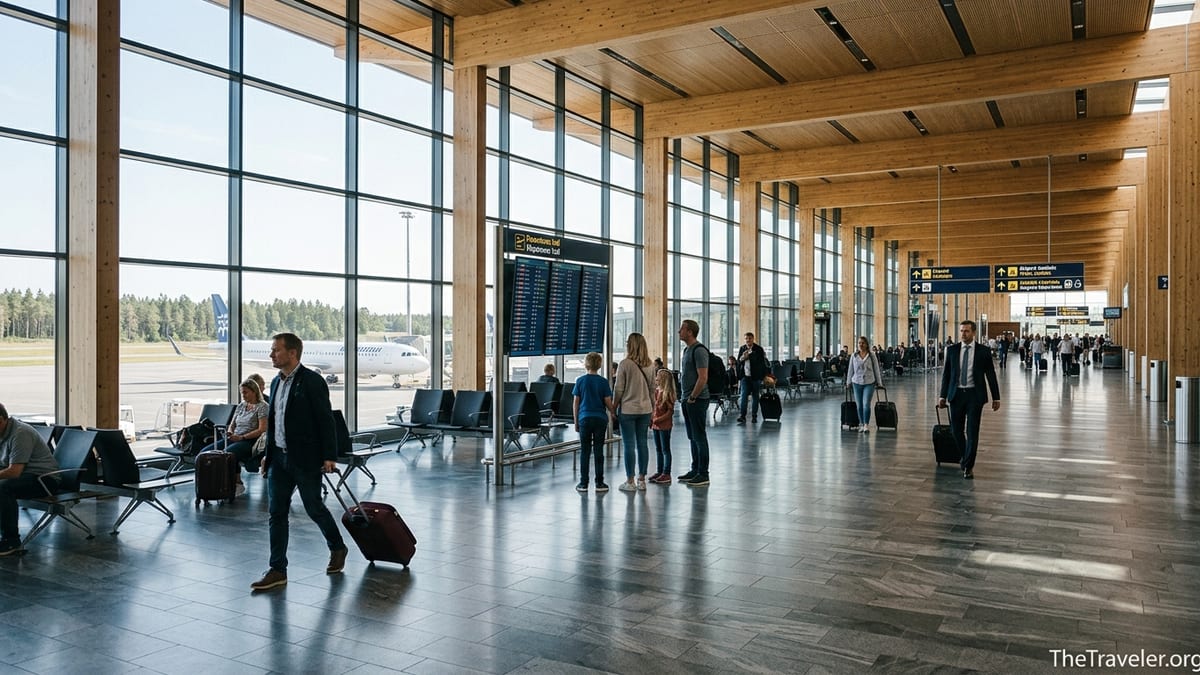
A Human Scale Airport With Room To Breathe
One of the main reasons Oslo Airport feels easier than many of its European counterparts is its size and scale. Gardermoen is a major Nordic hub, but it is not a mega-airport. It handles significantly fewer passengers each year than places like Heathrow or Schiphol, which means fewer people competing for the same elevators, toilets, security lanes and check in counters. In practical terms, that often translates into less crowding in security queues, more available seating in departure halls and a calmer overall soundscape.
The terminal building itself, including the newer expansion, is laid out as one large, elongated structure with a central “spine” from which gates branch off. You do not shuttle between multiple disconnected terminals by bus or train, as you might between Terminal 1 and Terminal 3 at Paris Charles de Gaulle or between satellite terminals at Frankfurt. For most flights at Gardermoen, you walk in a straight line: from check in to security, then out to your gate. Even when you need to change levels, it tends to be via short escalators or lifts rather than long, multi stage transfers.
Travelers notice the difference when connections are tight. At some large European airports, a 60 minute layover can feel risky because you may have to clear security again and ride an internal people mover. At Gardermoen, a one hour connection is often comfortable for a Schengen to Schengen transfer because the distances are shorter and the walking routes are intuitive. You leave one gate, walk back along the same central concourse, and follow clearly signed routes to your next gate without complicated detours.
The atmosphere also contributes to the sense of ease. The architecture uses a lot of wood, glass and natural light, a stark contrast with the low ceilings and harsh lighting that dominate older terminals elsewhere in Europe. Soft daylight and high ceilings reduce the sense of confinement and stress. Many passengers comment that even in busy times, Gardermoen feels more like a large railway station than a labyrinthine airport complex.
Clear Wayfinding And Straightforward Processes
Good signage is one of those things that passengers only notice when it goes wrong. At Oslo Airport, wayfinding generally goes right. Information boards use clear pictograms and color coding, with Norwegian and English text as standard. Arriving passengers leaving the baggage hall see simple, unambiguous choices: “Trains,” “Buses,” “Taxis,” and “Hotel shuttle,” each accompanied by universal icons. There are usually no long lists of airlines and terminals to decipher, because almost everything operates from this single main terminal.
Security screening is another process that feels comparatively straightforward. While actual waiting times vary by time of day and season, Gardermoen benefits from having centralized security areas that can flex more easily with demand. During peak times, extra lanes open and families are guided toward dedicated lines. Early morning departures to European business destinations are busy, but compared with many continental hubs where security queues can spill out of the hall, lines in Oslo often remain contained and reasonably paced.
Check in is similarly streamlined. Many Norwegian and European carriers, including SAS, Norwegian and Widerøe, encourage online check in and bag drop. At Gardermoen, this typically means walking up to a bank of self service machines, printing your own tag and placing your bag on a conveyor without waiting for an agent. Staff circulate in the area to help when needed, which keeps the flow moving. This self service culture is not unique to Norway, but the consistency with which it works at Gardermoen reduces the friction that travelers sometimes experience elsewhere when kiosks are out of order or poorly supported.
Passport control, particularly for travelers moving between Schengen and non Schengen areas, is also usually more predictable than at many busier hubs. Automated e gates are widely used for eligible passports, while manual booths are staffed for others. Queues can form during banks of transatlantic and UK flights, but the combination of automation and a relatively modest volume of widebody traffic tends to keep waiting times manageable. For many travelers flying to the United States or Asia via Oslo, this can feel less intimidating than braving larger hubs known for long passport control lines.
From Plane To Train In Minutes
Where Oslo Airport really distinguishes itself is in its connection to the city. The airport train station is directly underneath the arrivals hall, so reaching it is a matter of walking a couple of minutes from customs and taking an escalator or lift down. In other European cities, getting from the plane to a train into town can involve buses to distant terminals, long walks through parking structures or separate tickets and systems. At Gardermoen the transition is short, clear and well signposted.
Two rail options serve the route between the airport and Oslo: the Flytoget Airport Express and regular trains operated by Vy. The Flytoget service typically reaches Oslo Central Station in roughly 20 minutes, with departures as often as every 10 minutes at busy times. Vy’s regional and commuter trains usually take only a few minutes longer but cost noticeably less, making them popular with budget conscious travelers who do not mind an extra stop or two. Both depart from the same set of platforms beneath the terminal, so the choice comes down to price, timing and personal preference rather than wrestling with different transport nodes.
For many visitors, the simplicity is striking. You roll your suitcase off the baggage belt, follow “Train” signs, buy a ticket from machines or via an app that works in English, and you are on your way to Oslo’s central station without ever stepping outside. There is no need to navigate airport buses through traffic jams or metro systems with multiple changes. Even the bus options that do exist, such as airport coaches serving different parts of the city and surrounding region, depart from a clearly organized forecourt adjacent to the terminal, reducing confusion for tired passengers.
This integration means the total journey time from aircraft door to city center is often shorter and more predictable than it is at airports physically closer to town but poorly linked by public transport. On a typical evening arrival, it is realistic for a traveler with only hand luggage to be on a train within 20 to 30 minutes of landing and standing in Oslo’s main square about 45 minutes after touchdown. For a capital city airport in Europe, that combination of speed and simplicity is hard to match.
Thoughtful Design For Modern Travelers
Gardermoen’s most recent expansion was planned with modern travel patterns in mind, and many of those design choices are visible at passenger level. Power outlets are widely available in seating areas, including at gates where people tend to cluster before boarding. Wi fi is free and generally stable throughout the terminal, which removes one of the quiet frustrations of many older European airports where connectivity can still be patchy or paywalled.
Food and retail options are curated rather than overwhelming. Instead of endless duplicate chains, passengers find a mix of Scandinavian brands and international names, along with supermarkets and convenience stores where they can buy reasonably priced snacks, fresh sandwiches or last minute toiletries. While prices are high by global standards, as is common in Norway, the presence of supermarket style outlets inside the secure area allows budget travelers to avoid the markups typical of pure duty free environments.
There is also a strong emphasis on natural materials and sustainability, which subtly shapes the passenger experience. The extensive use of Norwegian wood and stone, large windows looking out over pine forest and airfield, and energy efficient lighting systems contribute to a sense of calm. Travelers who are used to the fluorescent glare and windowless corridors of some older European terminals often remark that Oslo Airport feels less like an anonymous transit node and more like a place someone has actually thought about as a space for people to spend time.
Families and passengers with reduced mobility benefit from a layout that minimizes unnecessary obstacles. Baby changing rooms and accessible toilets are distributed throughout the terminal. Elevators are usually close to escalators, and the need to navigate multiple staircases or long ramps is relatively limited. Combined with Norway’s general culture of accommodating strollers and wheelchairs on public transport, this makes the entire journey from home to gate more manageable for those who need extra time or support.
Fewer Surprises, Even When Things Go Wrong
No airport is immune to disruptions. Winter weather, technical issues on the rail line or air traffic problems can affect Gardermoen just as they do any major hub. What often sets Oslo apart is the transparency and alternatives available when things do go wrong. When rail issues temporarily halt trains between the airport and Oslo, replacement buses and even taxis are typically organized quickly, and information screens in the terminal are updated to reflect the changes. Airline and train staff are generally visible in the arrivals hall helping passengers re route their journey.
On the road side, licensed taxis line up in a clearly demarcated rank, with approximate fares into central Oslo displayed so visitors have a rough idea of what to expect before they get in. This is not always the case at other European airports, where confusing taxi queues and aggressive touts can be a significant source of stress, especially for solo travelers arriving late at night. In Oslo, the combination of posted information and regulated operators helps reduce the chances of unpleasant surprises.
Inside the terminal, real time flight information is easy to find and generally reliable. Delays and gate changes are communicated on large screens and via audible announcements. For passengers who prefer digital updates, many airlines serving Oslo, as well as the airport train operator, offer apps with live information and notifications. This multi channel approach means that even during irregular operations, travelers rarely feel as if they are in the dark about what is happening.
The relatively modest scale of the airport also makes it easier to re accommodate passengers. When a flight is canceled or heavily delayed, queues at service desks can form, but they rarely reach the chaotic lengths seen at much larger hubs during peak disruption days. Combined with consumer friendly policies from some local transport operators, such as guarantees to help passengers who miss flights due to significant train delays, this brings an extra layer of reassurance for those nervous about connections.
How Oslo Compares With Other European Hubs
To understand why Gardermoen feels easy, it helps to compare specific touchpoints with other major European airports. Take airport access: at Oslo, a train from the terminal to the main station takes around 20 minutes with frequent departures. In contrast, from London Heathrow you may need to choose between a premium express service or a slower, cheaper suburban train, both from separate platforms that can be confusing to first time visitors, and journey times into central London are longer.
Another point of comparison is terminal complexity. Many passengers using hubs such as Paris Charles de Gaulle, Frankfurt or Madrid Barajas have stories of long transfers between widely separated terminals or piers, sometimes involving buses or internal trains. Missing a connection because of a delayed incoming flight can easily mean traversing half the airport. At Oslo, the single terminal concept greatly reduces this risk. Even if your arrival gate is at one end of the building and your departure gate at the other, the uniform layout and clear signage make it easier to judge distances and walking times.
Security and passport control are also areas where the experience often feels less punishing than at bigger hubs. While Oslo can certainly see busy peaks, particularly during holiday seasons and early morning waves, the number of passengers funnelled through each checkpoint is smaller than at airports that serve as primary connecting hubs for large global alliances. For the average traveler, that often translates into a perception of shorter queues and less frantic crowding at bottlenecks such as the trays and belt areas in security.
Finally, there is the intangible element of culture. In Norway, expectations about queuing, personal space and following rules are generally high, and this social norm carries into the airport. People tend to line up calmly, respect priority boarding rules and give each other space, particularly in security and boarding areas. For international visitors accustomed to more chaotic boarding processes elsewhere, this can make the entire experience at Gardermoen feel more orderly and therefore less stressful.
The Takeaway
Oslo Airport Gardermoen is not the largest or most glamorous hub in Europe, but for many travelers it is one of the most pleasant to use. Its manageable size, thoughtful design and strong integration with rail transport combine to create a travel experience that often feels smoother than at the continent’s mega airports. From clear wayfinding and efficient security to quick, predictable transfers into the city, Gardermoen is engineered for practicality rather than spectacle.
Of course, no airport can guarantee a completely stress free journey. Weather disruptions, busy holiday peaks and occasional rail issues can still test the patience of even the most seasoned traveler. Yet, time and again, passengers report that navigating Oslo’s main airport involves fewer unpleasant surprises and less sensory overload than many of its peers. For anyone planning a European itinerary, especially one that involves tight connections or nervous first time flyers, routing through Gardermoen can be an unexpectedly smart choice.
Ultimately, what makes Oslo Airport feel easier is not any single standout feature, but the cumulative effect of many small, well executed details. Shorter walking distances, intuitive signage, a quick train ride into town, and a calm, light filled terminal all add up. In a travel era where complexity often seems to be increasing, Gardermoen shows that well considered design and reliable public transport can still make flying feel refreshingly straightforward.
FAQ
Q1. How long does it typically take to get from Oslo Airport Gardermoen to the city center?
In normal conditions, the airport express train takes around 20 minutes to reach Oslo Central Station, while regular trains are usually only a few minutes slower.
Q2. Is the airport express train worth the extra cost compared with regular trains?
The express train is faster and more frequent, which many travelers value, but regular Vy trains are often significantly cheaper and still convenient for most passengers.
Q3. How early should I arrive at Oslo Airport before an international flight?
For most long haul or non Schengen flights, arriving about two hours before departure is generally sufficient, though three hours is advisable during peak holiday periods.
Q4. Are security lines at Oslo Airport usually long?
Security can be busy at morning and late afternoon peaks, but compared with many large European hubs, queues are often shorter and move steadily thanks to centralized screening areas.
Q5. Is Oslo Airport difficult to navigate for first time visitors?
The airport is designed as a single main terminal with clear signage, so most first time visitors find it relatively straightforward to move between check in, security, gates and ground transport.
Q6. What options do I have if trains between the airport and Oslo are disrupted?
When rail services are interrupted, airport buses and taxis usually provide alternatives, and operators typically post updated information in the terminal so passengers can re plan their journey.
Q7. Are there affordable food options inside Oslo Airport?
Norway is generally expensive, but Oslo Airport includes supermarkets and convenience stores in addition to cafes and restaurants, which helps travelers find more budget friendly snacks and meals.
Q8. Is Oslo Airport a good place for connecting flights within Europe?
Yes, for many travelers it is, because the single terminal layout and relatively modest size mean walking distances are manageable and transfer procedures are usually straightforward.
Q9. How accessible is Oslo Airport for passengers with reduced mobility?
The airport provides elevators near most escalators, accessible restrooms and step free routes to key areas, and airlines can arrange additional assistance if requested in advance.
Q10. Does Oslo Airport feel less crowded than other major European airports?
Many passengers perceive it as calmer and less crowded, mainly because it handles fewer total passengers than mega hubs and benefits from spacious, light filled architecture.