


Lake Bled’s perfect mix of emerald water, storybook church island and clifftop castle has made it one of Europe’s most photographed landscapes. Two short hikes on the lake’s southern shore, Mala Osojnica and Ojstrica, deliver the classic elevated panoramas you see on postcards. With limited time in Bled, many travelers ask which viewpoint is better. The honest answer is that it depends on your fitness, your schedule and what kind of experience you want: easy and iconic, or quick and intense.
Get the latest updates straight to your inbox!
Understanding the Two Viewpoints Above Lake Bled
Mala Osojnica and Ojstrica sit on the same wooded ridge above the southwestern side of Lake Bled, starting from near Camping Bled and the Velika Zaka bay. Ojstrica is the lower and slightly closer viewpoint, at roughly 610 meters above sea level, while Mala Osojnica is higher at around 685 meters, which creates a noticeably more elevated perspective over the lake and its surroundings.
Both viewpoints are reached on steep forest paths rather than paved walks. You are not strolling along the lakefront promenade anymore; you are on a genuine hillside hike with tree roots, uneven rocks and sections that can be slippery after rain or in autumn leaf fall. Most reasonably fit visitors manage these hikes without special equipment, but city trainers with decent grip and a small daypack for water are far more comfortable than sandals or flimsy sneakers.
Crucially, the two viewpoints are close enough that you can visit both on a single loop of about 4 to 5 kilometers, usually taking 2.5 to 3.5 hours with photo stops. Travelers with just one free hour, though, will probably need to choose. That is when the differences in trail character, crowd levels and photographic angles become important.
For context, most visitors base themselves in Bled town on the northern shore, near the main bus station or lakefront hotels. From there, it is about a 25 to 35 minute walk along the lake to reach the trailheads near Camping Bled and Velika Zaka, or a 5 to 10 minute ride by local bus or taxi, depending on traffic and season.
The View: What You Actually See From Each Spot
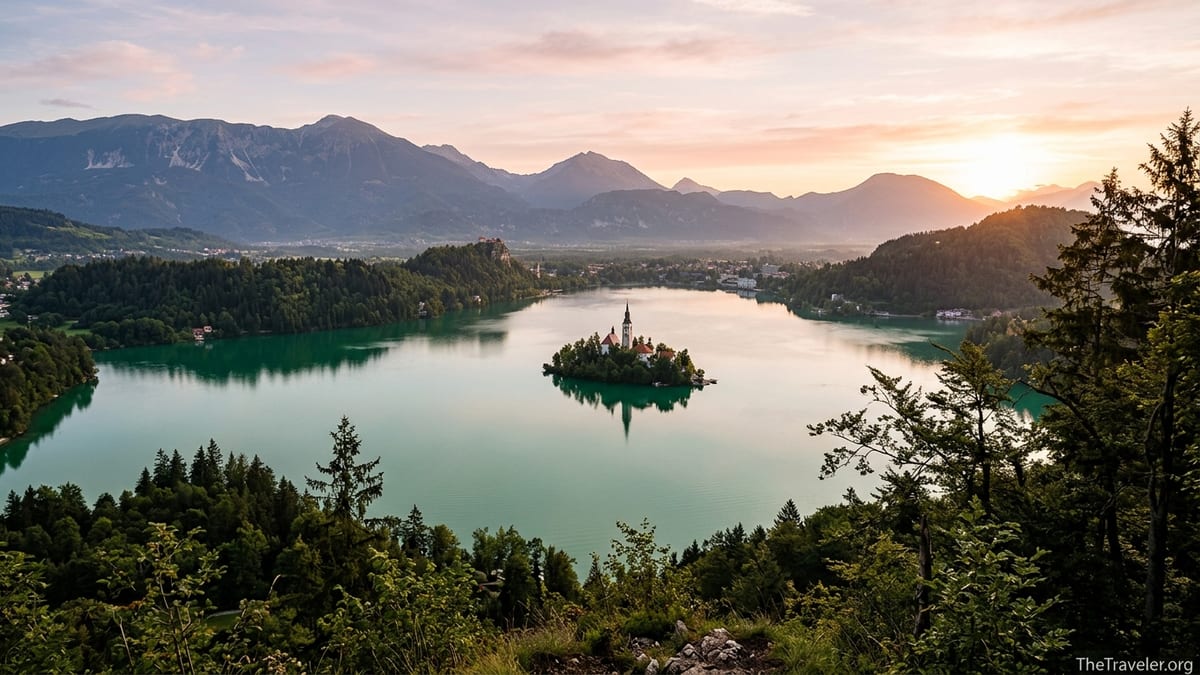
From Mala Osojnica, you get a wide, elevated, almost aerial-feeling view over the entire lake. The classic shot frames the island and the baroque church nearly centered in the water, with Bled Castle on its rocky cliff to the left and the Karavanke mountains and Stol ridge closing the horizon. A small wooden viewing platform and a bench at the edge of the slope make it easy to set up a tripod or rest while you soak in the panorama.
Because Mala Osojnica sits higher, the shape of the lake becomes more obvious, and you can see more of the shoreline around the island as well as the town of Bled in the distance. On clear mornings, the first light catching the church tower and castle, while the rest of the lake remains in shadow, makes this a favorite spot for photographers who like layered images and strong depth. In practice, this is the angle you see on magazine covers and in tourism campaigns.
Ojstrica, by contrast, feels more intimate and immediate. From its rustic wooden bench above a rocky ledge, the island appears slightly closer and the lake fills more of the foreground, while the mountains loom behind. The composition is tighter and a little lower, which many travelers describe as more “romantic” or immersive. You are not looking down from as high, so the water retains more of its depth and color rather than becoming a flat shape.
In practical terms, photographers coming with a full-frame camera and a standard 24–70 mm lens often find themselves shooting wider at Mala Osojnica to capture the entire basin, then zooming in slightly at Ojstrica to emphasize the island and castle. Smartphone photographers will likely be happy with both, but those wanting the iconic wide-cover shot tend to rate Mala Osojnica as the stronger viewpoint, while couples taking portraits often prefer Ojstrica’s bench and slightly cozier feel.
Trail Difficulty, Timing and Safety Considerations
The hike to Ojstrica is shorter but steeper. From near Camping Bled or the small parking area by Velika Zaka, most visitors reach the viewpoint in about 20 to 25 minutes of uphill walking. Several sections require you to step up over roots and rocks, and in wet conditions the packed earth can feel slick. Families with older children routinely make it up, but parents with toddlers or anyone with unstable knees should give themselves more time and be prepared to turn back if it feels too exposed near the top.
Mala Osojnica is a slightly longer effort, typically 30 to 45 minutes from the same area, depending on pace and direction. Some routes include a flight of metal stairs set into the slope, which can be demanding on the thighs but provide secure footing. On a hot July afternoon, this climb feels like a genuine workout, even though the total distance is short. Guides in Bled generally categorize both viewpoints as moderate hikes: short, but steep enough that you want closed shoes with grip, at least one liter of water per person in summer, and ideally hiking poles if you know your joints complain on descents.
In practice, many travelers underestimate the downhill. Coming back from Mala Osojnica or Ojstrica to the shore, particularly via the steeper direct paths, often takes only 15 to 20 minutes but can be hard on knees and ankles. If the ground is muddy, sections near tree roots can turn into a sliding puzzle. Those with limited mobility, recent ankle injuries or vertigo may find the inclines stressful and might be better off enjoying lower lakeside walks or taking in the view from Bled Castle instead.
Season and time of day matter as well. In July and August afternoons, temperatures around the lake regularly rise into the high 20s Celsius, and the forest can feel muggy. Early morning or late afternoon hikes are far more pleasant, and in winter the shaded trails can become icy. Between roughly November and March, it is wise to treat the viewpoints as winter hikes, with microspikes or at least very careful foot placement, and to check with your accommodation or the local tourist office for recent trail conditions.
Crowds, Atmosphere and Photography Conditions
Ojstrica has become something of a social media star. Its lower height and shorter hiking time make it a popular choice for those on day trips from Ljubljana or quick evening walks from lakeside hotels. On sunny weekends in June or September, it is common to find a small queue for the famous wooden bench as visitors take turns recreating the classic Lake Bled shot. The ledge is not huge, so at peak hours the atmosphere is friendly but busy, with people waiting, chatting quietly and occasionally moving gear around to share space.
Mala Osojnica tends to feel calmer, particularly early in the morning. Because it requires a few additional minutes of climbing and is sometimes combined with the higher Velika Osojnica viewpoint, casual hikers are slightly less likely to continue all the way up. Sunrise at Mala Osojnica, even in midsummer, often involves just a handful of people: a couple with a tripod, a solo traveler with a thermos of coffee, and perhaps one or two runners coming up from the lake circuit. On some weekdays outside school holidays, travelers report sharing the viewpoint with only two or three others for long stretches.
For photography, both viewpoints work at almost any time of day, but produce very different moods. Sunrise at Mala Osojnica, especially on clear mornings from May to September, offers soft front and side light on the island, with pastel reflections on the often glassy lake surface. Sunset, by contrast, typically lights up the western sky behind the viewer, leaving the island slightly more in shadow but painting clouds above the Karavanke in warm tones. Many visitors who only have one sunset in Bled choose Ojstrica or Mala Osojnica for that golden-hour glow over the mountains.
Fog is a wildcard. On autumn mornings, low mist can partially or completely obscure the island from both viewpoints for an hour or more, then suddenly clear to reveal a layered scene of drifting clouds and bright water. If you wake in October in Bled town and see heavy fog, it can still be worth hiking up: looking down on the lake as the church tower pokes through gaps in the mist is one of the most dramatic experiences you can have here. Just accept that there is a chance you will see only white, and dress for cool, damp air.
Access, Parking and How to Fit the Hikes Into Your Day
Most visitors start from the southwestern corner of the lake, near Camping Bled and the swimming area at Velika Zaka. From Bled’s main bus station, you can walk the lake’s northern shore in about 30 minutes, passing boats and lakeside cafes, then continue a short distance along the road to reach signed paths heading uphill to Ojstrica and Osojnica. In peak summer, a small seasonal shuttle bus runs around the lake with stops near the campground, usable with local tourist cards or paid tickets bought from the driver.
If you arrive by car, there is a paid parking area just above the western bay, a short walk from the trailheads. Prices change regularly, but visitors in 2025 reported paying on the order of a few euros per hour, with mobile payment options and posted maximum stay limits. During busy August weekends, these spaces can fill before mid-morning, so those driving are wise to arrive early or park in one of the larger lots closer to Bled Castle or the town center and walk or use the shuttle from there.
To link both viewpoints efficiently, many hikers follow a counterclockwise loop: starting from the campground area, they first climb to Mala Osojnica, continue across the ridge to the higher Velika Osojnica spur if they feel energetic, then descend toward Ojstrica and drop back to the lakeshore near Zaka. This loop usually takes around three hours, including generous time for photos and breaks, and pairs well with a lazy afternoon of swimming or rowing on the lake.
Travelers on day trips from Ljubljana or from cruise excursions in Trieste often have just four or five hours total at Lake Bled. In that case, a realistic schedule might include a single viewpoint hike, a short rowing boat trip to the island or a pletna boat ride from the town side, and a slice of Bled cream cake at a lakeside cafe. Compressing both viewpoints, a boat ride and a visit to Bled Castle into a half-day is technically possible, but becomes a race rather than a relaxed visit.
Who Should Choose Mala Osojnica vs Ojstrica
Mala Osojnica suits travelers who care most about the grand, fully framed panorama and are willing to put in a little extra effort for a higher, more expansive vantage point. If you are a landscape photographer traveling with a tripod and a mirrorless camera, or you simply want the version of Lake Bled that looks most like a drone shot without leaving the ground, Mala Osojnica is a strong first choice. It is also a good pick if you prefer a quieter, more contemplative atmosphere, especially at sunrise.
Ojstrica is ideal if you want maximum reward for minimum time, or if steep hiking is manageable but you prefer to keep it short. This is the better viewpoint for many families with older children, couples on a romantic walk before dinner and solo travelers who want to squeeze in a viewpoint between bus schedules. It is also the location where that famous wooden bench makes it easier to sit for portraits with the island framed behind you.
Travelers with limited fitness, recovering from injury, or uncomfortable on steep, rooty trails might find both viewpoints more challenging than expected. In that situation, an alternative is to walk the mostly level path around the lake and take in views from lakeside piers and from Bled Castle, which you can reach by car or a moderately steep paved road or staircase. The castle viewpoint is not as high as Osojnica’s, but the terrace still delivers a commanding angle over the water and is more accessible to a wider range of visitors.
If mobility is not an issue and you have half a day to dedicate to the south-shore hills, the honest best answer is to visit both viewpoints on a single loop. Doing so reveals how the character of the lake changes with relatively small shifts in height and angle, and it turns the excursion into a miniature ridge walk rather than a straight up-and-down outing.
Seasonal Tips, Gear and Etiquette on the Trails
In spring and early summer, when snow has melted from lower hills around Bled, the Ojstrica and Mala Osojnica trails are typically open and lush with new growth. Expect muddy patches in April and May after rainstorms, and occasional fallen branches after winter winds. Lightweight waterproof shoes help, but the main requirement is a sole with grip. A compact backpack with a water bottle, light jacket and small snack is worth carrying even for these short hikes, especially if you plan to linger for photos.
July and August are high season around Lake Bled, with tour buses arriving mid-morning and road traffic increasing. To avoid the heaviest crowds, aim to reach the trailhead by 7 or 8 in the morning or wait until after 5 in the afternoon. At these times, temperatures are more comfortable, and the sun sits lower in the sky, which is better for photography. Carry enough water; kiosks and cafes ring the lake, but there are no services once you leave the shore and start climbing.
Autumn brings some of the most beautiful conditions on the viewpoints, as the forests on the lower slopes of the Julian and Karavanke ranges shift through yellow and orange. On still days in October, the reflections in the lake can be mirror-smooth, with scattered leaves floating in the foreground. The trade-off is shorter daylight and increased likelihood of morning fog and slick leaves underfoot. In November, if temperatures hover near freezing, shaded sections can conceal ice. Locals commonly switch to sturdier boots and some even carry small microspikes if they hike these trails regularly in shoulder season.
Winter visits require additional caution. Snow can linger on the ridge, and there are no handrails at the actual viewpoints, only natural tree trunks and rocks. Walking to the very edge for a dramatic smartphone shot is not worth the risk if conditions are icy. In all seasons, respect basic trail etiquette: keep to marked paths to limit erosion on the steep slopes, pack out all trash, and keep conversations and music low so that others can enjoy the peaceful forest atmosphere.
The Takeaway
If your goal is the most expansive, classic panorama of Lake Bled, with the island, castle and distant mountains arranged in a single sweeping frame, Mala Osojnica is generally the better choice. It is a little higher, slightly quieter and particularly rewarding at sunrise, when the first light hits the church and castle walls. The extra ten or fifteen minutes of climbing beyond Ojstrica pay off in the breadth and drama of the view.
Ojstrica, on the other hand, excels as a quick, high-impact outing. The hike is shorter, the bench at the top is wonderfully placed for portraits, and the slightly lower angle makes the scene feel more intimate. For many travelers on tight schedules or those who prefer a shorter effort, Ojstrica provides the perfect compromise between accessibility and spectacle.
Ultimately, you are choosing between great and excellent rather than between good and bad. Both viewpoints showcase why Lake Bled has become a symbol of Slovenia: a compact landscape where water, forest, village and mountains meet in a remarkably harmonious way. If your itinerary allows, give yourself enough time and light to hike the ridge and visit both Mala Osojnica and Ojstrica. If you must choose only one, think about your fitness, your appetite for crowds and whether you favor a wide, cinematic panorama or a more personal, bench-level view of the lake. Either way, you are unlikely to leave disappointed.
FAQ
Q1. Which viewpoint is better if I only have time for one: Mala Osojnica or Ojstrica?
Mala Osojnica usually wins for the most expansive, postcard-style panorama, while Ojstrica is better if you want a shorter hike and a more intimate feel.
Q2. How long does it take to hike to each viewpoint from the lake shore?
From near Camping Bled and Velika Zaka, most people reach Ojstrica in about 20 to 25 minutes and Mala Osojnica in roughly 30 to 45 minutes, depending on pace and conditions.
Q3. Are the trails to Mala Osojnica and Ojstrica suitable for children?
Many families with school-age children manage both hikes, but the trails are steep and rooty, so close supervision is needed and lightweight hiking or sports shoes with good grip are important.
Q4. Can I visit both viewpoints on one hike?
Yes. A popular loop connects Mala Osojnica, optionally Velika Osojnica, and Ojstrica before returning to the lake, usually taking around 2.5 to 3.5 hours with photo stops.
Q5. What kind of footwear and gear do I need?
Closed shoes with good tread, such as light hiking shoes or sturdy trainers, are recommended, along with a small backpack with water, a light jacket and, in shoulder seasons, optional hiking poles.
Q6. When is the best time of day for photos at Mala Osojnica and Ojstrica?
Sunrise often offers the softest light and calmest lake surface, especially at Mala Osojnica, while late afternoon and early evening give warm side light and colorful skies from both viewpoints.
Q7. Are the viewpoints safe in bad weather or winter?
In rain, snow or ice the trails and rocky ledges become slippery, so extra caution is needed, and some visitors may prefer to skip the viewpoints and enjoy lower, safer lakeside vistas instead.
Q8. Is there public transport from Bled town to the trailheads?
In main season, a small local shuttle bus runs around the lake with stops near Camping Bled, but many visitors simply walk about 25 to 35 minutes along the lakeshore from town.
Q9. Will I have phone reception at the viewpoints?
Most travelers report having normal mobile reception on the ridge above Lake Bled, though signal strength can vary slightly by provider and exact spot among the trees.
Q10. What are good alternatives if I find the hikes too steep?
If the trails feel too demanding, consider walking the mostly flat lakeside path, visiting Bled Castle for elevated views, or taking a boat ride around the island for a closer water-level perspective.