


Oslo Airport Gardermoen (OSL) is Norway’s main international gateway and the primary airport for Oslo, handling tens of millions of passengers each year. For many travelers it is a first introduction to Norway, and knowing how the terminal works, how flights are organized, and how to reach the city can make your transit noticeably smoother. This guide walks you through the key things to know about flights, terminals, and practical services before you arrive at Gardermoen.
Get the latest updates straight to your inbox!
Understanding Oslo Airport Gardermoen at a Glance
Oslo Airport Gardermoen sits about 45 kilometers north of central Oslo and is the busiest airport in Norway, with well over 25 million passengers in a typical recent year. It is the main hub for Scandinavian carrier SAS and low cost airline Norwegian, and it also hosts a wide range of European and long haul flights operated by airlines such as Widerøe, KLM, Lufthansa, Turkish Airlines and Qatar Airways. Most visitors heading anywhere in eastern or central Norway will pass through Gardermoen at least once.
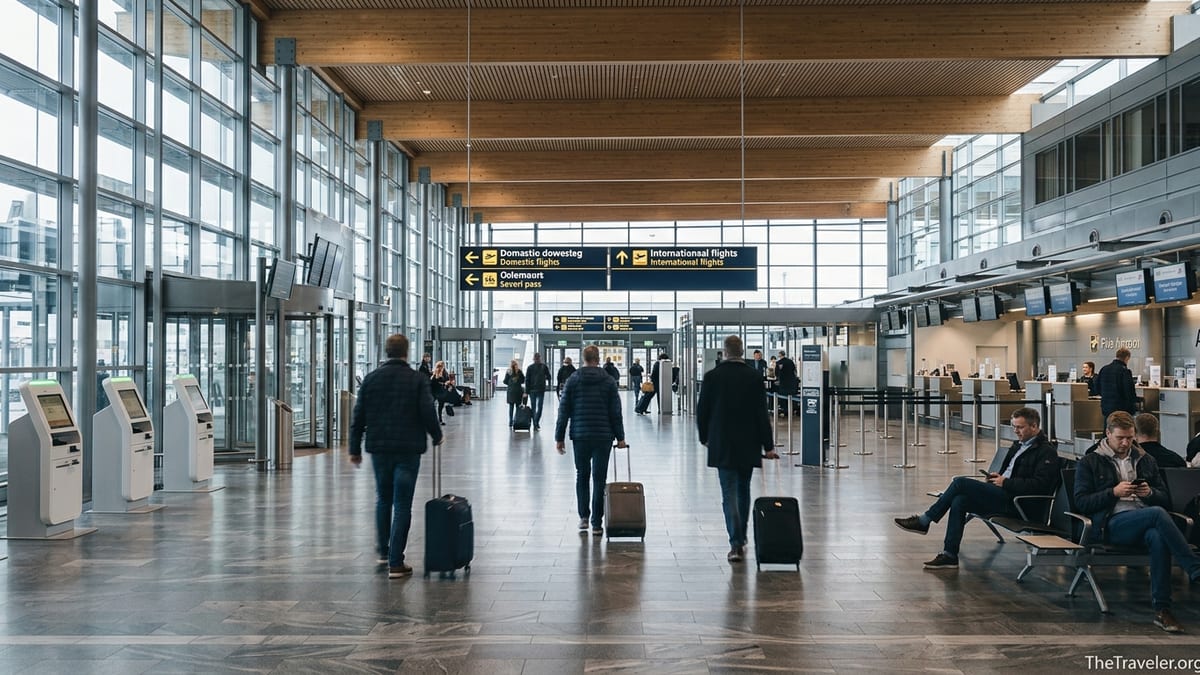
The airport is built around a single, integrated passenger terminal rather than clearly separated terminals A, B, or C as you might find in London or Paris. That means all check in, security and arrivals flow through the same building, and passengers then branch off into domestic and international departure areas. In practice this makes navigation straightforward, especially if you are connecting between domestic and international flights on the same ticket.
Although there is one terminal, Gardermoen is divided into wings and piers. The original west wing mainly serves domestic departures, while international flights use the east side and an extended north pier. There is also a smaller south pier that can be configured for Schengen flights during peak hours. For most travelers, the important point is that all these areas are connected inside the same secure zone, so you will not need buses between terminals during a connection.
Typical flight patterns at Gardermoen reflect Norway’s geography. You will see frequent short hops to regional airports such as Bergen, Stavanger and Tromsø alongside busy routes to major European hubs like Copenhagen, Amsterdam and London. In summer there are also many seasonal flights to Mediterranean destinations, so queues at security and boarding can be noticeably longer on peak holiday weekends.
Terminal Layout, Check In and Security
The central terminal building at Gardermoen is spread over two main levels. Departures are on the upper level, where you will find airline check in areas, automated bag drops, and access to the main security screening point. Arrivals are on the lower level, which contains the baggage halls, customs, car rental desks and direct access to the railway station underneath the terminal. Escalators, elevators and ramps connect the levels, and signage is clear in both Norwegian and English.
Check in areas are grouped by airline rather than destination. For example, SAS and its partners typically occupy a large section of the main hall, while Norwegian has sizable self service check in and bag drop zones nearby. Many airlines encourage online check in and use automated bag drops, something to keep in mind if you are arriving with only a digital boarding pass. Screens throughout the hall show which counters are open for each flight, and they switch dynamically through the day.
Security screening for most passengers takes place through a central checkpoint once you leave the check in hall. Families will notice a dedicated family lane at busy times, and premium passengers often have access to fast track. Wait times fluctuate, but outside of peak early morning and late afternoon waves, queues are usually manageable. A practical real world example: if you arrive at the airport around 09:30 for a mid day European departure, it is common to clear security in roughly 10 to 20 minutes, while those arriving at 06:30 on Monday mornings should allow substantially more time.
After security the terminal branches into domestic and international zones. Domestic A gates are primarily to the west, while international Schengen and non Schengen flights depart from a mix of central and north pier gates. Flight information screens mark which direction to walk and whether your flight boards via jet bridge or bus gate. Airport staff are usually visible in the central concourse area during busy hours, which is useful if you are unsure which pier to follow.
Domestic vs International Flights and Connections
Within Norway, Oslo Gardermoen is the main hub connecting remote regions to the capital and beyond. Flights to cities such as Bergen, Trondheim, Stavanger, Tromsø and Bodø operate many times a day, often with both SAS and Norwegian serving the same route. These flights generally depart from the domestic gates in the west wing. For travelers arriving from abroad and continuing domestically, this centralized layout means connections can be relatively quick compared with airports that separate domestic and international terminals completely.
If you arrive on an international flight and connect to a domestic one on a single ticket, you will normally clear passport control on arrival, collect checked luggage only if required by your airline, and follow signs for domestic transfers. In many cases bags are checked through to your final Norwegian destination, and you proceed straight to a transfer security check before entering the domestic departures area. Airlines usually recommend a minimum connection time around 50 to 60 minutes for international to domestic transfers at Gardermoen, though choosing a longer window can ease stress during peak seasons or weather disruptions.
International flights at Gardermoen are split between Schengen and non Schengen destinations. Flights to most of continental Europe, including neighboring Scandinavian countries, usually depart from Schengen gates where there is no outbound passport control. Flights to the United Kingdom, North America, the Middle East and some others typically leave from the non Schengen section of the north pier, which is separated by an additional passport checkpoint. In practice this means that if you are flying, for example, from Oslo to London or Doha, you should allow extra time to pass through passport control after security before reaching your gate.
Real world connection examples are helpful. If you land from New York in the morning and connect to Tromsø, you will likely arrive at a non Schengen gate, clear passport and customs, follow domestic transfer signs, and then re clear security into the domestic zone. By contrast, a connection from Copenhagen to Bergen may simply involve walking from one Schengen gate to another without any passport checks, as both flights operate within the Schengen area. Keeping your boarding passes and baggage tags handy helps staff guide you along the correct route.
Shops, Dining and Passenger Services
Once past security, Oslo Airport Gardermoen offers a broad mix of shopping and dining typical of a large European hub, though prices can feel high compared with many other countries. In the central departures area you will find a large duty free store, fashion and accessories outlets, a bookstore, and travel value shops selling cosmetics and electronics. Norwegian specialties such as smoked salmon and local chocolates are easy to find in dedicated souvenir and gourmet shops, a popular last minute purchase for departing visitors.
Food options range from quick grab and go snacks to sit down meals. Several cafés serve espresso, pastries and open sandwiches, while casual restaurants offer burgers, pizza, salads and Norwegian style dishes such as fish soup. Early morning travelers will notice the breakfast focus, with many venues opening before 05:00 to serve coffee and rolls to business passengers on domestic departures. It is common for a simple airport meal of a main dish and a soft drink to cost the equivalent of 20 to 30 US dollars, and coffee drinks can be significantly more expensive than many visitors are used to, so planning your budget accordingly is wise.
Passenger services extend beyond food and shopping. Free Wi Fi is available throughout the terminal, and there are multiple charging points for phones and laptops in seating areas. Families will find designated play spaces close to some gates, and there are baby changing facilities in many restrooms. A small onsite hotel is connected directly to the terminal, and several more hotels sit within a short shuttle or taxi ride, used frequently by travelers with overnight connections or very early departures.
Business travelers can access various lounges operated either by airlines or independent providers. SAS and Norwegian both offer lounge facilities for eligible passengers, and there is at least one pay in lounge that can be booked for a fee regardless of airline, subject to space. These lounges typically provide quiet seating, workspaces, snacks and showers. For passengers arriving early for a long haul flight, a few hours in a lounge can be an effective way to work or rest in a calmer environment than the public gate areas.
Getting Between Oslo Airport and the City
One of the most important aspects of planning your journey through Gardermoen is understanding how to get between the airport and central Oslo. The airport has its own railway station directly beneath the terminal, making trains the most popular and often the most efficient option. There are two main categories of train: the dedicated Airport Express train and regular regional or commuter trains operated by Vy. Both depart from the same platforms under the arrivals hall and run frequently throughout the day.
The Airport Express, often branded as Flytoget, is designed specifically for air travelers. It runs roughly every 10 to 20 minutes during the day, takes around 19 minutes to reach Oslo Central Station, and offers luggage racks and onboard information in English. Tickets can be purchased at machines in the arrivals area, via an app or with contactless payment at gates. Pricing is higher than standard trains, but many travelers value the speed and simple experience, particularly if they are arriving after a long flight and heading straight to centrally located hotels near Oslo Central Station or the National Theatre area.
Regional and commuter trains operated by Vy are generally cheaper and only slightly slower, with typical journey times into central Oslo around 20 to 25 minutes depending on stopping patterns. These trains are popular with local commuters and budget focused travelers. For example, a visitor staying in the Grünerløkka district might choose a Vy train to Oslo Central Station and then connect to a tram using the city’s Ruter transport system. Tickets can usually be bought at standard rail ticket machines or via apps used for national rail travel.
If you are arriving late at night or very early in the morning, it is important to check timetables in advance, because regular trains do not run around the clock. When trains stop operating after about 01:00, options narrow to night buses and taxis. Airport buses branded as Flybussen or other shuttle services connect the airport to various city districts, with some routes running through much of the night, although headways are longer and buses can fill quickly after late flight arrivals. For travelers whose accommodations are located directly along one of these routes, the bus can be a convenient, mid priced solution.
Taxis, Rental Cars and Ground Transport Tips
Taxi services at Oslo Airport Gardermoen operate from a dedicated taxi area outside the arrivals level. There is a system where different taxi companies queue in an organized line, and travelers can usually see indicative price information on screens or ask staff before choosing a vehicle. Real world reports show that prices into the city can vary significantly between companies and times of day, with standard daytime fares into central Oslo often costing the equivalent of 100 to 150 US dollars or more, and late night or bad weather journeys sometimes being substantially higher.
Because taxi pricing is high by international standards, it is wise to check approximate costs before joining the taxi queue. Many visitors choose to reserve a fixed price transfer with a specific company in advance, particularly if they are traveling as a group or carrying heavy luggage. For example, a family of four arriving with ski equipment for a winter holiday might compare the total cost of a private taxi straight to their apartment in the city versus four separate express train tickets plus a local taxi from Oslo Central Station. Depending on distance and time, either option could be more economical.
Rental car facilities are concentrated at or near the airport, with major international brands operating desks in the arrivals hall and car pickup in adjacent parking structures. Renting a car is most useful for travelers heading directly to destinations outside Oslo, such as cabins in the mountains or coastal areas that are less well served by rail. Driving into central Oslo is straightforward but subject to tolls and parking costs, and many visitors whose plans focus on the city itself find that using trains, trams and buses is more convenient than managing a car.
Shuttle buses also connect the airport with nearby hotels and some regional towns. For instance, a traveler booked at an airport hotel for an early morning departure can usually rely on complimentary or low cost shuttles starting in the very early hours. Similarly, long distance coach companies operate services that stop at Gardermoen on routes to other Norwegian cities. Checking whether your hotel or destination is on one of these lines can sometimes save the need for multiple transfers through Oslo itself.
Accessibility, Families and Special Assistance
Oslo Airport Gardermoen is built to modern European standards and generally provides good accessibility for passengers with reduced mobility. The terminal features step free routes, elevators, ramps and accessible restrooms. Dedicated assistance services can be requested in advance through airlines or directly via the airport, covering support at check in, security, boarding and baggage claim. For example, a traveler using a wheelchair can pre arrange to be met at the entrance, guided through security and taken to the gate, with either their own wheelchair or an airport chair provided.
Families traveling with children will find a number of practical facilities. Baby changing rooms are distributed across both public and secure areas, and many restrooms include child friendly amenities. Play areas near selected gates provide a chance for children to burn off energy before long flights, and some cafés cater to kids with smaller meal options. It is common to see Norwegian families arriving early and gathering in seating clusters around play corners while parents rotate through coffee runs and quick shopping trips.
For passengers requiring medical assistance, there are first aid points and access to emergency services inside the terminal. Pharmacies or pharmacy counters can provide over the counter medicines and travel essentials such as motion sickness remedies or basic bandages. If you travel with prescription medication, keeping it in original packaging and carrying a copy of the prescription is advisable, particularly when transiting from non Schengen countries where customs officers may perform checks in the arrivals hall.
Quiet seating areas and dedicated workspaces are not as extensive as in some mega hubs, but there are still pockets of relatively calm near the far ends of piers and in certain lounge areas. Travelers who are sensitive to noise or crowds might prefer to move away from the busiest central retail zones once they have purchased what they need, especially during the busy winter sports and summer holiday seasons when school groups and tour parties are common.
The Takeaway
Oslo Airport Gardermoen is a modern, efficient airport that balances the role of national hub with the needs of international travelers. Its single integrated terminal, clear layout and direct rail connection to the city help simplify what could otherwise be a complex experience, especially if you are connecting between domestic flights to Norway’s remote regions and international services.
For a smoother journey, think in terms of three stages. Before you arrive, check which airline and area of the departures hall you will use and decide whether you prefer the Airport Express train, a cheaper regional train or a bus to reach the airport. While at the airport, allow a realistic buffer for check in and security, particularly if you have to pass through passport control for non Schengen flights, and take advantage of the available food, shopping and Wi Fi to make waits more comfortable.
Finally, when leaving Gardermoen, weigh your ground transport options carefully, as costs differ significantly between trains, buses and taxis, especially late at night. With a bit of planning and awareness of how the terminal works, most travelers find that Oslo Airport Gardermoen is an easy and often pleasant place to begin or end a journey in Norway.
FAQ
Q1. Does Oslo Airport Gardermoen have multiple terminals?
Oslo Airport Gardermoen has one main integrated passenger terminal that is divided into domestic and international sections with several piers, but you do not change between separate terminal buildings.
Q2. How early should I arrive at Gardermoen before my flight?
For most European and domestic flights, arriving around two hours before departure is usually sufficient, while for long haul and peak travel times, two and a half to three hours is a safer buffer.
Q3. What is the fastest way to reach Oslo city center from the airport?
The dedicated Airport Express train typically reaches Oslo Central Station in under 20 minutes and runs frequently, making it the fastest regular option for most travelers.
Q4. Are there cheaper alternatives to the Airport Express train?
Yes, regular regional and commuter trains operated by Vy cost less and take only slightly longer, usually around 20 to 25 minutes between the airport and central Oslo.
Q5. Is it worth taking a taxi from Gardermoen into Oslo?
Taxis are convenient, especially late at night or with heavy luggage, but they are expensive, so many visitors prefer trains or airport buses unless traveling in a group that can share the cost.
Q6. How do I connect from an international to a domestic flight at Gardermoen?
On a through ticket, you typically follow signs for transfers, clear passport control if needed, pass a security check and then walk to the domestic gates, with checked bags usually forwarded automatically.
Q7. Are there good food and shopping options after security?
Yes, after security you will find a large duty free store, fashion and specialty shops, cafés and restaurants serving everything from quick snacks to full meals.
Q8. Is the airport easy to use for passengers with reduced mobility?
The terminal is largely step free with elevators, ramps and accessible restrooms, and special assistance can be booked in advance through airlines or the airport for help at each stage of the journey.
Q9. Can I stay overnight at or near Oslo Airport Gardermoen?
Several hotels are located either directly connected to the terminal or within a short shuttle ride, and many travelers use them for early morning departures or late arriving flights.
Q10. Does Oslo Airport have free Wi Fi?
Yes, free Wi Fi is available throughout the terminal, and there are multiple charging points where you can plug in phones, tablets and laptops while you wait for your flight.