


Snorkel masks, tubes and fins live hard lives. They are dragged through salt water and sand, tossed into beach bags, stuffed into suitcases and often forgotten wet in hotel bathrooms. The result is familiar to many travelers: fogged lenses, foul-tasting mouthpieces, stiff straps and, in the worst cases, moldy gear you do not want near your face. With a simple cleaning routine and a few deep-clean habits, you can keep your snorkel kit clear, safe and ready for your next trip.
Get the latest updates straight to your inbox!
Why Salt, Sand and Travel Are Hard on Snorkel Gear
Every time you step out of the ocean in places like Maui, Cozumel or the Maldives, microscopic salt crystals start drying on your mask skirt, snorkel and fins. If they are not rinsed away, those crystals work like tiny knives on silicone and rubber parts, slowly turning a soft mask skirt or snorkel mouthpiece brittle and leaky. Sand from beach entries in spots such as Hanauma Bay or Florida Keys State Parks grinds into buckles and purge valves, making them gritty or stuck.
Travel adds another layer of abuse. Gear is crushed in overhead bins, baked in the back seat of rental cars and left damp in mesh bags during boat rides between sites. Hot car interiors in destinations like Oahu or Curaçao can easily exceed temperatures that silicone and plastics are designed for, speeding up aging and warping softer parts. When you add sunscreen residue, skin oils and the occasional forgotten rinse, the result is mold, yellowed silicone and fog-prone lenses.
The good news for travelers is that preventing most of this damage costs almost nothing. A five-minute rinse with fresh water, thoughtful drying and occasional deeper cleaning can keep a mid-range snorkel set from a brand like Cressi, Mares or US Divers working reliably for many seasons instead of just one vacation.
Essential Rinse Routine After Every Salt Water Session
The single most important habit is to rinse gear in fresh water as soon as you can after leaving the sea. On many Caribbean and Pacific beaches, there are public showers or hoses near parking lots specifically for this. Use them. Hold your mask under running water, gently rubbing the silicone skirt with your fingers to lift away film from salt and sunscreen. Open the strap fully so water reaches the buckle tracks where grit likes to hide.
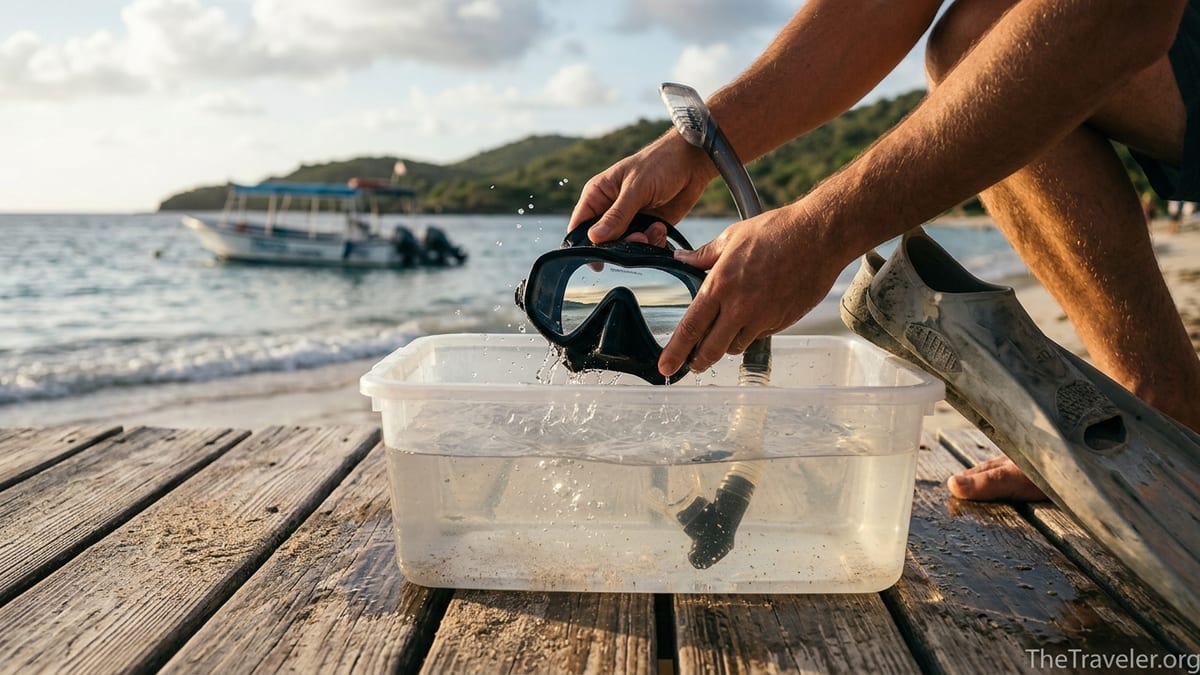
For the snorkel, let fresh water flow down through the top and out the mouthpiece. If your snorkel is a dry-top or semi-dry model, like those sold with Seaview 180 or TUSA sets, work the purge valve or dry-top mechanism with your fingers while rinsing so any trapped sand can flush out. Travelers on snorkel tours in Hawaii often use a simple plastic tub or cooler full of boat water mixed with fresh water to give everything a quick soak before the ride back to harbor.
Fins are easy to neglect, but they benefit from the same attention. Rinse foot pockets thoroughly, especially if you have closed-heel fins you wear barefoot, as in many warm-water destinations. Sand left around the heel or under adjustable buckles is a common cause of rubbing and blisters on the next day’s trip. On liveaboard boats in places like the Red Sea, crew will usually have a dedicated rinse bin. Use it after every dive or snorkel, and avoid leaving your mask and snorkel baking on deck.
If your hotel or rental apartment does not have an outdoor spigot, fill the bathtub or a large sink with cool or lukewarm tap water and give your gear a five- to ten-minute soak when you get back from the beach. Swish items around and flex moving parts. This simple end-of-day ritual often makes the difference between gear that lasts one week and gear that lasts several years.
Drying Gear Properly to Avoid Mold and Odors
Rinsing is only half the job. The other half is making sure gear dries completely before it gets packed into a bag or tossed into a car trunk. Trapped moisture is what leads to the black or pink mold spots many travelers first notice inside a snorkel tube or along the folds of a mask skirt just before a big trip.
After rinsing, shake off excess water and hang your mask and snorkel in a shaded, airy place. A balcony railing, shower rod or portable drying rack works well. In tropical destinations like Bali or the Bahamas, direct midday sun can be intense enough to fade colors and eventually weaken silicone, so shade is better than full sun. You can gently pat the inside of the mask skirt and the outside of the lens dry with a clean, soft towel, but avoid rubbing the inside of the lens to preserve any anti-fog treatment you apply later.
For the snorkel, angle it so the mouthpiece faces down and water can drip out of the tube. If you are staying somewhere humid, like a beachfront bungalow in Thailand, loosen any quick-release clips or joints so hidden pockets can air out. Fins should be left flat or heel-down so water drains away from the foot pocket rather than pooling inside.
Travelers often make the mistake of tossing damp gear straight into a mesh bag for an early flight or long bus ride. If you have to pack before things are fully dry, at least leave zippers slightly open and unpack as soon as you reach your next stop. In practice, that might mean hanging your gear in a hotel bathroom in Miami during an overnight layover instead of leaving it zipped in your suitcase where odor and mildew can build.
Mask Care and Defogging: Seeing Clearly Every Trip
A fogged mask can ruin an otherwise perfect swim with sea turtles in Akumal or reef fish in Bonaire. Fogging happens when a thin layer of moisture condenses on the inside of the lens. Brand-new masks from companies like Scubapro, Oceanic or Cressi often come with a factory film on the glass that encourages fogging until it is removed or broken down.
Before a new trip, many experienced snorkelers do a one-time deep clean of the inside of the glass with non-gel toothpaste or a dedicated mask scrub product to remove that film. At your destination, the most common everyday defog method is a drop of baby shampoo mixed with fresh water or a commercial anti-fog spray sold at local dive shops in places like Key Largo or Kona. You coat the inside surface lightly, rinse once so a thin film remains, then avoid touching the inside before putting the mask on your face.
If you are on a guided boat tour, crew will often have a communal anti-fog bottle ready. In that case, rinse your mask in the boat’s bucket, spray or add a few drops of solution, swish, then put it on immediately before you enter the water. Many snorkelers also wet their face with sea water just before donning the mask to reduce temperature differences that encourage fog.
Never scrub the inside of a tempered glass mask with abrasives once it is prepped, and never use harsh household cleaners on plastic lenses. Both can scratch the surface, and even light scratches will catch more condensation and make fogging worse. A gentle baby shampoo solution and your fingertips are usually enough.
Keeping the Snorkel Mouthpiece Clean and Safe
The snorkel mouthpiece spends long stretches in your mouth, so keeping it clean is not just about comfort, but also hygiene. After every use, pay extra attention to this part during your rinse routine. Massage around the bite tabs and where the mouthpiece joins the snorkel barrel. Rinse the inside by letting water run down from the top while you flex the soft silicone with your fingers.
If you are traveling with your own gear and only you use it, a periodic deeper clean is still wise, especially after a long trip. Many snorkelers soak the mouthpiece and lower snorkel in warm water with a small amount of mild dish soap, then rinse thoroughly and air dry. For those who rent gear on tour boats in destinations like Cancun, the operator should already be disinfecting mouthpieces between guests, but bringing your own mouthpiece or full snorkel is an easy upgrade if you are concerned.
For a deeper disinfecting clean at home, some divers use a weak bleach solution similar to those recommended for other nonporous equipment. That approach involves mixing a small amount of regular household bleach into plenty of fresh water, soaking for a short time, then rinsing very thoroughly and allowing all traces of bleach smell to disappear before using the snorkel again. Because bleach can irritate skin and lungs if not rinsed fully, many travelers instead opt for gentle, food-safe sanitizing solutions designed for sports mouthguards or baby bottles, which are widely available in pharmacies and supermarkets.
Whichever method you choose, the key real-world habits are simple: do not leave water trapped inside the snorkel tube, do not store a snorkel with the mouthpiece folded and wet in a closed case, and replace a mouthpiece that starts to feel sticky, taste odd, or show bite marks and tears.
Smart Storage on the Road and at Home
How you store gear between trips often matters more than how you use it during them. The best storage conditions for snorkel sets in a house or apartment are cool, dry and dark. A closet shelf away from heaters or windows works well. Many snorkel travelers keep their gear in a simple mesh bag or soft-sided gear bag from brands such as Akona or Mares, which lets air circulate while protecting lenses from scratches.
On the road, mesh bags excel for day-to-day use. On a liveaboard in the Caribbean, for example, you might hang your bag on the dive deck between swims so everything can drain. For flights, placing mask and snorkel in your carry-on protects them from rough handling. A common real-world setup for island-hopping trips in Greece or Indonesia is a hard mask box inside a duffel, fins and snorkel in a checked bag, and a lightweight mesh bag folded flat ready for beach days.
Avoid leaving gear in hot car trunks or on dashboards, especially in tropical climates where inside temperatures soar. Mask skirts left pressed against a hard surface in heat can warp into an uneven shape that never seals properly again. Likewise, avoid heavy objects pressing against your mask lens in a suitcase; a single hard knock can chip tempered glass.
If you are putting gear away for a season, make sure everything is completely dry, then store it loosely. Do not cinch mask straps tight around the box, do not bend snorkel tubes sharply to fit a space, and do not stack heavy items on top of soft fins. A little space around each item helps it keep its shape and makes your next pre-trip check much easier.
Preventing and Treating Mold, Mildew and Yellowing
Mold and mildew show up as spots, streaks or fuzzy patches, often black, gray or pink. Travelers commonly discover them at the start of a new vacation when they pull gear from a closet where it was stored damp after the last trip. Mold is most likely to grow in places that stay damp longer: inside snorkel tubes, under mask skirts, in purge valves and in thick fin foot pockets.
If you only see light surface mold, you may be able to salvage the gear. Rinse everything thoroughly, then soak affected parts in warm soapy water and gently scrub with a soft toothbrush dedicated to gear cleaning. For stubborn areas on nonporous parts like the inside of a snorkel tube, some experienced snorkelers use a dilute bleach or white vinegar solution, followed by copious rinsing and full air drying.
Yellowing of clear silicone mask skirts and snorkel mouthpieces is a slower process, often caused by a mix of UV light, age and contact with some sunscreens. Mild yellowing is mostly cosmetic and common on well-traveled gear, but if the material also feels sticky, brittle or develops a strong odor that rinsing does not remove, it may be safer and more pleasant to replace that piece.
To prevent mold and yellowing in the first place, keep applying the basics: fresh-water rinses, complete drying, storage away from direct sunlight and high heat, and avoiding long-term contact with heavily fragranced or oily products. In practice, that means taking an extra minute to rinse sunscreen-covered hands before adjusting your mask and not leaving your kit in a sunlit window for weeks between trips.
When to Repair, When to Replace Your Snorkel Gear
Even the best-maintained snorkel set from a reputable brand will not last forever. Knowing when to repair and when to replace is part of safe, enjoyable travel. Some parts are easy and inexpensive to refresh. Mask and fin straps, for example, are usually replaceable and widely sold in dive shops in popular destinations like Phuket, Sharm El Sheikh or Honolulu. If a strap is cracked but the mask body and lens are in good condition, a simple replacement strap can give it several more years of life.
Snorkel mouthpieces are also often replaceable and inexpensive. Travelers who bite down hard sometimes go through a couple of mouthpieces over the life of one snorkel barrel. If you notice tears where the bite tabs meet the base or if the mouthpiece feels loose and wants to pull off, replacing it is a smart, low-cost safety step.
On the other hand, certain types of damage mean it is time to retire an item. A chipped or deeply scratched mask lens, a skirt that has hardened and will not seal even when adjusted carefully, or a snorkel with a cracked tube should all be replaced before your next trip. The same goes for fins with splitting blades or buckles that no longer hold adjustments. These failures are frustrating at best and potentially hazardous if they fail far from shore.
As a rule of thumb, if you would not feel confident using the gear on an unguided reef snorkel in a place like Bonaire or the Seychelles, it may not belong in your checked luggage for a big trip. Consider your snorkel kit an essential travel tool on par with good walking shoes. When in doubt, upgrade key pieces before a major vacation instead of hoping a questionable mask or snorkel will survive one more season.
The Takeaway
Snorkel gear does not need complicated care routines or specialized equipment. What it does need is consistency. Rinse in fresh water after every swim, dry thoroughly in shade, keep mouthpieces and lenses clean and protected, and store your kit in a cool, dry place between trips. When mold or damage appears, address it promptly instead of ignoring it until the morning of your next excursion.
Travelers who adopt these simple habits often find that a modestly priced set bought at the beginning of a Caribbean holiday is still comfortably in use years later on trips to new islands and reefs. Clear vision, a comfortable seal and a clean-tasting mouthpiece can make the difference between a quick swim and a truly memorable encounter with marine life. Treat your mask, snorkel and fins like the essential travel partners they are, and they will reward you every time you slip beneath the surface.
FAQ
Q1. Do I need to rinse my snorkel gear even if I was only in the water for a few minutes?
Yes. Even a short swim in salt water leaves a film of salt, sand and sunscreen on your gear. A quick rinse under a beach shower or in a sink back at your accommodation helps prevent stiffness, fogging and early wear.
Q2. Is it safe to clean my snorkel mask with regular household cleaners?
It is better to avoid harsh household cleaners, especially those with strong solvents or abrasives. Use cool or lukewarm fresh water, a mild dish soap if needed and your fingertips. For defogging, rely on baby shampoo or mask-specific products rather than glass cleaners.
Q3. How often should I deep clean or disinfect my snorkel mouthpiece?
For personal gear that only you use, rinsing after every swim and a soapy soak every few outings is usually enough. If the mouthpiece has been stored for months, shared, or starts to smell or taste off, give it a more thorough clean with warm soapy water and, if you choose, a gentle sanitizing solution designed for mouth-contact items.
Q4. My mask skirt has turned yellow. Is it still safe to use?
Mild yellowing is mostly cosmetic and common on older silicone. If the skirt still feels soft, seals well on your face and does not smell strongly after a good rinse, it is generally fine. If it feels sticky, brittle or cracked, it is time to replace the mask.
Q5. Can I leave my snorkel gear to dry in direct sun on the beach?
Short periods in the sun are not disastrous, but long, repeated exposure to intense sunlight and heat can fade colors and age silicone and rubber more quickly. Whenever possible, dry gear in shade with good airflow instead.
Q6. What is the best way to stop my mask from fogging during a trip?
First, make sure a new mask has had its factory film removed with a one-time toothpaste or mask scrub treatment before your travels. Then, before each snorkel, apply a small amount of baby shampoo or commercial anti-fog to the inside of the lens, rinse lightly, avoid touching the inside and put the mask on just before entering the water.
Q7. How can I tell if my snorkel mouthpiece needs to be replaced?
Inspect the bite tabs and base for tears, check that it still fits snugly onto the snorkel and pay attention to how it feels. If it has visible cracks, feels unusually soft or sticky, tastes bad even after cleaning, or regularly slips off, replacing it is a good idea.
Q8. Is it okay to store my snorkel gear in the attic or garage between trips?
Attics and some garages can get very hot and may be damp, both of which can shorten the life of your gear. A cool, dry indoor cupboard or closet is usually a better long-term storage choice.
Q9. Can moldy snorkel gear be saved, or should I throw it away?
Light surface mold on nonporous parts can sometimes be cleaned with warm soapy water and thorough drying. However, if mold is extensive, embedded in silicone, or returns quickly after cleaning, it is often safer and less stressful to replace the affected items.
Q10. How long should a good snorkel set last if I care for it properly?
With regular rinsing, careful drying and sensible storage, many recreational snorkelers use the same mid-range mask, snorkel and fins for several years of vacations. Small consumable parts like straps or mouthpieces may need replacement sooner, but the core gear can serve you well across many trips.