


You can rent a mask and snorkel almost anywhere in the tropics, but the fins on offer are often a gamble: worn-out straps, strange sizing and stiff blades that leave your calves cramping halfway across the reef. For many travelers, buying a pair of snorkel fins and packing them from home is the single upgrade that turns splashing near shore into confident, relaxed exploring. This guide explains how to choose between full-foot, open-heel and short travel fins, how to size them for comfort, and how to pack them into a carry-on without sacrificing space for the rest of your holiday.
Get the latest updates straight to your inbox!
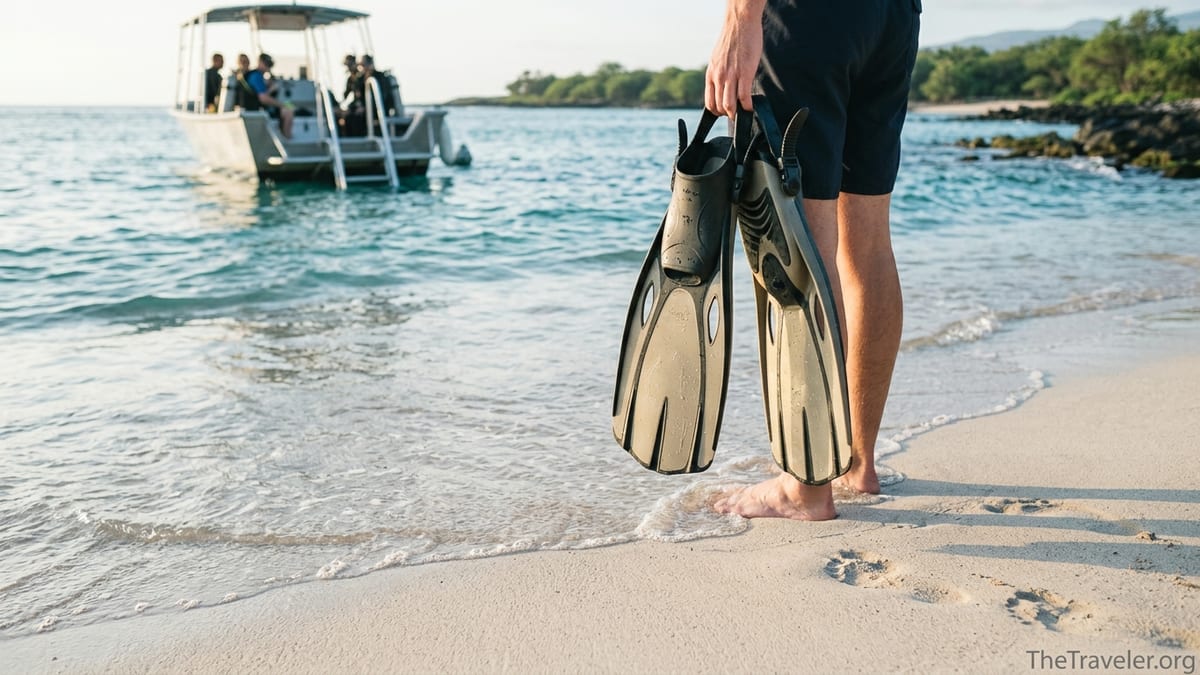
Understanding the Main Types of Snorkel Fins
Most snorkel fins you will see in shops in places like Hawaii, the Florida Keys or Cozumel fall into two broad categories: full-foot and open-heel. Full-foot fins look like a slipper with a blade attached. You slide your bare foot into a closed pocket, and there is no strap around your heel. They are common in warm-water destinations because they are light, affordable and easy to use. Brands such as Cressi, Scubapro and Mares all make popular full-foot snorkel models that you will see hanging on racks in beach-town dive shops.
Open-heel fins have a larger foot pocket and an adjustable strap around the back of your heel. They are normally worn with neoprene booties. This combination is more typical for divers, but many experienced snorkelers use it too. Open-heel designs are particularly useful where you need to walk over hot sand, lava rock or broken coral rubble to reach the water, such as some Big Island Hawaii beach entries or volcanic shores in the Canary Islands. The boot protects your sole, and the fin strap keeps the setup secure once you start swimming.
Within both categories you will find everything from compact travel fins with blades barely longer than your foot to long, powerful fins similar to freediving models. Entry-level snorkel kits at big-box retailers in the United States typically bundle a short full-foot fin, while specialist snorkel shops and dive centers tend to stock a wider spread, including open-heel travel fins that fit easily into a carry-on suitcase. Understanding which basic style matches your destination and habits is the first step to buying fins you will actually enjoy using.
Full-Foot vs Open-Heel: Comfort, Blisters and Warmth
If you are heading for a straightforward tropical holiday in places like the Maldives, Belize or Bora Bora, full-foot fins are usually the simplest choice. They are designed to be worn barefoot or with a thin neoprene sock, so they feel light and slipper-like on your feet. Many snorkelers report that a well-fitted full-foot fin, such as the Cressi Agua or Mares Avanti Tre, almost disappears once they are in the water. Because there is no strap, there is less hardware to rub or pinch, and the streamlined shape is easy to pack along the side of a suitcase.
The catch is that full-foot fins must fit very well. If they are even slightly loose, your heel will slide up and down, raising hot spots that can quickly become blisters on a long swim. This is a common complaint on guided reef tours in places like Mexico’s Riviera Maya, where rental fins are sized roughly and used by many guests each week. If you buy your own, try them on at the end of the day when your feet are a bit swollen, and wear a thin 2 mm neoprene fin sock during snorkeling to add cushioning and fill any small gaps.
Open-heel fins are more forgiving on fit, since the strap can be loosened or tightened and a neoprene boot fills the pocket. For travelers with wide or high-arched feet, slipping into a roomy open-heel fin such as the Scubapro Go Travel or Tusa Travel Right paired with a 3 mm boot can feel dramatically more comfortable than squeezing into a narrow full-foot pocket. The boot also protects your heel and instep from rubbing, which is helpful on multi-day trips like liveaboards in the Red Sea or week-long resort stays where you plan to snorkel every day.
Warmth is another factor. On shoulder-season trips to the Mediterranean or in destinations like the Galapagos, water temperatures can feel chilly during hour-long snorkel sessions. Open-heel fins with thicker neoprene boots will keep your feet notably warmer than bare full-foot fins. In contrast, if your goal is packability and you only snorkel in reliably warm places such as Thailand or Fiji, a full-foot fin with thin socks is usually enough protection.
Short Travel Fins vs Long Fins: Power, Currents and Control
Blade length is the second big decision. Short travel fins keep the blade close to your toes, often only a few centimeters beyond your foot. Long fins extend much farther and offer more surface area. The general trade-off is simple: short fins are easier to pack and maneuver, while long fins deliver more thrust for the same effort, which matters in currents or when you need to cover distance.
Short travel fins are ideal for casual snorkeling right off the beach or from resorts that run boat trips to sheltered fringing reefs. A pair of compact full-foot fins like the Cressi Agua Short or a barefoot open-heel design such as the Scubapro Go Travel can tuck diagonally inside most standard carry-on suitcases. On a typical trip to Maui, where many snorkel spots such as Kapalua Bay or Napili Bay have little to no current, these short fins provide all the propulsion most people need, and their smaller size makes it easier to keep your kicks shallow and avoid accidentally hitting coral heads beneath you.
Longer fins shine when conditions are less forgiving. If you plan to drift snorkel in places like Indonesia’s Komodo National Park or the passes of French Polynesia, where tidal currents can be strong, the extra surface area helps you move more efficiently and stay in control. Some experienced snorkelers use long freediving-style fins for this reason, although these can be awkward to pack in standard luggage. For a compromise, many dive-oriented fins marketed for warm water, such as Mares Avanti Quattro full-foot models, offer a medium-long blade that still fits diagonally in checked bags and provides significantly more power than short travel fins.
The key is to match your fins to your planned activities, not just the marketing label. If your itinerary is mostly calm house-reef snorkeling with a few boat trips to gentle outer reefs, short fins save space and feel agile in the water. If you know your destination is known for current, like some outer reefs on Australia’s Great Barrier Reef or channels in the Maldives, err toward a more substantial fin and consider checking a bag so you can bring it.
Sizing Fins: Getting the Fit Right Before You Fly
Snorkel fins do not always follow shoe sizing perfectly. Many models cover a range, like EU 41–42 or US men’s 9–10, and each brand’s foot pocket shape is slightly different. Travelers often discover this the hard way in resort shops in places like Roatan or Curaçao, where they grab a size roughly matching their sandals, only to find their toes cramped once they are in the water. Whenever possible, try fins on in person at a dive shop at home before your trip, even if you ultimately buy the same model online.
When fitting full-foot fins, stand upright and slide your foot fully into the pocket. Your toes should not be painfully squashed against the end, but you should also not be able to lift your heel more than a few millimeters. If you plan to wear 2 mm neoprene socks for blister protection, bring them and test with those on. Many snorkelers find that a snug fit with socks is more comfortable over a week of daily use than a looser barefoot fit that rubs after half an hour.
For open-heel fins, start by choosing a boot thickness that matches your travel style and destination. Thin 2 mm low-cut boots are easy to pack and work well in warm places like the Caribbean; 3 mm or 5 mm mid-height boots are better if you anticipate cooler water or rough beach entries. Put on the boots, slide into the fin pocket, and adjust the strap so it sits low on your heel without cutting into your Achilles tendon. You should be able to flex your foot and wiggle your toes without the fin feeling loose. Oversized open-heel fins that need to be cranked tight to stay on are a recipe for sore tendons and blisters on the sides of your feet.
Travelers with very large or very small feet often have the hardest time with sizing. Many mainstream full-foot snorkel fins top out around US men’s size 12, and rental options in popular tourist areas may be even more limited. If you wear a size 14 or larger, plan ahead and look for open-heel models specifically noted for generous foot pockets. For very small feet, including older children and petite adults, youth-specific short fins can be more secure than adult sizes with thick socks, especially in choppy surface conditions where a loose fin can be kicked off surprisingly easily.
Beach Entries, Boats and Walking in Your Fins
Where and how you enter the water matters just as much as what fin you are wearing. On resort boat trips in places like the Bahamas or the Maldives, staff often pass out fins after you are seated on the swim step. You sit down, put the fins on, slip into the water and adjust them while holding onto a line. In this setting, both full-foot and open-heel fins work equally well, and you never need to walk more than a step or two in them.
Shore entries tell a different story. On rocky coasts such as parts of the Greek islands or the Pacific side of Costa Rica, walking barefoot in full-foot fins can be treacherous. The thin rubber under your foot offers almost no protection from sharp stones or sea urchins hidden in tide pools. This is where open-heel fins with sturdy-soled boots come into their own. You can walk down to the water, wade to a safe depth, then sit or float to put your fins on without ever exposing bare skin to sharp or slippery surfaces.
Some newer travel-focused fins try to bridge this gap. Hybrid designs like short open-heel fins paired with sneaker-like water shoes or models built almost like a water shoe with a small blade attached are becoming more common. These can be handy in destinations where you have a mix of sandy beach and occasional coral rubble, such as parts of Oahu, allowing you to walk comfortably to the water without swapping footwear. Just be aware that most of these hybrids trade some fin efficiency for walking comfort, so they are best suited to relaxed lagoon snorkeling rather than long surface swims against current.
Regardless of fin type, avoid walking long distances with the fins on your feet. The awkward gait can strain your ankles and knees, especially on sloping sand, and it is very easy to trip. Instead, carry your fins in one hand or clipped to a small mesh bag, walk to the waterline in sandals or booties, and only put the fins on when you are ready to float. This small habit makes shore entries safer and keeps your gear in better condition.
Packing Fins for Carry-On and Checked Luggage
Fins are one of the bulkiest pieces of snorkel gear, but a little planning goes a long way toward getting them on the plane without drama. Short travel fins are the easiest solution for carry-on travelers. Many compact full-foot fins and open-heel travel models are deliberately designed to fit inside a standard 22-inch cabin suitcase diagonally. Snorkelers flying from the United States to islands like Turks and Caicos or the U.S. Virgin Islands often report packing a pair of short fins flat against the suitcase shell, then layering clothing and a packable towel over them.
If you prefer a longer fin, checked luggage gives you more options. Many medium-long fins can fit diagonally in a standard checked roller bag, especially if you pack them first and then fill the gaps between blades with softer items like rash guards or T-shirts. Placing the foot pockets toward the wheels and the blade tips toward the top handle usually works best. Wrapping the blades in a light towel or using a simple fin bag reduces the chance of them being bent if a heavy suitcase is stacked on top.
Weight is another consideration. Travel-branded fins such as the Scubapro Go series and some Cressi and Oceanic models use lighter plastics and shorter blades to keep the overall weight down. This can make the difference between staying under a budget airline’s 7 kg cabin allowance in Southeast Asia and being forced to check a bag. For U.S. domestic flights, most major carriers still allow a personal item and a carry-on for free on standard economy tickets, and many snorkelers pack their mask, snorkel and fins into a small dedicated backpack that fits under the seat, leaving the overhead bin space for clothing.
Finally, remember that rental fins are widely available in most beach destinations. If you only snorkel once every few years, you may decide it is not worth dedicating luggage space to your own fins and instead select the best-fitting rental pair each day. However, frequent snorkelers who travel to places like Hawaii, the Caribbean or the Red Sea often find that investing in a well-fitted pair and learning how to pack them efficiently pays off in comfort and confidence on every trip.
Real-World Gear Combos for Different Trips
To make the choices more concrete, it helps to think in terms of trip scenarios. For a classic fly-and-flop holiday to a Caribbean all-inclusive resort where you mainly snorkel from a calm sandy beach and occasionally join a half-day boat trip, a basic full-foot short fin is usually ideal. A traveler flying from New York to Punta Cana could pack Cressi Agua Short fins along the side of a carry-on, pair them with thin neoprene socks to avoid rubbing, and rely on the resort’s mask and snorkel rental if weight is tight.
For a more adventurous itinerary, such as a week in the Hawaiian Islands combining easy bays with a few rocky shore entries, an open-heel travel fin and boot combination offers more versatility. A common setup is a pair of Scubapro Go Travel fins, 3 mm neoprene boots with a decent sole, and a compact mask and snorkel set. This allows you to walk over hot, rough lava rock at places like Two Step on the Big Island, climb boat ladders comfortably, and still fit everything into a medium suitcase that can be checked or carried on depending on the airline.
If you are planning dedicated snorkel trips to destinations known for stronger currents or longer surface swims, such as outer reefs off Cairns in Australia or some channels in the Maldives, consider a medium-long fin even if that means checking a bag. A full-foot fin like the Mares Avanti Quattro or a similar open-heel model with boots offers noticeably more power when swimming across current to reach a reef ledge or returning to a liveaboard in choppy seas. In these conditions, trying to keep up with a guide line using very short travel fins can be tiring, especially for less fit swimmers.
Families need to balance all of these factors with the realities of kids’ rapidly changing shoe sizes. In many cases, it makes sense to buy inexpensive but reasonably well-fitted short fins for children, accept that they will outgrow them in a season or two, and plan to hand them down to younger siblings or friends. Rental fins sized for small feet are hit-and-miss in many destinations, so packing your own can make the difference between confident kids exploring the reef and frustrated youngsters struggling with loose or floppy gear.
FAQ
Q1. Are full-foot or open-heel fins better for most vacation snorkelers?
For warm, sandy beach destinations where you mostly enter from boats or gentle shorelines, full-foot fins are usually simpler, lighter and cheaper. If you expect rocky entries, cooler water or want fins that can double for light scuba diving, open-heel fins with booties are more versatile and protective.
Q2. Do I really need special travel fins for carry-on only trips?
You do not have to buy fins labeled as travel, but shorter, lighter models are easier to fit in a cabin bag and keep you under strict weight limits. If you mainly snorkel in calm bays, compact fins are usually powerful enough and simplify packing, especially on budget airlines with tight carry-on rules.
Q3. How tight should snorkel fins feel when I try them on?
Full-foot fins should feel snug but not painful, with your heel held securely and no hard pressure on your toes. Open-heel fins should feel solid with your boot on and the strap sitting low on your heel without digging in. If you can easily wiggle your foot side to side inside the pocket, the fin is probably too loose and may cause rubbing or even slip off in the water.
Q4. Can I wear regular water shoes inside full-foot fins?
Most full-foot fins are not designed to accommodate chunky water shoes, and pairing them can make the pocket too tight and uncomfortable. Instead, use thin neoprene fin socks with full-foot fins if you want extra cushioning or warmth. Save thicker-soled water shoes or boots for use with open-heel fins that have room for them.
Q5. Are short fins strong enough for snorkeling in currents?
Short travel fins work well in light current and sheltered bays but feel underpowered in strong tidal flows or wind-driven chop. If your destination is known for drift snorkels or open-ocean sites, a longer fin with more blade surface will give you better control and reduce fatigue. When in doubt, ask local operators what kind of fins they recommend for their typical sites.
Q6. How can I avoid blisters when snorkeling every day on a trip?
Choose fins that fit snugly without pressure points, and consider wearing thin neoprene socks even in warm water to reduce friction. Rinse sand out of your fins and socks after each use, and let your skin dry fully between snorkel sessions. If you feel a hot spot developing on your heel or toes, take a break and cover it with a small piece of sports tape or a blister patch before your next swim.
Q7. Should I buy my own fins if I usually rent the rest of my gear?
Many frequent snorkelers choose to buy just fins while continuing to rent masks and snorkels at their destination. Fins are the hardest rental item to fit well, and a poorly fitting pair can ruin a day in the water. Owning a comfortable set of fins that you know works for your feet can be a worthwhile investment even if you only snorkel on holiday once or twice a year.
Q8. Is it safe to fly with wet fins after a morning snorkel?
Airlines do not usually object to damp fins, but packing them wet can lead to bad odors and potential mildew. If you need to fly soon after snorkeling, rinse your fins with fresh water, towel-dry them thoroughly, and pack them in a breathable mesh bag rather than a sealed plastic one. If they must go in checked luggage, keep them away from delicate clothing in case any moisture remains.
Q9. Can one pair of fins work for both snorkeling and scuba diving?
Yes, many open-heel fins designed for warm-water diving also work very well for snorkeling, especially medium-length models paired with 3 mm boots. If you plan to do both activities on a single trip, choosing a versatile open-heel fin can save space. Just be aware that very stiff, heavy-duty scuba fins may feel tiring for long surface swims compared to lighter snorkel-specific designs.
Q10. How much should I expect to spend on decent snorkel fins?
Prices vary by brand and region, but as a rough guide, many solid full-foot snorkel fins fall into a moderate price range, while travel-oriented open-heel fins with adjustable straps and lighter materials tend to cost somewhat more. You rarely need top-end technical freediving or professional scuba fins for holiday snorkeling; instead, focus on fit, comfort and packability within a budget that feels reasonable for how often you travel.