


Snorkeling is often the highlight of a cruise or beach resort vacation, but the experience can be very different depending on the gear you bring. Rental masks that leak, fins that blister, or sunscreen that is not welcome in reef areas can turn a dream swim into a short and frustrating one. With a little planning, you can pack a lightweight snorkel kit that fits in a carry-on and is comfortable, familiar, and ready for almost any port or lagoon.
Get the latest updates straight to your inbox!
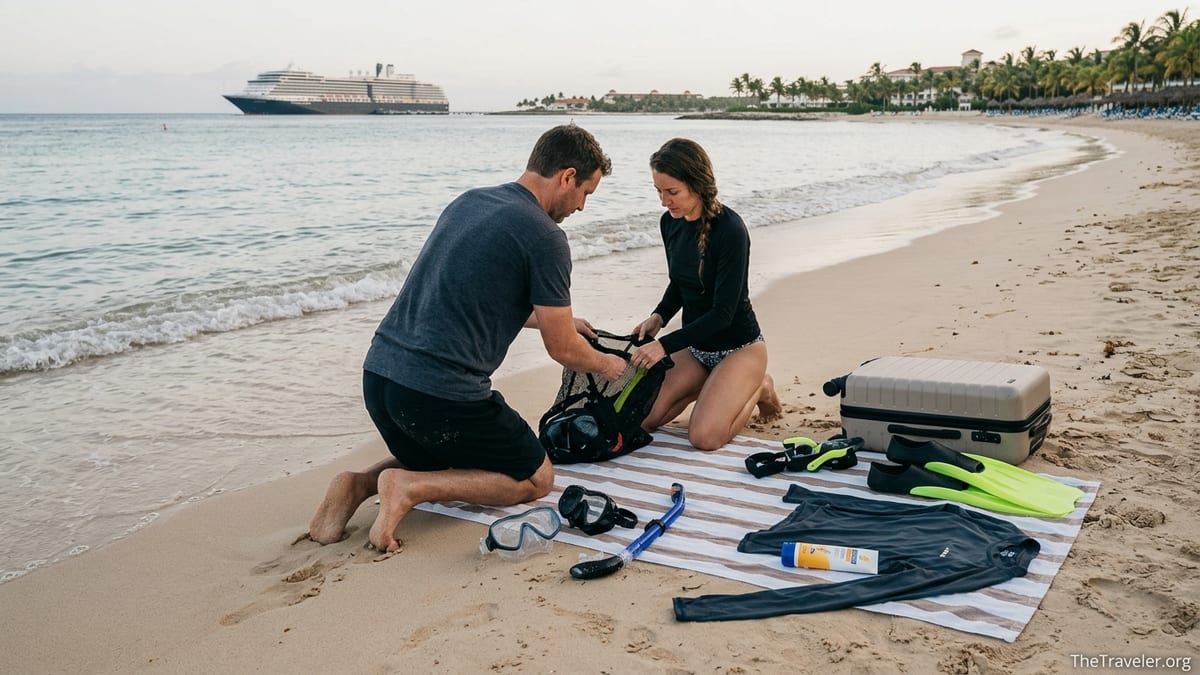
Why Packing Your Own Snorkel Gear Matters
If you have ever climbed off a cruise tender and been handed a scratched mask and a snorkel that smells strongly of disinfectant, you already know why many travelers prefer their own gear. Rental sets on popular Caribbean and Mediterranean excursions are often basic, heavily used, and sized generically. That can mean foggy lenses, stiff straps, or a mouthpiece that feels too large or too small, especially if you have sensitive gums or a smaller jaw.
On a typical Caribbean cruise, a ship-organized snorkel excursion might cost between 70 and 120 dollars per person, including gear. Bringing your own mask and snorkel, then using the operator’s fins or buoyancy vests, lets you enjoy the excursion with equipment you trust while still complying with local rules. Some travelers on large ships in the Bahamas and Cozumel report that they only use the included gear as backup if a strap breaks.
At all-inclusive resorts in places like Riviera Maya, the Dominican Republic, or the Maldives, snorkel gear is often included, but it may be limited by time slots or held at a central hut. Having your own lightweight set means you can slip into the water for a short reef visit at sunrise or just before sunset, when fish life is often more active, without queuing or signing forms.
Most importantly, practicing with your own mask, snorkel, and fins in a pool or local lake before your trip builds confidence. By the time you step into the water at Grand Cayman’s Seven Mile Beach or off a house reef in Bora Bora, the gear will feel familiar so you can focus on the turtles and parrotfish, not on fiddling with straps.
Choosing a Lightweight Travel Mask and Snorkel
For travel, look for a low-volume mask with a soft silicone skirt. Low-volume simply means the mask cavity is smaller, which makes it easier to clear if water gets in and reduces the feeling of bulk on your face. A common travel favorite is a single-lens design similar to the Cressi F1 or the TUSA Freedom Elite, which both pack relatively flat and weigh around half a pound. Expect to pay roughly 40 to 70 dollars for a good-quality mask that, with care, can last for years.
Fit matters far more than brand. In a dive shop, you would gently press the mask to your face without using the strap, inhale through your nose, and see whether it seals and stays in place. At home, you can do a similar test in front of the mirror. Travelers with narrow faces sometimes find “women’s” or “small” sizes from brands like Aqua Lung or Mares seal better. If you wear prescription glasses, many masks accept corrective lenses that can be installed by a dive shop before your trip.
For snorkels, travel-friendly options include simple J-shaped tubes or “dry-top” models that reduce the chance of splashes entering at the surface. A compact dry snorkel similar to the Cressi Supernova or the Scubapro Spectra occasionally costs between 30 and 50 dollars and often folds or bends enough to tuck into a shoe or side pocket. Avoid bulky full-face snorkel masks on cruises unless the line explicitly allows them, as some operators restrict their use over safety and CO2 buildup concerns.
One practical packing tip is to place your mask in its hard case, then nestle that case inside your sneakers in the suitcase. This protects the tempered glass lens and uses otherwise empty shoe space, keeping weight centered in your bag.
Short Fins and Compact Accessories for Easy Packing
Traditional long snorkeling fins can be excellent for speed but awkward for travel. They often exceed typical carry-on dimensions and can be inconvenient in crowded cruise-ship elevators and narrow cabin corridors. Short travel fins, sometimes called “trek” or “travel” fins, are designed to be much more compact while still giving enough propulsion for calm bays and resort house reefs.
Sets modeled on the Cressi Palau or Seavenger Aviator travel fins usually come with open-heel designs and adjustable straps, so you can wear them barefoot or with thin neoprene socks. The fin blades often measure around 15 to 17 inches, short enough to fit diagonally in most medium suitcases or inside a standard 25-inch checked bag. A complete travel set with mask, snorkel, short fins, and mesh bag commonly weighs 4 to 6 pounds and can cost from 80 to 150 dollars, depending on quality.
Short fins have limits. In strong currents, such as the channel drifts sometimes found near outer reefs in the Maldives or off Roatan, longer fins provide more power. On a cruise itinerary, that usually is not an issue because beginner-friendly excursions in places like Nassau or St. Thomas are chosen for calmer, shallow sites where short fins are adequate. If you expect to do more serious snorkeling away from guided tours, such as independent reef exploration at Bonaire, you might pack mid-length fins in a checked bag instead.
Other small accessories also help. A simple silicone mask strap cover can prevent long hair from tangling. Fin socks or thin neoprene booties reduce chafing on the tops of your feet during longer snorkels. These extras pack down to the size of a rolled pair of socks and often cost 10 to 25 dollars each, yet can make an hour in the water far more comfortable.
Mesh Bags, Anti-Fog Drops, and Simple Care Routines
A basic mesh snorkel bag is one of the most useful yet overlooked travel items. Many travel snorkel sets include one, but you can also purchase a standalone mesh backpack or shoulder bag. Look for models roughly the size of a daypack, large enough to hold fins, mask, snorkel, and a rolled rash guard or towel. Mesh bags allow gear to drip and air-dry on the walk back from the beach to your cabin or room, reducing the chance of mildew in a humid bathroom.
On cruises, it is common to hang a mesh bag with gear on the shower clothesline or over the balcony chair if allowed. At beach resorts, you can often rinse everything in a dedicated outdoor tap near the pool or watersports hut, then leave the bag hanging on a shaded balcony. A labeled mesh bag also reduces mix-ups at excursion docks, where dozens of nearly identical black fins may be piled on the same platform.
Mask fog is a problem many first-time snorkelers underestimate. While dish soap or baby shampoo diluted with water can help, travel-size anti-fog drops are compact and reliable. A small bottle, about the size of a lip balm, often lasts for dozens of uses and easily fits in a pocket of your snorkel bag. Apply a drop to the inside of the dry mask lens before entering the water, rub gently, and quickly rinse once. This simple habit can turn a cloudy reef view into a clear one.
Rinse gear in fresh water after every use, especially in tropical destinations where fine sand and salt crystals can grind into buckles and seals. On a weeklong Caribbean cruise, people who skip rinsing sometimes find that mask straps become stiff or that sand jams fin buckles by the second or third snorkeling stop. Taking five minutes to rinse and hang your kit after each outing can preserve it for many trips.
Rash Guards, Sun Protection, and Reef-Safe Sunscreen
Sun protection is as essential as the snorkel itself. Tropical sun near destinations like Aruba, Hawaii, or Fiji is intense, and the reflection off the water can nearly double exposure. Long-sleeve rash guards or swim shirts with a UPF 50+ rating from brands such as O’Neill, Patagonia, or Coolibar cover large areas of skin and significantly reduce the amount of sunscreen you need. Many travelers pack at least one fitted rash guard for snorkeling and a looser one for general pool use.
When sunscreen is necessary, many marine parks and islands increasingly prefer “reef-friendly” formulas. Jurisdictions such as Hawaii and parts of the Caribbean have banned the sale of sunscreens containing certain chemical filters like oxybenzone and octinoxate, which have raised concerns about coral health. While terms like “reef-safe” are not strictly regulated, choosing mineral-based options with zinc oxide or titanium dioxide as active ingredients, and avoiding oxybenzone and octinoxate on the label, aligns with common guidance in destinations that emphasize coral protection.
On a practical level, that means you might bring a couple of small mineral sunscreen tubes in the 3 to 3.4 ounce range for carry-on compliance. Many cruisers bound for Maui or Kona, for example, pack one face-specific mineral sunscreen and one body formula, then rely on rash guards and leggings to cover most skin. Travelers report that popular resort shops in places like Cancun or Waikiki do stock mineral sunscreens, but the selection may be limited and prices can be higher than at home, so buying before departure is usually more economical.
Apply sunscreen at least 15 minutes before entering the water so it can absorb and is less likely to wash off in a slick. At many protected bays, including some in Hawaii and the U.S. Virgin Islands, signage now urges visitors to use reef-friendly products and to rinse off excess lotion before entering the sea. Combining clothing, shade, and careful sunscreen use protects both your skin and the marine environment you came to see.
Carry-On Strategies for Cruises and Beach Resorts
One of the biggest questions for snorkel-loving travelers is whether all this gear can reasonably fit in a carry-on. The answer is usually yes, if you prioritize compact items and pack strategically. Many people choose to place the mask, snorkel, and rash guard in a personal item or backpack, then pack short fins and mesh bag in a rolling carry-on or, when necessary, a checked suitcase.
A common setup for a seven-night Caribbean cruise from Miami might include a soft-sided carry-on with clothing and toiletries, plus a small backpack with electronics and a basic snorkel kit. The mask in its case slides against the back panel, the snorkel sits along one side, and a rolled rash guard fills the top. Short fins can sometimes be laid flat at the bottom of the carry-on with clothes packed around them or placed diagonally in a checked bag for families bringing multiple sets.
Airlines generally accept snorkel masks and short fins in carry-on luggage, but full-size fins often must go in checked bags due to size. Cruise lines typically allow guests to bring personal snorkel gear onboard, though it is wise to pack wet items in a dry bag or lined tote when returning from shore to avoid dripping on carpets. Some travelers also carry a small dry pouch for room keys and a ship card, which can be worn under a rash guard while swimming.
For beach resort trips that involve multiple stops, such as a combination of a city break in Miami, followed by a flight to a resort in Turks and Caicos, a finless setup may be best: pack only your own mask and snorkel and plan to use the resort’s fins or water shoes. This reduces bulk and weight but still keeps the most personal pieces of gear under your control.
Cruise vs Beach Resort: How Your Gear Choices Change
On cruises, you are often snorkeling in different locations every other day: one day at a sheltered bay in St. Maarten, another at Grand Turk, then at Belize’s barrier reef on a guided boat tour. Because logistics are handled by the ship and local operators, compactness and ease of drying become major priorities. A mesh bag and a travel set with short fins are ideal in this environment, as they are easy to rinse and hang between ports, and quick to grab when your excursion group is called.
At all-inclusive or dedicated snorkel resorts, such as those on the Red Sea in Egypt or on smaller islands in the South Pacific, you may enter the water multiple times a day from the same beach or jetty. In these settings, comfort during longer sessions becomes more important than ultra-compactness. Slightly longer fins, thicker fin socks, and perhaps an extra rash guard can be worth the packing space if you intend to spend hours exploring a house reef.
Resorts often provide life vests and sometimes pool noodles for flotation, while cruise excursions may require everyone to wear a provided inflatable vest. That means you do not usually need to travel with your own bulky buoyancy gear unless you have very specific needs. Instead, focus on what operators rarely customize: the mask that seals to your face, the snorkel that fits comfortably in your mouth, and clothing that suits your sensitivity to sun and cool water.
Weather can also influence your packing. In cooler destinations such as the Canary Islands in spring or Hawaii in winter, the water may feel chilly after 20 or 30 minutes. A thin 1 or 2 millimeter neoprene top or a lined long-sleeve rash guard can extend your comfort without the hassle of a full wetsuit. At hot destinations in mid-summer, you might instead prioritize breathable rash guards and leggings that do not overheat while walking on the beach.
Practical Safety and Comfort Tips in the Water
Even with the right gear, a few small habits can improve both safety and comfort. Test your mask and snorkel in a pool or shallow hotel lagoon before heading to deeper reef areas. Practice clearing the snorkel by blowing firmly after a small wave splashes in. Many first-time snorkelers on cruise excursions in Cozumel find their confidence increases dramatically after just a few minutes of practice near the boat ladder.
Foot protection is another comfort detail. In destinations with rocky entries or coral rubble, such as some beaches in Curacao or the Greek islands, neoprene booties paired with open-heel fins prevent cuts and bruises. Where footwear inside fins is not practical, consider packing light water shoes for walking over hot sand and sharp rocks, then switching to fins in slightly deeper water.
Always respect local briefings about currents, wildlife, and no-touch zones. Many marine parks explicitly request that guests avoid standing on coral or chasing turtles. Using short fins and a gentle flutter kick helps keep your feet from accidentally striking the reef in shallow areas. For nervous swimmers, inflatable snorkel vests or pool noodles provided by operators add buoyancy without the bulk of a full life jacket.
After your snorkel, drink plenty of water and store wet gear in your mesh bag, not in a sealed plastic bag. In warm climates like the Caribbean or Southeast Asia, sealed damp gear can develop strong odors overnight. If your cabin or room has limited hanging space, you can lay fins flat on a towel on the bathroom floor and hang the mask and snorkel from towel racks or the shower line.
The Takeaway
Packing the right snorkel gear for cruises and beach resorts does not have to mean hauling a dive shop across the world. By choosing a well-fitting mask, a compact snorkel, short fins, a simple mesh bag, anti-fog drops, a rash guard, and reef-friendly sunscreen, you can assemble a lightweight kit that fits in a carry-on yet transforms your time in the water.
Think about how and where you will snorkel. If your trip centers on ship excursions and short guided swims, focus on portability and fast drying. If you are booking a resort with a renowned house reef, consider slightly more robust fins and extra sun-protective clothing for long sessions. In all cases, trying and adjusting your gear before departure is just as important as the gear itself.
Ultimately, a small investment of planning and a few pounds of luggage allowance can turn ordinary snorkel stops into memorable hours drifting over coral gardens, watching reef fish flicker below. With a thoughtful travel snorkel kit, every tender ride, beach walk, and resort jetty becomes a chance to slip beneath the surface with confidence.
FAQ
Q1. Do I really need to bring my own mask and snorkel, or are rentals fine?
Rentals are usable, but bringing your own mask and snorkel usually means better fit, more comfort, and hygiene. Many cruisers are comfortable using operator fins yet prefer their personal mask and snorkel, especially on multi-stop itineraries.
Q2. Can I fit snorkel gear in a standard airline carry-on?
Yes, if you choose travel-oriented items. A low-volume mask, foldable dry snorkel, and short fins typically fit in a 22-inch carry-on, especially if you nestle the mask in a shoe and lay fins flat at the bottom.
Q3. Are short travel fins powerful enough for most cruise excursions?
For typical beginner-friendly sites with mild currents, short fins are generally adequate and much easier to pack. For strong currents or independent reef exploration, mid-length fins in a checked bag can provide more thrust.
Q4. What makes a sunscreen “reef-safe” for snorkeling trips?
There is no official definition, but many destinations ask visitors to avoid sunscreens containing oxybenzone and octinoxate. Mineral formulas with zinc oxide or titanium dioxide, combined with UPF clothing, are commonly recommended options.
Q5. Do cruise lines allow full-face snorkel masks?
Policies vary by cruise line and excursion operator. Some operators discourage or ban full-face masks due to safety concerns. If you prefer one, check current rules before packing and consider bringing a conventional mask and snorkel as backup.
Q6. How many rash guards should I pack for a weeklong beach resort stay?
Two is a practical minimum: one fitted rash guard for snorkeling and one looser or backup top. In very sunny destinations or for daily snorkeling, some travelers pack three so one can always be drying.
Q7. Are anti-fog drops necessary if my mask is new?
They are not strictly necessary but are very helpful, especially for beginners. A travel-size bottle takes little space and can prevent fogging that might otherwise shorten your time in the water.
Q8. Can I snorkel comfortably without fins if I want to travel light?
In calm, shallow water with little current, many people do snorkel with only a mask and snorkel. However, fins add safety and control. If space is limited, consider compact short fins rather than skipping fins altogether.
Q9. How should I clean my snorkel gear in a cruise cabin or hotel room?
Rinse all pieces in fresh water after each use, gently remove sand from buckles, and hang them to dry on a shower line, balcony chair, or over towel racks. Avoid leaving wet gear sealed in plastic bags.
Q10. Is it cheaper to buy snorkel gear at my destination instead of at home?
Prices at resort or cruise-port shops are often higher and the selection more limited. Buying at home typically gives you better choice, time to test fit, and the chance to practice before your trip.