


Across the northern edges of Norway, Sweden, Finland and Russia, the traditional homeland of the Sámi people stretches quietly over tundra, birch forest and icy rivers. On winter itineraries this region, known as Sápmi, is now marketed with aurora safaris, reindeer sledding and cozy turf tents. Yet behind the postcards and tour brochures lies a living Indigenous culture shaped by struggle, resilience and deep ties to the land. For travelers willing to go beyond surface-level experiences, exploring Sámi culture can become one of the most meaningful parts of a trip to the Arctic.
Get the latest updates straight to your inbox!
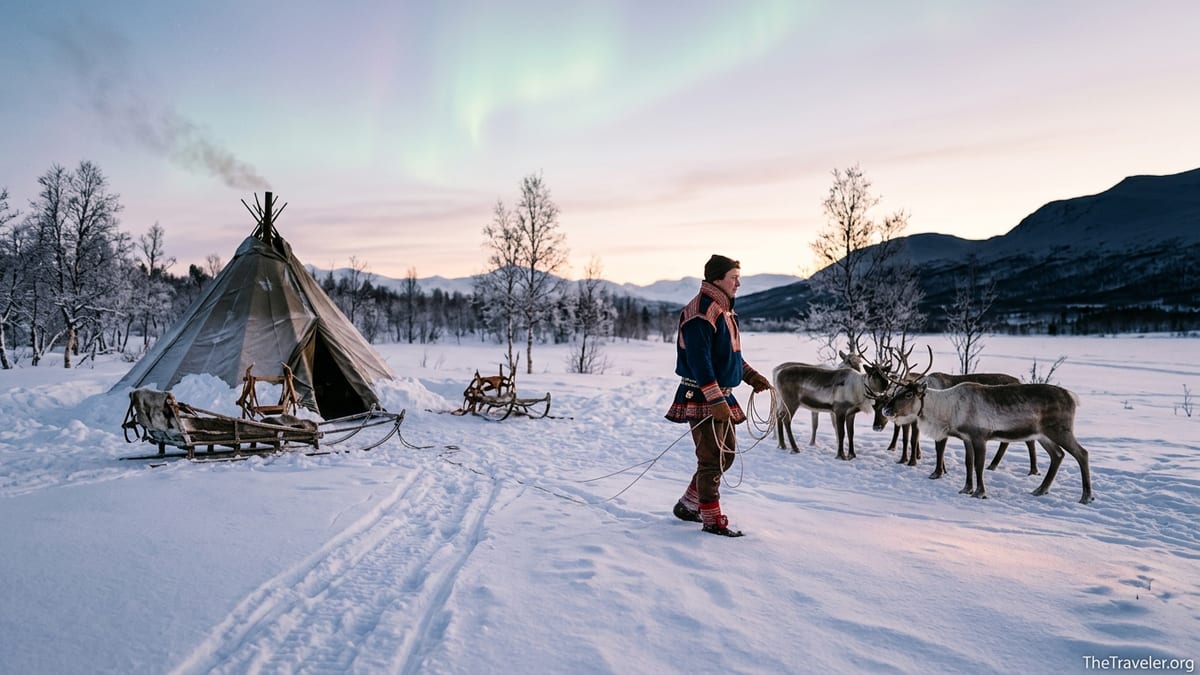
Meeting the Sámi: More Than a Photo With a Reindeer
Most travelers encounter Sámi culture for the first time through highly visible experiences such as reindeer sledding outside Tromsø, winter visits to a lavvu tent near Kiruna, or a brief cultural show bundled into a northern lights package. These can be memorable introductions, but they risk reducing a complex Indigenous society to costumes and animals if visitors stop there. The Sámi are not a tourist attraction; they are an Indigenous people of roughly tens of thousands spread across four countries, each with diverse languages, livelihoods and political realities.
In Tromsø, for example, a popular way to meet Sámi hosts is through small family-run reindeer experiences on land they actually use for herding. At outfits around the region, guests might feed the herd, sit by the fire in a lavvu, and listen as a herder explains migration routes, winter challenges and the realities of balancing tradition with modern regulations. When these encounters are led by Sámi families themselves, they become a chance to understand how reindeer herding is not a staged show but a legally protected livelihood and a core pillar of Sámi identity.
Travelers who expect only a quick sleigh ride often find the conversations are what stay with them. Hearing a young herder describe satellite tracking of grazing areas or conflicts with wind farm development can shift a visit from simple entertainment into an eye-opening look at how Indigenous communities navigate climate change and land rights in the 21st century. The reindeer become less of a prop and more of a doorway into understanding a different relationship to nature.
At the same time, visitors quickly learn that not all Sámi are herders. In cities such as Oslo, Umeå, Rovaniemi or Oulu, Sámi people work as journalists, designers, politicians and professors. Meeting Sámi artists at a gallery opening or listening to a Sámi musician at a small festival can be just as authentic as visiting a remote mountain hut. Exploring Sámi culture means recognizing its urban and contemporary dimensions alongside pastoral images from tourism marketing.
Beyond the Tourist Brochure: Where Sámi Culture Comes Into Focus
To move past scripted performances, many travelers build time for museums, cultural centers and local events that are created first and foremost for Sámi communities themselves. These spaces usually provide deeper context on history, language and politics than a standard tour commentary ever could.
In northern Norway, the Sámi National Museum collections in Karasjok house thousands of objects related to Sámi cultural history, from traditional clothing and tools to contemporary art. A visit there can transform how a traveler interprets the rest of their journey. After walking through exhibits on boarding schools and forced assimilation, a simple road sign in a Sámi language suddenly carries more weight. The museum sits near the Sámi Parliament of Norway, where travelers sometimes attend open sessions or exhibitions and see how political self-determination is being built today, not just remembered from the past.
Across the border in Sweden, Ájtte, the Swedish Mountain and Sámi Museum in Jokkmokk, is often described as the country’s main Sámi museum. Its permanent exhibitions on reindeer migration, seasonal movements and mountain ecology give context to that snowmobile ride a visitor took earlier in the week. When a guide in the gallery points out how climate change alters ice patterns on lakes, travelers start to understand why herders worry about reindeer breaking through unstable ice when moving between winter and summer pastures.
In Finnish Lapland, the Sámi cultural and administrative center in Inari includes the national Sámi museum and offers an in-depth look at several Sámi groups and languages. Travelers can watch short films made by Sámi directors, browse exhibitions curated by local historians and linguists, and in some seasons attend public events like language courses, book launches or children’s programs. Spending half a day here before venturing north to a reindeer herding community often changes the questions visitors ask and the sensitivity they bring to those encounters.
What Travelers Really Learn: Landscape, Resilience and Identity
When travelers give themselves time and space within Sápmi, certain themes emerge repeatedly from conversations with Sámi hosts. One is the centrality of the land. Guides and herders describe reading snow conditions with remarkable nuance, recognizing dozens of words for different types of ice or snow, and timing movements of animals based on subtle environmental cues. A guest sharing coffee in a tent near Kautokeino might hear an elder explain how cloudberry patches indicate wetland health, or how river ice tells them whether a winter has been trustworthy or not.
Another lesson is resilience in the face of colonization. Exhibitions in museums across Sápmi document policies that tried to suppress Sámi languages and beliefs, limit reindeer movements and erase Indigenous identity through schooling and religion. On a guided tour in Karasjok or Jokkmokk, it is common to hear how earlier generations were punished for speaking their language at school or discouraged from practicing traditional spirituality. Travelers often come away with a new understanding that the colorful gákti clothing sometimes sold on postcards is not simply a costume but a symbol of cultural survival that persisted despite heavy pressure to assimilate.
Travelers also learn how contemporary Sámi identity is far from static. At music festivals in northern Norway, visitors might hear joik, a vocal tradition sometimes compared to chanting, performed alongside modern electronic beats. At winter markets such as the one in Jokkmokk, young Sámi designers sell streetwear that merges traditional patterns with global fashion. A traveler who arrives expecting only a folk performance may leave with a playlist of Sámi rap and pop or with a piece of jewelry that subtly incorporates patterns from traditional carving art, known collectively as duodji.
Crucially, many visitors describe realizing that Sápmi is not a theme park frozen in time. It is a region where mining projects, wind farms and large tourism developments are debated in parliament sessions and community meetings. Joining a public lecture on land use or attending a panel discussion at a cultural festival exposes travelers to the same complex arguments that locals navigate daily, from job opportunities to the protection of grazing lands and sacred sites.
Avoiding the Pitfalls: When Sámi Culture Becomes a Backdrop
The surge in Arctic tourism has brought ethical challenges along with economic opportunities. In some parts of Lapland, large operators owned by non-Sámi companies promote vaguely defined “Lappish” experiences using generic imagery and decorative Sámi motifs without meaningful involvement of Sámi people. Travelers might see staff wearing imitation gákti in theme restaurants or staged “shaman” rituals that have little connection to real Sámi spiritual practices.
Researchers and Sámi organizations have criticized such practices as appropriation that turns Indigenous culture into a prop. In Finnish tourism hubs, concerns have been raised about ceremonies and costumes marketed as authentic despite having no basis in living Sámi traditions. For visitors, these offers can be confusing. Packages may use words like “traditional” or “authentic” while being designed entirely by non-Sámi companies for quick photo opportunities. The risk is that guests go home thinking they have learned about Sámi life when they have mostly consumed stereotypes.
Another pitfall arises when travelers treat Sámi culture as interchangeable with generic Arctic imagery. Seeing plastic reindeer at shopping centers alongside mass-produced souvenirs misleads visitors into thinking that all reindeer-themed items are Sámi crafts. In reality, genuine Sámi duodji is carefully regulated by Sámi associations that certify artisans, while many items in tourist shops are imported or factory made. Choosing the cheapest keyring over a handcrafted knife or piece of silverwork may feel like a minor decision in the moment but has real consequences for whether local artisans can sustain their work.
There are also social impacts. Guides in busy aurora resorts sometimes describe guests walking into cultural spaces with cameras raised before greeting anyone, or treating reindeer as props to climb on for photos. In some cases, visitors have entered private herding areas uninvited, following online tips to look for “free” reindeer encounters. Such behavior can stress animals, disrupt herding work and deepen local distrust of tourism. Recognizing these pitfalls helps travelers choose tours and experiences that build respectful relationships instead of reinforcing old patterns of exploitation.
How to Seek Out Authentic and Respectful Experiences
Responsible Sámi tourism begins with choosing who you book with. In many regions of Sápmi, national tourism boards and Sámi parliaments have published guidelines encouraging travelers to select experiences that are Sámi owned or at least co-designed with Sámi communities. In practice, this often means looking for small family companies whose websites clearly present the names, languages and stories of the people running the tours, rather than anonymous brands that only use generic Arctic imagery.
In Tromsø, for instance, several Sámi-run outfits limit group sizes, share detailed information about herding practices and clearly explain where and when reindeer can be fed or touched. They often include a storytelling session inside a lavvu with hot stew, coffee and traditional bread, providing space for questions about history, land rights or daily life. While prices might be higher than bare-bones sled rides offered by larger operators, guests are paying for time, knowledge and the assurance that revenue stays within Sámi communities.
Shopping choices matter too. At winter markets in Jokkmokk or Kautokeino, or in dedicated craft shops in Inari and Karasjok, travelers can meet artisans whose work is labeled with Indigenous quality marks granted by Sámi craft associations. Instead of mass-produced souvenirs, visitors find hand-carved cups, woven belts, leatherwork and silver jewelry grounded in family traditions. The price of a handcrafted item can feel high compared to factory-made trinkets in airport shops, but buying even one piece of certified duodji helps sustain skills that are central to Sámi cultural expression.
Finally, practical behavior on the ground makes a difference. Joining a tour that explicitly supports herders during challenging seasons, asking permission before photographing people, and honoring no-go zones around grazing areas all contribute to more balanced tourism. When a guide explains that a reindeer herd must move quickly due to changing snow conditions, accepting changes to the itinerary rather than demanding a longer photo stop shows respect for the fact that this is a working landscape, not a stage.
Learning Through Festivals, Food and Everyday Encounters
Beyond organized tours, some of the richest insights into Sámi life come through events and everyday moments. In northern Norway, summer music festivals centered on Sámi culture bring together artists, storytellers and activists from across Sápmi and beyond. Visitors who attend as guests rather than spectators often describe being struck by the normalcy of it all. Families camp together, teens sing along to Sámi-language pop songs, and elders sit near the stage chatting in their own languages.
In winter, traditional markets in places such as Jokkmokk transform small towns into meeting points where reindeer races, cultural seminars and craft stalls share space with modern food trucks and live music. International visitors who brave subzero temperatures for these gatherings may find themselves sipping hot berry drinks next to someone explaining how their grandparents traveled to the very same market by sled. The mix of past and present feels immediate and personal rather than curated for outsiders.
Food is another powerful entry point. Restaurants and food stalls across Sápmi increasingly highlight local ingredients like reindeer, Arctic char, cloudberries and foraged herbs. Some Sámi entrepreneurs participate in regional food networks that promote slow, locally rooted cuisine. A traveler ordering a simple bowl of reindeer stew or a plate of smoked fish might receive a story about where the ingredients came from, how they are preserved through long winters, and how climate change affects fishing or herding seasons. In this way, a meal becomes a quiet lesson in ecology and resilience.
Even short everyday encounters can be meaningful. Spotting bilingual road signs in northern Norway or Finland, hearing announcements in a Sámi language at a bus station, or browsing a bookstore shelf dedicated to Sámi authors all remind visitors that this is not an empty wilderness but a homeland. Taking a moment to ask a hotel receptionist about local cultural events or visiting a small community center exhibition often leads to experiences that never appear in glossy brochures.
The Takeaway
So is Sámi culture worth exploring for travelers who venture into the far north of Europe. The answer is yes, provided that exploration is grounded in curiosity, humility and a willingness to move beyond postcard images. When visitors choose Sámi-led experiences, spend time in cultural institutions, and listen carefully to stories of both hardship and pride, they gain a richer understanding of what it means to live as an Indigenous people within modern nation-states.
What travelers learn goes far beyond how to drive a reindeer sled or pronounce a new word for snow. They encounter a worldview built around relationships to land, community and language that has survived colonization and continues to adapt in the face of climate pressure and global tourism. That knowledge can quietly reshape how a guest thinks about their own home landscapes, their use of natural resources and their role as a visitor in any destination.
In the end, exploring Sámi culture is less about ticking off experiences and more about entering a conversation. Every thoughtful choice, from the tour operator you support to the handicraft you bring home, contributes to whether that conversation is respectful and reciprocal. For those willing to listen, Sápmi offers not just northern lights and sled tracks in fresh snow, but a chance to see the Arctic through Indigenous eyes.
FAQ
Q1. Do I need to travel far into the wilderness to experience Sámi culture authentically.
Authentic Sámi culture can be experienced in both remote and more accessible places, including museums, cultural centers and Sámi-run tours in towns like Tromsø, Jokkmokk and Inari.
Q2. How can I tell if a Sámi experience is respectful and not just a tourist show.
Look for Sámi ownership or clear collaboration, small group sizes, honest information about history and land rights, and transparent communication about where your money goes.
Q3. Are reindeer sledding tours ethical.
Many tours run by Sámi herding families are designed to support their livelihood and animal welfare, but travelers should avoid providers that treat reindeer purely as photo props or ignore herding needs.
Q4. Is it appropriate to wear or buy Sámi clothing as a visitor.
Buying certified Sámi-made accessories is generally welcomed, but wearing full traditional outfits or imitations as costumes can be insensitive unless you are invited to do so in a specific context.
Q5. How important is language when engaging with Sámi culture.
Most Sámi people also speak national languages, but learning a few Sámi greetings and recognizing place names shows respect and can open more personal conversations.
Q6. Can I visit Sámi parliaments or political institutions as a tourist.
Some Sámi parliaments and cultural centers offer public exhibitions, guided tours or open sessions, and visitors are usually welcome when they follow local guidelines.
Q7. What should I keep in mind when photographing Sámi people and places.
Always ask permission before taking close-up photos of people, be cautious around sacred or sensitive sites, and avoid interrupting herding work or ceremonies for the sake of a picture.
Q8. Are Sámi crafts in tourist shops always genuine.
Not necessarily; authentic Sámi duodji is often marked by Indigenous certification, so it is best to buy directly from artisans, markets or reputable craft shops that explain the origin of their products.
Q9. How can I learn about the harder parts of Sámi history without being intrusive.
Start with museum exhibitions, books and documentaries created by Sámi scholars and storytellers, then ask thoughtful, open questions if your guides indicate they are comfortable sharing personal experiences.
Q10. Is exploring Sámi culture suitable for families with children.
Yes, many Sámi-led experiences, from reindeer visits to museum workshops, are child-friendly and can help young travelers learn about Indigenous cultures in an engaging and respectful way.