


Dugi Otok feels wonderfully remote when you are walking along the cliffs of Telašćica or floating in the turquoise shallows at Sakarun, but the island is in fact closely tied to Zadar by several daily ferries and fast catamarans. The challenge for many visitors is not whether they can get there, but which route, port and ticket type makes the most sense for their itinerary, budget and luggage. This guide breaks down, in practical detail, how to reach Dugi Otok from Zadar without stress, whether you are heading for Sali, Brbinj, Božava or Zaglav.
Get the latest updates straight to your inbox!
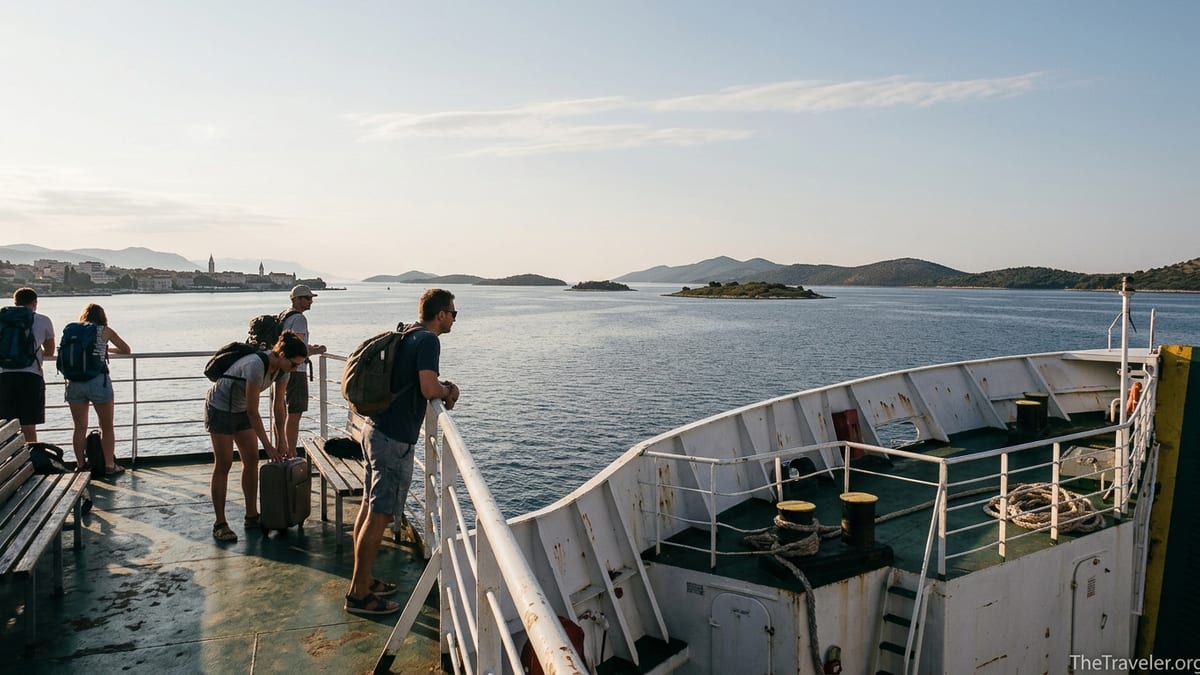
Understanding Your Options: Car Ferry vs Passenger Catamaran
From Zadar to Dugi Otok you essentially choose between two types of boat: the classic car ferry and the faster passenger catamaran. The car ferry links Zadar’s Gaženica ferry terminal with Brbinj on Dugi Otok and is the backbone of life on the island, used daily by locals taking cars, vans and delivery trucks. Passenger catamarans are foot-passenger only, docking at ports such as Sali, Zaglav, Božava and sometimes Brbinj, and are popular with visitors travelling light or staying in one village.
In practice, your choice usually comes down to whether you need a car on the island. If you are a couple with backpacks staying in Sali and planning boat trips organized locally, the catamaran is almost always easier and faster. If you have a family of four, a rental car, paddleboards and a week booked in a house near Sakarun, the Gaženica to Brbinj car ferry is the sensible option, even though the crossing is slower.
The car ferry is also more forgiving when it comes to luggage and bikes. Cyclists commonly roll loaded touring bikes on board at Gaženica and ride off at Brbinj to explore the entire length of the island. By contrast, catamarans typically require that bikes are booked or agreed in advance, and they may be refused on busy summer sailings. Understanding these practical differences will save you a lot of stress on the day of departure.
It is also worth noting that different companies operate the lines. The main car ferry to Brbinj is run by the state-owned Jadrolinija, while fast passenger services are shared between Jadrolinija and private operator TP Line or G&V Line Iadera. Schedules, booking systems and on-board experience differ slightly, so checking which company serves your chosen port before you plan connections is important.
Getting to the Right Port in Zadar: Old Town vs Gaženica
The first logistical decision is simply which port in Zadar you need. Car ferries to Dugi Otok use the modern Gaženica ferry terminal, about a ten minute drive from Zadar Old Town. Most passenger catamarans, on the other hand, depart from the central port by the historic peninsula, a short walk from the Roman Forum and main promenade. Turning up at the wrong port is one of the most common mistakes first time visitors make.
If you are travelling with a rental car, you will almost certainly be using Gaženica. The terminal is clearly signposted as you drive into Zadar from the A1 motorway; local renters often tell guests to “follow signs for Gaženica and then Dugi Otok / Brbinj.” At the terminal, you join the queue marked for the Brbinj line, where staff check your ticket and direct you onto the appropriate lane for cars, campervans or larger vehicles.
Without a car, staying in or near the Old Town, it is more likely you will walk to the city center port to catch a catamaran. For example, the fast line to Sali and Zaglav typically leaves from a quay a few minutes on foot from the Land Gate and Five Wells Square. Many travelers staying in the pedestrian core simply wheel their suitcase along the waterfront, stopping at a café until boarding begins about 30 minutes before departure.
If you are changing port same day, for example arriving by long distance bus to Zadar bus station and then catching a catamaran, allow extra time. A taxi from the bus station to Gaženica usually takes 10 to 15 minutes depending on traffic, while the ride into the Old Town port is slightly shorter. In peak summer afternoons queues at Gaženica security and ticket windows are longer, so avoid planning tight 15 minute transfers if you can.
Car Ferry to Brbinj: Route, Timing and Taking a Vehicle
The workhorse route for reaching Dugi Otok with a car is the Jadrolinija ferry between Zadar Gaženica and Brbinj. Crossing time is usually around one hour and 20 to 30 minutes, depending on the specific vessel and sea conditions. In summer there are typically three sailings per day in each direction, while spring and autumn may see two daily departures. Exact times change year by year, but mid-morning, early afternoon and evening departures are common patterns in the high season schedule.
On a practical level, taking a car on this ferry works much like any other Croatian island route. If you are travelling in July or August with a rental car, it is strongly recommended to buy a dated vehicle ticket in advance through Jadrolinija’s online system as soon as your accommodation dates are fixed. This does not guarantee you a particular lane on board, but it reserves a place for your license plate on that sailing, which is crucial when demand is high.
On departure day you should still arrive early. Local advice for peak summer is at least 60 to 90 minutes before departure if the ferry is popular with tourists. For example, a family driving a compact rental car from Zadar city center for the 11:00 ferry in late July might leave their apartment at 9:15, reach Gaženica by 9:30, check in and wait in the Brbinj lane. This buffer time allows for traffic, the occasional queue at the terminal entrance and a relaxed coffee at the terminal café before boarding starts.
Foot passengers can also use the car ferry, and some travelers actually prefer it for the open decks and more generous luggage space. This works well if you are being picked up by friends or accommodation owners at Brbinj. For example, many guesthouses near Sakarun offer a transfer that meets the main morning ferry. Boarding as a foot passenger is usually possible until closer to departure than for cars, but in high season it is still wise to buy tickets in advance for popular crossings.
Passenger Catamarans: Sali, Zaglav, Božava and Beyond
If you are travelling without a car and your accommodation is in or near a village with a passenger port, the fast catamarans are often the most efficient choice. The long established line between Zadar and Sali, continuing to Zaglav, is the main artery for the southeastern part of Dugi Otok and for visitors heading to Telašćica Nature Park. Travel times are significantly shorter than the car ferry to Brbinj, and you disembark directly in the heart of the village.
For the northwestern side of the island, including Sakarun beach and nearby villages, the catamaran routes to Božava and sometimes Brbinj or smaller islands are useful. In practice, many summer visitors combine routes: they take a catamaran from Zadar to Božava, then a local taxi boat or shuttle to Sakarun. Some lines also stop at smaller intermediate islands like Zverinac or Rivanj, which makes for a particularly scenic approach as you weave through the archipelago.
Schedules for the catamarans vary more through the year than the car ferry. In the shoulder season you may find one or two daily departures to Sali and fewer options to Božava, while in late July and August there are often additional afternoon or evening sailings. Sailings can also differ significantly between weekdays and Sundays. As an example, some travelers planning a day trip to Sakarun have found that the only combination of morning departure and evening return that works in a particular season is on Sunday, forcing them to adjust their itinerary.
Because catamaran capacity is limited and many passengers are tourists rather than locals, popular summer sailings can sell out, particularly around mid-morning. It is increasingly common for visitors to buy tickets online a few days in advance once the weather forecast looks stable. Others visit the ticket office in Zadar Old Town the day before to avoid standing in a queue with luggage on the morning of travel.
Arriving on Dugi Otok: Brbinj, Sali, Božava and Zaglav
Which port you choose on Dugi Otok should match where you plan to stay and how you will move around the island. Brbinj, roughly in the middle of the island, is the main car ferry port. From here a road runs north toward Božava and Sakarun and south toward Sali and Zaglav. Accommodation owners in villages as small as Savar or Luka often arrange to meet guests here, knowing that most ferry passengers will be carrying suitcases or arriving with rental cars.
Sali, on the southeastern tip, is the administrative and cultural center of the island and a popular base for those focused on hiking, sea kayaking and boat excursions into Telašćica Nature Park and the Kornati Islands. If you plan to stay entirely in Sali, perhaps in a seaside apartment near the main waterfront, arriving by catamaran directly into the village is usually more convenient than landing in Brbinj and then arranging a transfer.
Božava, on the northern side, is best known among visitors as the gateway to Sakarun, which lies just a few kilometers away across the island. In summer, small tourist trains and shuttle minibuses often connect Božava and Sakarun to meet incoming boats. A typical day trip might involve catching the early catamaran from Zadar to Božava, taking the shuttle to Sakarun for a few hours on the beach, then returning for an evening boat back to the mainland.
Zaglav is the main port for access to the interior of the southern part of Dugi Otok and is used by both locals and visitors heading to campsites, smaller coves and walking trails. Some seasonal boat tours from Zaglav provide transfers deeper into Telašćica, while local buses and taxis connect with Sali and neighboring villages. When planning your arrival, check whether your accommodation host suggests meeting you in Sali, Zaglav or Brbinj based on the time of day and your chosen line.
Tickets, Luggage and Taking a Car: Practical Advice
Ticketing for Dugi Otok is straightforward once you understand the categories. For the car ferry you typically need a separate ticket for the vehicle and for each passenger. Rental cars should be booked as soon as you know your intended sailing, particularly in July and August, because space for vehicles is limited. It is common for travelers who arrive in Zadar without a car reservation to find that their preferred morning ferry is already fully booked for vehicles, forcing them onto a late evening departure.
For catamarans you buy individual passenger tickets only, with separate tariffs for adults, children and, in some cases, residents. Online sales are common and most operators accept bank cards as well as local payment methods. Some travelers still prefer to purchase at the port ticket office to ask specific questions about luggage and connections, especially if they are carrying unusual items such as diving gear, windsurfing sails or musical instruments.
Luggage rules on both ferries and catamarans are generally relaxed as long as you can carry your bags yourself. Rolling suitcases, backpacks and small daypacks are all standard. On car ferries, foot passengers usually place larger suitcases on the vehicle deck near the stairwell and then head up to the passenger salon or outside deck, returning to their luggage only shortly before arrival. On catamarans, luggage is often stored in designated racks near the entrance or in front of the seats. If you arrive with very bulky items such as paddleboards in bags, arrive early and ask crew where they want them placed.
Cars and campervans require special attention. Rental agencies often specify that you must inform them if you plan to take their vehicle on a ferry, so check your contract. When boarding at Gaženica, follow staff instructions carefully: they may load vehicles in a specific order depending on length, and drivers are expected to park very close to the car in front to maximize space. Once parked, you should apply the handbrake, put the car in gear or park, and make sure the lights are fully off before locking the vehicle for the crossing.
Seasonal Timing, Weather and Common Mistakes
Ferry and catamaran timetables to Dugi Otok change between low season and summer, and from year to year, so always check the schedule for your exact travel dates rather than assuming last year’s pattern will apply. It is not unusual, for example, for there to be two daily car ferries in May, three in August and then a reduced service again in October. Fast passenger lines also sometimes gain or lose an extra evening sailing for the peak weeks only. Many experienced travelers check schedules again a few days before departure in case of small time changes.
Weather is another factor that can affect your journey. Strong Bora or Jugo winds, as well as summer thunderstorms, can lead to delayed or cancelled fast catamaran sailings, especially on exposed sections of the route. Car ferries are more robust in rough seas, though even they can be held at port in extreme conditions. If a storm is forecast for your travel day, it is wise to keep an eye on announcements from your ferry operator and allow flexibility in your plans, especially if you have onward flights or long distance buses.
Several mistakes come up again and again among visitors. The first is underestimating how early car drivers should arrive at Gaženica in high summer. Turning up 25 minutes before departure at the height of August, even with a ticket, may mean you are held for the next sailing if the vehicle deck is already full. Another is assuming that a day trip to Sakarun or Telašćica from Zadar will be easy on any day of the week, only to discover that the combination of outbound and return boats works realistically only on one or two weekdays in a given season.
A third common issue is misjudging distances and public transport once on the island. Dugi Otok is long and relatively sparsely populated, and while there is a local bus that follows the main road and meets some ferries, its schedule is limited. Travelers arriving in Brbinj without a car and hoping to rely on buses to reach a remote cove often discover that options are few or that they face long waits. Taxis and pre-booked private transfers exist but can be expensive for long distances, so clarifying transport with your accommodation before booking is strongly recommended.
Sample Itineraries: Matching Routes to Real Trips
To understand how the different routes work in practice, it is helpful to look at a few real-world style itineraries. Imagine a couple flying into Zadar on a Friday afternoon in late June, planning a three night stay in Sali without a car. They might book a room in the Old Town for the first night, then stroll down to the city harbor on Saturday morning to catch the late morning catamaran to Sali. Their host would meet them at the pier on foot, and they would spend the weekend hiking in Telašćica and joining a small boat trip to the Kornati Islands, returning to Zadar by catamaran on Monday morning in time for an afternoon onward bus.
A different case is a family of four arriving by car from Zagreb at the start of August with a week booked in an apartment near Sakarun. They reserve a vehicle space on the Gaženica to Brbinj ferry about two months in advance, choosing the mid-afternoon sailing to avoid an early start with children. On the day, they time their drive to reach Gaženica 90 minutes before departure, check in and then let the kids stretch their legs at the terminal. Once off the ferry in Brbinj they follow clear signs north toward Božava and then on to their accommodation, using the car throughout the week to explore bays and viewpoints.
Solo travelers on a budget often combine ferries with buses. One common pattern is to base in Zadar, book a rental bike in town, and then use the early morning car ferry or catamaran as a foot passenger with the bike as luggage. They ride from Brbinj to a village like Luka or Savar, camp or stay in a simple apartment, then ride back for a return ferry a few days later. This allows slow exploration of the island’s quieter roads and coves without paying for a rental car or relying on infrequent buses.
Another example is a group of friends planning a DIY beach day at Sakarun instead of joining a packaged boat excursion advertised in Zadar for a fixed price per person. They study the current summer catamaran timetable and see that on one particular day an early morning sailing to Božava lines up with an evening return, providing around six hours on the island. They buy their tickets a few days in advance, bring their own picnic and beach gear, and share the cost of the local shuttle between Božava and Sakarun. The result is a more flexible and often cheaper day out, at the expense of doing a little more planning themselves.
The Takeaway
Reaching Dugi Otok from Zadar is straightforward once you match the right boat and port to your style of travel. The car ferry from Gaženica to Brbinj is ideal for drivers, families and anyone carrying bulky gear, while passenger catamarans into Sali, Zaglav or Božava work best for those travelling light and focusing on one part of the island. Thinking in practical terms about where you are staying, how you will move around once you arrive, and how much flexibility you have with dates will simplify your decisions.
Give yourself generous buffers, especially in summer, treat timetables as guides rather than immutable promises, and coordinate closely with your accommodation host, who will often have the most up to date local knowledge. With a little preparation, the crossing from Zadar becomes part of the pleasure of the trip: a first glimpse of the long, low outline of Dugi Otok and the scattered islets of the archipelago that make this part of the Adriatic so memorable.
FAQ
Q1. Do I need to book the car ferry from Zadar to Dugi Otok in advance?
In low season you can sometimes buy tickets on the day, but in July and August it is strongly advised to reserve a vehicle space in advance, especially for popular morning and afternoon sailings, as the number of cars the ferry can carry is limited.
Q2. Can I visit Dugi Otok as a day trip from Zadar?
A day trip is possible, but depends heavily on the current timetable. In some seasons only specific days of the week offer a morning outbound and evening return that give you enough time on the island, so always check the latest schedules before planning a DIY excursion.
Q3. Is it better to bring a car to Dugi Otok or rely on buses and taxis?
Outside the main villages, public transport on Dugi Otok is limited, so having a car or at least a bike gives you far more freedom. If you plan to explore multiple beaches and viewpoints across the island, bringing a car or arranging a local rental is usually more practical than relying solely on buses and taxis.
Q4. Which port should I choose if I want to visit Sakarun beach?
Most visitors heading to Sakarun aim for the northern side of the island, using either the car ferry to Brbinj and then driving north, or a passenger catamaran to Božava in summer and linking with a local shuttle or taxi from there to the beach.
Q5. What happens if my ferry or catamaran is cancelled due to bad weather?
If a sailing is cancelled, operators usually transfer your ticket to the next available departure or offer a refund. In practice, fast catamarans are more likely to be disrupted than car ferries in rough seas, so if a storm is forecast, keep your plans flexible and monitor announcements from your chosen operator.
Q6. Can I take a bicycle on the ferry or catamaran to Dugi Otok?
Bicycles are normally accepted on the car ferry without much difficulty, often with a specific charge, as there is ample space on the vehicle deck. On catamarans, space is tighter and bikes may only be carried if there is room and sometimes need prior agreement, so it is wise to ask the operator in advance.
Q7. How early should I arrive at Gaženica port before departure?
For car drivers in high summer, arriving 60 to 90 minutes before the scheduled departure is recommended to ensure smooth check in and boarding. Foot passengers can usually arrive later, but allowing at least 30 to 45 minutes gives you time to buy or collect tickets and find the right quay.
Q8. Are there food and drinks available on board the ferries?
Most car ferries have a simple café bar serving coffee, soft drinks, snacks and sometimes light sandwiches. Passenger catamarans tend to offer more limited options or vending machines, so many travelers bring water and a small picnic, especially if traveling with children.
Q9. Is the crossing to Dugi Otok suitable for travelers who get seasick?
On calm days the crossing is usually smooth, but wind and swell can make parts of the route choppy. If you are prone to seasickness, consider the larger car ferry rather than a small fast catamaran, sit near the center of the vessel and bring any medication or remedies you find helpful.
Q10. Can I show my ferry ticket on my phone, or do I need a printed copy?
Most operators now accept mobile tickets displayed on a smartphone, especially for passenger catamarans, but practices can vary and mobile networks can be patchy at the port. It is sensible to download your ticket in advance and, if you prefer certainty, carry a printed copy as a backup.