


Dugi Otok is one of Croatia’s most atmospheric Adriatic islands, a long sliver of rock west of Zadar with quiet fishing villages on one side and wild cliffs and turquoise bays on the other. For a first-time visitor it feels remote yet still reachable in a day from the mainland, with enough infrastructure to be comfortable but still far fewer crowds than Hvar or Brač. This guide focuses on the practicalities you actually need for a first visit: how to get there from Zadar, how ferries and buses really work, where you are likely to stay, and what to expect at headline sights like Sakarun Beach and Telašćica Nature Park.
Get the latest updates straight to your inbox!
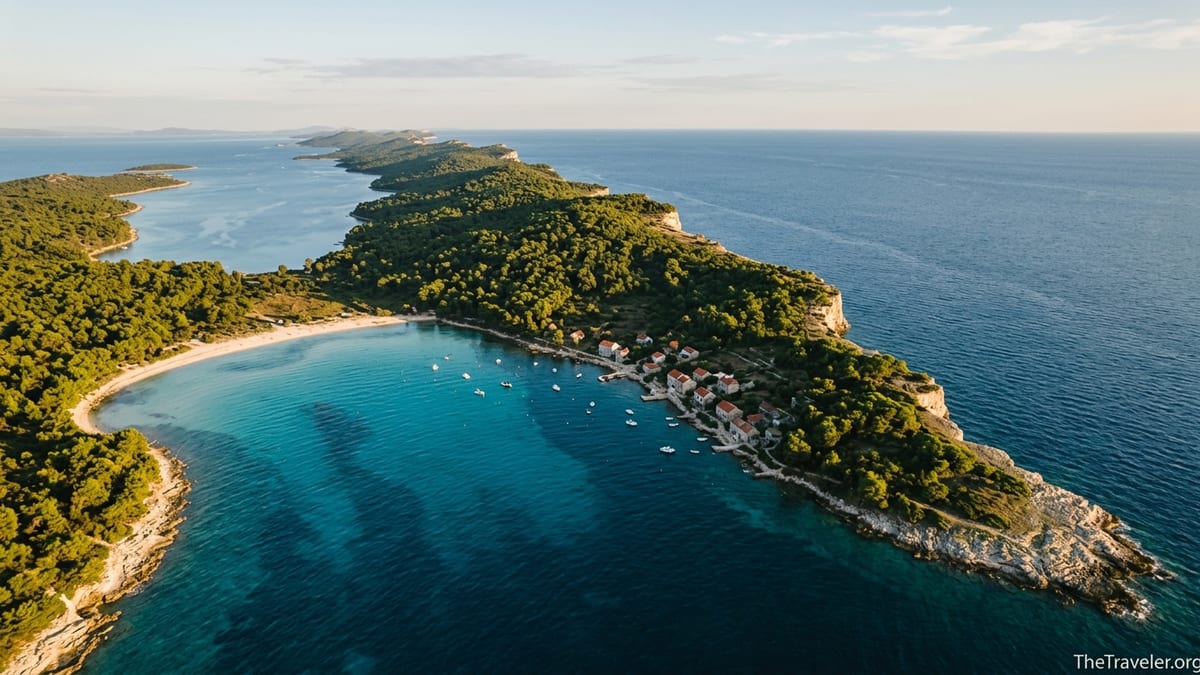
Where Dugi Otok Is and How the Island Is Laid Out
Dugi Otok, literally “Long Island,” sits off the Dalmatian coast opposite Zadar. It stretches roughly 45 kilometers from north to south, but is narrow, often only a couple of kilometers wide. Most settlements are on the more sheltered eastern side facing the mainland, while the wilder western side is exposed to the open Adriatic, with high cliffs, pine forest and a scattering of sheltered coves. First-time visitors usually underestimate distances: although the island is not huge, it can still take more than an hour to drive from the northern tip near Veli Rat down to Sali in the south.
The island has around a dozen villages that matter for visitors. Sali, in the southeast, is the administrative center and the main port for trips into Telašćica Nature Park. Božava, further north, is a small harbor settlement that serves as a base for Sakarun Beach and the cluster of tiny nearby villages such as Soline and Veli Rat. Mid-island villages like Brbinj, Savar and Luka feel quieter and more residential, with a handful of private apartments and small waterfront konobas serving grilled fish. You will spend most of your time either at your chosen base village, at Sakarun or at Telašćica, so it is useful to understand how they line up on the map before booking accommodation.
The feel of the island changes as you move along its length. The north has a low-key holiday atmosphere with a couple of larger hotels near Božava and pine-shaded lanes leading to beaches like Sakarun and Veli Žal. The middle is more about everyday island life, with vineyards, olive groves and stone houses lining the main road. The south is dominated by fishing traditions and by Telašćica’s protected landscapes, so it attracts more boaters, hikers and travelers looking for nature rather than nightlife.
How to Get to Dugi Otok from Zadar
Most travelers reach Dugi Otok from Zadar by Jadrolinija ferry or passenger catamaran. For visitors bringing a car, the key route is the car ferry from Zadar’s main ferry port at Gaženica to Brbinj on Dugi Otok. The crossing usually takes around 1 hour 40 minutes to 2 hours, depending on the vessel and sea conditions. In recent seasons, a one-way foot-passenger ticket has typically cost the equivalent of a few euros, with a small car adding several times that amount on top. Prices vary by season and vehicle size, so it is worth checking current tariffs shortly before travel and booking high-summer departures in advance.
If you are traveling without a car, the faster passenger catamarans are often more convenient. These typically depart from Zadar’s old town waterfront rather than Gaženica, which means you can walk from central accommodation in a few minutes. Services usually stop at villages such as Božava or Sali, depending on the line and day. For example, in summer, it is common to find a morning catamaran that reaches Božava in roughly an hour, which works well if you want to be close to Sakarun. Schedules change seasonally, and some lines run only a few days a week outside peak months, so treat timetable screenshots shared on blogs as illustrative rather than reliable and always confirm with the current Jadrolinija or local operator schedule.
Tickets can normally be bought online, at Jadrolinija offices on the Zadar waterfront, or at the Gaženica terminal. In July and August, foot passengers on catamarans occasionally find popular departures sold out close to sailing time, especially at weekends. A common real-world pattern is that travelers who show up an hour before a Saturday morning catamaran during high season sometimes need to shift to a later departure. For car ferries, the bottleneck is vehicle space, so if you are driving a rental with a tight itinerary, buying a dated vehicle ticket in advance is safer than relying on turning up early at the queue.
Finally, a handful of private tour boats and excursion companies in Zadar offer Dugi Otok day trips that might include Sakarun or Telašćica. These are typically full-day outings with food and swim stops, and they make sense if you are short on time and do not want to deal with public schedules. The trade-off is less flexibility once you are on the island and the fact that you see only a small slice of Dugi Otok, so independent travelers staying two or three nights usually prefer ferry or catamaran routes.
Getting Around: Buses, Cars, Scooters and Boats
Transport on Dugi Otok is simple but not always frequent. There is a main road running the length of the island from Veli Rat in the north down to Sali and to the entrance of Telašćica Nature Park. A local bus service, usually operated by Liburnija from Zadar, connects the main villages, often timed to meet car ferries at Brbinj. For example, it is common to find a bus waiting near the pier when the afternoon ferry arrives, running south through Savar and Zaglav to Sali. However, departures can be limited to a few services a day outside summer, and even in July and August they are not frequent enough to hop on and off between beaches comfortably, so it is wise to check the latest timetable on arrival.
For more flexibility, most visitors either bring a car on the ferry or rent one. Car rental on the island is modest in scale but available in places like Sali and Božava through local agencies and hotel desks. A realistic example would be a basic small manual car rented for a day to explore Sakarun and Telašćica, with pricing often higher than mainland Zadar due to limited supply. Scooters and e-bikes are also popular, especially with couples or solo travelers based in Sali or Božava. In practice, travelers often rent a scooter in Sali for a day to drive up as far as Sakarun, stopping at small beaches along the way, though you should be comfortable with sometimes gusty coastal winds and stretches of unshaded road.
Taxis exist but are limited and effectively operate as private transfers. Around Sali, for example, drivers can be pre-booked to drop you at the entrance to Telašćica or to bring you back from trailheads or coves. Expect prices that reflect island conditions: a short hop that might be inexpensive in a city can cost more here because vehicles and drivers are scarce. Ride-hailing apps popular in larger Croatian cities are generally not available, so arrange return journeys in advance rather than assuming you can call a car on demand.
On the water, boat rentals and small excursions are common in summer. In Sali and Božava, kiosks and harbor-side stands advertise half-day or full-day boat hire, sometimes without a skipper for small vessels if you hold a valid boating license. One typical scenario is a couple renting a small motorboat for a few hours to explore coves near the western shore, bringing a picnic and anchoring in a quiet bay. Organized boat tours into Telašćica are also sold locally, which can be a stress-free way to combine swimming time with a visit to the salt lake and cliffs if you do not want to drive and then hike.
Sakarun Beach: What to Expect at the Island’s Famous Bay
Sakarun, on the northwestern coast near Božava and Soline, is Dugi Otok’s most photographed beach. It is a wide curve of pale sand and shingle backed by pine forest, looking out over very shallow turquoise water. From Zadar, reaching Sakarun independently usually means taking a ferry or catamaran to Božava or Brbinj and then continuing by car, scooter or local shuttle. In peak summer, a small tourist “train” shuttle often runs between Božava and Sakarun, trundling through pines and dropping visitors at the back of the bay, which is helpful if you arrive without your own wheels.
Facilities at Sakarun are simple but adequate for a beach day. Expect a couple of seasonal beach bars or kiosks serving coffee, soft drinks and simple snacks like sandwiches and ice cream, along with basic toilets. There are usually sun-loungers and umbrellas for rent along parts of the shore, while much of the rest is uncontrolled, so you can spread a towel under the trees. Parking is set back from the beach, and during high season attendants may charge a fee per car for the day, which many recent visitors report encountering in mid-summer. From the parking area, it is a short walk along sandy paths to the water’s edge.
The bay’s very shallow gradient means that even 30 or 40 meters from shore the water may only be waist deep, making it popular with families and non-confident swimmers. The flip side is that children can run far out and still be in shallow water, so supervision remains important. In July and August, arrivals between late morning and mid-afternoon can find the central section of the bay busy, especially when excursion boats anchor offshore. A more tranquil experience is usually found earlier in the morning or after 4 pm, when day-trip crowds thin and the low sun sends warm light across the sand.
Environmental protection is a growing priority at Sakarun. Local rules and projects encourage better waste sorting and discourage single-use plastic in beach bars. You will see signage asking visitors to take their trash with them and to avoid trampling vegetation behind the dunes. Simple habits such as bringing a refillable water bottle, using reef-safe sunscreen and sticking to marked paths make a difference here, where the ecosystem is fragile and the population small.
Telašćica Nature Park: Cliffs, Salt Lake and Boat Coves
Telašćica Nature Park occupies the southeastern tip of Dugi Otok and the surrounding sea and is one of the island’s primary reasons to visit. It is a deeply indented bay lined with steep, forested slopes on one side and dramatic sea cliffs on the outer edge, facing open water. Within the park you find a mix of landscapes: the calm inner bay dotted with moored yachts, the tall cliffs that can reach close to 200 meters in places, and Lake Mir, a small saltwater lake separated from the sea by a narrow strip of rock. This variety means you can spend a day here walking between viewpoints, swimming and taking short boat rides.
Entrance to the park is paid, whether you arrive by land or sea. Visitors driving in from the island side pass a main entrance near Sali, where tickets are checked and where information boards outline walking routes and viewpoints. Prices change irregularly and can differ depending on whether you buy online in advance or at the gate, with seasonal variations between high summer and shoulder seasons. As an approximate guide, many travelers in recent years report paying the equivalent of a modest restaurant meal per adult for park entry, with motor vehicles charged separately according to size. Yacht and motorboat visitors are usually charged according to vessel length, often with mooring fees doubling as park tickets for the crew for that day.
Once inside, the main attractions are accessible by short walks from designated parking areas and shuttle stops. Lake Mir lies in a shallow depression and is usually slightly warmer than the open sea, so it is popular for swimming, although the shore is rocky rather than sandy. From here, marked paths climb to clifftop viewpoints where you can stand above the open Adriatic and watch for passing dolphins or, in late afternoon, dramatic light on the rock faces. There are simple refreshment stands and small restaurants at key points in season, but not enough to rely on for a full day without bringing water and snacks of your own.
Organized boat trips into Telašćica typically depart from Sali, from Zadar or from nearby coastal towns like Biograd. A typical day tour from Zadar might combine a cruise through the Kornati archipelago with a stop at Telašćica for a swim in Lake Mir and a walk to the cliffs, often including lunch on board. This is a good first encounter with the park if you do not plan to stay on Dugi Otok itself. However, if you are already based in Sali or elsewhere on the island, driving into the park early or late in the day allows you to avoid peak tour crowds and to experience the cliffs in softer light.
Villages, Beaches and Where to Stay
Choosing the right base on Dugi Otok shapes your trip more than on some other Croatian islands, because crossing from north to south takes time. For first-time visitors, the two most popular bases are Sali in the south and Božava in the north. Sali is a compact harbor town with a long quay lined by small boats, a few cafes, bakeries, a supermarket and several konobas serving grilled fish, calamari and local wines. It feels like a working community rather than a pure resort, with fishing boats still heading out early most mornings. From Sali you are close to Telašćica’s entrance and within a short drive or cycle of quiet coves, plus you have more year-round services than elsewhere on the island.
Božava, by contrast, is smaller and more overtly holiday-focused, with a cluster of hotels, pensions and apartments on and above the harbor. From Božava it is only a short ride or drive to Sakarun, Veli Žal and other northern beaches, making it the natural base for those who want to spend several days by the sea with easy access to a sandy bay. Facilities here include seasonal restaurants, beach bars and a small supermarket, with promenades threaded through pine forest leading out to rocky swimming spots. In high season, families and central European holidaymakers form much of the crowd, so it can feel livelier than villages further south.
Mid-island settlements such as Brbinj, Savar and Luka suit visitors who prioritize quiet and do not mind driving to sights. Many rentals here are simple stone or concrete houses converted into apartments, directly on the water or just behind the coastal road. You might find a two-bedroom apartment with a terrace overlooking the bay, within walking distance of a single family-run restaurant and a small shop. These villages often have local, mostly pebbly beaches near the harbor plus small jetties where children jump into the water in the evening. The trade-off is a longer journey to either Sakarun or Telašćica and fewer choices for eating out.
Accommodation options on Dugi Otok are dominated by private apartments, small guesthouses and a handful of mid-sized hotels around Božava and Sali. Large all-inclusive resorts do not exist here. A realistic range in high season for a simple but well-reviewed one-bedroom apartment near the sea might be the equivalent of a mid-range city hotel room elsewhere on the Croatian coast, rising for premium waterfront terraces or properties with pools. Outside July and August, prices often drop notably, and availability improves, making late May, June and September appealing windows for first-time visitors seeking value and milder temperatures.
Practical Tips for First-Time Visitors
Planning your first visit to Dugi Otok is easier with a few concrete details in mind. Seasonality is key: July and August bring the warmest seas and the most reliable sun, but also the greatest pressure on ferries, car rentals and headline sights. If you can travel in June or September, you still enjoy pleasant swimming conditions with significantly fewer people on Sakarun and at Telašćica viewpoints. In early spring and late autumn, some restaurants and smaller shops may be closed or operating reduced hours, and ferry schedules are less frequent, so self-catering and a flexible attitude become more important.
Cash and cards both work, but card terminals are not universal. Supermarkets and most established restaurants accept credit and debit cards, while small beach bars, bakeries and rural konobas sometimes prefer cash, especially for small bills. It is common for visitors arriving with only cards to find themselves walking back to a larger village in search of an ATM after stopping at a simple grill in a tiny bay. Bringing some local currency in small denominations on day trips helps avoid awkward moments when buying coffee, pastries or produce from roadside stalls.
For food shopping, expect at least one small supermarket in Sali and Božava, plus mini-markets or mixed-goods stores in several mid-island villages. Selection is more limited than in Zadar: you will find basics such as bread, milk, fresh fruit and vegetables, cured meats, cheese, pasta and household items, but not the variety of international brands or specialist products. Visitors with specific dietary needs sometimes bring items from the mainland, especially gluten-free or specialty vegetarian products. Fresh fish is most reliably found in restaurants or, if you are self-catering and early-rising, at small stalls or directly from fishers at harbors like Sali.
Finally, pack for strong sun and variable terrain. Even on relatively mellow summer days, long walks in Telašćica or along Sakarun’s shoreline involve reflective white rock, gravel paths and limited shade. A wide-brimmed hat, high-factor sunscreen, light long-sleeved clothing and sturdy sandals or trainers are more practical than flimsy flip-flops. In the evenings, especially in shoulder seasons, a light jacket is useful when the wind picks up across the open Adriatic. Simple gear like a dry bag for phones on boat trips and a reusable shopping bag for groceries also makes everyday life on the island smoother.
FAQ
Q1. How long should a first-time visitor spend on Dugi Otok?
For a first visit, two full days is the minimum to see both Sakarun and Telašćica without rushing. Many travelers find three to four nights ideal, allowing one beach day in the north, one nature day in the south and at least one flexible day for smaller villages and coves.
Q2. Is it realistic to visit Dugi Otok as a day trip from Zadar?
It is possible but involves a long day. A typical pattern would be an early morning catamaran from Zadar, a few hours on Sakarun or on a local boat trip, then an evening return. You will get a taste of the island but not the slower rhythm that comes with staying overnight.
Q3. Do I need a car on Dugi Otok?
A car is not strictly essential but makes exploring far easier. Buses connect main villages, and in high season there may be shuttles to Sakarun, yet services are limited. Without a car, consider basing yourself in Sali or Božava, using local rentals for a day or two to reach more remote spots.
Q4. Which base is better for first-timers, Sali or Božava?
Sali is best if you are most interested in Telašćica, local life and having more year-round services. Božava suits visitors focused on beaches, especially Sakarun and Veli Žal, and those who like to be near a cluster of hotels and seaside promenades.
Q5. Can I swim comfortably in early June or late September?
Sea temperatures vary by year, but many visitors find the water swimmable by early June and still pleasant in late September, especially in shallower areas like Sakarun and Lake Mir. Cooler days are possible, so bringing a light rash vest or short wetsuit can extend your time in the water.
Q6. How busy does Sakarun get in summer?
In July and August, late morning to mid-afternoon can be crowded, especially when excursion boats anchor offshore and shuttle passengers in. Arriving before 10 am or after 4 pm usually offers a calmer experience, with more space on the sand and shorter waits at beach bars.
Q7. Are there sandy beaches besides Sakarun on Dugi Otok?
Most Dugi Otok beaches are pebbly or rocky, with concrete platforms near some villages. Sakarun is the main sandy option. Some smaller bays have patches of sand or fine shingle, but they are usually much smaller and less uniform than Sakarun’s broad arc.
Q8. Is Telašćica suitable for children and less experienced hikers?
Yes, if you choose shorter, marked paths. The walk from parking areas to Lake Mir and to main clifftop viewpoints is relatively short and on clear tracks, though surfaces can be rocky. Good footwear and sun protection are important, but no technical hiking skills are needed for standard viewpoints.
Q9. Can I use mobile data easily on the island?
Coverage from major Croatian mobile operators is generally good in and between villages, with 4G or better common along the main road. In some isolated coves or behind cliffs, signal can weaken or drop, so downloading offline maps before arrival is a smart precaution.
Q10. Is Dugi Otok a good choice for travelers without nightlife interests?
Yes. Dugi Otok is primarily about quiet evenings in harborside restaurants, walks along the sea and early starts for swimming or hiking. Bars exist but are low-key, and there are no large clubs. It is well suited to couples, families and solo travelers who value nature and calm over nightlife.