


Dugi Otok looks small on the map, but once you are standing in the ferry port at Brbinj wondering how to reach Sakarun Beach, the lighthouse at Veli Rat or the cliffs of Telašćica, the island suddenly feels very long. Choosing the right transport can make the difference between a relaxed, spontaneous stay and a holiday spent chasing buses, taxis and sold-out rentals. This guide explains whether it makes more sense to bring a car from Zadar or rent on the island, with clear examples of ferry costs, road distances, scooter and bike options and summer availability.
Get the latest updates straight to your inbox!
Understanding Dugi Otok’s Layout and Distances
Dugi Otok is roughly 45 kilometers long, with a single main road running along its spine and small side roads dropping down to bays and villages. The car ferry from Zadar’s Gaženica port arrives in Brbinj, which sits almost in the middle of the island. From there, the main road heads north toward the beach of Sakarun and the lighthouse at Veli Rat, and south toward Sali and the entrance to Telašćica Nature Park. This linear layout means that most days out involve a series of relatively long point to point drives along the same road.
From Brbinj to Veli Rat in the far northwest you should allow roughly 30 to 35 minutes by car, as the distance is about 25 kilometers along a winding but paved road. To reach Sakarun Beach you turn off near the village of Verunić, about 20 to 25 minutes’ drive from Brbinj. Southbound, Brbinj to Sali is around 20 kilometers and usually just under half an hour by car. The entrance to Telašćica Nature Park is a short drive beyond Sali, reached on the same road. For visitors staying in one village but wanting to hop between the island’s headline sights, these half hour stretches add up quickly.
Because there is only one main road, public buses tend to be timed around the ferry schedule rather than functioning as frequent local transport. A published price list for local buses on Dugi Otok shows that routes focus on connecting Brbinj with Sali and other settlements, with services clustered around ferry arrivals and departures rather than spread evenly through the day. In practice, this means relying on the bus can work for a carefully planned day trip, but is restrictive for beach hopping or spontaneous sunset drives.
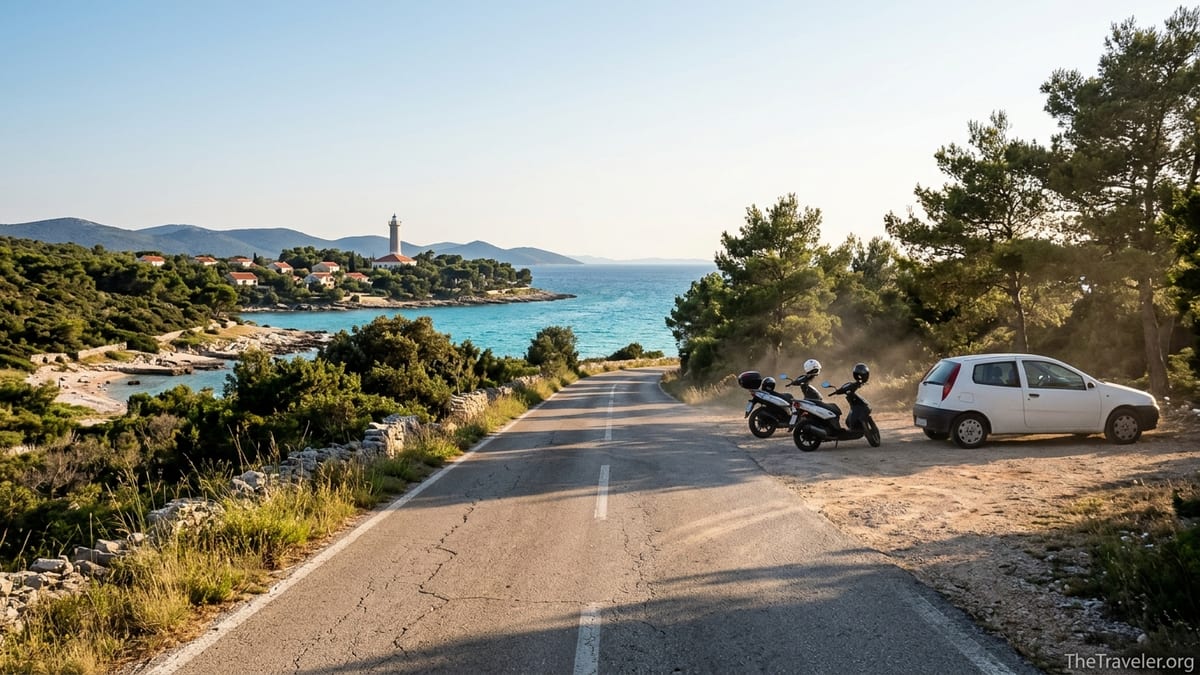
The road itself, officially designated as state road D109 with short connectors to the Brbinj ferry port and other small harbors, is fully paved and generally in good condition. However, it remains a typical Adriatic island road: relatively narrow, without shoulders, and with occasional sharp bends and stone walls. Traffic outside July and August is light, but in peak season you will share the road with a mix of local cars, visitors in rental vehicles, scooters and delivery vans. This environment influences whether you feel more comfortable in a car or on two wheels.
Bringing a Car from Zadar: Costs, Pros and Cons
The simplest way to have full flexibility on Dugi Otok is to bring your own or rented car on the car ferry that runs between Zadar’s Gaženica port and Brbinj. The ferry line, operated by Jadrolinija as route 434, carries both passengers and vehicles. Tickets are sold per person plus a separate fee for the car, calculated by vehicle length. As of the most recent schedules, a standard passenger car fare on this route in high season is typically in the range of several tens of euros one way, while foot passenger tickets are much cheaper, often under ten euros per person per direction. Exact prices vary by season and vehicle size, so checking the current Jadrolinija price list before you travel is essential.
If you are already renting a car on the mainland, adding the ferry cost is often good value for stays of three days or longer. For example, a couple renting a small car in Zadar for a week might be paying in the region of 40 to 60 euros per day including basic insurance in peak season. Adding roughly 80 to 120 euros for a return car ferry crossing for vehicle and passengers spreads the transport cost across the whole week and gives you complete freedom to explore the entire island without thinking about daily rental rates or availability.
The main advantage of having your own car on Dugi Otok is convenience. You can arrive on a morning ferry, drive directly from Brbinj to your accommodation in Sali, Božava or Veli Rat, shop once at a larger supermarket and then simply use the car whenever you like. Reaching Sakarun Beach from Sali becomes a straightforward 45 minute drive rather than a combination of bus, taxi or scooter rental. In the evening you can drive to a sunset viewpoint near Veli Rat lighthouse and comfortably return after dark, something many visitors prefer not to do on a scooter.
The downsides are primarily cost in high season and the logistics of traveling with a car. Car spaces on the ferry in July and August can sell out on popular departure times, so it is wise to arrive at the port well before departure or prebook where possible. You also need to navigate Zadar’s Gaženica port, which is a busy construction and traffic area, especially in summer. Finally, if you plan only a one day visit focused on a single area of the island, the car ferry schedule may not line up as conveniently as the faster passenger boats that serve some villages. For such short, focused trips, leaving the car in Zadar and renting locally can make more sense.
Renting a Car, Scooter or Bike on Dugi Otok
For travelers who prefer to arrive as foot passengers, Dugi Otok offers a small but growing network of local rental providers. In Sali, one of the main settlements in the south, the Adamo Travel agency rents bikes, scooters, cars and motorcycles directly from its office, allowing visitors staying in or near Sali to pick up a vehicle for a day or more. In Božava in the north, several businesses advertise scooters, cars and quads for exploring the area around Sakarun and Veli Rat. Some marinas and guesthouses also cooperate with local operators to arrange rentals for their guests.
Prices on the island are influenced by high summer demand and limited fleets. While mainland car rentals might start from the equivalent of 40 to 60 euros per day for a compact car in peak season, a small car rented on Dugi Otok itself can cost more per day, especially if you only take it for 24 hours. Visitors often report daily rates that feel closer to what you would expect on other popular Croatian islands, where 24 hour car rentals around 60 euros are common in July and August. Scooters are usually cheaper, with basic 50cc models on Croatian islands often renting from roughly 25 to 35 euros per day, while 125cc models may be somewhat more.
When renting scooters anywhere in Croatia, including Dugi Otok, license requirements follow national rules. A 50cc scooter can generally be rented with a regular B category car license, while 125cc machines require at least an A1 motorcycle license or equivalent. Helmets are provided and legally required. Most local rental shops also insist on a security deposit, either blocked on a credit card or taken in cash, and will check for visible damage on pickup and return. Booking in advance through email or messaging apps is strongly recommended in July and August, as the island’s small fleets can be fully booked for days at a time.
Bicycle rentals are available in Sali and at some accommodations, but the island’s profile and summer temperatures mean traditional bikes suit only certain travelers. The road from Brbinj to Sali and down to the entrance of Telašćica involves moderate hills, limited shade and long distances. For example, cycling from Sali to Sakarun would involve more than 40 kilometers each way along the main road. E-bikes, where available, can make this more realistic for experienced riders, but they are still less common than scooters in local rental fleets.
Scooters, Bikes or Car: What Works Best for Typical Itineraries
Choosing between a car, scooter or bike on Dugi Otok depends heavily on your base and priorities. For visitors staying near Sali who want to spend most of their time in Telašćica Nature Park and on nearby coves, a scooter rental of one or two days may be sufficient, combined with walking and perhaps occasional taxi rides. From Sali, the park entrance is only a short ride away, and the scooter makes it easy to reach viewpoints along the cliffs and the salt lake without worrying about parking a car in smaller spaces.
In contrast, travelers staying around Božava, Veli Rat or Verunić often choose scooters to bounce between Sakarun Beach, Veli Rat lighthouse, small coves along the northwest coast and their accommodation. Distances here are shorter than between the northern and southern ends of the island. For example, Božava to Sakarun is less than fifteen minutes by scooter, and Sakarun to Veli Rat is a similar distance. On a calm, sunny day this can be one of the most enjoyable ways to explore, with sea views and the freedom to stop by the roadside for photos or a swim.
Families with younger children or travelers planning to crisscross the island several times usually feel more comfortable with a car. A realistic scenario might be a family of four staying in Sali for five nights, planning one full day in Telašćica, one in the Sakarun and Veli Rat area and one or two days exploring smaller beaches near their base. In this case, loading beach gear, snacks and spare clothes into a car is significantly easier than using two scooters, and the cost of a car rental plus fuel can be competitive with multiple days of scooter hire.
Bikes tend to suit visitors interested in shorter, local rides rather than as the main mode for exploring the whole island. For example, using a bike from a base in Sali to reach nearby bays, the village of Zaglav or quiet olive groves is pleasant early in the morning or late in the afternoon. However, midday heat and the long distances between headline sights mean that, for most people, bikes are a complement rather than a substitute for motorized transport on Dugi Otok.
Parking, Driving Conditions and Summer Crowds
Parking on Dugi Otok is generally straightforward outside the busiest weeks of high season. In villages such as Sali, Božava and Veli Rat you will find signed parking areas near the waterfront and along access roads, some free and some subject to a small hourly or daily fee managed by the local municipality. Near Sakarun Beach, parking areas sit slightly back from the sand under pine trees, and in July and August they fill up by late morning with a mix of local cars, rental vehicles and scooters. Arriving earlier in the day or later in the afternoon helps avoid circling for a space.
Inside Telašćica Nature Park, driving is regulated and parking is focused around designated viewpoints, the salt lake Mir and trailheads. A nature park information page notes that visitors arriving by car from the northern side of the island reach the entrance shortly before the village of Sali, with a limited number of spaces available near main visitor facilities. In peak periods, park authorities may control traffic flow and ask vehicles to park in specific areas, so it is important to follow local signs and staff instructions. Using a smaller car or scooter can make maneuvering in these areas easier.
Driving conditions across the island are typical for rural Croatia. Speed limits are generally 50 kilometers per hour in settlements and 70 to 80 outside, though practical speeds are often lower because of bends, livestock crossings and occasional slow-moving local traffic. At night there is minimal lighting outside villages, so drivers should watch carefully for pedestrians, cyclists and animals. If you plan to drive after dinner or catch an early morning ferry, it is worth checking the route in daylight first so that you are familiar with curves and landmarks.
Summer crowds mostly affect availability rather than road safety. In July and August, ferries into Brbinj are busy with cars, vans and campervans, local buses run fuller and rental agencies can turn away walk-in customers by late morning. On the roads themselves, expect small clusters of vehicles behind delivery vans or cautious drivers, but not continuous traffic jams. Patience and defensive driving go a long way, as does avoiding tight schedules that require you to race from one end of the island to the other between commitments.
Ferry Logistics, Costs and How They Shape Your Decision
The connection between Zadar and Dugi Otok is central to any transport plan. The car ferry from Gaženica to Brbinj typically runs several times per day in summer, with crossing times around one hour and forty minutes. The timetable is seasonal, with more departures in July and August and fewer in the shoulder months. Because there is only one ferry operator on this line, tickets and schedules should be checked directly against the latest Jadrolinija information before travel. Departure times are often designed to allow same day travel to and from the island for both residents and visitors.
Ferry pricing has a direct impact on whether it is better value to bring a car or rent locally. A solo traveler or couple staying only two nights in Sali might find it cheaper to cross as foot passengers and rent a scooter from a local agency for a day or two, rather than paying the vehicle fare in both directions. On the other hand, a family of four staying a full week, with luggage and beach equipment, usually finds that paying one return car ferry ticket is less expensive and more practical than booking multiple local rentals or taxis once on the island.
It is important to be aware that car ferry tickets and positions are capacity limited. In high season, travelers with vehicles should aim to be at Gaženica well before departure, especially for morning ferries that are popular with island residents, delivery trucks and holidaymakers arriving or departing rentals. While foot passengers can almost always be accommodated, late arriving cars may be left to wait for the next crossing. If your accommodation check in or out times are tight, building a buffer into your schedule reduces stress.
For some itineraries, particularly short visits focused on a single part of the island, it may be worth combining the car ferry with local bus services. For instance, day trippers without a car can take the morning ferry to Brbinj and then use a bus timed to the ferry’s arrival to reach Sali, spend several hours in the village and Telašćica area, and return by bus to the evening ferry. This works best outside the hottest part of summer, and requires checking the latest bus price list and timetable for Dugi Otok, as published by the local operator serving routes between Brbinj, Sali and other settlements.
Summer Availability, Booking Strategies and Realistic Budgets
High summer on Dugi Otok, roughly from early July through late August, brings peak demand for every form of transport. Car ferry crossings from Zadar run busy, rental agencies in Sali, Božava and other villages can exhaust their fleets, and taxis and private transfers book up quickly. For visitors traveling in this period, advance planning is not a luxury but a necessity, especially if you have fixed dates or are traveling with children.
A realistic approach is to start by deciding whether you want a car for the entire stay or only for certain days. If you are renting a car on the mainland, inform the rental company that you plan to take the vehicle on a car ferry to an island, as some contracts require prior approval for ferry use. Then check the current Jadrolinija timetable for the Gaženica to Brbinj route that covers your travel dates, and build your itinerary around departures that allow comfortable arrival and departure times. Booking or reserving ferry spaces where possible, and arriving early at the port, helps secure a spot in high season.
If you prefer to rely on local rentals, contact agencies such as those based in Sali and Božava several weeks before arrival during peak periods. Many smaller businesses on the island work through phone, email or direct messaging rather than through large booking platforms, so be prepared to communicate directly. Ask about approximate daily rates for the type of vehicle you need, whether scooters, small cars or quads, and clarify fuel policies, insurance coverage and deposit requirements. Having a confirmed reservation for at least the first day or two of your stay gives you time to adjust plans on the ground.
In terms of budgeting, it can be helpful to think in ranges rather than precise numbers, as prices shift with demand and season. For many visitors in high season, a week on Dugi Otok might involve a return car ferry ticket in the low hundreds of euros for a vehicle and passengers, combined with fuel for exploring the island and perhaps one or two extra days of scooter hire for variety. Those traveling without a car might instead allocate part of their budget to scooter or quad rental on two or three days, plus bus tickets or occasional taxi rides. Being flexible about which days you schedule major excursions, based on rental availability and weather, can also improve your experience.
The Takeaway
Deciding whether to bring a car to Dugi Otok or rely on local rentals is primarily a question of how much freedom you want and how far you plan to range across the island. Because Dugi Otok is long and its main sights are spread between the northern and southern ends, having your own car or at least regular access to motorized transport makes a substantial difference to what you can realistically see in a limited time.
For week long stays, families, or travelers planning multiple trips between Sali, Telašćica, Sakarun and Veli Rat, bringing a car on the ferry from Zadar often offers the best balance of convenience and overall cost. For shorter visits, solo travelers and couples focused on one area, crossing as foot passengers and renting a scooter or local car can provide a lighter, more flexible experience, particularly if you book ahead in high season.
Whichever option you choose, planning around the Gaženica to Brbinj ferry schedule, reserving vehicles in advance for July and August, and understanding the island’s simple but stretched out road network will help you avoid frustration. With those logistics in place, Dugi Otok becomes what it looks like in the photographs: a relaxed, spacious island where the hardest decision is whether to head for a pine framed bay, a lighthouse sunset or a cliff top viewpoint next.
FAQ
Q1. Do I really need a car on Dugi Otok, or can I rely on buses?
Public buses on Dugi Otok are timed mainly to ferry arrivals and departures and run only a few times per day, so they work for very simple itineraries but not for flexible beach hopping. Most visitors who want to see both Sali and Telašćica in the south and Sakarun and Veli Rat in the north find that having a car or scooter is far more practical.
Q2. How much does it cost to bring a car on the ferry from Zadar to Dugi Otok?
Fares vary by season and vehicle size, but a standard passenger car typically costs in the range of several tens of euros each way, plus a smaller per person ticket for each passenger. Because prices and timetables change, you should always check the latest Jadrolinija information for the Gaženica to Brbinj route before committing to a plan.
Q3. Is it easy to find parking near Sakarun Beach and Veli Rat in summer?
Parking areas exist near Sakarun and around Veli Rat, but in July and August they fill quickly by late morning. If you arrive earlier in the day or later in the afternoon you are more likely to find a space without circling. Scooters usually have an easier time finding spots than cars, but you must still use designated areas and avoid blocking access roads.
Q4. Are the roads on Dugi Otok suitable for inexperienced scooter riders?
The main road is paved and generally in good condition but can be narrow, winding and exposed to wind, with limited lighting at night. Inexperienced riders may feel uncomfortable, especially with passengers or in busy summer traffic. If you have little or no prior scooter experience, a small car is usually a safer and less stressful choice.
Q5. Can I rent a car or scooter directly in Sali or Božava without booking ahead?
Outside the peak summer weeks you may find same day rentals, but in July and August local fleets in Sali, Božava and other villages often book out in advance. If your plans depend on having a vehicle, it is strongly recommended to reserve by phone or email before you arrive, especially for scooters and small cars.
Q6. Is cycling a realistic way to explore the whole island?
Because Dugi Otok is about 45 kilometers long with hills and limited shade, cycling the full length from Sali to Veli Rat and back in summer heat is demanding and best left to very fit, experienced riders. For most visitors, bikes are better for shorter local trips near their base, while longer excursions are more comfortable by scooter or car.
Q7. What about fuel availability on Dugi Otok?
There are fuel stations on the island, but they are few, so it is wise to top up when you pass one rather than waiting until the tank is nearly empty. Rental agencies can tell you where the nearest station is from your base, and filling up before a long north south drive is a sensible habit.
Q8. Are there any restrictions on driving into Telašćica Nature Park?
Access by car or scooter into the park is regulated, and you will need to buy an entrance ticket at or before the park gate. Once inside, you must follow signed routes and park only in designated areas. At busy times staff may direct traffic or temporarily limit access to certain parking zones to protect the environment and ensure safety.
Q9. What should I consider if I am traveling with children?
Families with children usually find a car more comfortable and secure than scooters, especially when carrying beach gear, snacks and spare clothes. Child seats are required and should be requested in advance if you are renting. A car also makes it easier to adjust plans quickly if the weather changes or younger travelers get tired earlier than expected.
Q10. Is it worth visiting Dugi Otok just for a day without a car?
A day trip without a car can work if you focus on one area, such as Sali and Telašćica, and plan around the ferry and bus schedules. You can take a morning ferry as a foot passenger, use a bus or prebooked taxi to reach your chosen destination, and return in the evening. However, if you want to see both the southern cliffs and northern beaches in one visit, bringing a car or staying at least one night is strongly recommended.