


The southern Appalachians stretch across both Tennessee and North Carolina, but the two states deliver very different travel personalities. One leans big on live music, neon, and family attractions; the other tilts toward craft breweries, leafy downtowns, and a calmer, nature-forward vibe. Both share the Great Smoky Mountains and Blue Ridge Parkway, yet how you experience them will depend a lot on which side of the state line you choose. If you are debating between Tennessee or North Carolina for your next trip, this guide breaks down the feel, costs, and experiences in real-world terms so you can match the right Southern destination to your travel style.
Get the latest updates straight to your inbox!
Overall Vibe: Big Energy vs Slow Burn
Think of Tennessee as the extrovert of the Southern mountains and North Carolina as its more laid-back sibling. In Tennessee, places like Nashville, Memphis, Pigeon Forge, and Gatlinburg buzz with live music venues, themed attractions, and neon-lit strips packed with bars, souvenir shops, and family entertainment. Walk down Nashville’s Lower Broadway on a summer weekend and you will pass multiple honky-tonks with bands on every floor and rooftop decks overlooking the Cumberland River. In Pigeon Forge, highway 441 is lined with go-kart tracks, dinner theaters, Dollywood, and outlet malls that make the area feel like a mountain amusement corridor.
North Carolina’s mountain towns favor a slower, more locally driven feel. Asheville, for instance, is known as much for its independent bookstores and galleries as its breweries, and its compact downtown is walkable enough that many visitors park their car once and explore on foot. Smaller towns such as Boone, Blowing Rock, Sylva, and Waynesville lean into porch-front restaurants, coffee shops, and easy access to trailheads rather than big-ticket attractions. On the coast, the Outer Banks and Wilmington area add beach-town energy that is lively but rarely as intense as Tennessee’s party scenes.
If your idea of a great vacation involves staying out late, hopping between live music stages, and packing your days with high-energy shows and rides, Tennessee will likely feel like the better fit. If you prefer café mornings, scenic drives, and evenings spent sampling local food and craft beer while listening to a single band instead of ten at once, North Carolina’s rhythm is usually a better match.
Both states can be quiet or busy depending on where you go, but the default tone differs. Tennessee’s marquee destinations amplify everything, while North Carolina’s most popular spots usually stay a notch more relaxed, even at their busiest.
Outdoor Experiences: Sharing the Smokies, Different Gateways
The Great Smoky Mountains National Park straddles the Tennessee and North Carolina border, so choosing a state is really about choosing a gateway. On the Tennessee side, Gatlinburg and Pigeon Forge sit just a few miles from the park’s Sugarlands and Metcalf Bottoms areas, with easy access to Newfound Gap Road and popular destinations like Clingmans Dome and Cades Cove. Pigeon Forge is also home to Dollywood, the regional theme park associated with Dolly Parton that combines roller coasters, music shows, and Smoky Mountain crafts into one of the area’s biggest attractions.
On the North Carolina side, entry towns like Cherokee, Bryson City, and Maggie Valley offer a calmer staging ground for the same national park. Cherokee sits near the Oconaluftee Visitor Center and elk viewing fields, while Bryson City is a base for the Deep Creek area’s waterfall hikes and the Great Smoky Mountains Railroad scenic excursions. Travelers who want the Smokies without as many neon lights often find the North Carolina communities more aligned with their style, though peak foliage and summer weekends still see heavy traffic on park roads.
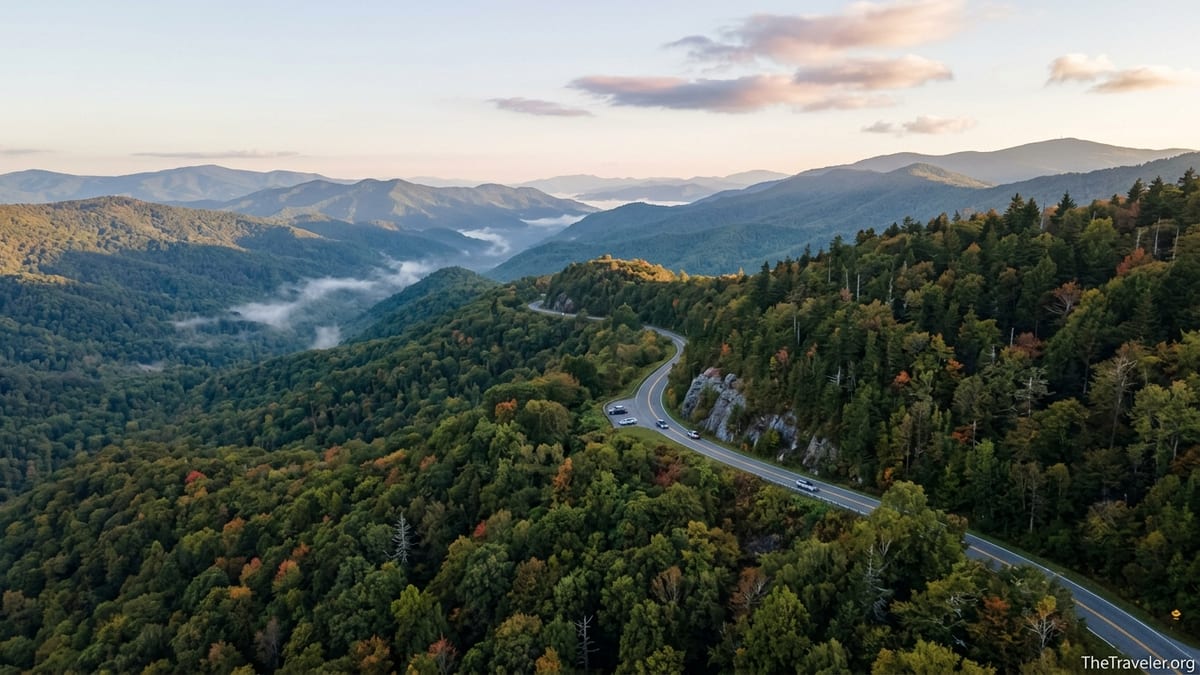
Beyond the Smokies, North Carolina offers the lion’s share of the Blue Ridge Parkway’s most famous overlooks and hiking access. The national park road runs for hundreds of miles along the state’s high ridges, and the section around Asheville includes viewpoints such as Craggy Gardens and Graveyard Fields plus trailheads leading toward Mount Mitchell, the tallest peak in the eastern United States. Portions of the Parkway near Mount Mitchell are undergoing repairs into late 2026 after hurricane damage, but long contiguous stretches around Asheville remain open, so visitors can still plan full-day drives flanked by wildflower-covered slopes or fall color.
Tennessee’s mountain experiences beyond the Smokies skew toward lake and river adventures around Knoxville and Chattanooga, with Lookout Mountain, the Tennessee River Gorge, and state parks like Fall Creek Falls offering waterfalls, zip lines, and rock formations. If you lean toward long, high-elevation ridge drives and cool summer temperatures, North Carolina holds the advantage. If you prioritize easy access from Interstates to waterfalls, caves, and river viewpoints plus Smokies highlights like Cades Cove, Tennessee works especially well.
City Scenes: Nashville & Memphis vs Asheville & Charlotte
For travelers who build trips around cities, Tennessee’s big stars are Nashville and Memphis. Nashville is the self-proclaimed Music City, where you can tour the Country Music Hall of Fame in the afternoon, catch an emerging songwriter in a small listening room at dusk, and end the night at a rooftop bar with live covers of classic hits. Major events like CMA Fest every June swell hotel prices, with downtown rooms that might run under 250 dollars midweek in shoulder seasons easily topping 500 dollars or more per night during festival dates and Saturdays. Live music, however, is often free to enter in honky-tonks; tipping the band is expected but you can hear multiple acts in a single evening without buying individual tickets for each set.
Memphis offers a more compact but deeply rooted music and civil rights experience. Here, visitors split days between touring Graceland, walking down Beale Street to hear blues and soul, and spending time at the National Civil Rights Museum housed in the former Lorraine Motel. Compared with Nashville, hotel rates in Memphis are often more moderate, and the city’s barbecue scene is a major draw for food-focused trips.
In North Carolina, Asheville plays the role of mountain city hub. The compact downtown is dense with independent restaurants, coffee shops, and breweries, plus street buskers and galleries. Rather than large arenas, you will find small venues like old theaters turned into music halls, along with brewery stages that host local bands. Food here leans heavily on farm-to-table menus, with many restaurants highlighting produce and meats from nearby farms and Appalachian food traditions. Hotel prices in summer and fall can be comparable to smaller big cities elsewhere in the United States, with midrange chain properties near Biltmore Village or downtown often starting around the low to mid 200 dollar range on busy weekends and dropping midweek or in winter.
Further east, Charlotte and Raleigh add larger-city options with pro sports, art museums, and international airports. They lack the concentrated tourism layering of Nashville but offer a broad mix of neighborhoods, restaurants, and cultural events that can anchor a long weekend. If your version of a great city break means live music on every corner and a festival calendar that dominates the skyline, Tennessee’s urban centers will feel more intense. If you prefer smaller venues, art galleries, and craft beer streets over all-night party districts, North Carolina’s cities, especially Asheville, align closer to that style.
Small Towns, Coastlines, and Road Trip Potential
Both states reward travelers who like to wander between smaller towns rather than planting in one city. In Tennessee, a classic road trip might connect Chattanooga, Knoxville, and the Smokies. Chattanooga offers the Tennessee Aquarium, riverfront trails, and Lookout Mountain’s viewpoints, while Knoxville mixes a college-town feel with riverfront parks and easy access to the mountains. From there, it is a relatively short drive into Pigeon Forge or Gatlinburg and on into the national park, meaning you can combine urban stops with mountain cabins and campgrounds in a week-long loop.
North Carolina lends itself to a more extended, varied road trip that can run from the mountains all the way to the Atlantic. One popular arc starts in Boone and Blowing Rock, continues down the Blue Ridge Parkway through the high country, spends a few nights in Asheville, then drops southeast toward Charlotte or Raleigh before ending on the coast in Wilmington or on the Outer Banks. On the Outer Banks, you trade blue ridges for sand dunes, wild horses in some sections, and lighthouses that can be climbed in season. Beach rentals here range widely in price, but families often book houses for a week, sharing costs across multiple households.
If your travel style craves both mountains and beach in the same state, North Carolina is the practical choice. Tennessee has riverfronts and lakes, but not ocean coastline, so you would need to pair it with a neighboring state if the beach is non-negotiable. On the other hand, travelers who prefer to keep driving days shorter and focus on a tight cluster of destinations might appreciate how close together Tennessee’s main stops sit. It is possible, for example, to fly into Nashville, spend two nights enjoying the music scene, then drive three hours to the Smokies for cabin time without ever leaving the state.
In both states, gas prices and toll-free highways can help keep costs reasonable for road-trippers, though current fuel prices hover higher than pre-2020 levels. Choosing a route that avoids backtracking and clustering stops by region will make your itinerary smoother whether you are focusing on Tennessee’s horseshoe from Memphis to Knoxville to the Smokies or North Carolina’s west-to-east sweep from Asheville to the Outer Banks.
Budget, Crowds, and Practical Logistics
From a budget standpoint, both Tennessee and North Carolina can be as affordable or as pricey as you make them, but they concentrate costs in different ways. Tennessee’s big expenses tend to be festival weekends in Nashville and attraction-heavy stays in Pigeon Forge and Gatlinburg. Tickets for Dollywood, for example, are in the same ballpark as other major theme parks, and families often layer on extras like dinner shows, mini-golf, and museum admissions. During peak weeks such as school holidays and fall foliage, nightly cabin rates in the Smokies can climb sharply, especially for properties with hot tubs and views.
North Carolina spreads costs more evenly across lodging and dining rather than marquee ticketed attractions. A long weekend in Asheville might involve one paid admission to a marquee estate or museum, then mostly free or low-cost activities such as hiking along the Blue Ridge Parkway, visiting waterfalls in Pisgah National Forest, or strolling riverfront greenways. Meals can run anywhere from casual barbecue joints and food trucks to multi-course tasting menus in downtown, letting you flex your budget by mixing high and low dining. On the coast, weekly rental houses can be expensive in midsummer, but splitting a multi-bedroom property between friends or family often compares favorably to booking multiple hotel rooms in a resort town elsewhere.
Crowds are a reality in both states, especially in national parks and city centers. In Tennessee’s Smokies gateways, traffic along the main park roads and through downtown Gatlinburg can slow to a crawl on fall weekends or during October leaf season. Paying attention to arrival times, using secondary park entrances when available, and planning early-morning hikes can help. In North Carolina, popular Blue Ridge Parkway overlooks near Asheville and Boone can also feel crowded at midday in October, and parking lots at waterfall trailheads may fill by late morning on sunny weekends.
Weather can also shape your decision. Summers in both states are warm and humid in the lowlands, but high-elevation stretches of the Blue Ridge in North Carolina often run several degrees cooler than nearby cities. Southeast-facing beaches in North Carolina experience classic East Coast summer patterns with afternoon storms and warm ocean temperatures, while Tennessee’s cities and valleys can feel hotter and more humid with less of a breeze. If you are heat-sensitive and plan to travel in July or August, a North Carolina itinerary that emphasizes higher elevations and ocean breezes may feel more comfortable than a mostly lowland Tennessee route.
Food, Drink, and Cultural Flavor
Food and drink might be the deciding factor if you like to eat your way through a destination. Tennessee’s culinary identity leans heavily into barbecue, hot chicken, and Southern comfort food, washed down with locally distilled whiskey. In Nashville, whole neighborhoods are devoted to dining, from hot chicken counters where you order by spice level to chef-driven restaurants blending Southern ingredients with global techniques. Memphis, meanwhile, is synonymous with slow-smoked barbecue ribs and pulled pork, with entire days of an itinerary easily organized around sampling different smokehouses.
In North Carolina, you still find barbecue, from tangy vinegar-based pork in the east to thicker sauces in the west, but the state’s current tourism spotlight often falls on craft beer and farm-to-table dining. Asheville alone boasts dozens of breweries ranging from tiny taprooms to sprawling complexes with food halls and live music stages, making it a natural fit for travelers who like to walk between tasting rooms. The surrounding countryside supplies ingredients that appear on menus in downtown restaurants that change offerings seasonally, highlighting Appalachian heirloom vegetables in late summer or mushroom-heavy dishes in rainy spring.
Culturally, Tennessee centers a lot of its visitor narrative on music history, from country and Americana in Nashville to blues and soul in Memphis and rock connections in places like Bristol. Museum visits often involve audio exhibits, vintage instruments, and live performances built into the experience. North Carolina’s cultural offerings tilt more toward craft and heritage, with traditional music, local pottery, and galleries featuring mountain artists in towns along the Blue Ridge. In coastal areas, maritime history museums, lighthouses, and small-scale fishing communities add a different layer of storytelling.
If your idea of culture means standing in a historic studio where landmark records were cut or spending a full evening in a legendary music hall, Tennessee will speak your language. If you are more drawn to strolling galleries, sampling seasonal menus, and browsing makers’ markets on a Saturday morning, North Carolina will probably feel like an easier match.
The Takeaway
Choosing between Tennessee and North Carolina is less about which state is better and more about which state fits your style right now. Tennessee shines for travelers who want high-energy music cities, theme park thrills near the mountains, and short hops between major attractions. A long weekend built around Nashville’s live music, followed by a cabin stay near Dollywood or Gatlinburg, delivers a classic Tennessee itinerary full of sound, lights, and postcard views from overlooks like Clingmans Dome.
North Carolina excels for travelers who prefer a slower pace, long scenic drives, and the option to combine blue mountains with sandy beaches in a single trip. You might spend a few days brewery-hopping and hiking around Asheville, then follow the Blue Ridge Parkway before dropping down to the Outer Banks for a week in a beach cottage, mixing hiking boots and flip-flops in the same suitcase. The state’s emphasis on outdoor access and local food often resonates with travelers who want nature to be the main event rather than a break between shows.
In practice, many repeat visitors end up exploring both states over multiple trips. If you are planning your first visit and love nightlife, live music, and marquee attractions, start with Tennessee. If you are craving quieter mountain towns, cooler summer temperatures at high elevations, and the possibility of tacking on time by the Atlantic, begin with North Carolina. Once you know which energy you prefer, it becomes easier to fine-tune future itineraries on either side of the state line.
FAQ
Q1. Is Tennessee or North Carolina better for first-time Smoky Mountains visitors?
For a first visit focused on the Great Smoky Mountains, Tennessee often feels more straightforward because Gatlinburg and Pigeon Forge sit right at major park entrances and offer many lodging and dining options. North Carolina gateways like Cherokee and Bryson City are quieter and appeal more to travelers who prioritize calm small towns and scenic drives over amusement-style attractions.
Q2. Which state is more affordable for a week-long trip?
Costs end up similar overall, but they are distributed differently. Tennessee can get pricey if you pack in festival weekends, theme park tickets, and cabin stays in peak season. North Carolina generally has fewer big-ticket attractions; spending often centers on lodging and dining, with many outdoor activities like hiking or parkway drives remaining free.
Q3. Where will I find better live music, Tennessee or North Carolina?
Tennessee wins on sheer volume and name recognition, especially in Nashville and Memphis where live music is woven into bars, museums, and events every night of the week. North Carolina has strong local and regional music scenes, especially in Asheville and smaller mountain towns, but they tend to be more low-key and less concentrated than Tennessee’s.
Q4. Which destination is better for a family with young kids?
Families who like rides, shows, and themed attractions usually gravitate to Tennessee, particularly around Dollywood, Pigeon Forge, and Chattanooga’s aquarium and railroad attractions. North Carolina suits families who prefer hiking, waterfalls, beaches, and smaller downtowns where you can walk easily with strollers and duck into parks and playgrounds between activities.
Q5. How do beach options compare between Tennessee and North Carolina?
Tennessee is landlocked, so you will not find ocean beaches there. North Carolina has a long Atlantic coastline, including the Outer Banks and beaches near Wilmington, which makes it better if swimming in the ocean, surfing, or renting a seaside cottage is central to your plans.
Q6. Is driving in the mountains easier in Tennessee or North Carolina?
Major approach roads in both states are well maintained, but North Carolina’s Blue Ridge Parkway and high-elevation routes involve more extended ridge driving and curvy sections. Tennessee’s main routes into the Smokies and between cities like Knoxville and Chattanooga use Interstate corridors and shorter mountain approaches, which some drivers find less intimidating.
Q7. Which state has better options for food and drink enthusiasts?
It depends on your tastes. Tennessee centers on barbecue, hot chicken, and whiskey, paired with live music and casual to upscale restaurants in Nashville and Memphis. North Carolina leans toward craft beer, wine, farm-to-table dining, and regional barbecue styles, especially in Asheville and the central part of the state.
Q8. When is the best time of year to visit each state?
Spring and fall are sweet spots for both, with milder temperatures and colorful scenery. Summer is busy everywhere, but high elevations in North Carolina and lakes and rivers in Tennessee help ease the heat. Winter brings quieter mountain towns and lower prices, though some high roads and park facilities can close temporarily due to weather.
Q9. Can I realistically see both Tennessee and North Carolina in one trip?
Yes, many travelers combine both. A common route is to fly into Nashville, spend a few days there, then drive to the Smokies, overnight near the park, and continue across the mountains into North Carolina to explore Asheville or the high country before heading home from a different airport.
Q10. Which state should I choose if I hate crowds?
If you intensely dislike crowds, avoid major festivals and peak foliage weekends in either state. Within that constraint, North Carolina usually offers more opportunities to spread out, especially along the Blue Ridge Parkway, in lesser-known mountain towns, and on quieter stretches of the coast. In Tennessee, looking beyond Gatlinburg and the busiest parts of Nashville to spots like state parks or smaller towns can also help you find breathing room.