


The French Riviera has a talent for looking perfect in every postcard, but it does not feel the same in April as it does in August or October. On a July afternoon in Nice, you might pay premium prices for a sunbed and squeeze onto a busy stretch of La Promenade des Anglais. A September morning in Antibes, by contrast, can mean warm water, half-empty beaches and hotel rates that quietly slide down from their summer peak. Choosing when to visit is the most powerful tool you have to balance beaches, big-name events and crowd levels on the Côte d’Azur.
Get the latest updates straight to your inbox!
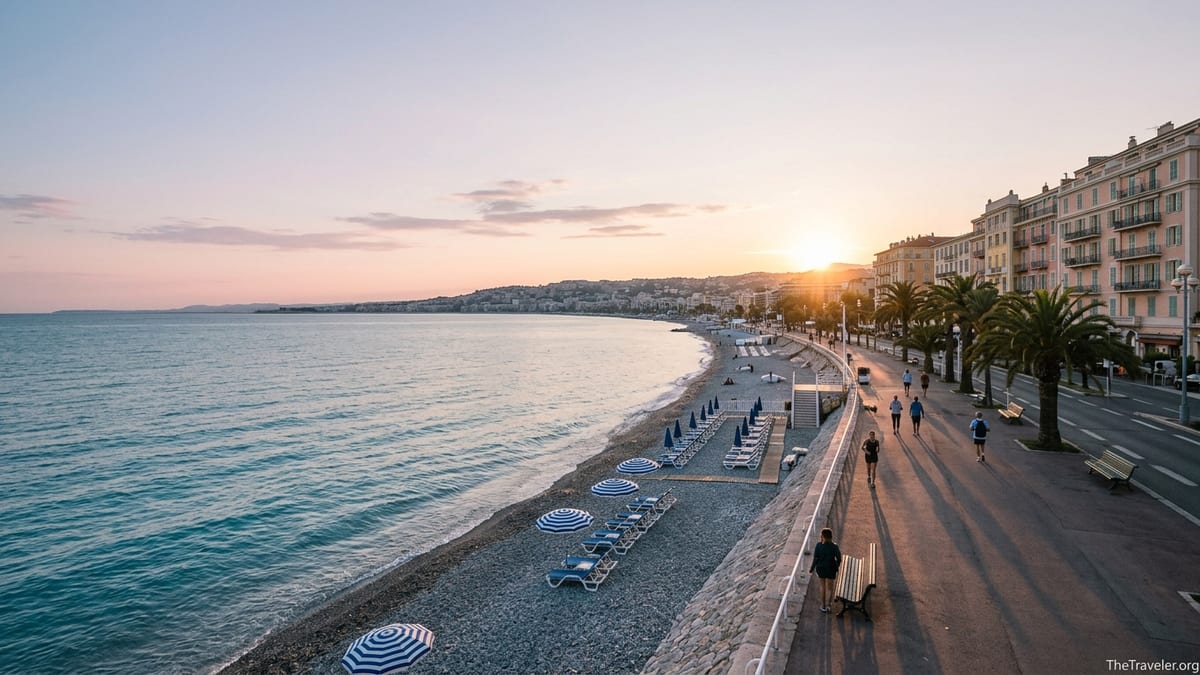
Understanding the Riviera’s Seasons
The French Riviera follows a clear seasonal rhythm that shapes everything from hotel prices to how crowded the trains feel between Nice, Cannes and Monaco. Tourism boards and local operators generally describe three main seasons: a high season from June to September, a mid or shoulder season in March to May and October, and a low season from November through February. In practice that means very busy beaches and fully booked resorts in July and August, moderate crowds and pleasant weather in late spring and early autumn, and quieter coastal towns in winter with more locals than visitors.
Weather is at the heart of this pattern. In Nice, average high temperatures typically climb from around the mid-teens Celsius in March to the low 20s by May, peak around the high 20s in July and August, then drift back to the low 20s in September. Sea temperatures lag behind, usually becoming comfortable for most swimmers from roughly June to late September. Travelers who want both beach time and manageable crowds often aim for June or September, when the water is warm but local school holidays and peak European vacation weeks have not yet or have just finished.
Costs track demand closely. A midrange three-star hotel room in Nice or Cannes that might cost roughly 120 euros per night in high season can be noticeably cheaper in shoulder months, while top-end five-star properties often swing from several hundred euros per night in spring to 800 euros or more in late July and early August. Restaurant reservations and beach clubs follow the same curve: peak dates require advance booking and higher budgets, while the same seafront tables may sit empty on a sunny October weekday.
For travelers weighing beaches versus crowds, it helps to think in terms of trade-offs. If your priority is long days on the sand and late-night beach clubs, July and August still deliver the classic Riviera summer, but you will share it with many others. If you prefer quieter promenades and easier restaurant reservations, late May, June and September give you much of the same sunshine, with a calmer feel and more flexibility.
Beach Weather by Month: When the Sea Feels Right
Beach conditions change steadily between April and October, and small differences matter when you are deciding whether you will actually swim or simply sit on the shore. In winter, the Mediterranean along the Riviera is usually too cool for anything more than a brisk dip, with sea temperatures often close to the mid-teens Celsius. By late May, the air can be warm enough for sunbathing, but the sea may still feel fresh, especially early in the month. Locals often say that the real swimming season starts once you can stay in the water for more than a few minutes without thinking about how cold your feet are.
From June through September, conditions generally favor beachgoers. In June, daytime highs in Nice and Cannes often sit in the mid-20s Celsius, and the sea is typically comfortable for a quick swim. July and August are the warmest months, with many days reaching around 30 degrees Celsius or a bit higher along the coast. The sea surface temperature commonly peaks in this period as well, often reaching the mid-20s. This is the moment when private beach clubs from Saint-Tropez to Menton are in full swing, parasols line the pebbles and sand, and families settle in for long days by the water.
September is a sweet spot for many travelers focused on swimming. The sea retains much of its summer warmth, but the air temperature eases slightly and the angle of light becomes softer. On a typical mid-September afternoon in Villefranche-sur-Mer, for example, you might float in water still warm from August while looking back at largely relaxed quayside cafés rather than crowds queuing for tables. Even into early October, hardy swimmers and Northern European visitors often find the water agreeable, though evenings turn cooler and days shorten.
Early spring and late autumn require adjusted expectations. In April, you may enjoy sunny lunches on the promenade in Menton or Antibes in a light jacket, but most people will not spend long in the water. By late October, stormier days become more common, and a strong wind can make the pebbled beaches of Nice or the sandy stretches near Juan-les-Pins feel wild rather than relaxing. These months reward travelers who value walks along coastal paths, photography and café culture more than traditional beach days.
Timing Major Events: Cannes, Monaco & Carnival
The Riviera’s global profile comes not just from its beaches but from its headline events, and timing your trip around or between them has a huge impact on crowds and costs. The Cannes Film Festival, held annually in May, transforms the relatively compact city into a dense patchwork of red carpets, industry parties and security barriers. In 2026, for instance, the main festival is scheduled for mid-May over roughly 10 days, and accommodation in Cannes and even in nearby Antibes and Nice typically jumps in price during this window. A basic hotel that might cost 150 euros earlier in the month can easily double when the festival opens.
To the east, the Monaco Grand Prix brings another surge of visitors, noise and spectacle. The Formula 1 race generally takes place in late May or early June, and for the 2026 season official schedules indicate a race weekend in early June. During those days, regional trains and buses into Monaco are crowded with racegoers, harbour slips are filled with yachts, and hotels charge event-level premiums. It is common for visitors who do not have race tickets to base themselves in Nice or Menton and commute in for the atmosphere, but anyone planning this should budget extra time for security checks and queues at Monaco’s train station.
Outside the summer, Nice Carnival provides a burst of color in the low season. The event usually runs for a couple of weeks in February, occasionally stretching into early March depending on the calendar. Floats line the Promenade des Anglais, flower battles fill the air with petals, and stands are set up along the sea. Hotel rates rise compared with quieter January weeks, but they generally remain below summer highs. Travelers who like the idea of a winter Riviera visit with a built-in festival often plan around this period, accepting cooler beach conditions in exchange for parades and nighttime light shows.
Other events also shape specific weeks. The Cannes Lions advertising festival in June, the Monaco Yacht Show in early autumn, and various yacht regattas and television festivals throughout the year all cause local spikes in demand. If your goal is warm beaches and fewer crowds, it is often smarter to avoid these dates even if the overall season is otherwise attractive. For example, visiting Cannes in late June, after Cannes Lions, or staying in Monaco in mid-September rather than during a show week can deliver the same sunshine with gentler prices and easier restaurant reservations.
Shoulder Season: Best Balance of Beaches and Fewer Crowds
For many travelers, the best time to visit the French Riviera for beaches, events and fewer crowds is the shoulder season: roughly late April to early June, and again from early September to mid-October. In these weeks, daytime temperatures are usually mild to warm, the Mediterranean is swimmable for most visitors by June and throughout September, and the intensity of July and August crowds is either still building or fading away.
Consider a late May stay in Nice. You might begin the day with a coffee on Place Masséna in 20-degree Celsius sunshine, then walk down to a relatively uncrowded stretch of the city’s pebbled beach. By midday, you could take a local train to Antibes or Villefranche-sur-Mer, finding space on the sand without needing to rent a sunbed weeks in advance. After dinner back in Nice, the promenade can feel lively but not jammed. Hotel prices in this window are typically higher than in March but still below August peaks, and you often have the option of moving last-minute between properties if you are flexible.
September offers a similar balance in reverse. By the second week of the month, many French families have returned home after the school holidays, and the atmosphere along the coast shifts from vacation energy to a more local rhythm. In places like Saint-Raphaël or Menton, you may notice more retired Europeans enjoying long stays and fewer short-term holidaymakers. A honeymooner choosing mid to late September in Villefranche or Cap d’Antibes, for example, can usually count on warm evening walks, terrace dinners where staff have more time to chat, and sea temperatures that still feel inviting at midday.
There are also practical advantages in these shoulder months. Car parks in scenic hill towns such as Èze or Saint-Paul-de-Vence are easier to access, which matters if you are driving the coastal and corniche roads. Popular day trips from Nice to Cannes, Monaco or Antibes remain busy but are less likely to involve standing-room-only regional trains in both directions. Beach clubs may offer slightly lower minimum spends or more relaxed booking conditions, and certain guided excursions, from small-group boat trips to wine tours inland, are easier to reserve on shorter notice.
The main trade-off is unpredictability. Spring can deliver sequences of flawless blue-sky days, but it can also serve up sudden rain showers, particularly around the sequence of public holidays in May. In early October, a storm system can bring rough seas and temporarily close some beaches. Travelers who value flexibility, pack a light jacket and plan both indoor and outdoor options usually find that the overall gains in space, price and comfort outweigh the occasional grey day.
High Summer: Sun, Sea and Serious Crowds
July and August remain the iconic Riviera months: the time when beach clubs in Cannes and Saint-Tropez run at full capacity, superyachts line the harbors, and hotel terraces overflow well into the night. If you picture afternoons at a private beach like Plage Beau Rivage in Nice or La Croisette’s famous clubs in Cannes with every lounger occupied and music drifting out over the water, you are imagining high summer. For beach lovers who thrive on energy and late nights, this can still be an irresistible period.
The price of this atmosphere is density. Coastal roads such as the Corniche between Nice and Monaco often slow to a crawl on weekend afternoons. Trains at around 6 or 7 p.m., especially between Cannes and Nice, can be packed with day-trippers returning to their base city. A spontaneous dinner at a popular seafront restaurant in Antibes or Menton becomes unlikely; reservations days in advance are the safer bet. On the sand, free public beaches fill early, and many travelers pay a premium for private sunbeds simply to secure personal space.
Heat is another consideration. While sea breezes moderate temperatures, inland spots and built-up promenades can feel hot during mid-afternoon, with daytime highs frequently around or above 30 degrees Celsius. Sun exposure reflects off pale stone and pebbles, which makes sun protection important. Families with young children or older travelers often adapt by planning beach time in the morning and late afternoon and retreating to shaded cafés or air-conditioned museums around midday.
If your dates are fixed in high summer, strategies can help soften the impact. Basing yourself in a slightly less central town such as Cagnes-sur-Mer, Juan-les-Pins or Menton can give you quicker access to quieter stretches of coastline while leaving Nice and Cannes reachable by short train rides. Booking key elements well in advance, including hotels, rental cars, and any must-do experiences like a day trip by boat to the Lérins Islands off Cannes, will reduce the stress of last-minute searching in a competitive market.
Low Season & Winter Sun: Culture First, Beaches Second
From November through February, the French Riviera moves into its low season. Days are shorter and cooler, with daytime highs in Nice often sitting in the low to mid-teens Celsius, yet the region still enjoys a good number of sunny days compared with many parts of northern Europe. For visitors who are more interested in museums, markets and scenic walks than swimming, this can be a rewarding and good-value time to visit.
Hotel and flight prices usually reflect reduced demand. You may find attractive deals at well-located properties like sea-facing four-star hotels in Nice or boutique guesthouses in Menton that would be out of budget in August. Restaurants often shift focus toward local customers, with slower-paced service and seasonal menus that highlight truffles, citrus and hearty Provençal dishes rather than beach club fare. In coastal markets, vendors sell winter vegetables and seafood to residents doing their weekly shopping rather than primarily to tourists seeking picnic supplies.
The beach experience, however, is more about atmosphere than swimming. Locals walk their dogs along the Promenade des Anglais, joggers run in the crisp air, and café terraces set out blankets and heaters for people watching. On clear days, the contrast of bright blue sea and snow-touched inland mountains makes for striking photographs. If you are prepared with layers, you can comfortably sip coffee outdoors in the late morning sun, but you are unlikely to spend hours in a swimsuit.
Events and holidays add structure to this season. The Nice Carnival brings crowds and colorful parades in February, and Christmas markets in Nice, Cannes and Monaco give December weekends a festive feel. Outside these peaks, many attractions remain open with shorter queues: the Matisse Museum above Nice, the Picasso Museum in Antibes and the hilltop village of Èze all feel more contemplative. This is the right window if you prefer culture over crowds and can accept that the Riviera’s famous beaches are more scenic backdrops than daily destinations.
Practical Tips for Matching Your Dates to Your Style
Beyond broad seasonal patterns, small practical choices shape how your trip feels on the ground. Start by deciding your priority: is it warm, swimmable water; headline events; or space and calm? A traveler who wants early-morning swims and long afternoons napping on a sunbed might choose late June or September and base themselves in a beach-focused town such as Antibes or Juan-les-Pins. Someone who dreams of spotting film stars and feeling the buzz of the Cannes Film Festival could aim for mid-May, accepting higher prices and less beach time in exchange for red carpets and premieres.
Booking strategy matters as well. For high season and major event weeks, reserving accommodation three to six months in advance is prudent, especially for sea-view rooms or apartments with terraces. In mid-October or late March, you can often secure central rooms in Nice a few weeks before arrival, and sometimes even walk into smaller hotels on the day. Flexible dates let you watch airfare and hotel rates, then slide your stay by a few days to dodge a convention or local holiday that quietly inflates prices.
Consider how you will move along the coast. The regional TER train runs frequently between key Riviera stops from Menton through Monaco, Nice, Antibes and Cannes. In high summer, aim for off-peak trains when possible, especially if you are traveling with luggage. In shoulder season, the same line becomes a relaxed, scenic commute for beach-hopping: an early train from Nice to Villefranche for a morning swim, an afternoon coffee in Beaulieu-sur-Mer, and dinner back in the city without traffic stress. Renting a car gives more flexibility for inland villages and less-connected bays, but parking in central Cannes, Monaco and Old Nice is often simpler outside July and August.
Finally, pack for microclimates. A breezy day in Saint-Jean-Cap-Ferrat can feel cooler than the same temperature on sheltered Menton beaches. Spring and autumn evenings can be surprisingly cool on restaurant terraces close to the sea, especially if a mistral-like wind picks up. Light layers, a scarf and a compact umbrella fit easily in a day bag and expand your options, whether you end up strolling an evening market in Antibes in short sleeves or watching a sudden shower from under the awning of a café in Cannes.
The Takeaway
If your main goal is to enjoy the French Riviera’s beaches with warm water and fewer crowds, aim for June or September. In these months you are likely to find seas that are comfortable for swimming, daytime temperatures suited to sunbathing, and an atmosphere that feels lively rather than overcrowded. Prices are still higher than in winter but often noticeably lower than in late July and August, and you gain more freedom to choose where and how you spend your days.
Travelers drawn to events should decide whether they want to be in the middle of the action or simply near it. Staying in Cannes during the film festival or in Monaco for the Grand Prix can be thrilling but expensive and intense. Basing yourself in Nice or Antibes instead gives you easier access to beaches and quieter evenings while keeping day trips to the festivities feasible. In winter, Nice Carnival and Christmas markets offer cultural highlights that turn a low-season break into more than just a sunny escape.
There is no single best time that suits every visitor, but understanding how weather, sea temperatures, events and school holidays interact will let you align your dates with your preferences. Whether you choose a quiet February week of museum visits and seaside walks, a June itinerary of coastal train hops and afternoon swims, or a September honeymoon of warm sea and soft light, timing will shape how you remember the Côte d’Azur long after your footprints disappear from its beaches.
FAQ
Q1. What is the single best month to visit the French Riviera for beaches and fewer crowds?
For most travelers, September offers the best balance. The sea is usually warm from summer, daytime temperatures are comfortable, school holidays have ended, and crowds and prices have started to ease compared with July and August.
Q2. Is the sea warm enough to swim in May?
By May, air temperatures are often pleasant enough for sunbathing, but the sea can still feel cool, especially early in the month. Many visitors from cooler climates do swim, but if warm water is essential, June through September is a safer choice.
Q3. How crowded is the Riviera in July and August?
July and August are the peak months. Beaches in cities like Nice and Cannes fill up quickly, roads are busier, and trains between main towns can be very crowded at popular times. Booking hotels, beach clubs and key restaurants well in advance is almost essential in this period.
Q4. Can I enjoy the French Riviera in winter if I am not swimming?
Yes. Winter is ideal for mild weather, cultural visits and good value. You can visit museums, explore old towns, hike coastal paths and enjoy café terraces on sunny days. The trade-off is cooler temperatures and limited beach time, but crowds are thinner and prices are lower.
Q5. Should I avoid the Cannes Film Festival and Monaco Grand Prix dates if I want fewer crowds?
If you are not specifically interested in those events, it is wise to avoid their core dates. Both attract large numbers of visitors, reduce hotel availability and push prices up across nearby towns, and make local transport and restaurants busier than usual.
Q6. Is it better to stay in one base like Nice or move between towns?
For many first-time visitors, using Nice as a base works well. The city has frequent trains and buses to Cannes, Antibes, Monaco and Menton, and you can adjust your day trips based on weather and mood. Moving between several hotels makes sense if you have more time and want different atmospheres, for example combining Nice with a quieter base such as Antibes or Menton.
Q7. How far in advance should I book accommodation?
For July, August and major events like the Cannes Film Festival or Monaco Grand Prix, booking three to six months ahead is sensible, especially for sea-view rooms. For shoulder seasons in late spring and early autumn, one to three months usually offers a good balance of choice and flexibility. In winter, last-minute deals are more common outside carnival and holiday weeks.
Q8. Are shoulder-season prices really lower than in summer?
Generally yes. While exact differences vary by property, nightly rates for hotels and apartments often drop between peak summer and months like June or September. You may also find more competitive offers on car rentals, beach clubs and guided excursions outside the peak holiday period.
Q9. When is the best time to combine beaches with hiking or inland villages?
Late April to early June and September to mid-October are ideal. Temperatures are usually comfortable for walking coastal paths or exploring hilltop villages such as Èze and Saint-Paul-de-Vence, and you can still enjoy beach time, especially in June and September when the sea is warmer.
Q10. Is it necessary to rent a car to enjoy the French Riviera?
No. The regional train network and local buses connect main coastal towns well, especially between Menton, Monaco, Nice, Antibes and Cannes. In peak summer a car can be more of a burden because of traffic and parking. A rental is most useful if you plan to explore less-served inland villages or quieter stretches of coast outside the main train line.