


At the far northern tip of Finnish Lapland, where the road ends at the Norwegian border and the sky opens over the Teno River valley, Utsjoki feels more like a living Sámi village than a typical tourist town. This is the only municipality in Finland with a majority of Northern Sámi speakers, a place where reindeer herding still shapes daily life, the Arctic tundra begins just above the tree line, and the Northern Lights regularly ripple across a dark, dry winter sky. Planning a trip here takes more thought than booking a quick weekend in Rovaniemi or Tromsø, but the reward is an immersive encounter with Sámi culture, deep Arctic nature and some of the most reliable aurora conditions in Europe.
Get the latest updates straight to your inbox!
Why Choose Utsjoki for Sámi Culture, Arctic Nature and Auroras
Utsjoki sits at roughly 70 degrees north, on the border with Norway, in the farthest corner of Finnish Lapland. It is small, quiet and spread out along the Teno (Tana) River, which forms the border with Norway and is famous among anglers for Atlantic salmon. Unlike more commercial Arctic hubs, Utsjoki is first and foremost a Sámi community, with road signs in Finnish and Northern Sámi and reindeer wandering near the village streets. For visitors, this means culture is not staged solely for tourism; it is the backdrop of grocery stores, schoolyards and everyday life.
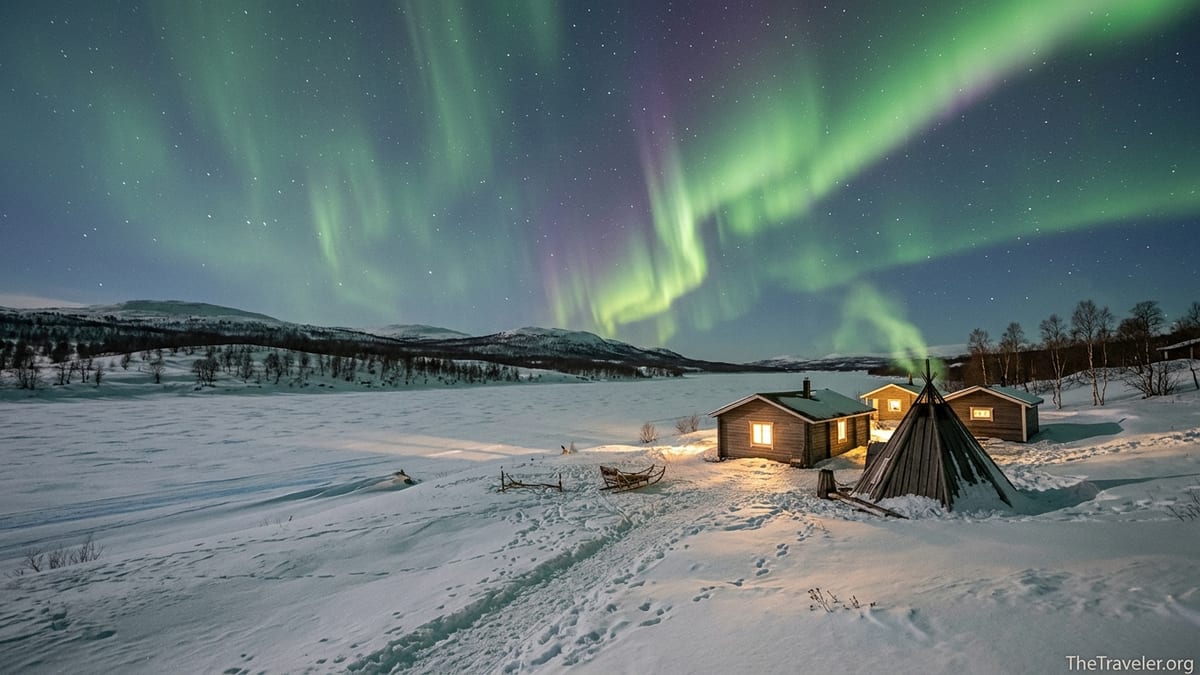
The municipality is also known among aurora enthusiasts as one of the most reliable locations for Northern Lights in Europe. The combination of its high latitude, distance from major cities and relatively dry continental climate often produces clear, dark skies from late August to early April, especially from October through March. On many winter nights, locals can step outside their homes and see bands of green light stretching over the Teno valley, without needing to drive hours away from light pollution.
Finally, Utsjoki offers easy access to both low Arctic fells and river valleys. Short hikes above the tree line give open views toward Norway, while longer trails such as routes in the Kevo area lead into a dramatic canyon landscape with waterfalls and bare tundra plateaus. In summer, the midnight sun shines for weeks, turning what might be a short evening walk anywhere else into a long, glowing exploration that can last until two in the morning without ever needing a headlamp.
Of course, Utsjoki is not for everyone. If you want nightlife, multiple restaurant options and shopping, Kiruna, Tromsø or Rovaniemi will suit you better. But if you are prepared for sparse services, long distances and deep quiet, this corner of Sápmi can feel like one of the most rewarding places to experience both Indigenous culture and Arctic nature in a respectful way.
When to Go: Seasons, Weather and Aurora Chances
Picking the right time to visit Utsjoki depends on your priorities. Winters here are long and cold, with average January temperatures well below freezing and frequent readings far under minus 15 degrees Celsius. Snow cover usually arrives in late autumn and often stays until late April or May. If seeing the Northern Lights is your main goal, the most reliable window runs from about late September to late March, when the nights are long and properly dark.
Within that period, many aurora travelers favor late February and March because daytime temperatures are often a bit milder, days are already longer and the chance of clear skies can be good. For example, someone staying at a local aurora-focused lodge in Utsjoki in March can typically expect daylight from late morning through late afternoon for snowshoeing or reindeer experiences, followed by hours of darkness for aurora watching. In December and early January, by contrast, you may only get a few hours of twilight around midday, which can feel magical but also challenging if you want to do much hiking.
Autumn from late August to early October is an underappreciated season. The first auroras can appear even while the nights are still fairly short, and Utsjoki’s birch forests often turn vivid yellow and orange along the river valleys. Daytime highs might hover just above freezing in late September, so you can still hike without full winter gear, yet at night you might step out of a riverside cabin to see auroras reflecting on unfrozen water. This is also a good time if you prefer to avoid deep snow and are interested in photography that combines autumn colors with the Northern Lights.
Summer, from June to early August, brings the midnight sun rather than auroras. The sun stays above the horizon for weeks, and even at “night” the sky remains bright. This is the time for longer hikes on marked routes, packrafting or canoeing on stretches of the Teno and exploring the Kevo area when trails are snow free. Temperatures can still be cool, often in the low teens Celsius, but with the right layers you can comfortably spend long days on the fells and nights sitting by the river under a golden sky that never quite darkens.
Getting to Utsjoki and Moving Around on the Ground
Reaching Utsjoki usually involves at least one long overland stretch. Most international travelers fly into Helsinki and connect to Ivalo Airport in northern Lapland. From Ivalo, it is roughly a 2.5 to 3 hour drive to Utsjoki, following the road north via Inari. If you do not want to drive, there are bus services that run this route, often with one or two departures a day in season. It is typical, for example, to land on an afternoon flight in Ivalo and board an evening bus north that passes through Inari before continuing along the E75 highway to Utsjoki.
Another option is to take the night train from southern Finland to Rovaniemi, then connect to a bus toward Inari and onward to Utsjoki. This can be appealing if you prefer to avoid domestic flights. In practice, travelers might depart Helsinki in the evening on a sleeper train, arrive in Rovaniemi the next morning, and catch a daytime bus that reaches Utsjoki by evening. While this adds time, it breaks up the journey and lets you see more of Lapland through the bus windows, including the lakes around Inari and the gradual shift to more open tundra near the Norwegian border.
If you do rent a car, be prepared for winter driving. From roughly November through March, the roads are typically snow covered or icy, and it is standard to drive on studded winter tires. Speeds are slower than on dry motorways, and it is common to meet reindeer on or near the road, especially in the twilight hours. Many visitors pick up a compact SUV or station wagon at Ivalo Airport from major rental companies, then keep it for the duration of their stay to reach trailheads, small villages along the Teno River and services on the Norwegian side such as fuel stations or supermarkets.
Once in Utsjoki itself, you should not expect local public transport in the way you might in a city. There may be a small number of scheduled bus routes along the main road, but for practical purposes you will rely either on your own vehicle, walking short distances near your accommodation, or transfers arranged by local operators. For example, if you book a Northern Lights package with a family-run lodge, airport transfer from Ivalo, evening aurora hunts by minibus and transport to cultural activities are often included in the price. This can be attractive if you prefer to avoid winter driving altogether.
Where to Stay: Cabins, Sámi-Run Lodges and Simple Hotels
Accommodation in Utsjoki is limited, so booking early is important, especially from December through March and again in September during autumn colors. You will not find large chain hotels here; instead, expect small riverside lodges, independent cottages and a handful of guesthouses. One recognizable style of stay is the traditional Finnish holiday village: a cluster of log cabins with their own kitchenettes, a shared sauna near the river and optional guided activities such as canoeing in summer and snowshoeing in winter.
Several local businesses specialize in Northern Lights and Sámi culture experiences. A typical winter package at a small aurora lodge might include three or four nights in a cabin overlooking the Teno valley, half-board meals, nightly aurora alerts and guided excursions by minibus to darker viewpoints when the forecast is promising. Prices vary widely by comfort level, but as an example, a three night package with meals and two or three guided activities can easily run into the high hundreds or low thousands of euros for two people, especially in peak season.
If your focus is more on self-guided hiking and fishing, renting an independent cabin can make sense. In practice, that might mean a simple timber cottage a short drive from Utsjoki village, with basic beds, a small kitchen, wood stove, composting toilet and a private sauna. These cabins are often managed by local families who can advise on nearby trails and fishing regulations. In summer and early autumn, anglers from Finland and abroad often book such cabins along the Teno River, combining early-morning fishing with day hikes on nearby fells.
Budget travelers can look for smaller guesthouses or apartments in and around the main village. These may offer shared kitchens and fewer included services but can significantly reduce costs while still providing access to the same wilderness and aurora opportunities. Whichever option you choose, pay attention to what is actually included: in winter, having breakfast and dinner on site can be a practical advantage, given that the nearest grocery store or restaurant might require a car and involve driving in the dark on icy roads.
Experiencing Sámi Culture Respectfully in Utsjoki
Utsjoki lies within the Sámi Domicile Area in Finland, where the Sámi people have certain cultural and linguistic rights, and where their presence is not confined to museums or tourist shows. As a visitor, your goal should be to support Sámi-led initiatives rather than consume culture from a distance. Concretely, this means choosing tours and accommodations owned or run by Sámi families when possible, listening more than you speak and treating reindeer and traditional lands with respect.
One common way to connect with local culture is to join a small group visit to a reindeer herder’s home or corral. On such visits, a herder might explain how reindeer ownership is organized within the community, how seasonal migrations and modern logistics work, and what challenges climate change and changing grazing rights create. You might help feed the animals, taste dried reindeer meat or fish cooked over an open fire and sit in a traditional lávvu tent listening to stories about life on the fells. These experiences work best when groups are small and the host sets the pace.
Music is another window into Sámi life. The traditional vocal art of joik is still performed in Utsjoki and surrounding areas, sometimes as part of cultural evenings at lodges or during local events. A host might explain how a joik is often created for a person, animal or place rather than as a generic song, and what role it has historically played in storytelling and spirituality. Hearing joik live, perhaps inside a candlelit wooden building while snow piles up outside, can be one of the most memorable moments of a trip here.
Finally, consider the everyday ways you can support the community. Buying handicrafts such as woven belts, knives with carved handles, beaded jewelry or duodji items directly from Sámi artisans puts money into local hands. Respecting photography rules is important; always ask before taking close-up photos of people, private homes, sacred sites or reindeer herds. If you are invited to a family-run experience that includes food, be open to trying game, fish and local berries, but let your hosts know in advance about any dietary restrictions so they can plan accordingly.
Arctic Nature: Hiking, Kevo Area, River Valleys and Wildlife
What sets Utsjoki apart even within Lapland is the feeling that wilderness begins almost at the village edge. Only a short drive from the main road, you can reach trailheads where marked paths climb above the tree line, quickly opening onto rolling tundra hills with views across to Norway. In late summer, the ground is carpeted with crowberries and bilberries, and small flocks of ptarmigan sometimes flush from the heather as you hike. In winter, many of these same routes are accessible on snowshoes or skis, with local guides leading the way and checking conditions.
The broader Utsjoki region includes the famous Kevo area, known for its deep canyon carved by the Kevojoki River. While multi-day treks here are more often associated with late summer and early autumn, several shorter day routes and viewpoints are accessible in the snow-free months to reasonably fit hikers. Typical days might involve four to six hours of walking on rocky and sometimes steep terrain, with simple wilderness huts or shelters used for breaks. Because infrastructure is limited and rescue services are far away, it is wise for first-time visitors to book at least one guided outing to learn about local conditions before attempting longer routes alone.
Closer to the village, the Teno River and its side valleys offer gentler exploration. In summer, local operators sometimes organize boat trips to show visitors the river landscape and explain its importance for salmon fishing and Sámi culture. Along the banks, you might see traditional river boats pulled up on shore, small cabins used during fishing season and old post roads that once linked remote communities. Birdwatchers visit in spring and early summer to look for Arctic species that breed in the area’s wetlands and fells.
Wildlife encounters in Utsjoki are subtle rather than dramatic. You are unlikely to see large predators, but you may well spot reindeer on the roads, moose tracks in the snow, foxes trotting along the river and various owls and grouse in the birch forests. In winter, simply learning to read the tracks that crisscross the snow becomes part of the experience: tiny imprints from voles, looping patterns from hares and the regular dotted lines of ptarmigan wing prints where birds have taken off or landed in fresh powder.
How to Plan for Northern Lights in Utsjoki
Even in a place as aurora-friendly as Utsjoki, there are no guarantees. Planning wisely can, however, tilt the odds in your favor. The first rule is time: try to stay at least three or four nights. Aurora chasers often talk about the “three night rule” to allow for at least one clear night, since cloud cover is often a bigger enemy than low solar activity. In practical terms, a long weekend from Thursday to Monday in February or March gives you four opportunities, which is usually enough for at least one or two good displays if the weather cooperates.
The second rule is darkness and location. Pick accommodation with minimal surrounding light pollution and, ideally, an open view to the north. Many riverside cabins and lodges around Utsjoki are built with this in mind: large north-facing windows, outdoor terraces and easy access to nearby hills where you can climb above tree level. Some operators offer nightly “aurora alerts” via SMS or WhatsApp, waking guests only when the lights become active so you do not have to stand outside for hours in deep cold. Others set up small heated shelters or kota huts a short walk from the rooms, where guests can warm up between photographing sessions.
Third, manage your expectations and comfort. Utsjoki nights in midwinter can be bitterly cold, and standing still while looking up at the sky makes you feel it even more. Pack proper cold-weather gear rather than urban winter clothing: insulated boots with room for thick socks, windproof pants with thermal layers underneath, a down or synthetic parka, mittens over glove liners, a balaclava and a wool hat. Many visitors also bring chemical hand and foot warmers. It is better to overdress and unzip layers than cut a viewing session short because you are shivering.
Finally, decide whether you want guided aurora hunting. A dedicated Northern Lights tour often involves a minibus or van, a local guide who reads forecasts and satellite data, and the flexibility to drive to clearer skies if clouds move in. For example, on a marginal night your guide might check weather charts and decide to cross into Norway, drive along the Teno valley or head onto higher ground for better conditions. This can be especially useful if you do not have a rental car or are uncomfortable driving icy roads at night. On very active nights, though, you may not need to go anywhere at all; simply stepping outside your cabin into the crisp silence can provide more than enough drama in the sky.
Practical Planning: Budget, Food, Gear and Safety
Utsjoki is remote and Finland in general is not a low-cost destination, so budgeting realistically is important. Accommodation for two people in winter typically ranges from modest guesthouse rooms at a moderate nightly rate to more expensive aurora-focused cabins with half-board and activities included. Meals at simple local restaurants or cafes, when available, are usually priced somewhat higher than in southern Europe, and remote venues often have limited menus focusing on hearty dishes like salmon soup, reindeer stew and oven-baked fish. Self-catering can reduce costs; many cabins come with a small kitchen, and it is common for visitors to stop at a larger supermarket in Ivalo or Inari on the way north to stock up on groceries.
Food experiences can be a highlight in themselves. A typical evening at a family-run lodge might feature baked Arctic char from a local river, mashed potatoes, lingonberries and a dessert made from cloudberries picked on nearby mires in late summer. Breakfasts often include rye bread, cheese, cold cuts, porridge and coffee served in wooden cups, which also act as souvenirs. If you have dietary restrictions such as vegetarian, gluten-free or lactose-free, advance communication is essential, but many hosts in Lapland are used to catering for a variety of needs when given time to prepare.
In terms of gear, pack for both indoor and outdoor life. Inside cabins and saunas, temperatures are warm and cozy, so you will want lighter clothes for evenings. Outside, especially from November to March, think in layers. A realistic packing list might include a merino base layer top and bottom, thick wool socks, a mid-layer fleece, an insulated jacket, thermal pants, a windproof shell, warm hat, balaclava or neck gaiter, liner gloves and insulated mittens. For activities like snowshoeing, cross-country skiing or short hikes to aurora viewpoints, proper winter boots with good traction are more important than stylish city footwear.
Safety in and around Utsjoki mostly comes down to respecting the environment. Distances between villages are long, and phone coverage, while generally good near main roads, can be weaker in remote valleys or deep in the Kevo area. Before any longer outing, leave your plan with your accommodation host, carry a basic first-aid kit and extra layers, and be conservative about your route choices, especially in winter. If you are inexperienced in Arctic conditions, booking guided excursions for high-exposure activities such as canyon hikes, long snowshoe treks or overnight camping is a sensible investment rather than a luxury.
The Takeaway
A trip to Utsjoki is less about ticking off famous sights and more about settling into a slow, immersive rhythm on the edge of the Arctic. It asks you to trade convenience and infrastructure for silence, long horizons and close contact with a living Indigenous culture. Planning requires more forethought than a city break: you need to time your visit carefully for either auroras or hiking, arrange transport from distant airports, book small accommodations months ahead and pack gear that will keep you comfortable in real winter, not just chilly weather.
For those willing to make that effort, Utsjoki offers something rare in European travel. You can share coffee in a Sámi family kitchen while learning about reindeer migrations, walk onto a nearby fell under the midnight sun without seeing another person, or stand beside the frozen Teno River at midnight as curtains of green light fold and twist across the sky. With respectful choices and realistic expectations, your journey to this northern edge of Sápmi can become less of a quick holiday and more of a deep, lingering encounter with both people and place.
FAQ
Q1. When is the best time to visit Utsjoki for the Northern Lights?
The most reliable period is from late September to late March, with many travelers favoring February and March for a balance of long dark nights and more comfortable daytime temperatures.
Q2. How many nights should I stay in Utsjoki to have a good chance of seeing auroras?
Plan on at least three to four nights to increase your chances of having one or two clear evenings, since clouds can be just as limiting as low solar activity.
Q3. Do I need a car in Utsjoki, or can I rely on tours and transfers?
You can manage without a car by arranging airport transfers and guided tours through a local lodge, but having your own vehicle gives more flexibility for independent daytime exploration.
Q4. Is Utsjoki suitable for families with children?
Yes, provided children are comfortable with cold weather and quiet surroundings; family-friendly activities include short snowshoe walks, gentle reindeer visits and relaxed aurora viewing near your accommodation.
Q5. What kind of clothing do I need for a winter trip to Utsjoki?
You will need proper Arctic winter gear: thermal base layers, insulating mid-layers, a warm parka, windproof pants, insulated boots, mittens, hat and face protection such as a balaclava or neck gaiter.
Q6. Can I experience Sámi culture in Utsjoki without joining large group tours?
Yes, many cultural experiences are offered by small Sámi-run businesses that focus on intimate visits, such as time with a reindeer herder, storytelling evenings or handicraft workshops with only a few guests.
Q7. Are there good hiking options around Utsjoki in summer and autumn?
There are numerous marked routes on nearby fells and in the wider Kevo area, ranging from short half-day walks to demanding multi-day treks for experienced hikers.
Q8. How expensive is a typical short aurora-focused stay in Utsjoki?
Costs vary, but a three or four night stay for two people in a small lodge with half-board and guided activities often reaches the high hundreds or low thousands of euros, excluding flights.
Q9. Is Utsjoki a good alternative to more famous Northern Lights destinations like Tromsø or Rovaniemi?
Utsjoki suits travelers who prefer fewer crowds, stronger Sámi cultural presence and quieter surroundings, even though it offers fewer restaurants, shops and organized excursions than larger hubs.
Q10. Do I need prior winter or Arctic experience to visit Utsjoki safely?
No, but you should be realistic about conditions, follow local advice, book guided outings for more challenging activities and ensure you have appropriate clothing and travel insurance.