


Far above the Arctic Circle, tucked against the Norwegian border, Utsjoki feels less like a destination and more like the edge of the map. With only around a thousand residents, a subarctic climate and eight traditionally recognized seasons, Finland’s northernmost municipality is a world away from the glass igloos and ski resorts that dominate Lapland tourism. Yet for travelers who make the long journey, Utsjoki and its outlying village of Nuorgam often become the most memorable stop of their entire Nordic trip. So is Utsjoki worth visiting, and what exactly do travelers love about Finland’s northernmost village life?
Get the latest updates straight to your inbox!
Where on Earth Is Utsjoki, Really?
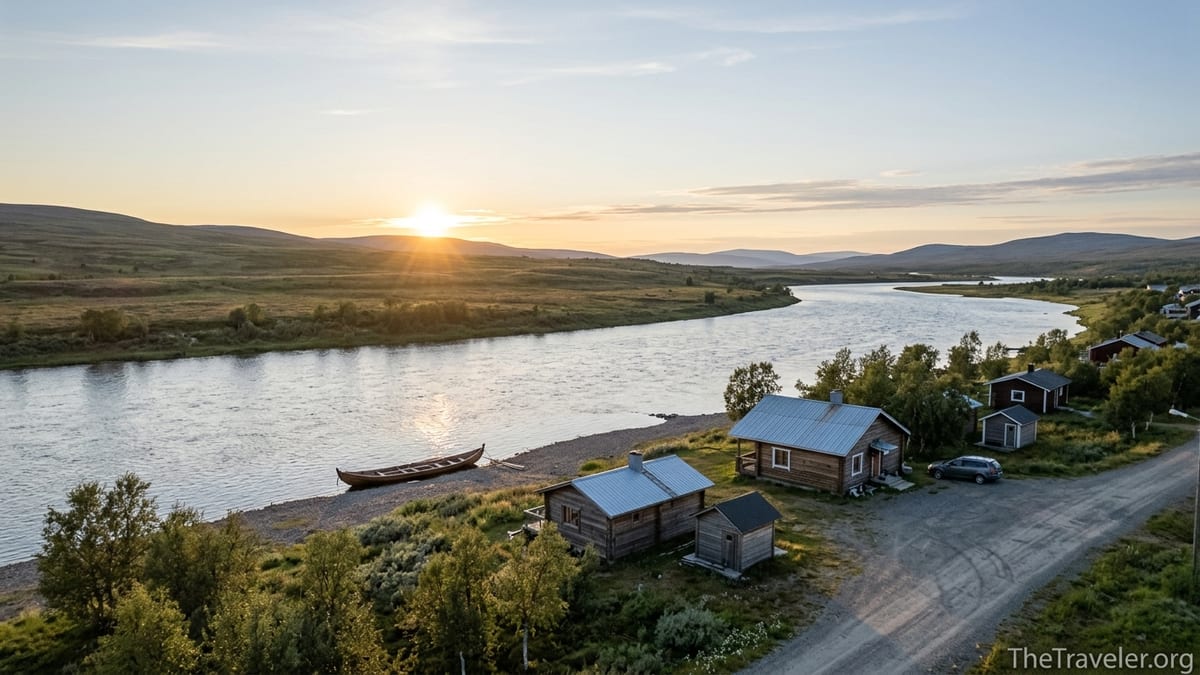
Utsjoki sits at the very top of Finnish Lapland, right on the border with Norway, several hundred kilometers north of better-known Rovaniemi. The municipality stretches along the Teno (Tana) River valley, with three main village centers: Utsjoki village itself, Karigasniemi and Nuorgam. Nuorgam, on the Teno River near Lake Pulmanki, has the distinction of being the northernmost village in both Finland and the European Union, around 500 kilometers north of the Arctic Circle. The landscape here is a mixture of low fells, treeless tundra, winding riverbanks and vast, open skies.
Reaching Utsjoki usually involves a domestic flight to Ivalo or Rovaniemi, then a long but scenic drive. In summer, travelers commonly rent a car in Ivalo and follow Route E75 north via Inari, a journey of roughly three to four hours through sparse pine forests that gradually give way to open fell country. In winter, buses operate less frequently and schedules are more weather dependent, so visitors typically plan carefully and build in buffer days. This remoteness is part of Utsjoki’s appeal: when you arrive, you genuinely feel that mass tourism has not yet made it this far.
Despite its isolation, basic services are present. Utsjoki village has a grocery store, fuel station and a handful of cafés and accommodation options, while Nuorgam offers riverside cabins, a village shop and holiday apartments. Prices for essentials such as bread, milk or snacks are higher than in southern Finland but not dramatically so; travelers used to Nordic price levels generally find Utsjoki slightly more expensive than Helsinki supermarkets, largely because of transport distances.
For trip planning, distance is the main constraint. Many visitors pair Utsjoki with a road trip into Norway, continuing along the Teno River to the Norwegian villages of Tana Bru or Karasjok or driving another hour or so north to the Arctic Ocean. This makes Utsjoki a natural hinge point between Finland’s inland fells and the dramatic coastal landscapes of northern Norway.
Midnight Sun, Polar Night and Otherworldly Light
One of the strongest reasons travelers consider Utsjoki worth the journey is its extreme light. Being so far north, the region experiences full midnight sun for roughly ten weeks each summer. From about mid May until late July, the sun does not dip below the horizon; even at 2 a.m. the villages of Utsjoki and Nuorgam glow in soft, slanting light. Visitors staying in a simple wooden cabin on the riverbank quickly realize they can hike, fish or simply sit outside on the porch at hours that feel surreal to anyone used to normal day and night.
In winter the pendulum swings the other way. From late November until mid January, the sun stays below the horizon and the area enters polar night. That does not mean total darkness. For a few hours each day, a deep blue twilight and pastel pink sunrise colors wash the fells, creating a long, slow “blue hour” that photographers love. Many travelers book January or February stays in Utsjoki for exactly this atmosphere: snow-covered tundra, frozen rivers and subtle light that never looks the same from one day to the next.
The same geography that produces these light extremes makes Utsjoki one of Finland’s most reliable places for seeing the Northern Lights. Local tour companies based in Utsjoki village offer aurora-focused stays from roughly late August to April, combining guided hunts by minibus or snowmobile with instruction in photographing the lights. Because there are no big towns nearby, local guides often simply drive a short distance along the Teno River or up a nearby fell road to reach completely dark skies. On clear nights in September or March, visitors commonly report seeing green and occasionally purple arcs right from their cabin terrace.
Weather, of course, can never be guaranteed this far north. Winter temperatures often drop well below freezing, and cloud cover can linger for days. Travelers who enjoy Utsjoki the most usually frame the auroras or the midnight sun as bonuses rather than the sole purpose of their trip, focusing instead on the slower rhythm of life in the villages and time outdoors.
Sámi Culture in Everyday Life, Not on a Stage
Another key reason Utsjoki feels different from more commercial Lapland destinations is its cultural makeup. Utsjoki is the only municipality in Finland where the majority of residents are Sámi, the Indigenous people of the region, and Sámi languages are widely used in schools, public services and everyday conversation. For visitors, this means that Sámi culture is not packaged as a seasonal show but woven through daily life, from reindeer herding to local festivals.
Travelers can see this in small details. In Utsjoki village, road signs appear in both Finnish and Northern Sámi. Reindeer herds move across the landscape throughout the year, and in winter you might share the single fuel pump with a local herder topping up a snowmobile before heading out onto the tundra. In the summer, Sámi-run guesthouses and holiday villages often serve dishes that draw on traditional ingredients like Arctic char, salmon from the Teno River, cloudberries and reindeer meat, prepared in straightforward, homestyle ways rather than tasting-menu style.
One culturally significant site just before Utsjoki village is the Utsjoki Church complex on Lake Mantojärvi. The small stone church from the mid 19th century is surrounded by historic wooden cottages that once served as temporary lodgings for Sámi families traveling long distances for services and markets. Today, some of those church cottages are used as heritage accommodation in summer, letting guests sleep in simple timber buildings that speak to the long relationship between local communities, religion and seasonal movement.
More contemporary cultural experiences are slowly appearing as younger Sámi artists and entrepreneurs use Utsjoki as a base. In recent summers, an open-air rap festival founded by a local Sámi musician has drawn small crowds under the midnight sun, with performances in Sámi language and attendees camping along the riverbanks. Events like this are modest in scale compared with major European festivals, but for visitors they offer a rare window into living Indigenous culture in the far north.
Nature Experiences: From Kevo Canyon to Quiet Riverbanks
For outdoor travelers, Utsjoki’s main draw is its access to wild, relatively untouched landscapes. One of Finland’s most famous hiking destinations, the Kevo Strict Nature Reserve, lies within the municipality. Kevo is best known for its dramatic canyon and falls, with marked trails that typically take several days to complete. Experienced hikers often tackle the roughly 60 kilometer Kevo route over three to five days between late June and early September, camping at designated sites and crossing streams by suspension bridges and fords. Because Kevo is a strict nature reserve, access is limited outside the marked season and camping is allowed only at official locations, which helps to keep the area feeling remote.
Those not up for a multi day trek still find plenty of options. Shorter day hikes from Utsjoki and Nuorgam lead up onto nearby fells with expansive views across the Teno valley and into Norway. A popular local outing from Nuorgam is the trail to Isokivenvaara, a viewpoint reached via the Skaidijärvi route, which rewards a modest climb with 360 degree views over treeless tundra and Lake Pulmanki, an inland remnant of an ancient Arctic fjord. Many accommodation providers provide simple trail maps or can suggest routes based on current conditions and guests’ fitness levels.
The Teno River itself is another focal point. Long known as one of the great salmon rivers of northern Europe, it has strict regulation regimes that limit fishing seasons and licenses to protect wild stocks. In recent years, authorities have greatly reduced or suspended recreational salmon fishing for visitors, so travelers now come more for the landscape than the catch. However, local operators still offer riverboat excursions on the Teno and its tributaries, giving guests a chance to ride traditional long wooden boats, learn about river ecology and stop for open fire coffee on remote gravel banks.
Even for those who never set foot on an official trail, simply stepping outside in Utsjoki feels like entering a vast open-air gallery. In late August and September, the low birch forests along the fells blaze in orange and red autumn colors, while crowberries and bilberries ripen along paths. Winter visitors find deep silence broken only by the crunch of snowshoes or the distant hum of a snowmobile across the river. The nature here is not manicured or theme-park neat; it is raw, sometimes harsh, and that is exactly what many travelers treasure.
Life in Finland’s Northernmost Villages: Utsjoki and Nuorgam
Understanding Utsjoki’s appeal also means understanding its village rhythm. Utsjoki village, sometimes called Utsjoki church village, serves as the municipal center, with the main school, municipal offices and a cluster of businesses along the main road. Travelers staying here might book into a riverside hotel or family-run guesthouse, walk to a compact grocery store for supplies, and spend evenings in a small restaurant that serves reindeer stew, sautéed potatoes and lingonberry jam while locals discuss weather and herding conditions over coffee.
Nuorgam, about 40 kilometers north of Utsjoki village, feels even more out on the edge. Built along the Teno River’s Finnish bank, it consists of scattered houses, a couple of holiday villages, a modest convenience store and a fuel pump. From many cabins, guests can look across the river directly into Norway; in winter, headlights from Norwegian traffic trace a thin glowing line on the opposite bank while the sky above both countries shimmers with aurora. In summer, families staying in self-catering apartments often barbecue on shared outdoor grills at midnight sunlight, with children playing on the grass while their parents sit in fleece jackets against the chill.
Daily logistics here require some planning. Bus services are sparse, so travelers without a car tend to stay longer in one place rather than trying to move every day. Groceries, fuel and basic supplies are available but selection is limited; those with dietary restrictions often bring specialty items from larger supermarkets in Ivalo or even from southern Finland. On the other hand, tap water is exceptionally clean, and many cabins still offer traditional Finnish saunas heated with wood, giving guests the chance to experience an evening cycle of hot steam followed by a quick dash into the snow or a roll in the fresh powder outside.
Community events, from local markets to music gatherings, can provide unexpected highlights. A small Sámi handicraft fair might pop up in the village hall, with artisans selling knives, jewelry made from reindeer antler, and delicately woven bands in traditional colors. During school holidays, you may find a children’s ski race organized on a simple track by the village, watched by parents bundled in down jackets and sipping hot berry juice. Visiting Utsjoki means stepping into a place where these everyday moments are not curated for tourists but simply happen to be the life of the village.
Practicalities: Costs, Seasons and Who Utsjoki Is Best For
Because of its remoteness, Utsjoki is not the cheapest place to visit in Finland, but savvy planning keeps costs reasonable. Accommodation spans from basic cabins with kitchenettes to more upscale Arctic-style lodges. In high winter and during peak aurora season, a comfortable cabin with private sauna might cost a mid range nightly rate by Nordic standards, while simpler apartments in shoulder seasons can be closer to budget levels for the region. Many travelers save money by self-catering, buying ingredients at the village shop and cooking in their cabin, then choosing one or two special restaurant meals during their stay.
Seasonality is crucial. Summer from June to August offers the easiest travel logistics, snow free hiking and the midnight sun. This is the time for families, road trippers and nature photographers who prefer mild temperatures and long days, though even in July nights can feel chilly and rain showers frequent. Autumn, especially late August and September, brings vivid foliage, berry picking and early Northern Lights, but hiking on wet, sometimes boggy ground requires good boots. Winter from December through March is best for snow based activities, from snowshoeing to cross-country skiing and snowmobile safaris, but also demands warm clothing rated for well below freezing and a willingness to deal with limited daylight.
Utsjoki tends to suit certain traveler types more than others. Independent nature lovers, photographers, hikers and those interested in Indigenous cultures often see their time in Utsjoki as the highlight of a long Nordic itinerary. Travelers expecting a wide choice of restaurants, nightlife or big excursion menus may be disappointed; compared with Rovaniemi or Levi, options are intentionally limited, in line with the region’s focus on small-scale, sustainable tourism. Families with young children who enjoy outdoor play, simple cabin life and the novelty of midnight sun generally do well here, as do couples looking for a quiet, remote retreat.
What Utsjoki does not offer is an easy, plug and play Arctic theme park. There are no massive Santa complexes or long lines for glass igloos. Instead, visitors plan their days around weather, road conditions and their own energy. Many spend a morning hiking, an afternoon reading in the cabin and an evening in the sauna, occasionally joining a guided outing such as a local reindeer farm visit or Northern Lights chase. Those who embrace this slower rhythm often leave feeling deeply rested, even if they never tick off every possible activity.
Is Utsjoki Worth Visiting? Weighing Pros and Cons
Whether Utsjoki is worth visiting depends largely on what you expect from a trip above the Arctic Circle. On the plus side, it offers some of Finland’s most authentic and least commercialized Arctic experiences: a Sámi-majority community, powerful seasonal contrasts, genuine wilderness hiking, and a river landscape that still feels shaped more by nature and traditional livelihoods than by tourism. It is one of the few places where you can drink morning coffee in a cabin kitchen while listening to Sámi radio, then step outside into a view that stretches across the border into Norway with no sign of crowds.
For travelers who have already visited Rovaniemi or the ski resorts of central Lapland, Utsjoki can feel like a refreshing contrast. Instead of polished visitor centers and packed excursion programs, you find modest village houses, working reindeer corrals and fishing sheds along the river. Travelers often describe feeling like temporary residents rather than customers, especially during longer stays of four or five nights when they establish routines at the local shop and recognize familiar faces at the fuel station or post office.
The challenges are real, however. Public transport is limited, winter driving demands experience and proper tires, and sudden weather changes can disrupt hiking or Aurora plans. Those who arrive without understanding subarctic conditions may find the cold and darkness in midwinter overwhelming. In summer, the constant daylight can disrupt sleep for travelers unused to the midnight sun; blackout curtains and sleep masks help, but some visitors simply do not enjoy a sun that never sets.
Ultimately, Utsjoki is worth it for travelers who see the journey itself as part of the adventure and who value cultural depth and wilderness over convenience. If your ideal Arctic holiday involves international chain hotels, shopping malls and nightly bar hopping, you will likely be happier further south. If instead you are drawn to quiet roads, tundra hikes, auroras reflected in a slow moving river and conversations with local hosts who have lived here for generations, Utsjoki often feels not just worth visiting, but unforgettable.
The Takeaway
Utsjoki and its northern village of Nuorgam are not places you stumble upon by accident. They sit at the extreme edge of Europe, far from major airports and even farther from mass tourism. Yet for those who deliberately make their way here, the reward is a distinctive mix of Sámi culture, Arctic light and unspoiled nature that is increasingly rare in the modern travel landscape.
Travelers love Utsjoki not because it offers endless entertainment, but because it offers space: space to think, to walk, to listen to the wind in the birch trees and the soft rush of the Teno River. The midnight sun, the polar night and the auroras are spectacular, but so are the quieter moments of village life, from a shared sauna evening to a casual chat at the grocery counter. If your idea of a successful journey includes coming home with more questions than souvenirs and memories of a landscape that feels truly wild, then Utsjoki is not just worth visiting, it may be exactly the Arctic you have been looking for.
FAQ
Q1. How many days should I spend in Utsjoki?
Most travelers find that three to five nights is ideal. This allows time for at least one guided activity, a full day of hiking or exploring and a few flexible evenings for Northern Lights or midnight sun, depending on the season.
Q2. Do I need a car to visit Utsjoki and Nuorgam?
A car is highly recommended, especially outside high summer. Limited bus services exist, but having your own vehicle makes it much easier to reach trailheads, viewpoints and small villages along the Teno River.
Q3. When is the best time to see the Northern Lights in Utsjoki?
The most reliable months for auroras are generally from late August to early April, with particularly popular periods around September and March when nights are dark but temperatures can be more manageable than midwinter.
Q4. Is Utsjoki suitable for families with children?
Yes, provided your family enjoys nature and simple cabin life. Children usually love the novelty of midnight sun, snow play and saunas, but parents should be prepared for long drives, limited entertainment options and cold winter conditions.
Q5. How cold does it get in winter?
Winter temperatures regularly drop well below freezing, and cold spells can bring much lower readings, especially with wind on open fells. Good quality winter clothing, including insulated boots, mittens and layered thermal wear, is essential between December and March.
Q6. Can I visit Utsjoki as a day trip from Rovaniemi or Ivalo?
From Ivalo, a same day round trip is technically possible but would involve many hours of driving and little time on the ground. From Rovaniemi, distances are even longer. Most travelers choose at least one overnight, and ideally several, to make the journey worthwhile.
Q7. Are there ethical considerations when visiting Sámi areas like Utsjoki?
Yes. Visitors are encouraged to support Sámi-owned businesses, ask permission before photographing people or reindeer corrals, and learn about local customs and land use. Choosing small-scale, locally run tours helps ensure tourism benefits the community.
Q8. Is it expensive to eat out in Utsjoki?
Restaurant prices are similar to or slightly higher than other parts of Lapland, reflecting remote logistics and short seasons. Many visitors keep costs down by booking accommodation with kitchen facilities, cooking most meals and treating restaurant dinners as occasional highlights.
Q9. Do I need special experience to hike in Kevo or on nearby fells?
For short marked day trails, basic fitness and appropriate gear are usually enough in summer. Longer routes like the multi day Kevo canyon trail require good physical condition, navigation skills, proper equipment and respect for rapidly changing weather.
Q10. Is Utsjoki safe for solo travelers?
Utsjoki is generally very safe, with low crime and close knit communities. The main risks relate to nature: cold, isolation and changing conditions. Solo travelers should inform someone of their plans, carry proper gear and stay on marked routes appropriate to their experience.