


Perched at more than 6,300 feet on Mount LeConte in Great Smoky Mountains National Park, LeConte Lodge is one of the hardest overnight reservations to score in the eastern United States. With only around 60 beds, no road access, and a cult following among hikers, most dates sell out almost as soon as they open. Yet with a clear understanding of the lottery system, the waitlist, and how cancellations are handled, it is very possible to sleep in one of those rustic cabins above the clouds instead of just dreaming about it.
Get the latest updates straight to your inbox!
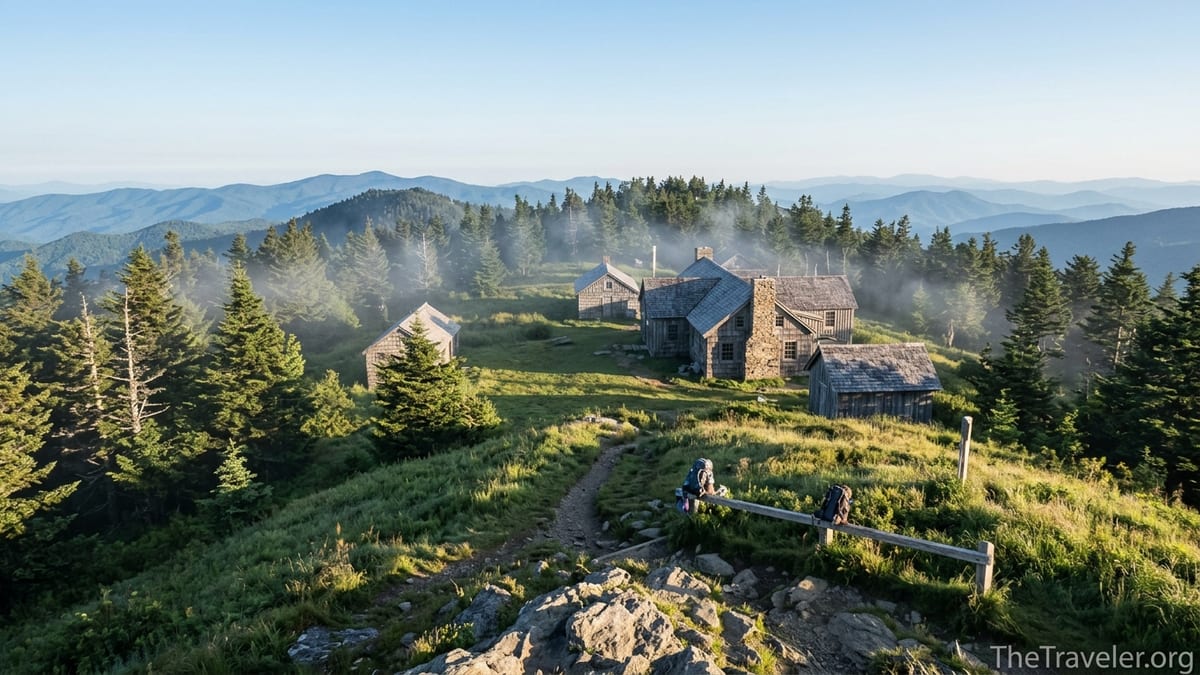
Why LeConte Lodge Books Out So Fast
LeConte Lodge combines scarcity, scenery, and tradition in a way few places can match. It is the only non-camping overnight lodging inside Great Smoky Mountains National Park and the highest guest lodge in the eastern United States, sitting at roughly 6,360 feet in a spruce fir forest just below the summit of Mount LeConte. The lodge accommodates about 60 guests per night in seven rough hewn cabins and three multi room lodges, which is a tiny capacity compared with the millions of people who visit the Smokies each year.
The lodge operates seasonally from roughly late March to mid or late November, depending on the year. That gives you a window of about eight months when demand is packed into a fairly short season. Early spring and late fall weekends are particularly popular because guests hope for snow dusted cabins, clear views, and dramatic sunrises. Fall color season and long summer daylight also book quickly.
On top of that, staying at LeConte Lodge has become a bucket list goal for many hikers. National outlets like National Geographic and regional hiking clubs frequently highlight it as a must do overnight in the Smokies. That sort of coverage means that when reservations open, thousands of people are competing for only a few dozen spaces each night. Understanding that context helps explain why you cannot simply call a month before and expect to find a Saturday cabin in October.
The final piece is the hike in only access. With no road, electricity, or showers, LeConte Lodge feels far removed from Gatlinburg and Pigeon Forge below. Guests hike 5 to 9 miles one way on one of five trails such as Alum Cave or Trillium Gap, then arrive to find kerosene lanterns, propane heaters, and family style hot dinners. That mix of physical challenge and comfort is precisely what keeps demand sky high year after year.
How the LeConte Lodge Reservation System Works
LeConte Lodge uses a lottery style system for most of the following year’s reservations, followed by traditional first come, first served bookings for whatever is left and for any cancellations. The overall pattern is that the lodge opens requests for the entire upcoming season at once, processes those requests in a randomized way, and then fills remaining gaps and cancellations by phone or email.
For recent seasons, the lodge has accepted reservation requests for the next year during a defined window, usually in early fall. For example, for a future season you might see a window that opens on October 1 and closes on October 31. During that time guests are asked to submit a request form listing preferred dates, party size, and flexibility. All forms received during that window are entered into the lottery with equal weight, so you are not penalized if you email on the final day instead of the first.
After the request period closes, staff spend several weeks working through the lottery. They match requests against available space, taking into account cabin sizes and minimum occupancy rules. Guests who receive a space get a confirmation email or letter with dates, deposit amounts, and payment deadlines. Others are informed that they did not get their first choices and may be placed automatically on a waitlist if they indicate they are open to it.
The exact dates of the lottery window and notification timing can shift slightly year to year, so it is essential to confirm current details directly with the lodge before you start planning. The core structure has been consistent, though: a single annual request period, followed by lottery processing, then ongoing booking of cancellations.
Lottery Strategy: Maximizing Your Chances
Because the main reservation window is a lottery rather than a race to click first, success is about strategy rather than speed. One of the biggest levers you control is date flexibility. Instead of requesting a single Saturday in October, consider listing a range such as any two nights between early May and mid May or any weekday in late September. The more nights you are willing to consider, the more chances staff have to fit you into a cabin that would otherwise sit partially empty.
Party size is another key factor. The lodge’s cabins and multi room lodges are configured with double bunk beds and a few single beds, and staff try to avoid leaving unused beds when demand is so high. If you are a solo traveler and insist on a private cabin, your odds are much slimmer than if you are open to sharing a larger lodge with friends or family and filling more beds. Some veteran guests deliberately plan trips with four or five people so they can fit neatly into a standard cabin rather than competing for scarce small party spaces.
Think about time of week and season as well. Weekends in peak foliage and summer understandably see more demand than midweek nights in April. If your schedule allows, requesting Sunday through Thursday dates in shoulder season often improves your chances. For example, a two night stay on a Monday and Tuesday in late April may be far easier to secure than a single Saturday in October, even if you submit both requests at the same time.
Finally, be extremely clear on the request form about secondary preferences. Indicate whether you will accept a different date range than your first choice, whether you are open to single night instead of two nights, and how far you can shift your stay within the season. Many successful guests report that they did not get their ideal weekend, but did receive a midweek slot because they checked every box labeled “flexible” on the request form.
Understanding Rates, Deposits, and Policies
LeConte Lodge uses an American Plan pricing structure, which means your nightly rate includes both lodging and two meals, typically dinner and breakfast. Rates are approved in partnership with the National Park Service and are adjusted periodically. As an approximate guide, recent seasons have seen per person rates in the range of around one hundred eighty to two hundred dollars per adult per night, with reduced prices for children aged roughly four to twelve. Larger two and three bedroom lodges are priced as a flat nightly charge for a base number of guests, with an additional per person fee above that base.
Because all guests hike to the lodge, there are no add ons like resort fees or parking charges at the cabins themselves. However, you should budget for the park’s separate parking tag requirement at the trailhead. Day passes and weekly or annual tags are relatively modest in cost, but they are mandatory and enforceable. A two day visit for a one night stay will usually require either two single day tags or a weekly tag for your vehicle.
The lodge requires a deposit to confirm a successful reservation, with the remaining balance due closer to your stay. Exact deposit amounts and cancellation policies can change, but the general principle is that cancellations made well in advance can receive a partial refund, while last minute cancellations may forfeit the deposit to cover the cost of empty beds that could have been sold to someone else. When you receive a confirmation, read the fine print on payment dates carefully and set calendar reminders so you do not accidentally lose your spot.
Alcohol is not sold by the glass at the lodge, but guests can often preorder wine by the bottle for dinner using a separate form tied to their reservation, or bring limited amounts of their own where allowed by current policy. There is also a small selection of snacks and souvenirs on site, with prices listed in a guest binder. These extras are incidental compared with the overall cost of the stay, but they can be helpful if you forgot a small item or want a coffee mug to remember your night above the clouds.
Waitlists, Cancellations, and Last Minute Openings
Even if you strike out during the lottery, you still have a realistic chance to stay at LeConte Lodge by working the waitlist and watching for cancellations. Life happens, and every year guests cancel trips because of injuries, family commitments, or changing plans. Those openings are filled from the waitlist or by guests who happen to call at the right time.
When you submit your lottery request, always opt in to be placed on the waitlist for any dates in your window. If the lodge offers a choice between specific dates or a general season long waitlist, consider choosing the broader option if you are flexible. Once on the list, your best tool is polite persistence. Many seasoned visitors call or email the reservations office periodically starting a couple of months before their preferred travel period to ask about new openings. You do not need to contact them daily, but checking once every week or two during the peak cancellation season can pay off.
In practical terms, cancellations are most common during shoulder seasons and around holidays when weather or family plans are more volatile. For example, guests might cancel an early April trip if a late winter storm is forecast, or decide they cannot travel on a long holiday weekend after all. Being prepared to accept a last minute opening, perhaps on a Tuesday and Wednesday instead of a weekend, can dramatically increase your odds.
If you live within a half day’s drive of the Smokies, you have additional flexibility. Some regional hikers put their name on the waitlist for broad ranges of dates, then keep bags packed and watch for short notice calls from the lodge. If they get a call offering a Wednesday night stay with only a week’s notice, they can rearrange work and head for Tennessee. That opportunistic approach will not work for everyone, but it shows how thinking beyond the original lottery window can unlock a coveted night at the lodge.
Choosing Dates, Trails, and Parking With a Reservation in Hand
Once you secure a reservation, attention shifts from winning a spot to making the most of it. First, confirm exactly which nights you have booked and how long your hike will be. A single night stay usually means hiking up on day one, sleeping at the lodge, then hiking down on day two. Two night stays give you a full day on top to explore the mountain’s side trails and overlooks.
Next, choose your hiking route based on your group’s fitness and comfort with elevation. Popular options include the Alum Cave Trail, which is the shortest and steepest route at about five miles one way with dramatic rock features and cliffside sections, and Trillium Gap Trail, which is longer but more gradual and passes the famous Grotto Falls. Rainbow Falls, Bullhead, and the Boulevard Trail via the Appalachian Trail provide additional options for experienced hikers or those wanting quieter paths. Many guests take a different trail down than they used going up to see more terrain.
Do not forget the logistics at the bottom of the mountain. Great Smoky Mountains National Park now requires paid parking tags at trailheads, and roadside parking near busy trailheads has been curtailed by fences and boulders. A lodge reservation does not guarantee you a parking space, so plan to arrive early on busy weekends and peak season mornings. If you are hiking Alum Cave, consider that its parking area fills quickly on pleasant days. Trillium Gap and Rainbow Falls have their own small lots and roadside pullouts where allowed; again, aim to arrive during the early morning hours to reduce stress.
Weather at 6,000 feet can be very different from the valley below. Even in late May or early October, temperatures can be near freezing at sunrise on the mountain while Gatlinburg feels mild. Pack layers, rain gear, and a warm hat and gloves, even in months when you would not normally consider them at home. The lodge provides blankets and propane heaters, but you will appreciate dry clothing and warm outerwear after a long climb through cloud or drizzle.
Insider Tips From Frequent Guests
Guests who return to LeConte Lodge year after year often develop personal routines that help them both secure reservations and enjoy their stays. One common practice is signing up for the lodge’s email newsletter so you receive direct notice when the next lottery window and any policy changes are announced. Because the lodge does not rely heavily on social media, email and the official website are the most reliable ways to know exactly when to submit your request.
Many repeat visitors also plan their trips midweek rather than fighting for weekend slots. For example, a family from Atlanta might request a Tuesday to Thursday stay in June instead of a Friday to Sunday in July. They drive up on Monday, hike in Tuesday morning, spend two nights, then hike out Thursday and return home. This pattern avoids the heaviest trailhead traffic, makes parking tags easier to manage, and takes advantage of slightly lower midweek demand without sacrificing the experience of sunrise and sunset from the mountain top.
Another insider tactic is pairing your LeConte stay with a flexible base in the valley. Rather than locking in a nonrefundable cabin or condo for specific dates before you know whether you have a lodge reservation, consider booking cancellable accommodations in Gatlinburg, Pigeon Forge, or nearby Sevierville. Once your lottery results arrive, you can adjust those down valley plans to match your confirmed lodge dates. This reduces financial risk if you do not secure the spot you hoped for.
Finally, treat your lodge reservation as a commitment to be well prepared on the trail. Guests who have the best memories of LeConte typically train for the hike with regular walks, practice carrying a daypack, and test their boots before the trip. They arrive early enough to hike at a comfortable pace, enjoy vistas like Alum Cave Bluffs or Grotto Falls along the way, and reach the cabins with plenty of daylight to settle in before dinner. With limited emergency resources on the mountain, being ready for the physical side of the adventure is just as important as securing the reservation itself.
The Takeaway
Reserving a night at LeConte Lodge is more involved than booking a typical hotel room, but that is part of what makes it special. A once a year lottery, a slim chance of cancellations, and a hike in only location combine to create genuine scarcity. Yet travelers who understand the system, stay flexible on dates and party size, and work both the lottery and the waitlist often find themselves sipping hot cocoa under kerosene lantern light far above the valley haze.
If a stay at LeConte Lodge is high on your Smokies wish list, start early. Monitor the lodge’s official announcements for the next reservation window, think carefully about how flexible you can be with dates and companions, and be prepared to follow through if your name is drawn. With realistic expectations and patient planning, you can turn one of the region’s most coveted reservations into an unforgettable mountaintop night.
FAQ
Q1. When do LeConte Lodge reservations open each year?
The lodge typically accepts reservation requests for the following season during a defined lottery window in early fall, often around October. Exact dates can change, so always confirm the current year’s schedule directly with the lodge before planning.
Q2. Is LeConte Lodge really that difficult to book?
Yes, demand usually far exceeds supply, especially for weekends and peak foliage or summer dates. However, travelers who are flexible about dates, willing to stay midweek, and open to different months often succeed within a year or two of trying, particularly if they also watch the waitlist and cancellations.
Q3. How much does it cost to stay at LeConte Lodge?
Rates vary by season and cabin type, but recent seasons have seen per person nightly rates for adults in the general range of roughly one hundred eighty to two hundred dollars, including dinner and breakfast. Children’s rates are lower, and large multi room lodges are priced as a flat nightly charge for a set number of guests.
Q4. Do I have to hike to get to LeConte Lodge?
Yes. There is no road to the lodge. All guests hike between about five and nine miles one way on one of several trails, such as Alum Cave, Trillium Gap, Rainbow Falls, Bullhead, or the Boulevard. You should be prepared for a full day hike with thousands of feet of elevation gain.
Q5. What happens if the weather is bad on my reservation dates?
LeConte Lodge operates in a mountain environment where rain, fog, and even snow are possible in the shoulder seasons. The lodge generally remains open in poor weather and expects guests to arrive as planned, though extreme conditions can occasionally affect operations. Always check the latest park and lodge updates before hiking and pack appropriate cold and rain gear.
Q6. Can I bring children to LeConte Lodge?
Many families stay at the lodge successfully. Children who are old enough to handle a long uphill hike and follow safety instructions around steep drop offs can have a memorable experience. Parents should choose trails that match their kids’ abilities and closely supervise them on cliffs, near overlooks, and on cabin walkways.
Q7. Are there showers, electricity, or Wi Fi at the lodge?
No. LeConte Lodge is intentionally rustic. Guests have kerosene lanterns for light, propane heaters in cabins during colder parts of the season, cold water for washing, and shared restrooms. There are no showers, no electrical outlets in cabins, and no Wi Fi, which is part of the appeal for many visitors seeking a digital break.
Q8. Can I just hike up for the day without a reservation?
Absolutely. The trails to Mount LeConte and the lodge area are open to day hikers, and you do not need an overnight reservation to visit the grounds, enjoy the views, or buy a snack or souvenir when the lodge is open. Overnight stays, however, always require advance reservations.
Q9. How do parking tags work for a stay at LeConte Lodge?
Great Smoky Mountains National Park requires paid parking tags at trailheads. A one night stay usually means you need coverage for both your ascent and descent days, either by purchasing consecutive single day tags or a weekly tag. The lodge reservation does not include parking, so arrange and display your tag according to current park rules.
Q10. What is the best way to improve my odds of getting a reservation?
Be as flexible as possible with dates, length of stay, and party size. Request midweek dates or shoulder season periods, indicate you are open to alternate dates on the form, and opt in to the waitlist. Then monitor communications from the lodge and be prepared to accept a cancellation opening on relatively short notice if your schedule allows.