


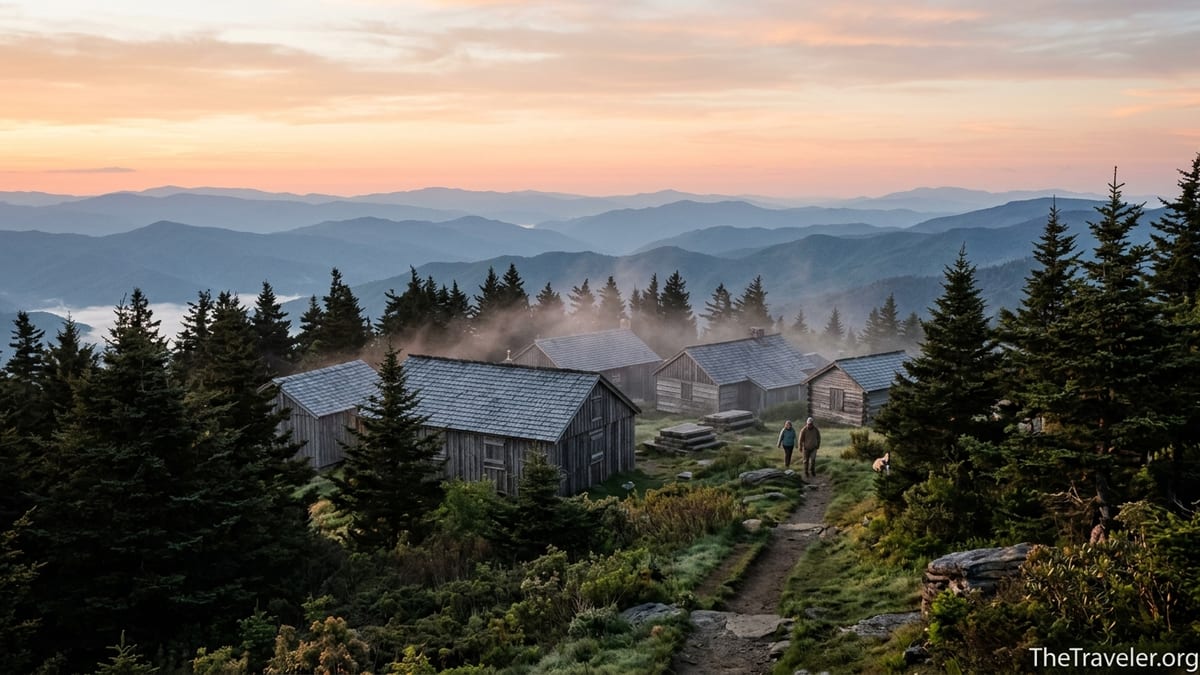
Perched just below the summit of Mount Le Conte in Great Smoky Mountains National Park, LeConte Lodge has become a near-mythical destination for hikers. With no road access, no electricity, and weather that can swing from sunlit balmy afternoons to sleet overnight, it is both demanding and deeply rewarding. For many nature lovers, finally walking into the rustic cluster of cabins at roughly 6,400 feet feels less like checking into a lodge and more like joining a long-standing mountain tradition.
Get the latest updates straight to your inbox!
A Mountaintop Lodge You Have to Earn
LeConte Lodge sits high on the slopes of Mount Le Conte, one of the dominant peaks of Great Smoky Mountains National Park. At about 6,400 feet in elevation, it is widely described as the highest guest lodge in the eastern United States that you can actually sleep in, not just visit for a view. There are no roads, no parking lot and no shuttle. The only way in or out is by hiking one of the mountain’s steep trails, which instantly gives any night at the lodge a sense of being earned rather than purchased.
Most visitors begin their journey before sunrise from trailheads along Newfound Gap Road or Cherokee Orchard Road outside Gatlinburg, Tennessee. A typical route, such as the Alum Cave Trail, will take a reasonably fit hiker around four to six hours of steady climbing, with more than 2,500 feet of elevation gain. By the time you pass the wooden sign pointing toward LeConte Lodge near the summit, your legs have already done a full day’s work, which makes the first glimpse of the weathered cabins and stone dining hall feel especially satisfying.
This hike-in-only model is a major part of what makes the lodge special to hikers. You share the experience with people who have sweated up the same ridges and rock steps, not with motorists piling out of tour buses. Even in peak season, the crowd at LeConte feels more like a small trail community than a resort guest list. Stories of the climb, the weather and wildlife sightings become natural icebreakers on the porches and at dinner tables.
Because every supply reaches the lodge by foot, either in hikers’ backpacks or on the backs of pack llamas, nothing about staying here feels disposable. Water is carried or collected, waste is carefully managed and extra comfort items are limited by what can realistically be hauled up the mountain. That logistical constraint keeps the focus squarely on the basics: shelter, food, warmth and the surrounding wilderness.
Rustic Comfort Without Modern Distractions
LeConte Lodge is often described as rustic, but that simplicity is exactly what many hikers and nature lovers come for. Guest cabins and multi-room lodges are basic, with wooden bunks or beds, kerosene lanterns and propane heaters instead of electrical outlets and televisions. There is no grid power, no Wi-Fi and no air conditioning. On a typical May or October evening, you might be pulling on a fleece and listening to wind in the spruce-fir canopy instead of scrolling through your phone.
The lodge operates during a defined season, generally from late March through late November, and reservations often fill many months in advance. Rates are typically charged per person and include two hearty meals: dinner the night you arrive and breakfast the next morning. While prices fluctuate over time, guests can expect per-person nightly rates in roughly the low- to mid-hundreds in recent years, factoring in the truly all-inclusive setting: hot meals, warm drinks and a bed high above the valley lights where you did not have to carry your own tent or stove.
Meals are served family-style in a communal dining hall, a highlight for many guests. Tables fill with hikers still in fleece layers and trail pants, comparing routes and weather while staff carry in steaming dishes of roast meat or vegetarian options, mashed potatoes, green beans, cornbread and dessert. Coffee and hot cocoa are bottomless, and the mood often shifts from trail-weary to festive as people warm up. Because everyone is essentially “trapped” on the mountaintop until morning, dinner conversation can feel more relaxed and unhurried than at lodges where cars are waiting just outside.
Basic amenities such as potable water, composting or vault toilets and simple wash basins are provided, but guests share facilities and must keep expectations modest. Instead of power showers, hikers might wipe down at a basin with hot water poured from a pitcher. Instead of room service, you get a wool blanket and the crackle of your heater. For many repeat visitors, that absence of modern convenience is what allows them to truly unplug and listen to the nighttime quiet of the mountain.
The Trails: Five Distinct Journeys to the Same Summit
Part of LeConte Lodge’s mystique comes from the variety of routes that lead to it. There are five main trails used to reach the summit area and the lodge: Alum Cave, Boulevard, Trillium Gap, Rainbow Falls and Bullhead. Each offers a distinct personality, and many returning guests choose a different way up or down each time, turning the lodge stay into the centerpiece of a new hiking adventure.
The Alum Cave Trail is the most popular and shortest approach at roughly 5 miles one way. It is also among the steepest, rewarding hikers with dramatic features such as Arch Rock, the open ledges around Inspiration Point and the imposing overhang of Alum Cave Bluffs. Higher up, narrow rock sections with hand cables offer airy views and a sense of exposure that many hikers find exhilarating. On a clear June day you might see rhododendron patches in bloom contrasting with distant blue ridgelines as you ascend.
The Boulevard Trail, usually accessed from Newfound Gap, is longer and more rolling, often listed at around 7.5 to 8 miles to the lodge. It follows a high-elevation ridge for much of its distance, with frequent peeks into both Tennessee and North Carolina. Hikers who choose this route often mention its relative quiet and the feeling of walking “in the clouds” among spruce and fir, especially on foggy days. The price is a bit more total time on trail, often six to seven hours for an average party with breaks.
Trillium Gap, Rainbow Falls and Bullhead complete the network, mostly starting from the Cherokee Orchard area. Trillium Gap is known as the llama supply route, and on designated days visitors can encounter the pack llamas that haul food and linens up to the lodge. The lower section passes behind Grotto Falls, one of the few places in the park where you can actually walk behind a waterfall. Rainbow Falls climbs past its namesake cascade, a popular day-hiking destination in its own right, before continuing to the summit area. Bullhead, historically less traveled, offers long, open stretches with expansive views over the Smokies and can feel especially exposed in summer sun. Together, these trails let hikers tailor their LeConte experience: steep and dramatic, long and airy, waterfall-filled or view-oriented.
Immersive Smokies Ecosystems and Big-Sky Views
For nature lovers, the draw of LeConte Lodge is not only the cabins but the mountain ecosystems surrounding them. As you climb from valley trailheads around 2,500 feet toward the lodge, you pass through a stacked series of habitats. Lower slopes are dominated by mixed hardwood forests, especially vibrant in late October when sugar maples and oaks turn red and gold. Mid-elevations bring rhododendron tunnels and laurel thickets that bloom in late spring, along with creek crossings and moss-covered boulders.
Near the top, the forest shifts to high-elevation spruce-fir. The air cools noticeably, even on hot summer days, and the forest floor becomes a patchwork of ferns, clubmoss and soft duff. Birders may hear dark-eyed juncos, winter wrens and other species that favor these cooler conifer zones. In late summer, hikers sometimes notice small, delicate wildflowers such as monkshood and grass of Parnassus along the higher trails, species more typical of colder climates that find suitable niches on Le Conte’s ridges.
Above the cabins, short side paths lead to some of the finest viewpoints in the park. Cliff Tops, a rocky outcrop just a few minutes from the lodge, is a classic sunset spot. On a clear evening in September, you might stand shoulder to shoulder with a small group of fellow guests watching the sun drop behind layered blue ridges, with the towns in the valleys beginning to glimmer faintly below. In the other direction, Myrtle Point is a favored sunrise perch, offering an almost 270-degree panorama that catches the first light coming in from the east.
Because the lodge area sits high on the mountain, weather can be dramatically different from the forecast in Gatlinburg or Pigeon Forge. Daytime temperatures in July can feel almost springlike compared with the valley heat, while April and November visits may bring frost, rime ice on the trees or even a dusting of snow. This changeability is part of the appeal for many hikers, who relish stepping out of the cabin in the early morning to find the world shrouded in fast-moving fog or sparkling in clear mountain light.
Tradition, Community and the Llama Trains
LeConte Lodge has operated in some form since the 1920s, predating the formal establishment of Great Smoky Mountains National Park. That long history gives the complex a sense of continuity that many guests feel as soon as they arrive. Weathered shingles, hand-painted signs and simple rock-bordered paths speak to decades of caretaking by staff who live on the mountain during the operating season.
A big part of the lodge’s appeal is the small, tight-knit community that forms among staff and guests. Many crew members return season after season, learning the nuances of the trails, the frequent weather patterns and the quirks of the cabins. Guests who snag hard-to-get reservations sometimes find themselves sharing dinner with long-time LeConte regulars who have been coming up for decades, swapping stories about memorable storms, wildlife sightings or the time their children first reached the top.
The llama supply trains have become one of the lodge’s most beloved traditions. Several times a week, pack llamas carry fresh food, linens and other essentials up the Trillium Gap Trail, replacing the pack mules used in earlier decades. For hikers who happen to be on Trillium on a “llama day,” it is common to step aside on the trail as a string of sure-footed animals passes by, each with colorful panniers and a wrangler in the lead. Many families time their descent from the lodge along Trillium specifically to see the llamas, making the journey itself one of the highlights of their stay.
Long-running customs also extend to simple comforts and souvenirs. Guests can purchase items such as tin mugs, patches or shirts printed with the date and elevation, all carried up the mountain along with food. Many hikers make a tradition of buying a new mug or patch every time they stay, slowly building a home collection that chronicles their personal relationship with the mountain. Even something as small as signing the lodge’s guest log can feel meaningful, especially to those who remember reading earlier entries on a previous trip.
Planning a Stay: Reservations, Seasons and Practical Details
Because LeConte Lodge is one of the only places you can sleep in a permanent structure inside Great Smoky Mountains National Park, demand for reservations is intense. The lodge typically opens reservation requests for the following season well in advance, and many popular dates in mid-summer and peak fall foliage are allocated months before opening day through a combination of lottery-style systems and rolling bookings. Cancellations do occur, so determined hikers sometimes call the reservation office periodically in hopes of picking up a last-minute opening for a weekday night.
Stays are usually booked as a one-night or two-night package, with dinner on arrival and breakfast included. Guests who want more flexibility sometimes coordinate with the nearby backcountry shelter on Mount Le Conte, operated separately through the park’s permit system, combining a lodge night with tent or shelter camping. This hybrid approach is especially popular with backpackers who want one evening of relative comfort on the mountain in the middle of a longer route.
From a packing standpoint, hikers treat a lodge stay much like a lightweight backpacking trip, minus the tent and stove. In practice, that means sturdy hiking shoes, extra layers, rain gear, a headlamp, personal toiletries, water and trail snacks. Because the lodge provides blankets and meals, many guests can keep their packs in the 15 to 25 pound range, depending on photography gear and personal extras. It is wise to prepare for wet, cool and windy conditions even if the forecast at lower elevation looks mild. The temperature can drop significantly as you climb, and sudden fog or rain is common along the ridges.
Many hikers build their entire Smokies vacation around a night at LeConte. They might spend a day or two in Gatlinburg or Townsend, exploring lower-elevation trails such as Laurel Falls or Cades Cove, then dedicate a full day to hiking up to the lodge. After spending the night, they may descend via a different trail and reward themselves with a large breakfast in town. Others fit LeConte into a longer road trip that includes stops in Asheville, Cherokee or the Blue Ridge Parkway, making the hike a centerpiece of a weeklong Southern Appalachian itinerary.
The Deeper Appeal: Why LeConte Lodge Stays With You
What sets LeConte Lodge apart from more typical mountain lodges is the combination of physical effort, simple comfort and immersive landscape. You cannot just drive up, snap a photo and drive away. You have to commit to hours of climbing, weather uncertainties and carrying your own essentials. That effort creates a tangible sense of accomplishment, especially for guests who are new to longer hikes. It is not uncommon to see multi-generation families at the lodge, with grandparents proudly pointing out the cabins to grandchildren who have just completed their first serious mountain ascent.
The environment at the lodge encourages a slower, more reflective pace. Without cellular service or electronic distractions, evenings tend to revolve around conversation, reading, journaling or strolling over to a viewpoint. Some guests sit on the front porch of their cabin and simply watch the clouds roll through the trees, listening for ravens overhead. Others take advantage of the extra light in midsummer to walk to Cliff Tops after dinner and return by headlamp. The rhythm of the stay naturally matches the sun and the weather rather than a digital schedule.
For many nature lovers, a night at LeConte also deepens their connection to the park as a whole. Hiking the same trails that generations of visitors and early park advocates used, staying in a lodge that started as a simple camp nearly a century ago and seeing the range of habitats stacked up the mountain side all underscore the value of the protected landscape. It is easier to grasp the importance of conservation when you have just watched the sun rise over undisturbed ridges stretching as far as you can see.
The memories that people carry away from LeConte tend to be a blend of small, specific moments: the taste of hot coffee after a cold, misty hike; the sudden clearing of clouds to reveal far-off ridges; the soft knock on the cabin door when a staff member calls you to breakfast; or the quiet shared with a stranger while watching the last light fade from Myrtle Point. Those details, more than any single grand view, are what keep hikers and nature lovers returning and recommending the lodge year after year.
FAQ
Q1. How difficult is the hike to LeConte Lodge?
The hike is considered strenuous for most people. Even the shortest route, Alum Cave, climbs over 2,500 feet in about 5 miles. With steady pacing, breaks and appropriate gear, many reasonably fit hikers, including older adults and motivated children, complete the trek safely each season.
Q2. Which trail is best for first-time visitors to LeConte Lodge?
Alum Cave is the most popular choice because it is the shortest and offers dramatic scenery, but it is also steep and has some narrow ledges. Trillium Gap is a good option for those who prefer a steadier grade and want to see Grotto Falls and, on certain days, the llama train. Ultimately, the best choice depends on your comfort with exposure, distance and elevation gain.
Q3. Do I need a reservation to stay at LeConte Lodge?
Yes. A reservation is required and spots are highly sought after. Many dates book months in advance, especially weekends, summer and peak fall foliage. Some travelers secure reservations nearly a year ahead, while others watch for cancellations closer to their travel dates.
Q4. What is included in the nightly rate at LeConte Lodge?
While exact details can change over time, the rate generally includes your bed in a cabin or lodge room, a family-style dinner on the night you arrive and a hot breakfast the next morning. Hot beverages such as coffee, tea and cocoa are usually available, along with basic linens and blankets. Guests bring their own personal items, clothing and any extra snacks.
Q5. Is there electricity or Wi-Fi at LeConte Lodge?
No. There is no standard electrical service, Wi-Fi or cell coverage for guests at the lodge. Lighting is provided by kerosene lanterns, and propane heaters warm the cabins during cooler weather. Many visitors find the lack of connectivity to be one of the best parts of the experience.
Q6. What should I pack for a night at LeConte Lodge?
Pack as if you were going on a cool-weather day hike with an overnight at a very basic cabin. Sturdy hiking footwear, layered clothing, rain gear, a warm hat and gloves in shoulder seasons, a headlamp, personal toiletries, a small first-aid kit, water bottles and trail snacks are standard. Because meals and bedding are provided, most people can keep their pack weight relatively moderate.
Q7. When is the best time of year to visit LeConte Lodge?
The lodge operating season typically runs from early spring to late fall. Spring visits offer wildflowers and cooler temperatures but can be wet and unpredictable. Summer brings more stable weather and lush greenery, while autumn showcases colorful foliage and crisp mountain air. Your ideal time depends on whether you prioritize wildflowers, long daylight, or fall colors and cool nights.
Q8. Can families with children stay at LeConte Lodge?
Yes, families with children frequently stay at the lodge. Parents should carefully consider their children’s hiking ability and comfort with several hours of uphill walking. Many families choose Trillium Gap or Rainbow Falls for a slightly gentler grade, plan plenty of snack breaks and allow extra time so the hike remains fun rather than rushed.
Q9. Are there showers or private bathrooms at LeConte Lodge?
No. There are no showers and bathrooms are shared. Facilities typically include composting or vault toilets and simple wash basins. Guests manage personal hygiene with basic supplies, using provided water and basins rather than full bathrooms. This simple setup is part of the lodge’s rustic character.
Q10. What happens if the weather is bad on my hiking or lodge day?
Mount Le Conte’s weather can change quickly, and rain, fog or even early-season snow are all possibilities. The lodge generally remains open during poor weather, and hikers are expected to carry appropriate clothing and gear. If conditions look particularly challenging, such as thunderstorms or ice, many guests adjust their start time, choose a less exposed trail or consider safety first and reschedule if park guidance suggests travel is unsafe.