


The Hollywood Sign perches high on the southern slope of Mount Lee, inside Griffith Park just above Hollywood. From street level it can look close, but visitors are often surprised by how tricky it is to see well. The letters are fenced off, monitored by cameras and patrols, and there is no legal way to walk up to, touch, or climb on the Sign. Instead, you reach it indirectly, via a tangle of city streets and park roads that feed into hiking trails and official viewpoints whose rules can and do change. This guide focuses on what most visitors staying in or near Hollywood really want to know: from a hotel or rental in central Hollywood, what are the most realistic options for getting that iconic photo or taking a satisfying hike near the Sign, with or without a car.
Get the latest updates straight to your inbox!
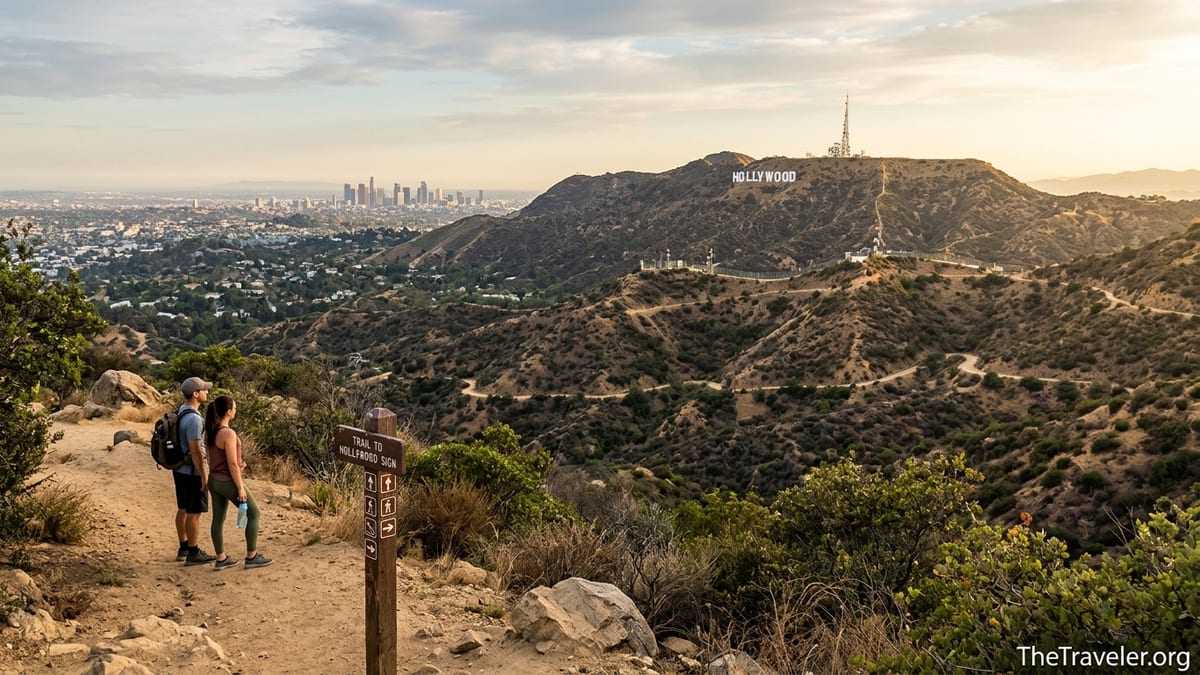
Key things to know before you go
The Hollywood Sign sits inside Griffith Park, a vast urban park rising immediately north of Hollywood Boulevard. The letters themselves stand on a steep slope of Mount Lee, surrounded by security fencing, cameras, motion sensors, and communication equipment. Current park policy does not allow public access inside the fence line, and there are significant penalties for trespassing. The closest legal access is to viewpoints around and above the Sign, including the ridgeline behind it on Mount Lee Drive, where you look down over the letters rather than stand among them.
Reaching a good view involves some combination of city streets and park trails, and that is where things get confusing. Over the past decade, several formerly popular residential access routes have been restricted or discouraged after tensions between residents and visitors, and the city of Los Angeles has repeatedly adjusted parking rules, signage, and navigation directions. Trailheads and road access within Griffith Park also change for reasons such as fire risk, storm damage, or construction. Before finalizing any detailed directions, writers and visitors alike should always confirm current rules, road closures, and parking regulations with official sources such as Los Angeles Recreation and Parks, Griffith Observatory information, and the Hollywood Sign’s own visitor guidance.
For travelers based in Hollywood, the good news is that you do not need a complicated backroads strategy to see the Sign. Several straightforward, legal viewpoints work well by rideshare or car, and there are established hiking routes that start from official park entrances and visitor hubs rather than from quiet residential cul-de-sacs. The key is to choose an option that matches your time, fitness, and transport, then double check opening hours, public transit timetables, and any current advisories shortly before you go.
Heat and terrain are another critical factor. Even in cooler months, Griffith Park’s slopes can feel exposed, with limited shade and long stretches of decomposed granite fire roads. In summer and on clear autumn days, temperatures on the hillsides can run well above downtown readings. Carry more water than you think you will need, wear closed-toe shoes with grip, and avoid setting off on longer hikes in the hottest part of the day or so late that you risk coming down in the dark.
Drive-up and rideshare viewpoints from Hollywood
If your main goal is a classic photo and you would rather not hike, several viewpoints within a short drive of central Hollywood offer legal, well known perspectives of the Sign. From a Hollywood hotel, typical rideshare times to these spots are about 15 to 30 minutes outside rush hour, although congestion around sunset can extend that. Because rules on private car access, drop-off points, and curbside parking are updated regularly, it is essential to confirm the latest conditions and any posted hours shortly before a visit.
Griffith Observatory is one of the most reliable and rewarding drive-up options. Located on the southern slope of Griffith Park, it has terraces specifically oriented toward sweeping views of the Hollywood Sign and the basin below. This is a major city attraction with formal opening hours, staffed facilities, and restrooms. At the time of writing, admission to the building is free and there is paid parking closest to the Observatory, with additional street parking along the access road that may be metered or time limited depending on the day. Writers should verify current parking fees, enforcement hours, lighting conditions after dusk, and whether ride-hailing services are allowed to pick up and drop off directly at the main loop.
Another longstanding favorite for simple Sign photos is Lake Hollywood Park on the north side of the hill, across the 101 Freeway from central Hollywood. The grassy park offers a relatively close, front-on angle of the letters in a relaxed, family-friendly setting. In recent years it has featured prominently in both official and unofficial viewpoint maps. Access is by winding residential roads and curbside parking is heavily regulated, with frequent changes to time limits and no-parking zones. Anyone giving directions should stress that visitors must obey all posted signage, avoid blocking driveways, and be prepared that drop-offs by rideshare drivers might require a short uphill or downhill walk if the exact park frontage is congested or temporarily restricted.
Within the Hollywood neighborhood itself, there are also easier, urban viewpoints that require minimal logistics. For instance, the upper terraces and parking decks of major shopping complexes at the Hollywood and Highland intersection now branded as Ovation Hollywood are widely known among locals and tourism authorities as places where you can frame the Sign between buildings while still standing on the Walk of Fame area. Downtown Hollywood rooftops and some multi-level parking structures along Sunset Boulevard also have clear sightlines. However, building access policies, opening hours, and rooftop operations can change with new tenants and refurbishments, so writers should verify which levels are currently open to the public and whether photography is permitted.
Public transit and shuttle options from central Hollywood
For visitors without a car, Los Angeles public transit provides workable, if sometimes multi-stage, routes to Hollywood Sign viewpoints. The Metro B Line links several Hollywood stations with the broader rail network. From Hollywood and Vine or Hollywood and Highland stations, you can ride to connections for bus and neighborhood shuttles that climb into Griffith Park. Because bus routes and schedules are periodically adjusted, and nighttime service is often reduced, it is vital to consult the current Metro timetable and any service alerts close to publication or travel dates rather than relying on older guidance.
One of the most practical combinations for Sign views is the pairing of the Metro B Line with the DASH Observatory shuttle operated by the city’s transit department. In recent service plans, the DASH Observatory has run between the Vermont and Sunset area near a B Line station and Griffith Observatory, operating on a loop up into the park. Official visitor information for the Hollywood Sign currently recommends this connection as a cost efficient way to reach Griffith’s viewing terraces without dealing with observatory parking. However, specific fares, operating days, and the frequency of shuttles are subject to budget cycles and seasonal demand, so writers must confirm current operating hours and note any cutbacks or seasonal suspensions that could affect early morning or evening trips.
Within Hollywood proper, the DASH Hollywood and DASH Los Feliz buses can also shrink the distance between accommodations and park-edge neighborhoods. These routes have historically linked parts of Hollywood Boulevard and adjacent streets with residential areas that border Griffith Park. They are useful for travelers who are comfortable walking the final stretch up to an official trailhead. The important caveat is that some hillside streets have seen increased restrictions on non-resident traffic and visitor parking. Advising readers to alight at recognized commercial nodes or park entrances, rather than deep in residential side streets, respects neighborhood concerns and helps reduce the risk of confusion or citations.
In general, public transit is best suited to travelers who are content with half-day outings and flexible timing. Even when everything is running on schedule, door-to-viewpoint journeys from central Hollywood to Griffith Observatory or a nearby trailhead often take at least 45 minutes each way once waiting and walking are included. For families with small children or visitors unused to heat and hills, it can be sensible to aim for a single major viewpoint such as the Observatory rather than trying to string multiple Sign experiences into one transit day.
Representative hikes to see or get behind the Sign
For many visitors, the most satisfying way to experience the Hollywood Sign is on foot. Griffith Park contains a network of official trails and fire roads that climb to ridges with both side-on and above-the-sign perspectives. Exact distances and elevation profiles vary slightly among sources and with any reroutes, so it is wiser to think in broad bands rather than precise figures. Before publishing a detailed route description, always check the current trail status on official park maps, and note any signage about temporary closures, fire conditions, or habitat protection.
One of the classic moderate options from the north is the Brush Canyon Trail from the Canyon Drive area, often combined with Mount Lee Drive to reach the fenced overlook behind the Sign. In general terms, this is a half-day outing for the average visitor, usually around 4 to 7 miles round trip with roughly 300 to 400 meters of elevation gain, depending on the exact starting point and side paths taken. The route begins on a wide dirt road that climbs steadily into the park before joining the paved Mount Lee service road near the top. Time wise, many reasonably fit hikers take about 2 to 3 hours for the full up and down, not including long photo stops.
A second widely used category of routes approaches from the south near Griffith Observatory or the Vermont Canyon area. Using combinations such as the Mount Hollywood Trail and signed connections toward Mount Lee Drive, it is possible to start at or near the Observatory parking area, gain views of downtown Los Angeles along the way, and eventually reach either intermediate ridges with angled views of the Sign or the higher service road behind it. These are also typically half-day hikes for casual walkers, falling into the 3 to 6 hour window including breaks, with moderate but sustained climbs on exposed slopes. Because they start near a major visitor hub, they appeal to travelers who want to combine museum time and vistas over the city with a more ambitious hike.
For experienced hikers seeking a steeper, more rugged experience, there are shorter but sharper routes in the western part of Griffith Park, sometimes used to reach Cahuenga Peak and then traverse to Mount Lee. These paths involve rougher footing and more pronounced gradients within an overall distance band of roughly 3 to 5 miles, with significant elevation gain compressed into a smaller horizontal span. They can deliver superb high-level views of the Sign, the San Fernando Valley, and the Los Angeles Basin, but are not recommended for families with small children or anyone uncomfortable with narrow, rocky single-track sections. Land managers have, at times, adjusted signage and barriers in these areas to discourage erosion or protect sensitive slopes, so route descriptions must be kept flexible and up to date.
Trail etiquette, safety and neighborhood sensitivities
Whatever route you choose, treating Griffith Park as a real mountain environment within the city is the best mindset. Summer afternoons and early autumn heat waves can push hillside temperatures to levels that surprise visitors from cooler climates. The standard advice is to carry at least one to two liters of water per person for even a modest hike, plus a hat, sunglasses, and sunscreen. Trail surfaces are often loose and dusty, so closed-toe walking shoes or light hiking boots with some tread are much safer than sandals. Starting long hikes early in the morning not only avoids heat but also gives a buffer in case progress is slower than expected.
Staying on marked, official trails is also a safety and conservation issue. Social shortcuts carved by impatient hikers contribute to erosion and habitat damage, and in places near the Sign itself they may lead you into areas under active surveillance where trespassing fines and police response are real possibilities. Fences and cameras around the letters are not decorative. Visitors should be explicitly warned that climbing over barriers or attempting to access the immediate footprint of the letters is illegal, and that the best photos usually come from some distance anyway, where the word “Hollywood” reads clearly against the hillside.
Neighborhood relations are another sensitive point. Several access routes to the park begin near quiet residential streets in the Hollywood Hills. Over the years, increased visitor traffic, unsafe parking behavior, and congestion on narrow roads have led to conflict between residents and tourists. In response, the city has installed new signage, revised parking regulations, and at times rerouted navigation apps away from certain streets. Any current trailhead recommendations that involve residential areas should emphasize strict adherence to posted parking rules, avoidance of driveways and fire hydrants, and patient, low speed driving. Where possible, steer visitors toward parking in official park lots or using transit and shuttles instead of crowding cul-de-sacs.
Writers should also address realistic end-of-day timing. Many visitors are tempted to start hikes close to sunset to capture warm light on the Sign and city skyline. While sunset can indeed offer beautiful conditions for photography, it also coincides with fading light on often uneven trails, cooler temperatures, and reduced staffing at visitor centers. Travelers unfamiliar with the terrain may be safer aiming for late afternoon golden light that still allows them to descend with daylight in hand, unless they are equipped with headlamps and comfortable hiking in the dark.
Choosing routes for families, beginners and photographers
For families and less experienced hikers based in Hollywood, the most accessible choices are typically the no-hike or very short walk viewpoints. Griffith Observatory’s terraces, reachable by car, shuttle, or a combination of Metro and DASH, combine facilities, education exhibits, and expansive views that keep children engaged. Lake Hollywood Park is another appealing option for families who can reach it by car or rideshare and are prepared for a bit of hill walking between the drop-off point and the grassy area. In both cases, the ground is suitable for casual footwear and strollers in many areas, though anyone venturing beyond the immediate paved zones should still watch for slopes and uneven surfaces.
For beginners willing to walk but wary of steep climbs, routes that follow wide fire roads with gradual gradients are the best compromise. The lower stretches of the Brush Canyon approach or the gently rising paths from near the Griffith Park Visitor Center can provide satisfying views without committing to the full Mount Lee summit. Framing these as scenic out and back strolls of an hour or two, with the option to turn around at any point, helps travelers avoid feeling pressured to reach a specific summit just for the sake of it.
Photographers, meanwhile, may care as much about angle and backdrop as raw proximity. Front-on views from places like Lake Hollywood Park and certain Hollywood Hills turnouts are ideal if you want the word “Hollywood” to appear straight and legible in the frame, often with foreground trees or city streets. Angled perspectives from Griffith Observatory or nearby ridges can be more atmospheric, tying the Sign into the wider sweep of Los Angeles and the Observatory’s domes. Those who hike behind the Sign to the Mount Lee ridgeline will find dramatic downward views across the tops of the letters and out to the basin, better suited to wide-angle lenses and more abstract compositions.
Time of day plays a significant role in photography. In the morning, the Sign is often illuminated from the front, which can flatter front-facing viewpoints and reduce haze if marine clouds have burned off. Late afternoon and sunset can bathe both hillside and city in warm tones, but may place parts of the Sign in shadow depending on season. Because the Hollywood Sign is oriented roughly south, its look shifts subtly through the year as the sun’s path changes. Writers do not need to overcomplicate this, but can reasonably suggest that visitors serious about photos aim for morning to mid-morning for clarity and mid to late afternoon for mood, always weighing these windows against safety and transit realities.
A simple decision framework from a Hollywood base
For travelers already overwhelmed by conflicting online advice, it helps to reduce the options to a straightforward choice among three main experiences. First is the no-hike viewpoint: from central Hollywood, take a rideshare or transit combination to Griffith Observatory or a central Hollywood terrace view and focus on an easy, iconic photo. This suits tight schedules, families with young children, and anyone sensitive to heat or mobility limitations. The main considerations are confirming current shuttle or parking arrangements and allowing enough time for traffic around peak sunset periods.
The second category is the short scenic walk, ideal for visitors who want a bit of movement but not a full mountain outing. Examples include walking partway up an official Griffith Park fire road from a recognized entrance, or strolling between a shuttle stop and the Observatory terraces with pauses at roadside viewpoints. These outings typically fit into two to three hours door to door from a Hollywood base and do not require special equipment beyond comfortable shoes, water, and sun protection. They deliver satisfying views of the Sign set within the broader park landscape without demanding sustained climbing.
The third option is the half-day hike to or above the Sign, best for reasonably fit visitors who are accustomed to walking several miles on uneven ground. Here, representative choices include hiking from the Brush Canyon area up toward Mount Lee or building a loop from near Griffith Observatory across ridges to a behind-the-sign viewpoint. Plan at least half a day from Hollywood including travel, and be prepared with ample water, snacks, a hat, and ideally a backup navigation aid such as a downloaded map. Emphasize that these are real hikes, not city strolls, and that starting early in the day is essential.
In practice, the decision can be framed in a simple way: if you want a quick photo with minimal logistics, go for the no-hike option via Griffith Observatory or a Hollywood terrace. If you want to stretch your legs and enjoy viewpoints along a wide dirt road, choose a short scenic walk toward, but not necessarily all the way to, the Sign. If your priority is standing high above Hollywood with the letters at your feet, commit to a half-day hike on an established route, respecting closures and the limitations of your group. In all cases, the final step before you set out should be the same: check the latest park, transit, and parking information, then head for a legal, well established access point and let the Sign do the rest.