


For individuals and families planning a relocation to Mexico, the ability to move funds across borders safely is a critical operational question. Mexico is one of the largest remittance destinations in the world, receiving over 60 billion US dollars in transfers annually, with the United States alone accounting for more than 90 percent of inflows in recent years. Understanding how to move money into Mexico securely, efficiently and in a compliant manner is therefore essential when assessing whether relocation is practical.
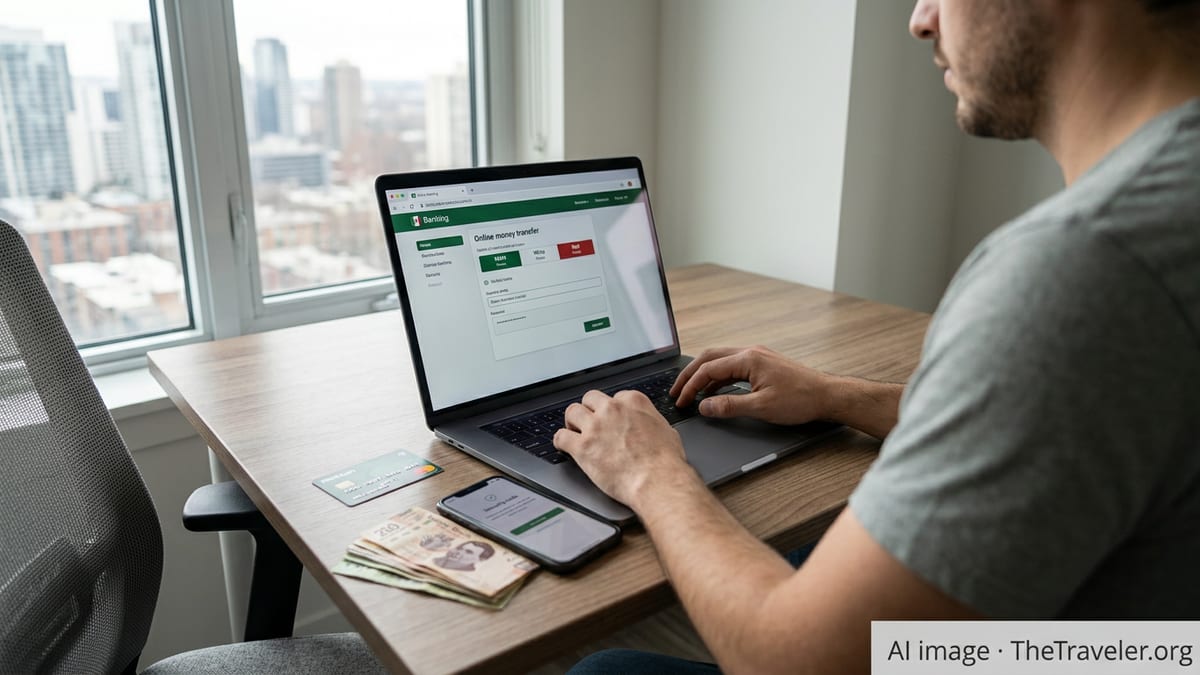
Overview of Cross‑Border Money Transfers to Mexico
Mexico is among the top global recipients of remittances, with annual inflows in the mid‑60 billion US dollar range in 2023 and 2024, before a decline to roughly 62 billion in 2025. Remittances represent around 3 to 4 percent of Mexico’s gross domestic product and are a core source of household income, especially for families supported from abroad. For relocating professionals, this infrastructure translates into a mature and highly competitive transfer market.
The vast majority of funds arrive from the United States, which typically represents more than 90 percent of remittance inflows into Mexico. However, significant transfers also originate from Canada, Europe and other Latin American countries. This concentration has led financial institutions and money transfer operators to optimize services for the US–Mexico corridor, often resulting in lower average costs compared with many other emerging market destinations.
Global monitoring indicates that average costs of sending remittances worldwide still hover around 6 to 7 percent of the amount sent for a typical 200 US dollar transfer. For the Mexico corridor, competition has pushed typical digital transfer pricing significantly lower, often in the low single‑digit percentage range for online providers, while traditional bank wires can still cost the equivalent of 25 to 40 US dollars per transaction in some sending countries. Relocating individuals benefit most when they understand these structural differences and select channels carefully.
Safety in this context has three dimensions. First is financial security and fraud prevention. Second is regulatory and tax compliance both in the sending and receiving country. Third is operational continuity, ensuring access to funds even during market or policy disruptions. Any relocation‑related transfer strategy should address all three.
Main Channels for Sending Money to Mexico
There are four primary categories of channels for moving personal funds into Mexico from abroad: international bank transfers, specialized online money transfer operators, card‑based transfers and cash‑pickup services. Each category presents different trade‑offs in terms of security, speed, traceability and cost.
International bank transfers are typically executed via SWIFT from the sender’s bank to a Mexican bank account. These transfers are highly traceable and operate within formal banking supervision in both jurisdictions. They are usually well suited for larger one‑off transactions such as initial relocation funds, but fees can be comparatively high, and correspondent bank charges and unfavorable exchange markups need to be considered.
Online money transfer operators and fintech platforms have become the dominant channel for small to medium‑sized remittances. Many allow direct deposit into Mexican bank accounts, debit cards or local wallets, often completing transfers in minutes. Their pricing models vary, with some charging fixed fees plus margin on the exchange rate, and others offering lower or zero fees but higher exchange spreads. These services are convenient for regular income support or maintenance transfers related to ongoing living costs in Mexico.
Card‑based transfers include sending to a Mexican debit card, prepaid card or enabling cash withdrawals from foreign debit or credit cards at Mexican ATMs. While this can be efficient for short stays, ATM fees and dynamic currency conversion charges can be substantial. For long‑term relocation planning, this is rarely the most cost‑effective main channel, but it can serve as a useful backup or emergency option.
Regulatory and Compliance Considerations
Both the sending and receiving sides of a transfer to Mexico are subject to financial regulations aimed at combatting money laundering and terrorist financing. In Mexico, banks and licensed money transmitters are supervised by financial authorities and must follow know‑your‑customer and transaction monitoring rules. Similar frameworks apply in major sending countries such as the United States, Canada and member states of the European Union.
For individuals relocating to Mexico, this means that large or repeated transfers may trigger additional documentation requests. Common requirements include proof of identity, proof of address and sometimes evidence of the origin of funds, such as employment contracts, payslips, tax returns or asset sale documents. While this can feel intrusive, it is standard practice in regulated financial systems and an important part of secure, legally compliant fund flows.
Reporting thresholds differ by jurisdiction, but financial institutions often review or report transactions starting at the equivalent of several thousand US dollars, especially if they are unusual compared with a customer’s profile. Planning relocations with clearly documented funds and using the same route consistently can reduce friction and the risk of account holds. Attempting to avoid scrutiny by using informal couriers or splitting transfers into many small unreported transactions significantly increases risk and is inadvisable.
Relocating individuals should also consider the tax implications of transferring money into Mexico, particularly where large balances are involved. While a simple transfer is not itself income, funds may be linked to foreign salary, investment income or asset sales that could be taxable in the sending or receiving country. Professional tax advice is therefore recommended, especially for high‑net‑worth individuals or those with complex cross‑border profiles.
Cost, Speed and Reliability by Channel
Cost structures vary significantly across channels. Traditional bank wires from major banks in North America or Europe to Mexican bank accounts often charge a flat outward fee of roughly 20 to 40 US dollars, plus potential intermediary bank fees and a foreign exchange margin. For smaller transfers between 200 and 500 US dollars, total costs can represent a high percentage of the amount sent. For larger one‑off transfers, the percentage impact is more moderate, but comparing total landed amount is still critical.
Online money transfer operators typically offer more competitive pricing. For digital transfers funded from a bank account or debit card and delivered as a peso deposit to a Mexican account, many providers advertise fees in the region of 1 to 3 percent of the transfer value, sometimes less for higher amounts or promotional tiers. Some services charge near‑zero upfront fees but apply a 2 to 4 percent margin to the exchange rate; this can be more expensive than a visibly higher fee with a near‑market exchange rate, so reviewing the total received in pesos is essential.
Speed is also differentiated. Bank wires can take from same‑day to several business days depending on cut‑off times, correspondent bank arrangements and compliance checks. Online operators increasingly offer near‑instant transfers to Mexican accounts, given strong integration with local payment infrastructure. Cash‑pickup transfers are often near‑real‑time once approved, but may come with higher fees, especially if funded with a credit card.
Reliability encompasses not only technical uptime but also policy consistency. Large traditional banks and major global transfer companies benefit from scale and long‑established infrastructure. Fintech platforms may provide better user experience and pricing but can be more sensitive to regulatory changes. For relocation planning, it is prudent to identify at least two viable channels and periodically test both, so that any disruption in one route does not compromise day‑to‑day access to funds in Mexico.
Security, Fraud Risks and Best Practices
Modern transfer systems between major economies and Mexico are generally secure at the infrastructure level. The main vulnerabilities arise from social engineering, account takeover and use of informal or unregulated intermediaries. Protecting against these risks is particularly important for newly arrived residents who may not yet be familiar with local practices or language.
Common fraud vectors include phishing emails that mimic transfer providers, fake customer support contacts requesting login details, and scams where a recipient is pressured to refund a transfer that is later reversed or found to be fraudulent. Using strong, unique passwords, two‑factor authentication and official apps only, along with never sharing one‑time codes, materially reduces the likelihood of account compromise. Verifying recipient information carefully before confirming a transfer is essential, as recovering funds sent to the wrong account can be difficult or impossible.
Relocating individuals should avoid using informal cash couriers or unlicensed money changers for significant sums. While such channels may appear to offer better exchange rates, they carry elevated risks of theft, loss and lack of recourse. In contrast, regulated banks and licensed money transfer operators are subject to capital, security and consumer protection standards, and they maintain formal complaint and dispute resolution mechanisms.
Device security is another critical element. Many cross‑border transfers are initiated via smartphone applications. Ensuring devices are protected with biometric or strong PIN locks, updated operating systems and reputable security software reduces exposure. Using secure, private internet connections instead of public Wi‑Fi for initiating large transfers further strengthens overall protection.
Practical Strategies for Relocating Individuals and Families
For people planning a move to Mexico, a structured approach to fund transfers can improve both safety and cost efficiency. One common strategy is to separate the relocation into two stages: an initial lump‑sum transfer to cover deposits, setup costs and emergency reserves, followed by smaller periodic transfers to cover ongoing living expenses. The initial transfer may be best executed through a well‑priced bank wire or a large‑amount transfer via a specialist provider, while monthly expenses can be handled via lower‑fee digital remittances.
Before departure, it is advisable to open or identify a Mexican bank account that will receive funds, where possible. Many Mexican banks allow non‑residents or new residents to open accounts with a passport and immigration document, though exact requirements vary. Having an account in place simplifies transfers and reduces reliance on cash pickup. Where opening an account is not yet feasible, selecting a transfer provider with extensive cash‑pickup coverage or direct deposit to third‑party accounts trusted by the relocating family can serve as a temporary bridge.
Budgeting also matters. Mapping out expected monthly living costs in pesos, then translating this into foreign currency at conservative exchange rate assumptions, helps determine appropriate transfer amounts and frequencies. Consolidating several smaller transfers into a single monthly payment can reduce fixed fees, though this must be balanced against the risk of exchange rate volatility between transfers. Some providers offer rate alerts or limited‑time rate locks, which can be useful tools when timing larger transfers.
Maintaining multi‑channel redundancy is an important resilience measure. For example, a relocating individual might use an online money transfer operator as the primary channel, keep the option of a direct international bank wire as a backup and ensure that at least one international debit or credit card can be used at Mexican ATMs in an emergency. Testing each route with small amounts before relying on it for critical transfers is considered good practice.
The Takeaway
Mexico’s position as a leading global remittance destination means that individuals relocating to the country have access to a relatively mature, competitive and secure ecosystem for receiving cross‑border transfers. However, safety and efficiency are not automatic. They depend on informed channel selection, attention to regulatory requirements and disciplined operational practices.
For decision‑grade relocation planning, the key variables are total transfer cost including exchange rates, the robustness of security and consumer protection frameworks around chosen providers, and the flexibility to maintain access to funds under different scenarios. Traditional bank wires, digital money transfer platforms, card‑based access and cash‑pickup services each have distinct roles, and combining them thoughtfully can deliver both reliability and cost control.
A relocating individual or family that documents the origin of funds, standardizes on regulated channels, monitors exchange rate movements and maintains at least one tested backup route will be better positioned to manage financial flows into Mexico. This structured approach turns cross‑border transfers from a potential vulnerability into a manageable and predictable component of living in the country.
FAQ
Q1. What is the safest way to send a large sum of money to Mexico for relocation purposes?
The safest option for large sums is usually a direct international bank transfer from a reputable bank to a Mexican bank account in the recipient’s name, or a high‑value transfer through a well‑established, regulated money transfer provider. These channels offer strong traceability, compliance checks and documented records, which are important for both security and future financial or tax reporting.
Q2. How much does it typically cost to send money to Mexico?
Costs vary by channel and amount. Traditional bank wires often charge a flat fee of roughly 20 to 40 US dollars plus an exchange margin, while digital remittance services commonly charge in the low single‑digit percentage range, sometimes under 3 percent for account‑to‑account transfers. Evaluating the total amount the recipient receives in pesos is the most reliable way to compare options.
Q3. How long do transfers to Mexico usually take to arrive?
Many digital money transfer services deliver funds to Mexican bank accounts or cash‑pickup locations within minutes once a transaction is approved. International bank wires can be same‑day or may take one to three business days depending on cut‑off times, intermediate banks and compliance checks. Delays are more likely for unusually large or first‑time transfers.
Q4. Is it risky to use cash‑pickup services in Mexico?
Licensed cash‑pickup services operated by established providers are generally secure from a technical and legal standpoint, but they introduce physical‑security considerations. Recipients should collect money during business hours, in well‑staffed locations, avoid displaying cash in public and, where possible, move funds quickly into a bank account or use electronic payments to limit the need to carry large amounts of cash.
Q5. Can I transfer money to Mexico before I have a local bank account?
Yes. Many providers allow transfers for cash pickup or to third‑party accounts, and some offer transfers to local debit cards or wallets. However, relying solely on pickup can be inconvenient for ongoing living expenses. For medium‑ and long‑term relocation, opening a Mexican bank account as early as feasible usually improves convenience, security and cost efficiency.
Q6. Are there limits on how much money I can send to Mexico?
There is no single universal legal cap for personal transfers, but both sending and receiving institutions apply their own limits and may require additional documentation above certain thresholds. High‑value or frequent transfers can trigger enhanced due‑diligence checks. Planning ahead, informing your bank or provider of expected transfer patterns and keeping documentation on the source of funds helps reduce disruptions.
Q7. How can I avoid fraud when transferring money to Mexico?
Use only regulated banks or licensed transfer companies, enable two‑factor authentication on accounts, access services through official websites or apps, and never share passwords or one‑time codes. Verify recipient details carefully and be cautious of unsolicited requests to change bank information or to refund money from a recent transfer. When in doubt, contact the provider through official customer service channels.
Q8. Is it cheaper to send larger amounts less frequently?
Often yes, because many providers apply fixed fees per transaction, which form a smaller percentage of a larger transfer. However, exchange rate volatility between transfers and personal budgeting needs must be considered. A balanced approach is to send amounts that cover one or two months of expenses at a time, comparing the net pesos received under different schedules.
Q9. Can I rely on my foreign debit or credit card for living expenses in Mexico?
Foreign cards can be useful as a supplementary channel, especially at the start of a relocation, but ATM fees, foreign transaction charges and dynamic currency conversion markups can be significant. Card networks and issuing banks may also block transactions they view as unusual. For long‑term residence, a combination of local banking and regular cross‑border transfers is generally more sustainable.
Q10. What documentation should I keep related to my transfers to Mexico?
It is advisable to retain bank statements or transfer receipts showing dates, amounts, exchange rates and counterparties, as well as documents demonstrating the source of funds such as employment contracts, payslips, sale contracts or investment statements. These records can be important for resolving disputes with providers, satisfying anti‑money‑laundering checks and addressing any future tax or regulatory questions.