


More news on this day
Footage from London Gatwick Airport shows hundreds of passengers stranded overnight on terminal floors after a major air traffic control failure triggered mass disruption to flights across the United Kingdom.
Get the latest news straight to your inbox!
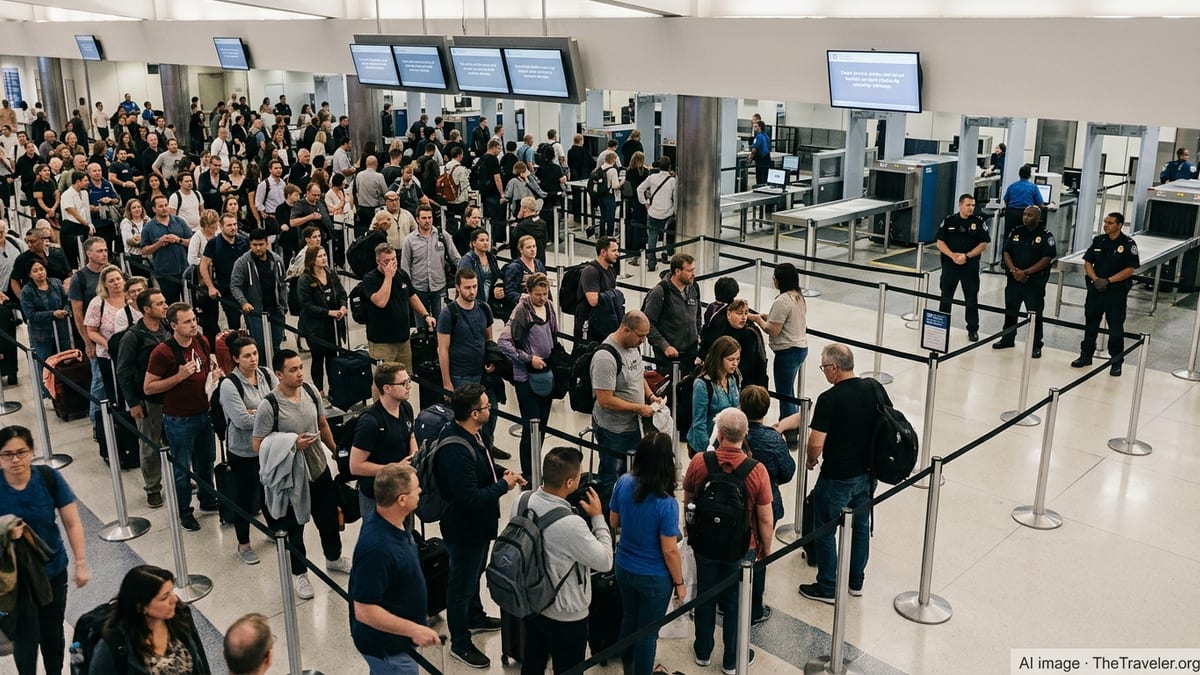
Viral footage captures crowded terminals and exhausted travelers
Videos circulating on social media from September 8 and 9 show dense crowds at Gatwick’s South Terminal, with passengers sitting or lying on the floor beside trolleys and packed suitcases as they wait for information on delayed or cancelled flights. Airport seating areas appear overwhelmed, forcing many travelers to stretch out in walkways and near check-in zones while departure boards display rows of disrupted services.
Images published in international and UK media similarly depict stranded passengers at Gatwick after a technical problem in the national air traffic control system led to an abrupt halt in many departures. Reports describe people waiting for hours inside aircraft that never left the gate or were held on the tarmac before eventually returning to stands, contributing to crowding inside the terminal as flights were rescheduled or called off.
The scenes at Gatwick formed part of a wider picture of disruption across Britain’s aviation network, but footage from the airport has become a focal point on social channels, with travelers documenting long queues, packed departure halls and children trying to sleep amid the noise and fluorescent lighting.
Commentary shared online highlights the emotional toll of the delays, with travelers describing missed holidays, weddings and family events as they attempted to secure alternative flights, hotels or refunds in the midst of crowded conditions.
National air traffic control glitch triggers cascading disruption
The chaos at Gatwick followed what the UK’s National Air Traffic Services described in public statements as a technical failure in its flight processing system on Tuesday, September 8. According to published coverage, the issue forced air traffic managers to limit the number of flights they could safely handle, leading to what flight-tracking services counted as more than 1,000 cancellations and widespread delays across at least 15 airports in the country.
While the technical fault was reported as resolved within several hours, the knock-on impact was severe. Airlines were left with aircraft and crews out of position, and many flights scheduled later in the day were cancelled as operators attempted to reset schedules and comply with crew duty-time limits. Travel news outlets note that airports including Gatwick, Heathrow, Manchester and Birmingham experienced significant disruption, with delays and cancellations carrying into the following day as carriers tried to clear backlogs.
Gatwick, which typically serves tens of millions of passengers a year and is London’s second-busiest hub, warned in public updates that it would take time for operations to return to normal. Industry analysis indicates that even a short outage in a central system such as air traffic control can take more than 24 hours to unwind because aircraft, crews and connecting passengers are scattered across multiple destinations.
Aviation commentators observing live data pointed out that, even after restrictions were lifted, schedules remained fragile, with last-minute cancellations and aircraft substitutions still occurring on routes to and from Gatwick. That instability contributed to ongoing scenes of congestion in the terminals as stranded passengers waited to be rebooked.
Passengers face nights on the floor and complex rerouting
Travelers caught by the disruption at Gatwick describe a range of experiences, from being stuck in aircraft for several hours to finding themselves in long customer service lines after their flights were finally cancelled. Some reports recount passengers being asked to leave security-restricted areas after last departures were scrubbed, only to join queues at check-in desks or attempt to secure accommodation late at night near the airport.
Publicly available coverage across UK and international outlets notes that, while some passengers managed to obtain hotel rooms and meal vouchers, others opted to sleep in the terminal, improvising beds out of coats and luggage. For people traveling with young children, older relatives or connecting itineraries, the combination of uncertainty and crowded conditions at Gatwick posed particular challenges.
Social media posts compiled by travel and news sites describe travelers weighing whether to wait for rebooked flights from Gatwick, transfer to other London airports, or abandon air travel and seek trains or ferries. In several reported cases, passengers aiming for holidays or special occasions looked at alternative routings via European hubs, often at short notice and higher cost, as they attempted to salvage their plans.
Consumer advocates observing the situation have pointed to the complexity of passenger rights in such scenarios, where responsibility for care and compensation can depend on whether disruption is classified as beyond the airline’s control. For many passengers at Gatwick, the immediate priority has been more basic: finding somewhere to sleep, securing food and water, and ensuring access to up-to-date information in a crowded and fast-changing environment.
Airlines and airport work to clear backlog as delays linger
By Wednesday, September 9, flight operations at Gatwick had largely resumed, but reports from aviation data providers and news organizations show that dozens of services were still delayed or cancelled as airlines worked through the backlog. Carriers have been reshuffling aircraft, running additional sectors where possible and consolidating lightly booked flights to free capacity for stranded passengers.
Publicly reported statements from airlines affected by the air traffic control failure outline efforts to rebook tens of thousands of customers, though many travelers at Gatwick have still faced waits of 24 hours or more for alternative departures. Some long-haul passengers arriving into the UK have also been caught in the disruption when their onward Gatwick connections were cancelled, forcing them to re-plan journeys mid-trip.
Analysis in UK media suggests that the event is likely to prompt renewed scrutiny of the resilience of critical aviation systems and of contingency planning for major outages. Travel industry commentators note that while airports such as Gatwick routinely manage weather-related disruption, nationwide technical issues present a uniquely difficult challenge because all major hubs are affected at once, limiting the options for rerouting.
For now, the images of crowded halls and weary passengers at Gatwick and other UK airports are serving as a reminder to travelers of the value of flexible itineraries, travel insurance and real-time flight tracking tools, particularly during peak seasons when any disruption can quickly ripple across the network.
Associated Press coverage of UK air traffic control disruption
LBC explainer on cancellations at major UK airports
Sky News live updates on UK airport disruption
The Guardian report on passenger experiences during IT chaos