


More news on this day
Air travelers face ongoing disruption after a turbulent Thursday in the skies, with more than 2,100 flight cancellations reported and airlines warning of continued delays and schedule changes into Friday.
Get the latest news straight to your inbox!
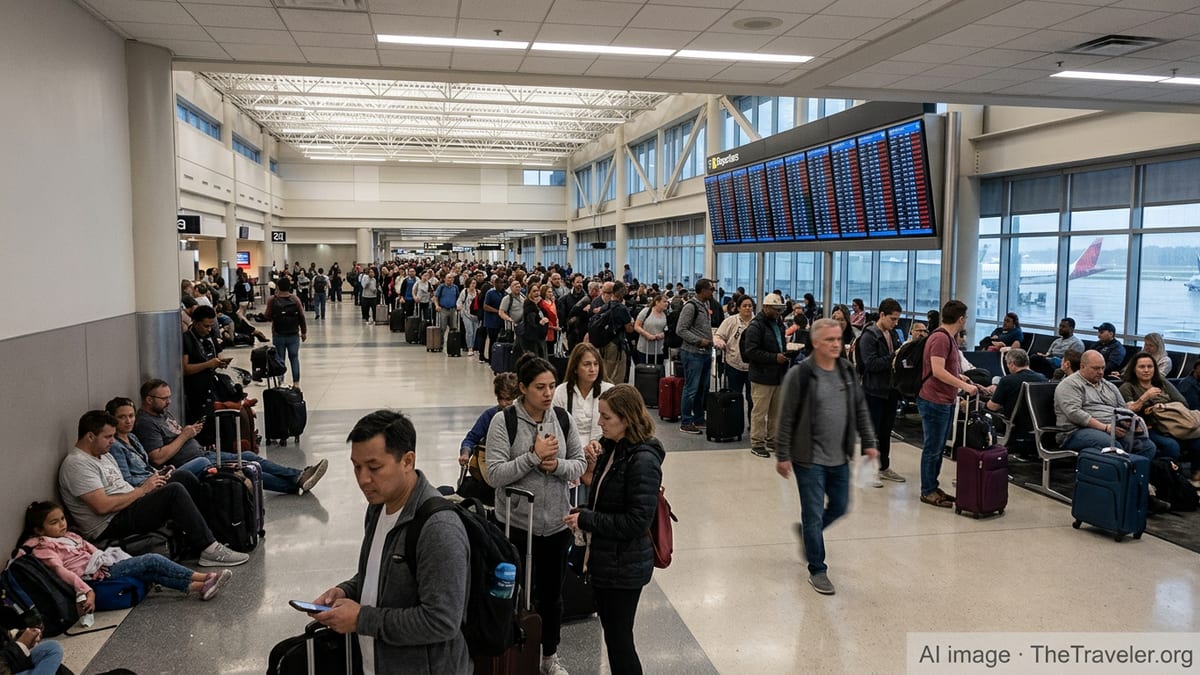
Wide wave of Thursday cancellations
Publicly available aviation data and media tallies indicate that more than 2,100 flights were canceled worldwide on Thursday, with at least 2,145 cancellations logged across major carriers and airports. Those figures sit on top of thousands of additional delays, creating a knock-on effect that is expected to continue to affect schedules into the following day.
The cancellations were concentrated at large U.S. hubs and busy transcontinental corridors, where dense timetables leave limited room to absorb disruption. Because airlines rely on the same aircraft and crews to operate multiple legs in a day, a single scrubbed or heavily delayed departure can ripple through several subsequent services.
Tracking sites that compile carrier and airport reports show that many of Thursday’s problems involved domestic routes, such as flights linking Chicago, Dallas, Denver and coastal gateways. International services from those hubs also experienced disruption as aircraft and crew were reassigned or rotated to stabilize schedules.
Although exact totals vary between tracking platforms and airline disclosures, independent coverage consistently places Thursday’s total cancellations above the 2,100 mark, a threshold that typically signals systemwide operational strain rather than isolated local problems.
Weather and congestion among key drivers
Recent Federal Aviation Administration (FAA) planning reports for early September point to thunderstorms and unsettled weather across several major regions, including central and south Florida, Minneapolis and Denver, as a significant factor behind the elevated disruption. According to the FAA’s daily air traffic outlook, convective storms in these areas were expected to slow arrivals and departures and trigger ground-delay programs at multiple airports.
When severe weather sweeps across large sections of the national airspace system, traffic managers often reduce the flow of arrivals and departures to maintain safety margins. That can force airlines to cancel or reroute flights proactively rather than risk long tarmac waits, diversion-heavy operations and crew-time violations later in the day.
Separate advisory notices in recent days have highlighted recovery operations at certain Florida airports after earlier rounds of storms, underscoring how back-to-back weather events can leave limited capacity for airlines to rebuild normal timetables. In that context, Thursday’s 2,145 cancellations appear to be the culmination of several days of challenging meteorological conditions layered on top of peak late-summer demand.
Operational congestion has also been a contributing factor. Busy hubs where airlines run tightly banked schedules are particularly sensitive to any loss of capacity, as even modest restrictions on arrivals or departures can quickly lead to queues, missed connections and cascading schedule changes.
Major hubs and carriers absorb the impact
Large U.S. airports such as Chicago O’Hare, Dallas–Fort Worth, Denver and key Florida gateways have featured prominently in recent delay and cancellation statistics. Local airport dashboards and airline status pages for this week show clusters of scrubbed flights and rolling delays at these hubs, particularly during peak afternoon and evening departure banks.
Individual flight trackers for several major U.S. airlines also show schedule adjustments and equipment changes around the same period. While many flights ultimately operated close to schedule, others were shifted, consolidated or removed from timetables as carriers worked to reposition aircraft and keep crews within regulatory duty-time limits.
International routes have not been immune. Transatlantic and transborder services that rely on aircraft cycling through U.S. hubs have experienced knock-on effects, including late departures and occasional cancellations, as airlines prioritized recovering heavily trafficked domestic corridors.
Despite the disruption, a substantial share of Thursday’s scheduled flights still operated, and airline operations teams continued to adjust timetables into the evening in an effort to restore more normal patterns for Friday. However, with aircraft and crew resources out of their usual positions, residual delays are widely expected.
What travelers can expect into Friday
Industry experience suggests that a day with more than 2,100 cancellations often leads to persistent irregular operations into at least the following morning. Aircraft that ended Thursday in the wrong cities, combined with crews approaching duty limits, can make it difficult for airlines to launch the first wave of Friday flights on time.
Travelers with early-morning departures on Friday are likely to see rolling schedule adjustments as airlines update aircraft assignments and crew pairings overnight. Even where flights are not canceled, departure times may be shifted, and tight connections could prove vulnerable if inbound aircraft arrive late.
Airport information pages and carrier alerts in recent days have emphasized the importance of monitoring flight status closely, using airline apps, text alerts and airport websites. Passengers are being encouraged by publicly available guidance to allow extra time at the airport, particularly at hubs that have recently experienced elevated disruption.
Consumer-rights resources also note that passengers affected by cancellations or significant delays may have options for rebooking and, on some itineraries, financial compensation or travel-credit support, depending on the carrier’s policies and the applicable regulations for the route.
How airlines and passengers are managing the fallout
Airlines typically respond to large-scale disruption days by opening more generous rebooking windows, temporarily waiving some change fees and fare differences on affected routes, and adding extra customer-service capacity at call centers and digital channels. Publicly posted travel advisories and weather alerts in recent weeks show carriers using such tools to encourage travelers to move away from the most heavily impacted time periods.
Some airports have highlighted that conditions at their own facilities can remain relatively normal even as national networks struggle, a reminder that weather or congestion elsewhere can lead to cancellations at otherwise clear local hubs. Airport guidance generally urges passengers to verify departure and arrival times directly with their airline rather than relying solely on broader traffic summaries.
For travelers still scheduled to fly in the aftermath of Thursday’s 2,145 cancellations, flexible planning and close attention to digital updates remain the best tools. Checking status repeatedly on the day of travel, considering earlier or later departures when rebooking, and building in longer connection times can all reduce the risk of missed flights as operations gradually stabilize.
While conditions are expected to improve as airlines work through the backlog, the volume of cancellations recorded on Thursday underscores how quickly weather and congestion can combine to disrupt modern air travel, even late in the busy summer season.
FAA Air Traffic Control System Command Center