


More news on this day
A large-scale emergency services operation at the Port of Dover has brought parts of one of the United Kingdom’s busiest travel gateways to a standstill, with reports indicating passengers were left stuck for hours as ferries and road traffic were disrupted.
Get the latest news straight to your inbox!
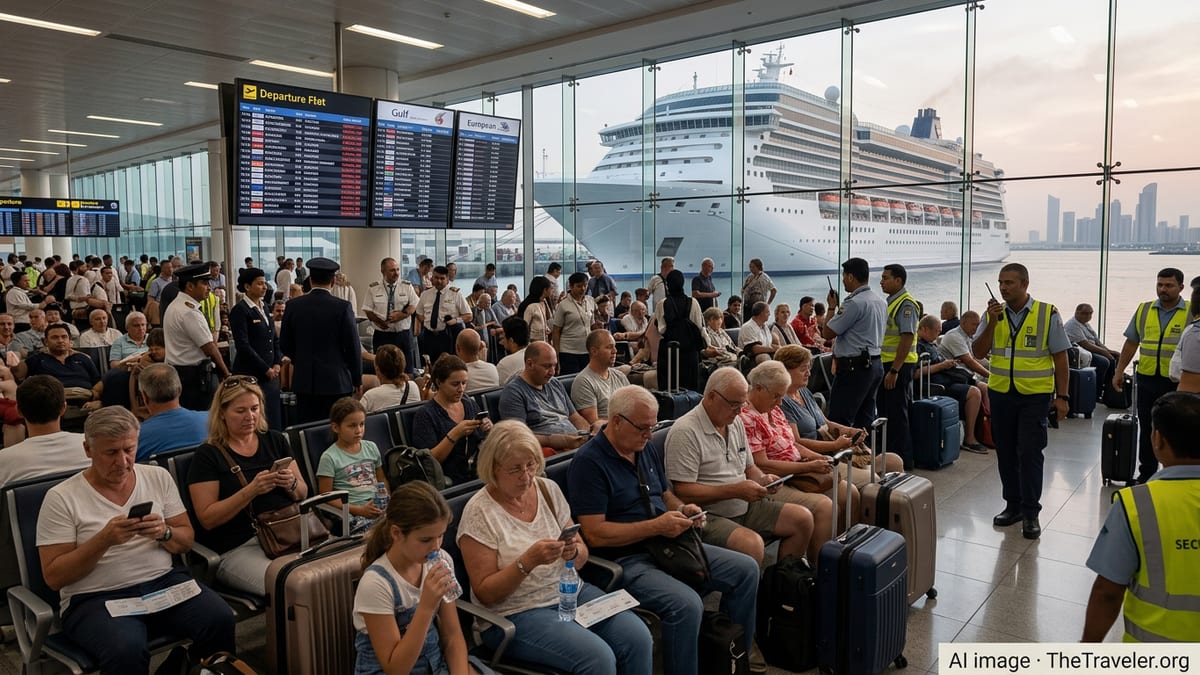
Emergency services flood key Channel gateway
According to early reports from local and national UK media, a significant number of emergency vehicles were sent to the Port of Dover after an incident within the port complex prompted concerns for passenger safety. Photographs and video shared on social media showed multiple fire engines, ambulances and police vehicles converging on the seafront approach roads and terminal areas.
Publicly available information indicates that port operations were temporarily constrained while the scale of the situation was assessed. Witness accounts described traffic being held in and around the terminal, with some vehicles reportedly stationary for extended periods as emergency teams moved through the area.
The Port of Dover is the primary short-sea link between the UK and continental Europe, handling thousands of passenger and freight vehicles on busy travel days. Any emergency response that occupies large sections of the road layout or berths can quickly ripple through the operation, creating queues that stretch onto local roads and arterial routes.
Reports from the scene suggested that terminals serving cross-Channel ferries were the most affected, though freight flows were also slowed while access lanes were partially closed or redirected. Ferry operators issued updates urging passengers to allow extra time and warning of knock-on delays to scheduled sailings.
Passengers report lengthy waits and travel disruption
Travellers caught up in the disruption described long, slow-moving queues approaching Dover and extended waiting times once inside the port estate. Based on accounts shared publicly, some passengers missed booked crossings and were placed on later sailings once services began to recover.
Individuals posting on social media spoke of being “stuck” in stationary traffic near the eastern docks and on surrounding approach roads, echoing previous episodes in which congestion at Dover has left holidaymakers and coach groups stranded for hours. Families heading to mainland Europe at the start of peak travel periods appeared particularly affected as traffic built rapidly behind the incident.
Published coverage highlighted that delays outside the immediate port footprint can quickly spread to the wider road network in Kent, with the A2 and A20 vulnerable to gridlock when access to Dover is restricted. Once traffic flows are interrupted, recovery can be slow, even after emergency activity is scaled back.
Some passengers reported that facilities and information were limited while they waited in their vehicles. Travel commentators noted that high summer temperatures, combined with lengthy standstills, can create difficult conditions for motorists and coach passengers if services such as toilets, refreshments and clear updates are not readily available.
Context: a sensitive chokepoint for UK–EU travel
The latest disruption comes against a backdrop of repeated congestion and operational strain at Dover in recent years. Previous holiday periods have seen “gridlock” conditions as traffic built up in response to reduced ferry capacity, heightened border controls and adverse weather affecting sailings.
Industry analysis regularly cites Dover as one of the most sensitive points in the UK transport system because of its concentration of traffic and reliance on precise scheduling. When one part of the system is interrupted, whether by an emergency response, mechanical issues with ferries or delays at border control, the effect can be magnified across thousands of vehicles.
Travel experts point out that the port’s geography leaves limited space to hold waiting traffic. Once holding areas are full and movements toward the berths are paused, vehicles back up rapidly onto local roads and sometimes major routes further inland. This makes any “huge” deployment of emergency services particularly disruptive, even if the underlying incident is confined to a small section of the port.
Commentary in UK media has also linked past congestion at Dover to the cumulative effect of new border procedures and infrastructure constraints, noting that the port must simultaneously handle heavy freight flows and large numbers of leisure travellers during peak holiday weekends.
Operational recovery and advice for future travellers
As the immediate emergency response at Dover was scaled down, ferry operators and port teams focused on clearing backlogs and rebalancing schedules. Public updates from transport firms indicated that services were resuming, but with residual delays expected as long queues of vehicles were processed through check-in, border controls and embarkation.
Travel industry guidance suggests that passengers planning to use Dover in the coming days should allow additional time for their journeys, especially during early mornings and late afternoons when demand is typically highest. Motorists are often advised to carry water, snacks and essential medications in case of extended waits in traffic, and to monitor live service information before setting off.
Analysts say the latest incident is likely to renew scrutiny of resilience planning at key UK ports. There is ongoing debate about how best to manage surges in demand, emergency responses and new border requirements without leaving passengers stuck for prolonged periods. Suggestions in recent public discussions have ranged from expanded holding areas and improved roadside facilities to more flexible staffing at border control points during peak operations.
For many travellers, the disruption serves as a reminder that cross-Channel journeys through Dover remain vulnerable to sudden, externally triggered delays. While large emergency responses are comparatively rare, their impact on this tightly configured port means that even short-lived incidents can have outsized consequences for passengers attempting to move between the UK and mainland Europe.
Broader implications for summer getaway plans
The timing of the latest disruption is particularly significant for holidaymakers and coach operators planning summer getaways. Dover is a preferred route for families driving to France and beyond, and any perception of recurring hold-ups can influence decisions about whether to travel by ferry, use alternative ports or switch to air and rail options.
Tourism bodies have previously emphasised the importance of maintaining confidence in cross-Channel routes, arguing that clear information and visible contingency planning help reassure passengers when unexpected incidents occur. When images of long queues and emergency vehicles dominate news coverage, some prospective travellers may look for routes perceived as less vulnerable to bottlenecks.
Transport commentators note that, despite episodes of intense congestion, most journeys through Dover proceed without major incident. However, they also acknowledge that the combination of high seasonal demand, evolving border regimes and occasional emergencies means that delays are unlikely to disappear entirely. For travellers, building extra time into itineraries and staying informed about conditions at the port remain key strategies for reducing the risk of being caught in lengthy queues.
With peak summer approaching, operators, local authorities and national transport planners are expected to watch closely how quickly Dover recovers from this latest emergency response and what adjustments, if any, are made to minimise the chances of passengers once again finding themselves stuck outside the port.