


More news on this day
Frankfurt, Paris Charles de Gaulle and Rome’s Fiumicino and Ciampino airports have emerged as critical pressure points in Europe’s troubled rollout of a new digital border system, as major airlines warn that biometric checks are already producing queues of up to five hours, missed flights and the risk of a broader summer travel meltdown.
Get the latest news straight to your inbox!
EU’s New Border System Collides With Peak Summer Demand
Europe’s Entry/Exit System, which became operational at all external Schengen border crossings in April 2026, replaces passport stamping for non-EU nationals with a digital register of each entry and exit, including fingerprints and facial images. The system is intended to strengthen border security and automate overstay tracking, but the combination of complex procedures and heavy summer demand is now straining airport capacity across the continent.
Publicly available information indicates that waiting times at some external Schengen borders have reached four to five hours during peak periods since the system went live, particularly for UK and other non-EU travellers who must complete full biometric enrolment on their first trip. Aviation and airport groups have warned that, without rapid adjustments, prolonged queues could become a defining feature of the 2026 holiday season.
Industry bodies argue that the main bottleneck lies not in the technology itself but in the way it is being deployed at busy hubs. Many border checkpoints still rely on a limited number of enrolment kiosks and manually supervised capture of fingerprints and facial scans, sharply reducing the number of passengers that can be processed per hour compared with traditional passport stamping.
Frankfurt and Paris CDG Emerge as Ground Zero for Delays
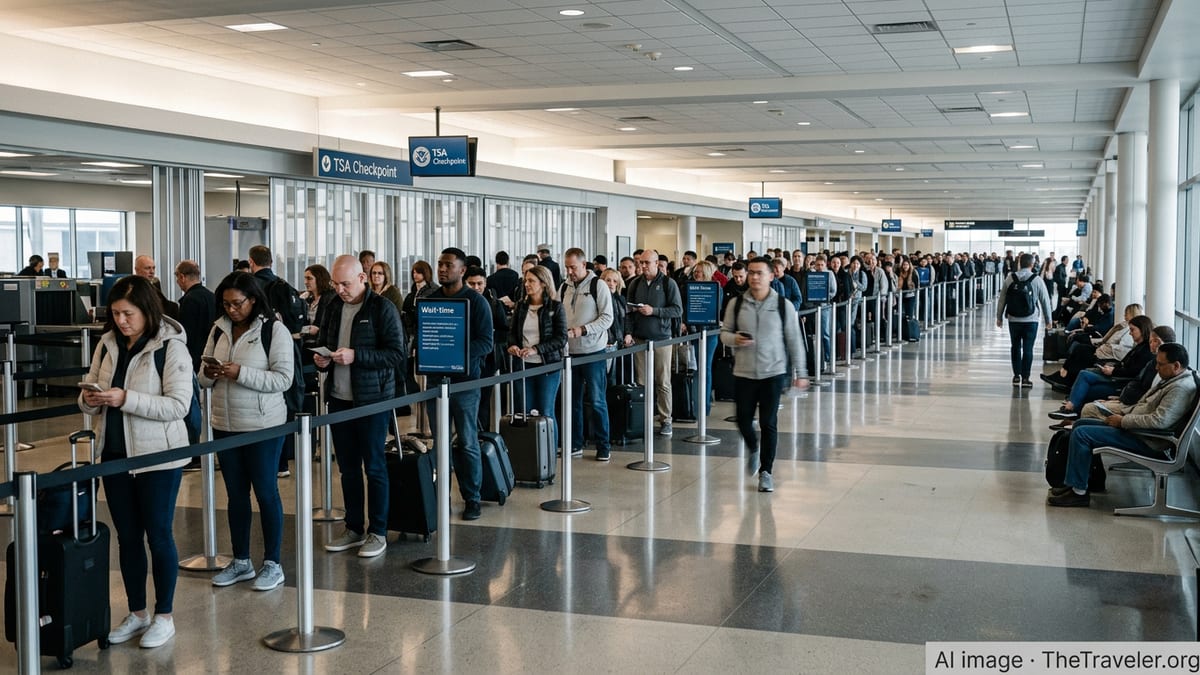
Frankfurt Airport and Paris Charles de Gaulle, two of Europe’s largest long haul gateways, have become emblematic of the new border pressure. Travel advisories and passenger accounts describe extensive queues at non-EU passport control during recent peaks, with lines reported snaking through arrival halls as officers work through the additional biometric steps required by the Entry/Exit System.
Frankfurt, which opened its third passenger terminal in April 2026, had expected the extra capacity to ease crowding. Instead, the introduction of EES has shifted congestion from check in and security to passport control, particularly on banks of flights from the United Kingdom, North America and the Middle East that arrive within tight windows.
At Paris Charles de Gaulle, the situation is similar. The airport is simultaneously handling a busy transatlantic schedule, heavy UK leisure demand and a complex web of Schengen and non-Schengen flows. Reports indicate that when multiple widebody flights arrive close together, non-EU queues can surge far beyond pre EES levels, with some passengers missing onward connections despite having arrived with what would previously have been considered safe transfer times.
Operational data referenced in recent coverage suggests that automated e-gates are absorbing part of the load for returning travellers whose biometrics are already on file, but the benefit is being offset by the volume of first time enrolees who must be handled manually at staffed booths.
Rome’s Fiumicino and Ciampino Sound the Alarm
Rome’s two main airports, Fiumicino and Ciampino, have moved to the forefront of the policy debate as Italian aviation stakeholders call for urgent flexibility. Published reports from Italy describe concerns that, if current procedures remain unchanged, the combination of summer holiday traffic, pilgrimage flows and cruise transfer passengers could overwhelm border facilities.
Aeroporti di Roma, the operator of both Fiumicino and Ciampino, has publicly argued through local media that a partial suspension or relaxation of biometric checks during peak hours may be indispensable to avoid severe operational disruption. The warnings follow a series of incidents across Italy in which long lines at passport control have led to missed flights and aircraft departing with large numbers of booked passengers still stuck in queues.
Italian coverage also points to a growing north south contrast. While some airports in northern Europe have been able to diffuse pressure by investing early in additional enrolment kiosks and staffing, Mediterranean leisure hubs with heavily banked summer schedules are finding it harder to smooth demand. Fiumicino and Ciampino, which together handle tens of millions of passengers annually, are now central to efforts to secure additional leeway from European institutions.
Officials in Rome are reported to be weighing options that range from dynamic staffing surges and reconfigured queuing areas to the temporary scaling back of biometric checks for selected low risk cohorts during the busiest departure and arrival waves.
Airlines Close Ranks as British Airways, Ryanair and easyJet Demand Action
Major European carriers, including British Airways, Ryanair and easyJet, have intensified public pressure on policymakers as their operations absorb the knock on effects of the Entry/Exit rollout. According to recent aviation industry coverage, these airlines and others have written collectively to European authorities urging a temporary suspension or easing of biometric requirements at the most congested airports through the height of the summer season.
Reports from Germany and Italy describe cases in which flights have left with dozens, and in at least one instance more than one hundred, ticketed passengers still waiting at passport control. Airlines contend that the resulting rebooking costs, crew duty limitations and knock-on delays are undermining already fragile schedules and eroding consumer confidence in European air travel.
Airline executives quoted in financial and trade press have characterised current wait times as unsustainable and warned that brand reputations are at risk if customers come to associate European holidays with multi hour border queues. The carriers argue that the regulatory framework governing EES already contains provisions that would allow member states to use more discretion in how and when full biometric checks are applied during exceptional peaks.
At the same time, carriers are adjusting their own playbooks. Some have begun quietly lengthening minimum connection time requirements at key European hubs, particularly where a transfer involves crossing an external Schengen border. Others are proactively urging passengers from the UK and other non-EU countries to arrive earlier at departure airports and to avoid tight self connected itineraries when flying into congested hubs such as Frankfurt, Paris CDG and Rome Fiumicino.
Calls Grow for Phased Rollout and Local Flexibility
As pressure mounts, European institutions and national governments are considering adjustments that stop short of dismantling the digital border project. A recent agreement between the Council of the European Union and the European Parliament envisages a more progressive launch of certain EES functions, giving member states additional latitude in how quickly they move to full biometric enforcement and how they prioritise different traveller categories.
Airport and airline associations have welcomed the principle of a phased rollout but continue to argue that more concrete steps are needed ahead of the late July and August peaks. Proposed measures circulating in industry position papers include temporary waivers that would allow officers to rely on existing passport data during the busiest hours, increased deployment of mobile enrolment teams in arrival halls, and the opening of additional lanes dedicated to families and other vulnerable travellers.
Consumer organisations and travel advisers, meanwhile, are focusing on practical guidance. Recommendations published over recent weeks urge non-EU passengers to allow significantly more time than before for border formalities at major hubs, to build generous buffers into any same day rail or cruise connections from Frankfurt, Paris or Rome, and to ensure that travel insurance policies clearly cover border control related delays.
For now, the experience of travellers moving through Frankfurt, Charles de Gaulle, Fiumicino and Ciampino offers a test case for how well Europe can balance security ambitions with operational reality. The coming weeks will reveal whether targeted adjustments can prevent long queues and missed flights from solidifying into the defining travel story of summer 2026.