


More news on this day
Hundreds of flight delays affecting major carriers across France are disrupting early summer travel, as a mix of storms, air traffic bottlenecks and tightly wound airline schedules slows journeys through some of Europe’s busiest air corridors.
Get the latest news straight to your inbox!
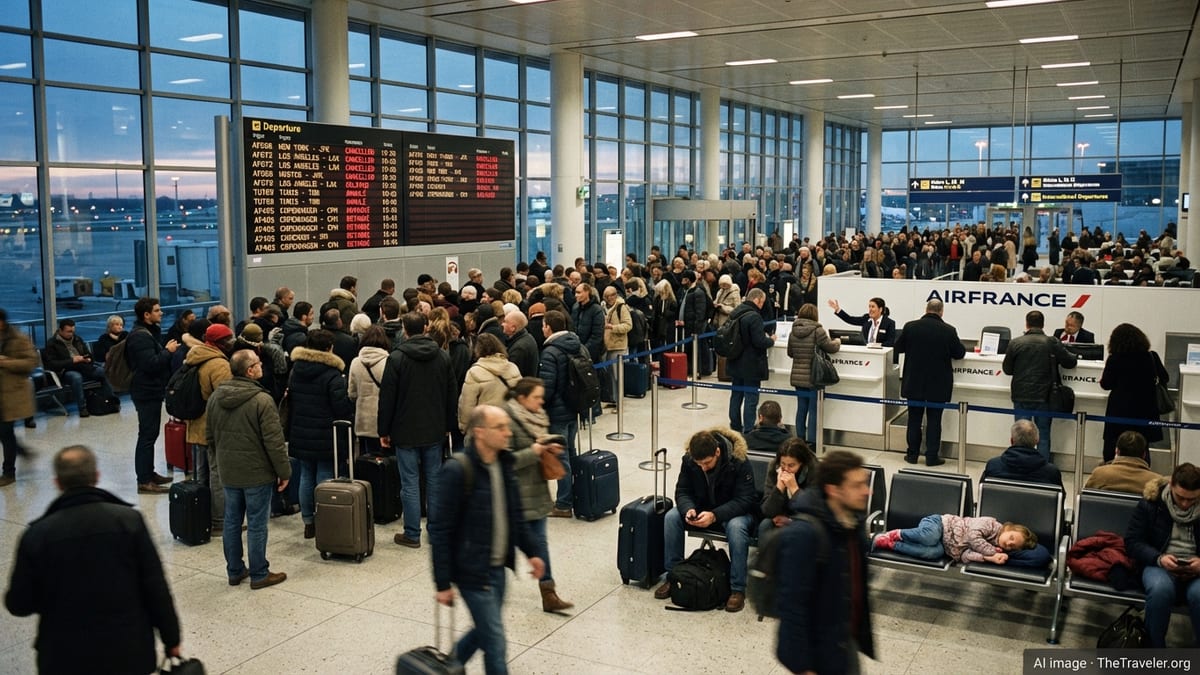
Wave of Delays Hits French Hubs
Live flight-tracking and airport data for late June indicate that French hubs, including Paris Charles de Gaulle and Orly, have recorded several hundred delays in recent days, affecting both domestic routes and international services linking France with the rest of Europe and North America. Disruption has been particularly visible during peak morning and late afternoon banks, when tightly timed connections leave little spare capacity in the system.
Publicly available performance dashboards show that on some days more than one hundred departures at Paris Charles de Gaulle alone have run late, with further knock-on delays at regional airports such as Lyon, Marseille and Nice. Services operated by Air France and its partners, along with low cost carriers and other major European airlines, have all been part of the rolling disruption.
The pattern in France mirrors a wider European trend, with network reports from Eurocontrol pointing to elevated air traffic flow management delays and highlighting France among the main contributors. Recent briefings note that staffing and capacity constraints in French airspace, compounded by unsettled weather, are feeding into longer average delays per flight across the continent.
Weather, Airspace Constraints and Operational Strain
Weather instability across Western Europe has played a central role, with thunderstorms and heavy rain triggering temporary restrictions on take offs and landings at several major airports. When storm cells drift across key French sectors, air traffic managers often reduce the rate at which aircraft can safely be handled, leading to holding patterns, diversions and ground delays that ripple through airline schedules.
Network monitoring updates for June show that weather has recently overtaken other issues as the leading cause of en route delays, particularly in France and neighboring Germany. Even short interruptions in capacity can quickly translate into dozens of delayed departures, especially during busy holiday periods when flight schedules are near their practical limits.
Operational strain within airlines is compounding the challenge. Industry analyses describe how aircraft and crews are often planned on tight rotations, meaning that a single late inbound aircraft can impact multiple subsequent flights. In France this is especially visible at hubs such as Paris Charles de Gaulle, where feeder flights from across Europe connect to long haul departures, and at regional airports where one aircraft may operate several domestic legs in a single day.
Impact on Major Carriers and Passengers
Major carriers serving France, including Air France and other large European and transatlantic airlines, have all recorded a spike in delayed operations as June has progressed. Monitoring of specific days shows clusters of late departures and arrivals across networks, with some routes experiencing repeated knock on delays when earlier sectors overrun their scheduled times.
For passengers, the impact ranges from relatively minor schedule slippage to significant disruption. Missed connections, especially at Paris Charles de Gaulle, can turn what should be straightforward itineraries into extended travel days, requiring rebooking onto later flights or overnight stays. Long haul passengers connecting from delayed short haul services are among the most exposed, as missed intercontinental departures can be difficult to re-accommodate on the same day.
Travel advisories and consumer guidance published in recent days emphasize that many of the current delays are being attributed to factors considered outside airlines’ direct control, such as severe weather and air traffic restrictions. Even so, airlines operating in France remain responsible for providing care, refunds or rebooking in line with European passenger rights rules, and reports indicate that carriers are adding staff at customer service desks and urging travelers to make use of apps and digital tools to manage disrupted trips.
France at the Heart of a Wider European Bottleneck
France’s central position in European airspace means that problems within its control zones can affect flights that neither depart from nor arrive in the country. Eurocontrol’s broader European overview explains that French sectors regularly handle large volumes of overflights linking the British Isles, Iberian Peninsula and parts of Southern Europe with Central and Northern Europe. When capacity in these sectors is reduced, airlines across the region may see delays even on routes that do not directly involve French airports.
Recent network summaries also point to a build up of structural pressure ahead of the main summer peak, with France consistently listed among the states generating a high share of total en route delay minutes. Capacity planning, staffing and airspace modernization efforts are all highlighted as factors that will help determine how resilient operations remain during July and August, when traffic is expected to climb further.
This backdrop helps explain why disruption at French hubs is being closely watched by aviation planners and travel companies across Europe. With schedules already dense and demand robust, even modest deterioration in performance at a handful of control centers or major airports can have outsized consequences for punctuality across the continent.
What Travelers Through France Should Expect Now
For travelers planning to transit France in the coming days, publicly available information from airports, airlines and independent tracking platforms suggests that further pockets of disruption are likely, particularly during busy weekend and holiday periods. While not every day brings widespread problems, the pattern of sudden weather related restrictions and airspace congestion means that delays can accumulate quickly when conditions deteriorate.
Passenger advocacy groups and travel experts are advising flyers to build extra time into itineraries that involve French hubs, opting for longer connections where possible and avoiding last flight of the day options on critical sectors. Flexible tickets and clear contingency plans, such as awareness of alternative routings by rail or via neighboring hubs, can help reduce the stress of any last minute changes.
Consumer oriented guidance also underscores the importance of monitoring flights closely using airline apps and airport information screens. In a season when hundreds of delays can emerge within a single afternoon across France and surrounding states, the ability to react quickly to gate changes, rolling delay announcements or rebooking offers is becoming an essential part of navigating Europe’s crowded summer skies.