


More news on this day
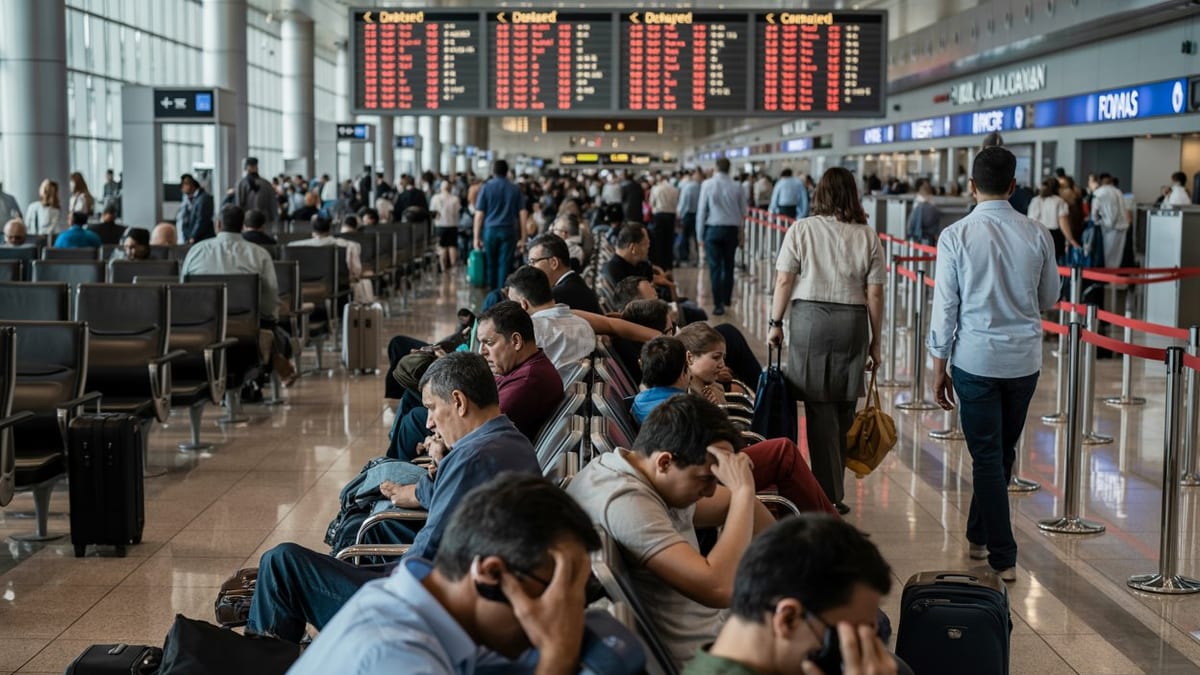
Hundreds of air travelers were stranded on June 9 as a fresh wave of flight cancellations and delays involving KLM, Volaris, easyJet, British Airways, Air France, Norwegian Air Sweden and Austrian Airlines rippled across the Netherlands, Mexico, the United Kingdom, France, Austria and other destinations, snarling early summer holiday plans and business trips.
Get the latest news straight to your inbox!
Network Disruption Hits Multiple Carriers and Hubs
Operational data compiled from live flight-tracking services on June 9 indicates that at least 66 flights operated by the seven carriers were cancelled and a further 564 were delayed, creating widespread disruption at key hubs including Amsterdam Schiphol, Paris Charles de Gaulle, London airports, Vienna, and airports in Mexico. The impact was felt across both short-haul European routes and longer transatlantic and leisure services.
Reports from aviation-focused outlets describe crowded terminal halls, long queues at customer service desks and rebooking counters, and growing frustration among passengers confronted with missed connections and overnight stays. At Amsterdam Schiphol alone, separate monitoring of operations in recent days has shown a pattern of heavy disruption, with hundreds of delays and dozens of cancellations recorded in a single day, particularly affecting KLM and its partners.
In Italy, analysis published on June 9 of operations at Rome’s Leonardo da Vinci Airport highlighted significant knock-on effects, with airlines such as KLM, easyJet, British Airways and Air France among those experiencing delays and cancellations as schedules came under pressure. Similar patterns were reported at other major European hubs, pointing to a system-wide strain rather than isolated local issues.
In Mexico, publicly available data shows that low-cost carrier Volaris, which connects numerous domestic and cross-border routes, was among the airlines experiencing schedule changes and delays, leaving passengers facing extended waits and, in some cases, missed onward travel plans.
Combination of Capacity, Weather and Knock-on Delays
Published coverage attributes the disruption to a mix of factors, including airspace and airport capacity constraints, localized weather events and reactionary delays that built up across the day as aircraft and crews fell out of position. Analysis by flight compensation and passenger-rights platforms of recent operations at Amsterdam Schiphol, for example, indicates that once delays accumulate at a busy hub, subsequent rotations are easily pushed back, leading to late arrivals and missed departure slots.
Industry monitoring from earlier in the season has pointed to strong underlying demand in European aviation during 2026, with Eurocontrol traffic overviews showing flight numbers at or above pre-crisis levels and airlines running tight schedules to maximize fleet use. In that context, even modest disruptions, such as storms in parts of France or congestion in crowded terminal areas, can rapidly trigger wider operational challenges.
Separate reports from recent weeks have also highlighted pressures created by fuel-supply constraints in some markets and by new border procedures at European airports, which can lengthen processing times at peak periods. While not all of these elements are directly linked to the June 9 disruptions, analysts note that they form part of a broader backdrop in which airlines have limited slack to absorb unexpected events without resorting to cancellations.
For carriers like easyJet, British Airways and Air France, which operate dense short-haul networks across multiple bases, a cancelled or heavily delayed early-morning departure can have a cascading effect on subsequent flights throughout the day. When combined with busy long-haul operations by groups such as Air France-KLM, the result is a web of interconnected delays that may ultimately strand passengers far from their intended destination.
Passengers Face Long Queues, Missed Connections and Overnight Stays
Across the affected airports, passengers reported spending hours in lines to rebook flights, obtain hotel vouchers or secure basic assistance such as food and refreshments. Coverage of disruptions at Amsterdam Schiphol and Rome’s main airport describes travelers sleeping in terminal areas, scrambling for scarce hotel rooms and attempting to reroute via alternative hubs as direct services filled up.
At some European airports, the disruption coincided with the start of the summer holiday period, compounding the challenge as flights were already heavily booked. With spare seats limited, rebooking options on the same day were often unavailable, forcing travelers onto next-day departures or multi-leg itineraries that significantly extended journey times.
In several cases, cancellations of widebody aircraft serving long-haul routes had an outsized impact, with a single scrapped rotation affecting hundreds of passengers. Aviation-focused legal and advisory sites note that such events can create particularly complex rebooking tasks, as carriers must find comparable capacity on alternative flights or partner airlines, often across already congested transatlantic or leisure corridors.
For those connecting through major hubs, missed onward flights created additional complications. Some travelers arriving late into airports such as London Heathrow, Paris Charles de Gaulle or Vienna International missed final departures of the day to regional destinations, resulting in unplanned overnight stays and further logistical challenges related to baggage and ground transport.
What Passenger Rights May Apply Under EU and UK Rules
Consumer advocacy organizations and passenger-rights specialists emphasize that many of the affected routes fall under European Union Regulation EC261 and corresponding UK legislation, which can provide travelers with rights to care, rerouting and, in certain circumstances, financial compensation. These protections generally apply to flights departing from EU and UK airports on any carrier, as well as to flights into the region operated by EU or UK airlines.
Guidance published by flight-compensation services explains that, depending on the cause of a disruption, passengers may be entitled to meals and refreshments after a specified waiting period, hotel accommodation when an overnight stay becomes necessary, and transportation between the airport and accommodation. In cases where a flight is cancelled or subject to a long delay, travelers may also be able to choose between rerouting at the earliest opportunity and a refund of the unused ticket.
However, the same guidance notes that compensation in the form of fixed-sum payments is not guaranteed. Airlines are generally not required to offer such payments when disruptions result from what regulations describe as extraordinary circumstances, such as severe weather, air traffic control strikes or airspace closures. In practice, this often leads to disputes over whether a given cancellation was within the carrier’s control.
Experts in the field advise passengers to keep records of boarding passes, booking confirmations and any written communications from airlines regarding the reasons for delays or cancellations. These documents can be important when submitting claims directly to the carrier or, if necessary, escalating cases to national enforcement bodies or approved dispute-resolution schemes.
Ongoing Vulnerability Ahead of Peak Summer Travel
The latest wave of cancellations and delays involving KLM, Volaris, easyJet, British Airways, Air France, Norwegian Air Sweden and Austrian Airlines comes against a backdrop of repeated operational disruptions across Europe in 2026. Earlier this year, monitoring reports documented hundreds of delays and dozens of cancellations on multiple days at major hubs, reflecting a network operating close to capacity.
Aviation analysts commenting on recent events describe an industry still working to balance high demand with constraints on staffing, aircraft availability and airport infrastructure. While airlines have added capacity compared with prior years, they continue to face tight margins for error, meaning relatively localized problems can trigger rapidly escalating knock-on effects across wider networks.
The experience of passengers stranded across the Netherlands, Mexico, the United Kingdom, France, Austria and other destinations on June 9 underscores the fragility of current schedules at the start of the summer season. With school holidays and peak leisure travel still ahead, observers suggest that further episodes of large-scale disruption remain possible if weather, air traffic control issues or infrastructural bottlenecks coincide with peak volumes.
For travelers, publicly available guidance from airlines, airports and consumer organizations continues to stress the importance of monitoring flight status closely, building additional time into connections, and understanding what protections may be available when journeys do not go as planned.