


More news on this day
Summer travelers in North America are contending with an unusual mix of disruptions this week, from geese closing a popular public pool to rail derailments complicating regional journeys and a softer outlook for tourism in several destinations.
Get the latest news straight to your inbox!
Geese Force Temporary Closure of Popular Community Pool
A community pool in the northeastern United States has temporarily closed portions of its deck and shallow-water areas after a resident flock of Canada geese took over key parts of the facility at the height of the summer season. Local parks and recreation updates describe repeated incidents of birds congregating on pool edges and walkways, leaving behind droppings and feathers that raised sanitation concerns and prompted stepped-up cleaning.
Publicly available guidance from wildlife agencies notes that Canada geese often become flightless during their annual molt in June and July, concentrating near dependable food, grass, and water. That pattern has been evident at the affected pool, which sits next to a pond and grassy picnic area. Staff have posted temporary barriers around the worst-affected sections while maintenance crews focus on disinfection and mechanical cleaning between swim sessions.
Wildlife and facilities managers across North America have reported similar challenges this summer, with geese drawn to open lawns, splash pads, and pool decks in urban parks. Commercial bird-control providers describe a growing market for deterrent systems at public pools, ranging from overhead lines and low fencing to acoustic devices and trained herding dogs, all aimed at steering flocks away without harming the animals.
Health guidance referenced by municipalities stresses that the primary concern around geese in aquatic recreation areas is water quality. High densities of birds can contribute to elevated bacteria levels and nutrient loads in adjacent ponds or shallow features, occasionally triggering short term closures while water is tested and treated. The community operating the closed pool has indicated through public notices that it expects to reopen all zones once routine sampling and cleaning confirm that quality standards are being met.
Latest Train Derailments Add Uncertainty for Summer Travelers
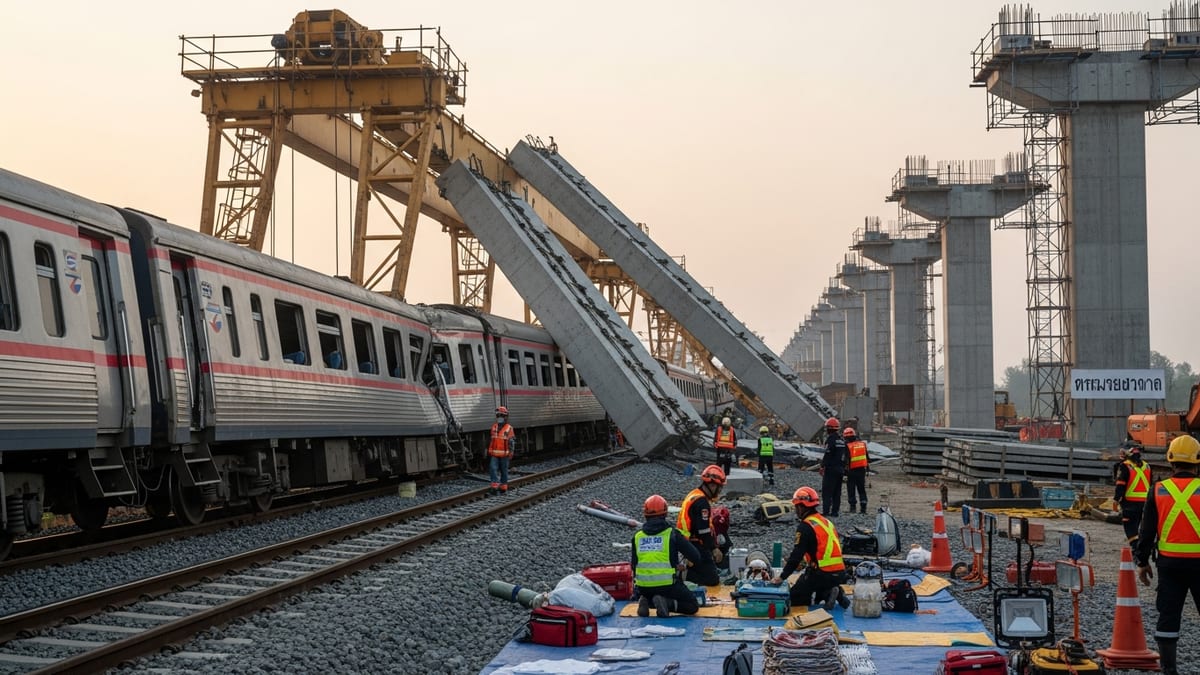
Rail passengers and drivers in several parts of the United States are facing delays and detours following a series of freight and commuter train derailments reported since late June. In one of the most disruptive incidents, regional coverage and eyewitness accounts describe a freight train leaving the tracks outside St. Louis in late July, scattering cars near a major highway corridor and temporarily blocking a key route used by both freight and passenger services.
Earlier in the summer, reports from Pennsylvania, California, and suburban areas near Philadelphia and Washington, D.C., highlighted additional derailments that affected commuter rail and freight corridors. In several of those cases, service interruptions were relatively short, but they led to cancellations, bus bridges, and warnings that schedules could change at short notice while track inspections and repairs were completed.
While most of the recent incidents did not involve passenger injuries, they have reinforced traveler concerns about reliability on certain routes. Commentators tracking rail operations point to a combination of factors, including aging infrastructure, extreme weather, and heavy freight volumes, as underlying risks that can compound around busy holiday periods. Travelers relying on regional trains for connections to airports or cruise terminals are being urged in public advisories to build in additional time and monitor operator alerts closely.
From a tourism perspective, the immediate impact of these derailments appears localized, affecting specific corridors rather than national rail networks. However, repeated service disruptions can influence traveler perceptions, especially among visitors unfamiliar with alternative options or nervous about tight connections. Travel planners recommend checking real time status before departure and considering flexible or refundable tickets on routes that have recently experienced infrastructure issues.
Tourism Growth Slows as Costs and Uncertainty Weigh on Trips
Beyond these acute disruptions, the broader travel landscape shows signs of cooling after several strong rebound years. International tourism briefings from organizations such as the OECD and the United Nations World Tourism Organization indicate that while global arrivals remain above pre pandemic levels in many regions, growth has slowed and become more uneven in 2026.
In the United States, state level reporting from destinations like Colorado points to record or near record visitor numbers paired with slower growth in spending and a modest decline in direct travel related jobs. Analysts cited in those reports highlight rising airfares, higher fuel costs, and a strong dollar as factors that can dampen both domestic road trips and inbound long haul travel, particularly from price sensitive markets.
National level data on international arrivals to the United States suggests that some key source markets are underperforming compared with expectations. Trade and tourism briefings describe lower than anticipated visitor numbers from parts of Asia, including India, with observers estimating that even single digit percentage declines in high spending segments can translate into hundreds of millions of dollars in forgone revenue for hotels, attractions, and retailers.
Despite these headwinds, industry assessments maintain that overall demand for travel remains resilient, with many travelers choosing shorter stays, closer to home destinations, or off peak travel dates to manage budgets. For leisure visitors, local disruptions such as pool closures or rail delays typically weigh less on trip decisions than broader cost and confidence trends, but they can influence satisfaction and reviews once travelers are on the ground.
Destinations Respond With New Management and Safety Measures
Municipalities and tourism operators are using the current season to refine how they manage crowding, wildlife, and infrastructure stresses. In parks and waterfront areas where geese have become more aggressive or concentrated, city and county agencies are expanding public education on not feeding wildlife, experimenting with landscape changes that make lawns less attractive to flocks, and, in some jurisdictions, issuing special permits for population control when nonlethal measures are exhausted.
Rail and transit agencies, meanwhile, are emphasizing visible safety and maintenance initiatives in public updates. Following recent derailments, operators have described stepped up track inspections, speed restrictions through vulnerable zones, and investments in sensor technology designed to detect issues such as heat related rail expansion or equipment defects before they lead to incidents. While these measures do not eliminate risk, they are intended to reassure riders and reduce the likelihood of prolonged outages on heavily used lines.
Tourism boards and destination marketing organizations are also adapting their messaging. Instead of focusing solely on peak season attractions, many are promoting shoulder season travel, lesser known sites, and multimodal access options that combine rail, bus, cycling, and walking. This approach is intended both to spread demand and to give visitors alternatives if a particular facility such as a pool, trail, or rail segment becomes temporarily unavailable.
For travelers, the evolving response means that flexibility and information are increasingly central to trip planning. Monitoring local parks and recreation notices for facility updates, reviewing rail operator advisories before departure, and staying attuned to regional tourism bulletins can help visitors navigate around short term disruptions and make the most of their time on the road.
What Travelers Should Watch in the Coming Weeks
Looking ahead to late summer and early fall, analysts expect a mixed picture for travel. On the one hand, high temperatures and occasional severe weather events can continue to strain infrastructure, from rail tracks to water systems, and keep pressure on public facilities that serve as cooling centers or recreation hubs. On the other, the gradual tapering of peak vacation traffic may give operators more room to complete maintenance and implement new management strategies.
Wildlife behavior will remain a factor in some regions, particularly where permanent bodies of water border recreation areas. As geese regain flight after the molting period and begin dispersing, some pools and lakeside beaches that experienced the heaviest pressure in June and July may see relief, although long term patterns suggest that resident populations are likely to remain a recurring consideration in facility planning.
On the rail front, safety investigators and infrastructure managers will continue to review recent incidents for patterns and lessons that can inform investment decisions. Public discussions around rail safety in the United States increasingly connect individual derailments to larger debates over freight volumes, inspection protocols, and funding for track upgrades, all of which have implications for how easily travelers and goods move between regions.
For now, the most immediate takeaway for travelers is that localized disruptions, whether caused by wildlife or infrastructure failures, are part of a more complex travel environment in 2026. By staying informed and remaining adaptable, visitors can continue to enjoy busy summer itineraries while keeping a close eye on the latest advisories affecting the routes and recreation spots they plan to use.