


More news on this day
Local, regional, and federal agencies in Huntsville, Alabama, recently converged for a simulated train derailment drill, using a complex rail incident scenario to test emergency coordination and on-the-ground decision making.
Get the latest news straight to your inbox!
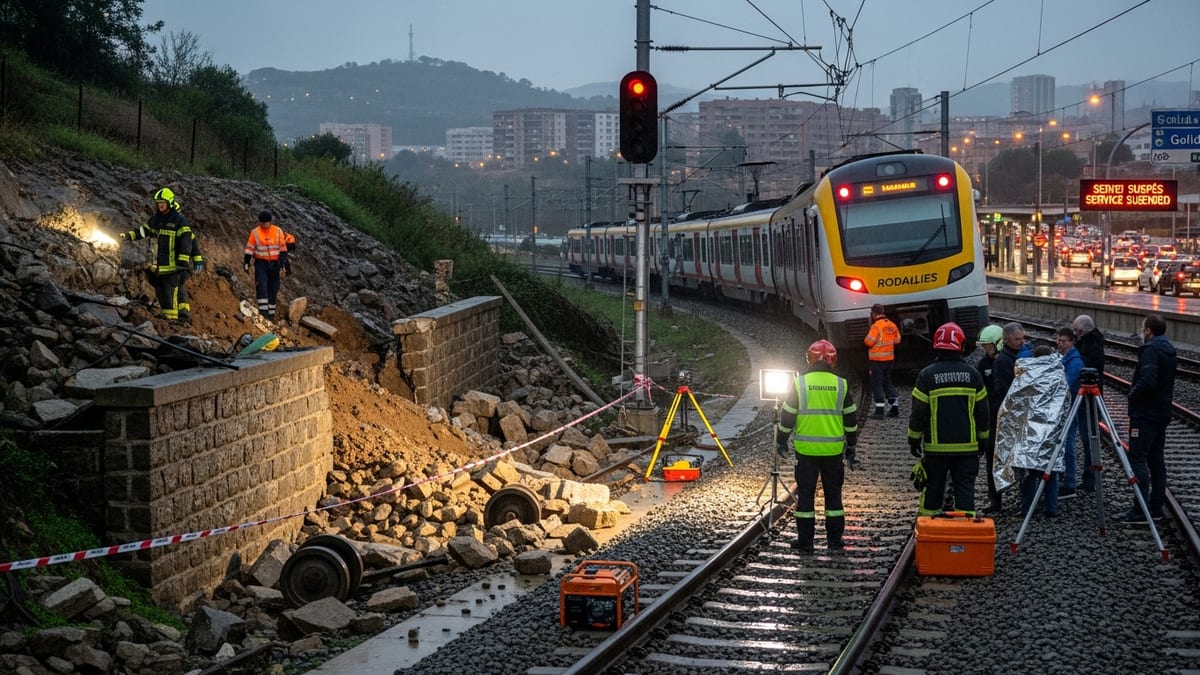
Multi-agency exercise focuses on complex rail emergency
Publicly available information indicates that the Huntsville exercise brought together fire, law enforcement, emergency medical services, rail operators, and emergency management teams to rehearse their roles in a high-risk rail incident. The scenario centered on a freight train derailment near a populated area, a situation that can quickly involve hazardous materials, mass casualties, and large-scale evacuations.
Participants operated under a unified incident command structure, a framework widely used in U.S. emergency management to organize leadership, share information, and allocate resources in real time. The drill challenged commanders to manage competing priorities, including rescuing simulated victims, securing the rail corridor, and assessing environmental impacts.
Exercise planners also incorporated realistic constraints, such as damaged infrastructure, blocked roadways, and incomplete information about what the train was carrying. These conditions were designed to pressure-test how quickly responders could identify hazards, establish perimeters, and communicate protective actions to the public.
Although the drill did not involve an actual derailment, organizers used staging, role players, and mock damage to mirror the confusion and urgency that typically accompany a major transportation emergency.
Testing hazardous materials response and medical surge
Rail incidents can quickly escalate when hazardous materials are involved, and the Huntsville drill placed particular emphasis on how teams would identify, contain, and mitigate chemical risks. Exercise documentation and similar training scenarios in other jurisdictions show that responders often practice reading rail car placards, consulting hazardous materials guides, and coordinating with rail companies to determine what is on board.
In the simulated derailment, hazmat units were tasked with establishing hot, warm, and cold zones, determining safe operating distances, and setting up decontamination corridors. These steps are critical to protecting both responders and nearby residents from potential exposure to toxic substances or flammable cargo.
The medical component of the drill concentrated on triage and surge capacity. Emergency medical teams practiced sorting simulated patients by injury severity, stabilizing them in the field, and coordinating ambulance transport to area hospitals. Hospital staff participation in similar exercises typically includes testing intake procedures, communication with emergency management, and the ability to handle a sudden influx of trauma patients.
By linking field operations with hospital procedures, the exercise offered health care providers and first responders an opportunity to align expectations about what information will be available, how many patients may arrive, and how long on-scene stabilization might take during a real derailment.
Communication, coordination, and public information under review
Exercises of this type are often as much about communication as they are about tactical response. In Huntsville, participating agencies used the drill to practice radio interoperability, information sharing between command posts, and coordination with regional partners that could be called in for assistance.
Publicly available emergency planning guidance highlights the importance of clear, consistent messaging to residents during transportation incidents. The simulated derailment scenario incorporated this element by tasking public information officers with drafting hypothetical alerts, advisories, and evacuation notices that would be disseminated via local media and official channels.
Participants also explored how to manage social media and community questions during a fast-moving incident. Even in a controlled exercise environment, agencies can evaluate how quickly they can verify details, correct inaccurate information, and provide practical guidance about sheltering in place, evacuation routes, or school and workplace disruptions.
After-action reviews following such drills typically examine radio traffic logs, situation reports, and sample public messages to identify where information flowed effectively and where bottlenecks or confusion emerged.
Part of a broader shift toward realistic training in Huntsville
Huntsville has become a regional hub for advanced training and simulation, and the recent train derailment drill reflects a broader trend toward more immersive, scenario-based preparation. The city is home to multiple institutions and federal facilities that use high-fidelity simulations to rehearse responses to complex emergencies, from severe weather to cyber incidents.
Recent coverage of the Federal Bureau of Investigation’s Kinetic Cyber Range in Huntsville describes a 22,000-square-foot replica town used to train personnel on cyber-physical threats to hospitals, utilities, and transportation systems. That facility, while focused on digital and infrastructure security, illustrates the same priority seen in the rail drill: exposing responders to realistic, high-stress situations in a controlled environment.
Local emergency planners frequently integrate lessons from national rail safety guidance and previous incidents in other parts of the country into their exercises. By recreating the cascading effects of a derailment, from traffic disruptions to hazardous materials concerns, Huntsville agencies seek to ensure that procedures are practical, coordinated, and adaptable to real-world conditions.
Officials involved in similar exercises nationally often report that this type of training builds muscle memory, clarifies roles, and strengthens relationships among agencies that would need to work side by side when minutes matter most.
Next steps and lessons for future rail safety planning
Following major drills, participating agencies commonly compile an after-action report that documents strengths, gaps, and recommended improvements. While detailed findings from the Huntsville train derailment exercise have not yet been broadly circulated, comparable reports from other rail-focused exercises typically highlight issues such as notification timelines, resource staging, and clarity of command roles.
In many communities, rail exercises have prompted updates to pre-incident plans, revised mutual-aid agreements, and new investments in equipment such as foam trailers, air monitoring devices, or upgraded communication systems. Huntsville agencies are expected to use insights from the derailment scenario to refine response checklists, training calendars, and public outreach materials related to rail safety.
Regular practice is widely regarded by emergency planners as essential to maintaining readiness. As freight volumes and hazardous materials shipments continue through corridors near residential neighborhoods and industrial hubs, communities such as Huntsville increasingly view complex, multi-agency drills as a core component of their public safety strategy.
The simulated train derailment in Huntsville underscores how local agencies are seeking to anticipate low-frequency but high-consequence events, aiming to reduce risk and improve outcomes should a real rail emergency occur.