


More news on this day
Delta Flight DAL2445 diverted to Pittsburgh International Airport, where it landed without incident after a precautionary rerouting that drew attention from flight-tracking observers and travelers monitoring the journey in real time.
Get the latest news straight to your inbox!
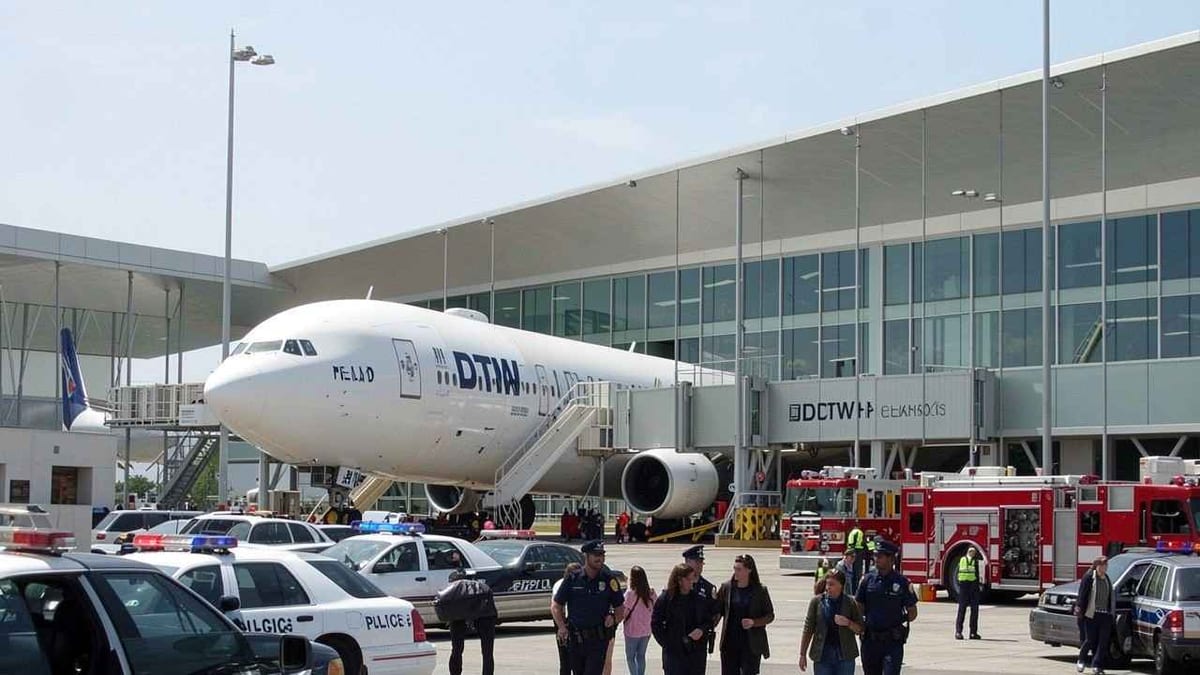
Unscheduled Stop Brings Flight DAL2445 to Pittsburgh
Publicly available flight-tracking information indicates that Delta Flight DAL2445 altered its planned route and headed to Pittsburgh International Airport, touching down there instead of its original destination. The diversion unfolded in typical fashion for an unscheduled stop, with the aircraft turning toward the nearest suitable airport and completing a standard approach and landing.
Data visible on flight-tracking platforms suggests that the aircraft descended steadily into the Pittsburgh area, consistent with a controlled, precautionary diversion rather than a rapid emergency descent. Ground-handling and airfield operations at Pittsburgh International routinely accommodate diversions of this kind, and the airport is a common alternate for flights operating along several East Coast and Midwestern corridors.
Initial online discussion from aviation enthusiasts and travelers focused on the timing of the turn toward Pittsburgh and the aircraft type operating the route. Without an immediate public explanation from the airline, speculation ranged from a minor technical concern to weather or a passenger-related issue, all scenarios that are well within standard operating practices for modern commercial aviation.
Common Reasons Flights Divert to Alternate Airports
Published guidance on airline operations and historical diversion patterns shows that flights typically divert for a handful of recurring reasons, including mechanical checks, medical concerns, weather, or airport conditions at the scheduled destination. In many cases, the rerouting is described as precautionary, designed to give crews and ground teams more time and resources to assess a situation.
Weather across busy air corridors can change quickly, and storm cells, low visibility, or wind conditions may make a primary destination temporarily unsuitable. In these situations, crews often choose an alternate airport that offers longer runways, more predictable approach paths, and robust support services. Pittsburgh International is frequently used in that role due to its location and infrastructure.
Another factor that can prompt a diversion is a minor technical indication in the cockpit that does not affect the aircraft’s immediate ability to fly but still requires inspection by maintenance personnel. Procedural safety margins are intentionally conservative, which means crews may decide to land sooner than planned to allow a thorough check on the ground rather than continue to the original destination.
What the Diversion Means for Passengers
For travelers on board, a diversion such as that experienced by Flight DAL2445 can translate into extended time on the aircraft, a transfer to the terminal at the alternate airport, or rebooking onto later departures once the situation is resolved. The experience varies depending on the timing of the diversion, gate availability, crew duty limits, and the condition that prompted the rerouting.
Publicly available airline customer guidance notes that passengers on diverted flights are generally re-accommodated on the next available services to their final destinations, either from the diversion airport or after the original flight is cleared to continue. Individual outcomes can differ, with some travelers able to make tight connections and others facing longer overnight delays.
In similar recent diversions to Pittsburgh, reports from passengers highlight long stretches on the tarmac, limited refreshments, and uncertainty while the aircraft awaits refueling, a new departure slot, or updated instructions. Such accounts underscore how an operational decision taken for safety and reliability can still create a challenging travel day for those on board.
Pittsburgh International’s Role as a Diversion Hub
Although Pittsburgh is no longer a major connecting hub for as many airlines as in past decades, the airport maintains ample runway length, broad ramp space, and regular service from several carriers, including Delta. These characteristics make it an attractive choice as an alternate airport for flights traversing the northeastern United States.
Regional commentary and aviation community discussions frequently reference diversions to Pittsburgh for flights originally bound for cities such as Philadelphia, New York, or Washington, particularly during periods of convective weather or snow. In those instances, Pittsburgh’s relative distance from the worst of a storm system can provide calmer conditions for landing, refueling, and regrouping.
Operational patterns also show that airlines occasionally use Pittsburgh to manage traffic when airspace near large coastal airports becomes congested. By temporarily routing aircraft to inland alternates, carriers can reduce holding times and conserve fuel while waiting for conditions at primary destinations to improve.
How Diversions Fit Into Modern Airline Safety Practices
Aviation safety specialists and industry publications emphasize that diversions like that of Delta Flight DAL2445 are built into airline planning and are considered evidence of conservative decision-making rather than signs of heightened danger. Routes are designed with multiple alternates in mind, and crews are trained to select and reach these airports efficiently whenever circumstances make it prudent.
Modern aircraft are equipped with detailed performance and navigation tools that support such decisions, evaluating factors such as remaining fuel, weather conditions, runway length, and available services. When any of these considerations point toward an alternate being preferable, a diversion becomes the routine option, even if it temporarily disrupts passenger itineraries.
Travel advisories and frequent-flyer guidance often encourage passengers to view diversions as a normal part of air travel in a complex operating environment. While Flight DAL2445’s unscheduled stop in Pittsburgh may have been inconvenient for those on board, the outcome once again illustrates how crews, dispatchers, and airports coordinate to bring flights safely to the ground when plans change mid-journey.