


More news on this day
Fast evolving thunderstorms across the Midwest are casting a shadow over Lollapalooza 2026 in Chicago, raising concerns about possible schedule changes in Grant Park and knock-on delays for travelers passing through O’Hare International Airport.
Get the latest news straight to your inbox!
Festival Crowds Watch the Radar Over Grant Park
Lollapalooza 2026 is drawing tens of thousands of fans to Chicago’s Grant Park from July 30 to August 2, with more than 170 acts programmed across multiple stages. The four day event sits at the heart of peak Midwest storm season, and recent model runs have highlighted the risk of strong thunderstorms building along a warm, humid air mass over northern Illinois during the weekend.
Publicly available forecasts indicate that scattered storms could develop quickly during the late afternoon and evening hours, the same window when headliners attract the largest crowds to the park. Short range outlooks describe a classic summer pattern for Chicago, with muggy conditions near Lake Michigan and the potential for lightning, gusty winds and brief torrential downpours.
The location of Grant Park on the lakefront makes the festival particularly exposed to fast shifting weather boundaries. Storm cells tracking across the metropolitan area can reach the open lawns with little advance warning, creating challenges for stage operations, sound equipment and temporary structures if severe gusts materialize.
Local coverage and festival focused discussions in recent days have emphasized how quickly Chicago’s conditions can change, with some weather enthusiasts noting that official readings are often taken at O’Hare, several miles from downtown. That gap raises the possibility that storms could park briefly over the central city and Lakefront while radar and observations still show only scattered activity elsewhere in the metro area.
Safety Protocols and Potential Schedule Changes
Lollapalooza has long operated under a set of weather safety rules that allow for pauses in performances, temporary evacuations of the grounds, or a full closure of the park in the event of lightning or dangerous winds. While organizers had not issued major interruptions by early Saturday, festival goers are being reminded through public channels and community forums to keep phones charged, enable alerts in the official app and identify exit routes in case conditions deteriorate.
Past editions of large outdoor festivals in the region have seen sets cut short or rescheduled when storm cells approached within a set radius. Current commentary around the 2026 edition suggests that similar thresholds remain in effect, which could mean staggered delays across the eight main stages if lightning moves near downtown Chicago during prime time slot hours.
For artists and crews, the threat of severe weather introduces added logistical complexity. Any pause in the schedule can compress changeover times or lead to outright cancellations when curfews in Grant Park and union rules for production staff limit how late performances can be pushed. Publicly shared guidance urges attendees to expect that some appearances could be shortened rather than moved wholesale to avoid overrunning the city’s noise controls.
Fans are also being cautioned that, if the most intense storms hold off until after sunset, there may still be lingering impacts on sound quality, stage lighting and on site amenities. Wet turf, high humidity and electrical safety checks can slow the restart of equipment even once lightning has cleared the recommended distance from the site.
O’Hare Braces for Knock On Flight Disruptions
Any significant thunderstorm activity over Chicago has the potential to ripple quickly into air travel disruptions at O’Hare, one of the nation’s busiest hubs. Historical data from severe weather days in the region shows that even short lived convective lines can trigger ground holds, arrival metering programs and widespread delays as controllers work to maintain spacing in crowded airspace.
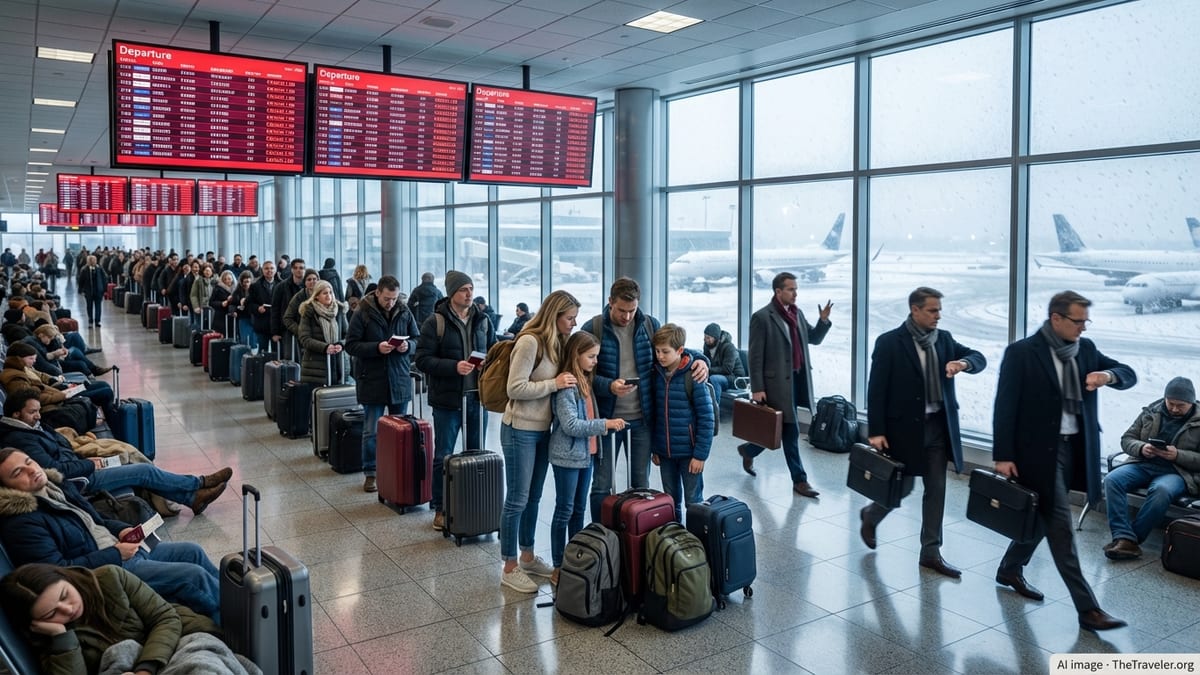
Airline and aviation reports in recent seasons have highlighted how storms anywhere in the Midwest corridor can snarl the tightly scheduled network that connects through Chicago. Travelers headed to Lollapalooza, as well as those simply changing planes at O’Hare, may face rolling gate changes, longer taxi times and last minute cancellations if cells build over key departure and arrival routes during peak periods.
Forum discussions among frequent flyers in 2026 point to an unusually stormy summer around Chicago, with several instances of rolling delays attributed to thunderstorms near O’Hare. That pattern, combined with the concentration of leisure travelers flying in and out for the festival weekend, raises the risk of congested terminals and long lines at customer service desks when weather disruptions occur.
Travel experts generally recommend booking earlier flights during storm prone seasons and monitoring airline alerts closely in the hours before departure. For those arriving or leaving on the same day as festival attendance, current guidance suggests allowing extra buffer time between a scheduled touchdown at O’Hare and the goal of reaching downtown, particularly if convective outlooks mention strong storms or shifting wind patterns.
City Infrastructure Faces a Mid Summer Stress Test
The convergence of a marquee music festival, volatile summer weather and peak travel season represents a broader stress test for Chicago’s transportation and emergency response systems. Grant Park’s position near key commuter rail lines, major bus routes and the city’s expressways means that any rapid evacuation or weather related slowdown could spill out onto the surrounding street grid.
In past severe weather events, documented storm summaries for Cook County have recorded flash flooding on arterial roads, downed tree limbs and localized power interruptions. While most thunderstorms pass with limited damage, a small subset can produce damaging straight line winds or hail, which may complicate late night journeys back to hotels and neighborhoods across the region.
Publicly available planning documents emphasize coordination between city agencies, transit providers and large event organizers for exactly these types of scenarios. During a multi day festival such as Lollapalooza, each successive round of storms can test drainage systems in and around Grant Park, as saturated ground struggles to absorb additional rainfall from slow moving cells.
Riders on commuter and urban rail systems are being encouraged through public channels to check service updates throughout the weekend, as heavy rain and lightning can prompt temporary speed restrictions or signal checks. Similar considerations apply to rideshare operations, which often face surge pricing and longer wait times when storms align with the end of the concert day.
What Attendees and Travelers Can Do Now
With conditions still evolving, the most practical steps for festival goers involve preparation and flexibility. Weather aware attendees are packing lightweight rain gear, sealable bags for electronics and footwear suitable for slick grass and mud, all common features of Chicago festivals affected by summer storms. Many are also building in time for shelter breaks between sets, rather than attempting to move rapidly across the park as thunder approaches.
For air travelers, publicly shared advice from airlines and aviation observers underscores the importance of enrolling in carrier specific alert systems, confirming the status of flights before leaving for the airport and having a backup plan in case of missed connections. Rebooking options, hotel availability near O’Hare and alternative routings through other hubs can change quickly once a line of storms sweeps across the region.
Those combining flights and festival entry on the same day may benefit from separating the two when possible, arriving in Chicago a day early or scheduling departures for the morning after their final Lollapalooza date. That strategy can create a buffer against cascading delays that start with one stormy afternoon and linger through the night in the form of aircraft and crew displacements.
As the 2026 edition of Lollapalooza moves into its busiest stretch, the interplay between music, meteorology and mobility will remain in sharp focus. Festival watchers, local residents and visitors alike will be tracking the same radar screens to see whether the Midwest’s latest round of storms will merely dampen the grounds or significantly reshape one of the summer’s signature weekends in Chicago.