


More news on this day
Southwest Airlines Flight 2887 made an unscheduled diversion to Minneapolis–Saint Paul International Airport, landing safely after the crew altered course while en route, according to publicly available flight tracking information and media coverage.
Get the latest news straight to your inbox!
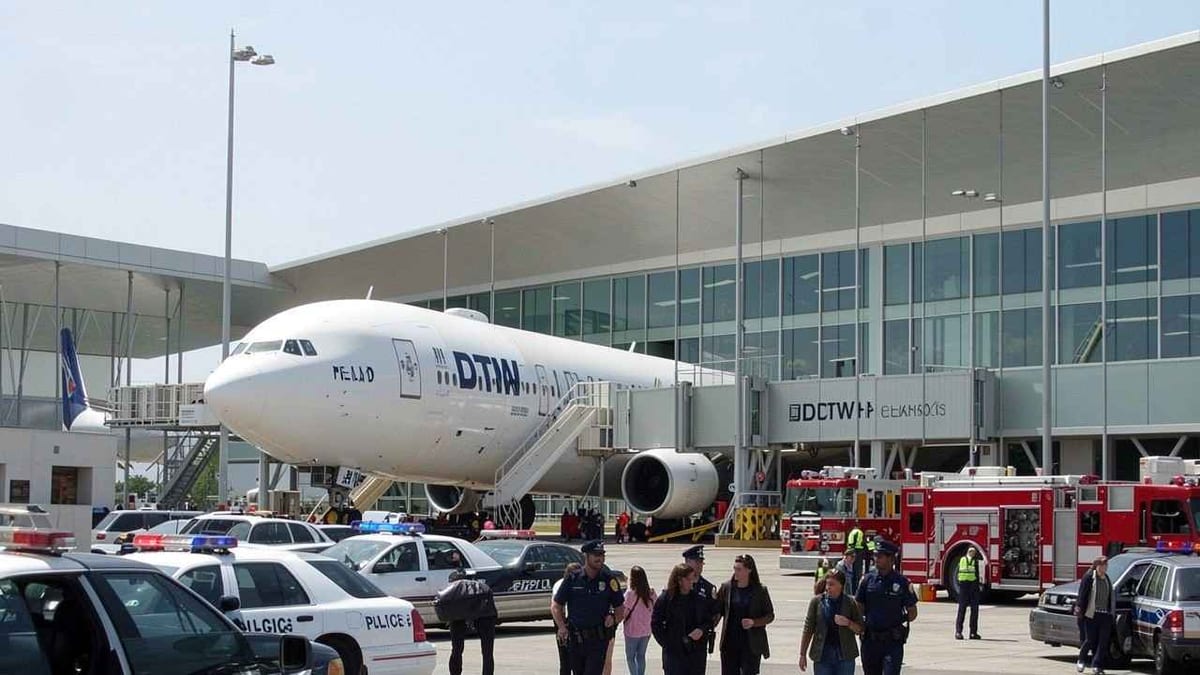
Unscheduled Diversion Brings Southwest Flight to MSP
Flight data and media reports indicate that Southwest Flight 2887, operating as a scheduled passenger service, diverted from its original route and touched down at Minneapolis–Saint Paul International Airport rather than its planned destination. The aircraft landed without incident, and available information does not point to any injuries among those on board.
Publicly accessible aviation tracking platforms show the jet changing course toward the Twin Cities area partway through its journey, a standard procedure when crews determine that continuing on the filed route is not advisable. Diversions of this kind can be prompted by a range of operational considerations, including weather, technical checks, or passenger medical needs.
While the precise trigger for the course change on Flight 2887 has not been detailed in initial coverage, the sequence of events follows a familiar pattern for modern commercial aviation, where real-time data, onboard diagnostics, and network planning tools support rapid route and schedule adjustments.
For travelers, the most immediate impact of such a diversion is typically extended journey time or missed onward connections, but available reports suggest the primary objective of a safe and controlled landing at Minneapolis–St. Paul was achieved.
Minneapolis–St. Paul’s Role as a Diversion and Connection Hub
Minneapolis–Saint Paul International Airport is a major Upper Midwest aviation hub, handling tens of millions of passengers annually and serving as a key node in domestic and international route networks. The airport’s runway capacity, airline presence, and ground facilities make it a logical diversion point for flights operating across central and northern parts of the United States.
Southwest Airlines maintains a regular schedule at the airport, using it for services to large destinations across the country, which can simplify the logistics of handling diverted flights and rebooking affected passengers. Having an established operational footprint means aircraft can be met by local ground teams familiar with the carrier’s procedures.
For airlines, selecting a diversion field involves balancing runway length, available maintenance support, air traffic conditions, and passenger-handling capabilities. Minneapolis–St. Paul’s combination of long runways, multiple terminals, and extensive airline operations often makes it a preferred option when a flight must leave its intended path.
Once on the ground, diverted aircraft are typically parked away from routine departure banks until the airline confirms whether the journey can resume on the same jet, whether a maintenance review is needed, or whether passengers will be reaccommodated on other flights.
Operational Factors That Commonly Lead to Diversions
While specific details surrounding Flight 2887’s diversion have not been comprehensively outlined in early reports, similar events across the industry highlight several recurring causes. Adverse weather at either the destination or along the route can prompt rerouting or unplanned landings when visibility, wind, or storm conditions exceed the thresholds defined in airline operating procedures.
Technical indications on modern aircraft, including caution alerts from onboard monitoring systems, may also lead crews to prioritize precautionary landings. In many of these cases, follow-up inspections confirm minor issues, but standard practice in commercial aviation is to err on the side of caution when evaluating in-flight warnings.
Medical concerns involving passengers or crew are another frequent reason for diversions. When cabin staff observe symptoms that may require urgent care, or when ground-based medical consultation services advise immediate assessment, pilots can request priority handling into the nearest suitable airport. Such decisions are governed by the principle of ensuring timely access to appropriate care, even at the expense of schedule disruptions.
Less frequently, route adjustments may be tied to air traffic management constraints or temporary restrictions in airspace. Airlines rely on a mix of internal dispatch information and air navigation service updates to determine whether it is more practical to hold, reroute, or divert to an alternate field such as Minneapolis–St. Paul.
Impact on Passengers and Ongoing Travel Plans
For travelers aboard Flight 2887, the diversion to Minneapolis–St. Paul likely resulted in changes to arrival times and, for those with onward connections, the need to adjust subsequent travel plans. Standard airline practice following a diversion is to coordinate gate agents, customer service channels, and digital tools to begin reaccommodating passengers as soon as a revised plan is confirmed.
Publicly available guidance from Southwest and other carriers emphasizes that customers affected by significant schedule disruptions may be offered rebooking on later services, same-day adjustments where seats are available, or, in some cases, refunds under the carrier’s policies. The exact options can vary based on fare type, route, and the nature of the disruption.
At the airport level, diversions can create ripple effects across gate usage and departure sequences, particularly during peak travel periods. However, large hubs such as Minneapolis–St. Paul are designed to absorb a degree of irregular operations, using spare gate capacity and flexible staffing patterns to support unplanned arrivals.
Most passengers on diverted flights ultimately continue to their intended destinations later the same day or on the next available departure, though overnight stays can be required if an aircraft needs additional technical checks or if severe weather persists in the region.
Growing Reliance on Real-Time Data in Airline Operations
The handling of Flight 2887’s diversion highlights the broader industry shift toward data-driven decision making. Airlines, including Southwest, increasingly rely on integrated operations centers that monitor fleets in real time, track weather systems, and coordinate with airports and air traffic control to adjust flight plans when conditions change.
Passengers now frequently see the results of this data integration through mobile notifications and updated boarding information that reflect route changes, gate swaps, or revised departure times. While the initial experience of an unplanned landing can be disruptive, these tools enable airlines to communicate updates more quickly than in the past.
Minneapolis–St. Paul’s position within national air networks also benefits from these systems, as its role as both a destination and diversion point depends on up-to-date information about runway availability, gate assignments, and connecting-flight capacity. Efficient sharing of that information between airports and carriers helps reduce the overall duration and complexity of diversions.
As airlines continue to invest in technology and resilience planning, events such as the diversion of Southwest Flight 2887 demonstrate how modern commercial aviation is structured to prioritize safe outcomes, while working to restore disrupted journeys as swiftly as operational conditions allow.