


More news on this day
A freight train derailment in a Regina rail yard is under investigation, focusing renewed attention on how rail traffic is managed in and around the Saskatchewan capital and what the incident means for safety across Canada’s busy freight network.
Get the latest news straight to your inbox!
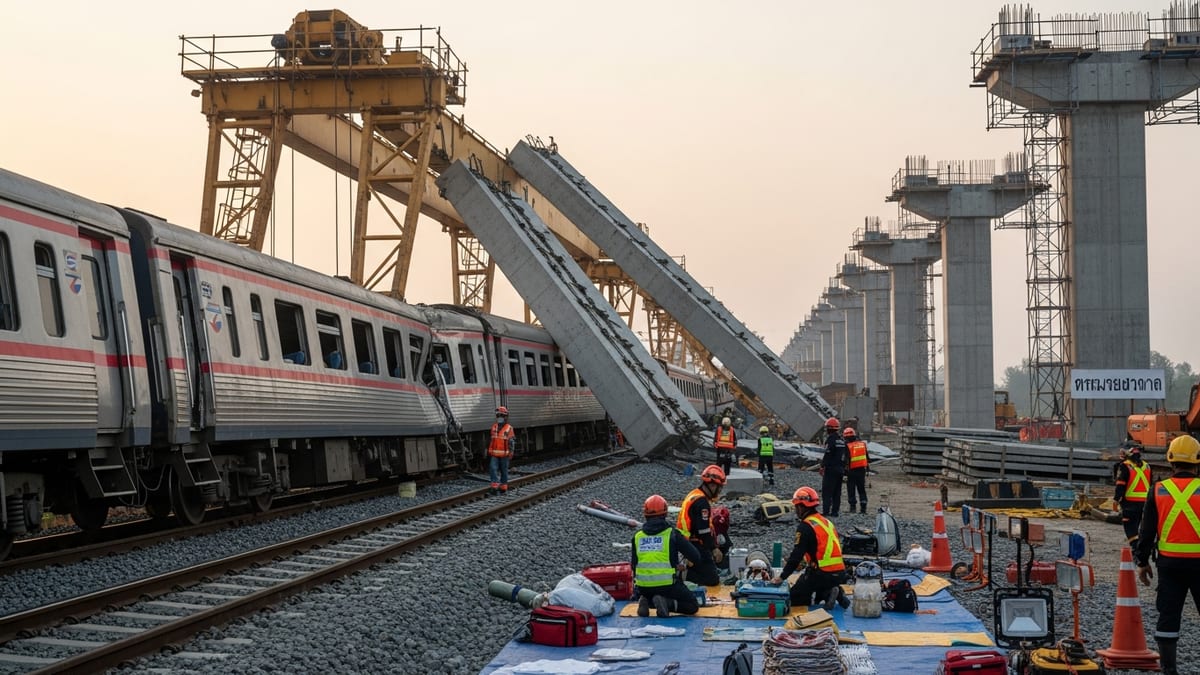
What is known so far about the Regina derailment
Initial reports indicate that a freight consist derailed while moving through a yard area serving Regina, with several cars leaving the tracks within a complex of switching lines rather than on a mainline. Early information circulating through local coverage and rail-industry channels suggests the train was engaged in routine yard movements when the incident occurred.
Publicly available information shows that no major injuries had been reported in the immediate aftermath, and early accounts point to damage largely confined to rolling stock, track infrastructure and adjacent railway property. Emergency services attended the scene to secure the site and assess any potential risks from fuel, cargo or debris, a standard precaution whenever rail equipment leaves the rails.
Published coverage so far has not indicated a significant hazardous materials release associated with this derailment. However, investigators typically review train consist documents, cargo manifests and mechanical records to confirm what each car was carrying and whether any containment systems were compromised when the cars toppled or jackknifed.
Yard derailments can appear visually dramatic, with stacked or crumpled cars, but often occur at comparatively low speeds compared with mainline crashes. Even so, they can disrupt operations for days while damaged track is rebuilt, cars are re-railed or scrapped, and safety teams document the scene.
Investigators focus on track conditions and yard operations
The incident has been referred to federal rail safety investigators, whose work typically begins with a site survey, examination of track geometry and inspection of the rolling stock involved. According to publicly available Canadian rail investigation practices, teams usually document rail wear, alignment, ballast condition and any signs of recent maintenance in the affected yard tracks.
Investigative work also tends to examine how yard traffic was being managed at the time of the derailment. This may include reviewing switching plans, radio recordings, signal indications and speed records from onboard event recorders. In rail yards, derailments can be linked to problems such as misaligned switches, over-stressed track on tight curves, or cars handled in a way that creates excessive forces through couplers and wheelsets.
Published material from recent Canadian derailment reports highlights that extreme temperatures and maintenance practices have been implicated in some rail failures elsewhere in the country. Those findings may inform lines of inquiry in Regina, particularly if the incident occurred during a period of high temperatures or after recent track work in the yard.
Investigators are expected to take physical evidence, data from locomotive event recorders and company documents back for detailed analysis. While preliminary observations sometimes emerge within days, full rail safety reports often take months or longer to complete, as teams reconstruct the sequence of events and test competing hypotheses about the cause.
Impact on rail operations and nearby communities
The derailment has prompted short-term changes in yard operations in Regina as crews work to clear debris, inspect adjacent tracks and restore the flow of freight traffic. Rail companies typically reroute some trains, reduce yard speeds or limit certain movements while repairs and inspections are under way, which can lead to temporary congestion elsewhere on the network.
For communities around the yard, visible wreckage and the presence of cranes, heavy trucks and remediation crews serve as a reminder of how closely freight operations intersect with urban life. Noise, work lights and intermittent road disruptions around yard access points may continue while damaged cars are removed and track sections rebuilt.
Local concerns often focus on hazardous materials, even when early information suggests cargo is primarily non-dangerous freight. Publicly available information from past incidents elsewhere in Canada shows that railways and regulators typically conduct environmental checks at derailment sites, including soil and water sampling, to verify that no contamination has escaped from fuel tanks or cargo.
Once the immediate recovery is complete, railway engineers generally carry out further detailed inspections of nearby infrastructure, including turnouts, crossovers and yard lead tracks, to ensure that latent defects do not remain. These assessments can lead to speed restrictions, targeted maintenance programs or infrastructure upgrades designed to reduce stress on heavily used yard segments.
Derailment adds to wider conversation on Canadian rail safety
Although most Canadian rail movements finish without incident, the Regina derailment adds to a series of recent events across the country that have kept rail safety in the public eye. National statistics and recent investigation reports show that freight traffic volume, extreme weather and aging infrastructure all contribute to the risk profile of the network.
In particular, safety specialists have pointed to the importance of how trains are handled in rail yards, where complex switching maneuvers concentrate rail traffic into a confined space. Academic work comparing mainline and yard risks notes that yard switching and arrival or departure operations can be significant contributors to overall derailment risk, especially for long, mixed freight trains.
Publicly available Canadian case studies released in recent months have also highlighted track geometry, thermal stress on rails and maintenance practices as recurring themes in derailments elsewhere. While each incident is unique, these findings are likely to frame how regulators, rail companies and local communities interpret what happened in Regina and what lessons might be drawn from it.
Rail advocates often argue that incidents like this highlight both the essential role of freight rail and the need for continual investment in inspection technology, staff training and yard design. For cities that grew up alongside major yards, the Regina derailment may renew questions about land use, emergency readiness and how to balance efficient freight movement with the safety and comfort of nearby residents.
What rail travelers and visitors should know
For travelers passing through Regina or using Saskatchewan as a jumping-off point for wider exploration, the derailment is unlikely to have a major direct impact on passenger itineraries, based on information currently available. Yard incidents typically affect freight patterns more than passenger schedules, though knock-on delays can occur if main lines are temporarily affected or if traffic is rerouted.
Visitors planning rail journeys across Western Canada may wish to monitor published service updates from passenger operators and regional news outlets, particularly if their routes intersect with busy freight corridors around Regina. During periods of recovery and inspection after a derailment, freight congestion can occasionally ripple across the network, leading to schedule adjustments or slower running in some segments.
The incident also offers a reminder that many Canadian cities, including Regina, have rich railway histories and active rail communities that closely follow developments on the network. For travelers interested in industrial heritage, rail museums, historic stations and public viewpoints near yards and mainlines provide ways to engage with railroading from a safe distance, while remaining mindful of railway property boundaries.
As the investigation in Regina progresses, additional details about causes and corrective actions are likely to emerge through formal reports and public statements. For now, the derailment stands as another illustration of how integral rail is to Canada’s transportation system and how events in a single yard can prompt broader discussions about safety culture, infrastructure and urban planning.