


Few winter experiences feel as cinematic as standing on the runners of a husky sled, the only sounds the scrape of the skis and the dogs’ eager breaths as you glide through frozen forest. Husky safaris have become a signature activity across Finnish Lapland, northern Norway and Swedish Lapland, but prices, quality and ethics can vary widely. This guide pulls together current, real-world examples from leading destinations like Rovaniemi, Levi and Tromsø so you know what to expect, what you are really paying for and how to choose a tour that treats both dogs and guests well.
Get the latest updates straight to your inbox!
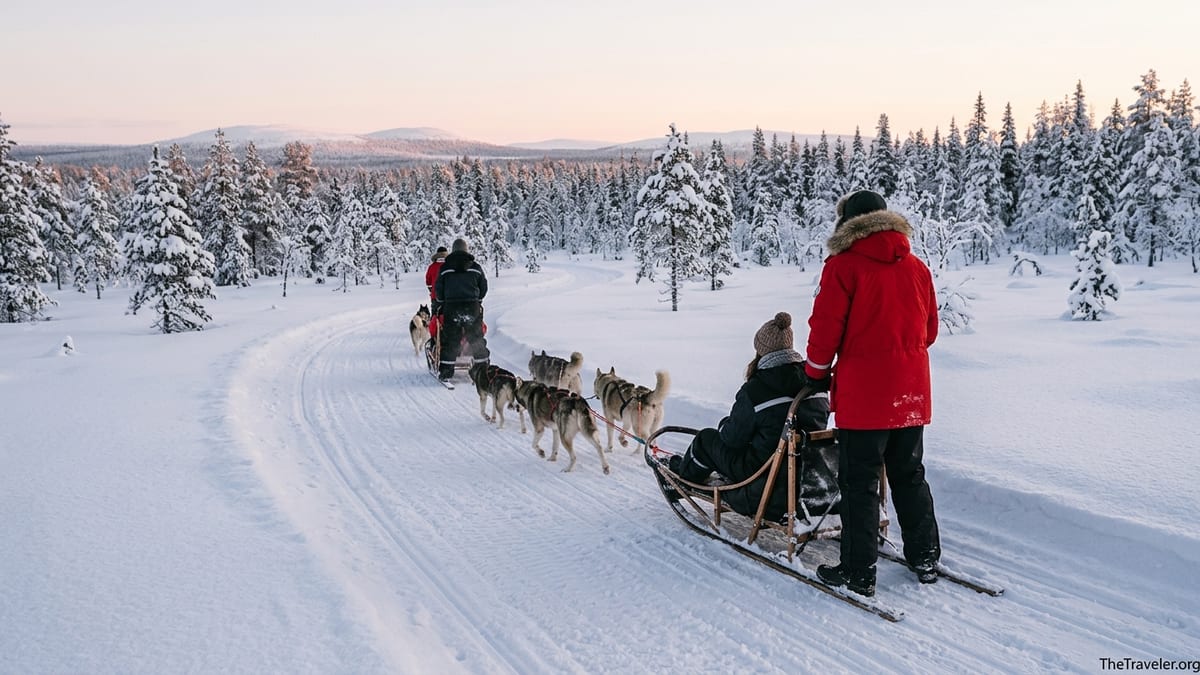
What Does a Husky Safari Typically Cost?
Across the main Arctic hubs, a standard husky safari where you visit a kennel, drive or ride a sled and get hot drinks now usually costs between about 130 and 260 US dollars per adult, depending on distance, season and whether it is in Finland, Norway or Sweden. In Rovaniemi in Finnish Lapland, a short 5 kilometre self-drive safari sold by local operators commonly starts around 110 to 140 euros per adult in the early and late season, rising closer to 170 to 190 euros in the Christmas and New Year weeks when demand peaks. In Tromsø in northern Norway, a standard 3 to 4 hour dog sledding tour with 20 to 40 minutes on the sled is often priced between 200 and 250 euros per person, reflecting higher local costs and longer transfers from the city.
Short taster rides are noticeably cheaper because the actual sled time is brief. Around Rovaniemi, tiny 2 to 3 kilometre passenger rides in the Santa Claus Village area are frequently advertised for about 60 to 70 euros per adult for under 15 minutes of sledding, while in Levi you can find 1.5 kilometre husky safaris with kennel visits from roughly 80 to 90 euros. By contrast, extended wilderness safaris of 12 to 18 kilometres, or half-day expeditions in Swedish Lapland, routinely exceed 250 to 300 euros per adult, especially if they include a campfire lunch or reindeer stew and transfers from ski resorts.
Children’s pricing varies but is usually 25 to 40 percent lower than adult rates. Many Finnish operators list children aged 4 to 12 at about 60 to 130 euros depending on distance, and Norwegian kennels often quote specific age bands such as 6 to 11 years at reduced prices. Infants and toddlers are not always allowed on sleds, especially on self-drive tours. It is common to see a minimum age of 4 to 6 years for short passenger rides and 12 to 16 years to stand on the back and help drive a team, even with an adult.
Seasonality also affects prices. Many Lapland companies publish a winter 2025 to 2026 price grid where December to early January rates are 5 to 10 euros higher per person than November or March. Tour brochures for Rovaniemi and Kuusamo, for example, show short husky safaris around 150 euros in late November and 160 euros across the Christmas period, with similar small premiums for reindeer and snowmobile excursions. If you are flexible and visit in late January, February or mid-March, you often get more daylight and slightly better value than during Christmas week.
Key Destinations: Rovaniemi, Levi, Tromsø and Beyond
Rovaniemi, just below the Arctic Circle in Finland, remains one of the world’s most popular husky safari bases. Here you will find a dense cluster of kennels within about 25 to 35 kilometres of town, offering everything from 2 kilometre family rides inside Santa Claus Village to serious 15 kilometre wilderness safaris in surrounding boreal forest. Well-regarded operators in the area typically include hotel pickup from the city centre, thermal outerwear and boots, a 5 to 10 kilometre trail, hot berry juice and cookies, and the chance to meet the dogs before and after the ride. Expect total tour times of 2 to 4 hours door to door.
Levi, one of Finland’s main ski resorts, has grown into another major hub for husky experiences. Around Levi you can book compact 1.5 kilometre safaris with local companies for roughly 80 to 90 euros, self-drive 5 kilometre runs starting around 130 to 140 euros, and longer 6 to 10 kilometre safaris that approach the 170 to 200 euro mark. Many of these tours depart from small family kennels located 20 to 30 minutes from the ski village and combine mushing with snowmobile transfers or reindeer visits. This makes Levi a good choice if you want to mix skiing with one or two carefully selected winter activities rather than spending your entire trip on excursions.
Tromsø in northern Norway offers a slightly different experience. Instead of forested Lapland hills, you are more likely to sled through open valleys, along fjord edges or between low mountains, with tours operating from late November to early April depending on snow. A popular self-drive husky adventure marketed in Tromsø, for instance, advertises a roughly 4 hour excursion including 70 to 80 minutes of actual sledding, full thermal clothing, kennel visit and hot cake and drinks for about 225 US dollars per person. Shorter 2 to 3 hour tours with 20 to 30 minutes on the sled tend to be a little cheaper at around 150 to 190 euros.
Swedish Lapland, particularly around Kiruna and Abisko, is also a strong choice if you are combining a husky safari with northern lights viewing or a visit to the Icehotel. Winter 2025 to 2026 price sheets from small-scale Swedish operators typically show “husky taster” experiences of around 1.5 hours including a short shared sled ride and kennel visit costing a little over 100 euros equivalent, while half-day husky tours with 2.5 hours total and longer sled time are priced closer to 200 to 250 euros. Many Abisko guesthouses work with trusted kennels and can arrange pickup from accommodation or train stations.
Understanding Tour Types and What You Get for the Price
When comparing husky safari prices, it helps to understand the main formats. Short tasters, usually 1 to 2 hours including transfers, are designed to give you a brief taste of sledding without taking half a day. A common example is a 2 kilometre ride in Rovaniemi’s Santa Claus Village for about 60 euros, or a 1.5 kilometre run in Levi for a little under 90 euros. These are generally passenger-only, with a guide driving the sled, and the actual time behind the dogs can be as little as 8 to 15 minutes.
Standard safaris of around 5 to 10 kilometres are the sweet spot for most travellers. In Finnish Lapland these tours typically last 2 to 3 hours door to door, including transfers, gear fitting, a 30 to 50 minute sled ride and time for photos and dog cuddles afterward. Prices often fall in the 140 to 200 euro range per adult. In Tromsø, a similar mid-length safari might advertise 30 to 40 minutes of sledding within a 3 to 4 hour round trip for 200 to 250 euros. These tours usually allow self-driving, meaning two guests share a sled and alternate between sitting in front and standing on the runners.
Extended and full-day safaris step up in both price and physical demand. A 12 to 18 kilometre tour from a Lapland resort can run 250 to 320 euros, with 60 to 90 minutes of sled time and a stop for lunch or snacks over an open fire. Multi-day expeditions across the Finnish or Swedish fells, often staying in simple wilderness cabins, are specialist products that start around 800 to 1,000 euros per person and can climb to several thousand for longer routes. These are best suited to travellers comfortable with long hours outdoors in temperatures that may reach minus 20 degrees Celsius.
What your money buys can vary, so check inclusions carefully. Reputable Arctic operators normally include transfers from central hotels, professional guiding, use of thermal overalls, boots and mittens, instruction on how to drive, and hot drinks. Some also include a simple meal, such as reindeer soup or sausages grilled over a campfire, especially on longer trips. Lower priced short rides in built-up tourist villages may not include clothing, often assume you arrive dressed for the cold and may involve queuing in busy areas. A 60 euro Santa Village ride, for example, is rarely comparable to a 170 euro wilderness safari outside town, even if both involve huskies.
Ethical Husky Safaris: How to Choose a Responsible Kennel
The husky safari industry has grown quickly, and travellers are increasingly asking whether dogs are treated ethically. Prices can sometimes hint at quality, but they are not a guarantee. Instead, focus on a mix of kennel scale, daily workload, guest reviews and how transparent the company is about dog welfare. Many small family-run kennels in Finland and Sweden emphasise that they limit the number of tours per day, rotate dogs frequently and reduce distances in warm spring weather. One family operation near Levi, for example, highlights half-day safaris with relatively few daily departures and encourages visitors to interact with the dogs only if the animals approach first, a sign of respect for the dogs’ boundaries.
Reviews are particularly useful. Look beyond star ratings on tour platforms and read recent comments that mention the dogs’ condition and behaviour. Positive signs include descriptions of energetic but calm dogs, spacious kennels with clean straw bedding, and guides who know each animal by name and personality. Watch out for repeated reports of dogs looking extremely thin, chained without shelter or being forced to run in slushy conditions. In Tromsø, travellers frequently discuss the differences between large, high-volume outfits and smaller operators that run fewer sleds and emphasise quiet interaction at the kennel rather than constant back-to-back rides.
Group size and pace also play a role in welfare and guest experience. Cheaper, high-capacity tours may send out long caravans of sleds following one another nose to tail, leaving little room to enjoy the landscape. More expensive small-group safaris, like those capped at six or eight sleds in Tromsø’s valleys, can feel more peaceful and give guides time to help guests learn actual mushing techniques. Another detail worth checking is what happens to retired dogs. Some Lapland kennels now share information about adoption programs or how older animals are given lighter tasks such as greeting visitors at the yard.
As a visitor, you can contribute by being honest about your limits and following instructions carefully. Do not demand to drive if you are uncomfortable balancing on the sled, and accept that in marginal snow conditions a responsible operator may shorten or cancel a tour. Ethical kennels often state clearly that safety and dog welfare come before distance guarantees. While this can be disappointing if you had your heart set on a long run, it is a good sign that the company takes its responsibilities seriously.
Practical Planning: Seasons, Clothing and Booking Windows
The main husky safari season in Finnish Lapland, Tromsø and Swedish Lapland usually runs from late November through late March, with variations based on local snow conditions. In Rovaniemi, tourism calendars for winter 2025 to 2026 list husky activities beginning around mid-November, peaking from early December to late February, and continuing into the end of March or early April in years with good snow. Tromsø kennels similarly advertise dog sledding from the first substantial snow, sometimes as early as late October on inland plateaus, though December to March is the most reliable window.
If you are travelling in the Christmas and New Year period, it is wise to book popular tours weeks or even months ahead. Some Rovaniemi and Levi operators report that prime 10 kilometre safaris over the last week of December can fill entirely by early autumn. In Tromsø, where northern lights tours also compete for time and budget, it is common for travellers visiting in January or February to secure dog sledding slots at least 3 to 4 weeks in advance. Outside peak dates in late November or mid-March, it is often possible to book a few days out, particularly for shorter or daytime tours.
Regardless of where you go, dressing properly is essential. Even though operators supply thermal outer suits and boots, you should bring your own warm base layers, including wool or synthetic long underwear, a thick fleece or wool mid-layer, and a windproof hat that covers your ears. Good gloves or liner gloves make it easier to operate camera buttons while still staying warm. Face coverings such as buffs or balaclavas are helpful when wind-chill on a moving sled makes the air feel even colder than the forecast temperature. Many guests underestimate how cold their feet can get while sitting as a passenger; bringing a second pair of socks or disposable toe warmers can be a good idea.
Time of day also shapes the experience. Midday tours in December may happen in blue twilight in Lapland, which can be atmospheric but less ideal for photography, while March safaris often enjoy higher sun and brighter snow. Some Tromsø operators sell evening husky excursions combined with a northern lights hunt, but remember that you will feel colder after sunset and that dog sledding on dark trails is more about atmosphere than scenery. If your schedule allows, a bright daytime safari plus a separate aurora-focused tour often offers the best of both worlds.
How to Read the Fine Print: Distance, Self-Drive Rules and Safety
Husky safari marketing can be confusing, especially when distance and duration are presented in different ways. Some brochures advertise total tour length in hours, which includes transfers, clothing and safety briefings, while others emphasise kilometres on the sled. For example, a 2.5 hour Ruka husky program might involve only 45 to 60 minutes of actual sledding, just as a 4 hour Tromsø excursion could contain 30 to 40 minutes of mushing. When comparing prices, try to find the approximate kilometres or sled time so you are not misled by overall duration alone.
Self-driving is another key point. Many visitors assume that all husky safaris allow you to stand on the runners and drive, but that is not always the case. Short Rovaniemi rides in crowded tourist areas are usually passenger-only; a guide stands at the back while you sit in the sled. To drive, you will almost always need to book a proper kennel safari outside town and meet minimum age and physical requirements. Age thresholds vary by company, but it is common in Finland and Norway to require drivers to be at least 16 or 17 years old. Younger children typically sit in the sled with an adult and are not allowed on the runners.
Ask about safety protocols, especially if you are nervous about speed or falls. Good guides give a thorough briefing on how to brake, how to lean into turns and what to do if you or your partner falls off the sled. Many insist that the driver never releases the brake fully on downhill sections and that there is always at least one foot on the brake when the sled is stopped, as the dogs love to run and may bolt if they feel slack in the line. Trail layouts are designed with safety in mind, combining gentle hills and open flats with clear signage and radio communication between guides.
Weight limits and mobility considerations are important too. Two adults typically share one sled, with a combined weight limit that often sits around 180 kilograms. If guests are heavier or one person has limited mobility, some operators can arrange alternative seating formats, such as a guide-driven sled with additional support. It is always better to discuss these needs upfront rather than on arrival, as kennels may adjust team size or vehicle type to keep everyone safe and comfortable. Reputable companies also have clear policies on alcohol and reserve the right to refuse participation if someone arrives impaired.
The Takeaway
Husky safaris have evolved into one of the defining winter experiences of the European Arctic, and with that popularity has come a wide range of prices and products. A 60 euro five-minute ride in a busy tourist village is a very different experience from a 200 euro half-day wilderness safari with a small family kennel. Understanding what drives cost, from distance and group size to inclusion of clothing and meals, will help you choose a tour that matches your expectations and values.
Across Rovaniemi, Levi, Tromsø and Swedish Lapland, current price ranges for winter 2025 to 2026 show that a fair, well-run standard safari typically sits between about 140 and 250 euros per adult, with small discounts for children and modest surcharges during the Christmas and New Year peak. Booking early, reading recent reviews that focus on dog welfare and safety, and being realistic about your fitness and cold tolerance will go a long way to ensuring your time behind the sled is exhilarating for you and sustainable for the dogs. With thoughtful planning, a husky safari can become the highlight of your Arctic trip rather than just another line item on the tour list.
FAQ
Q1. How much should I budget for a husky safari on a Lapland holiday?
For a typical 5 to 10 kilometre self-drive safari in Finnish Lapland or Swedish Lapland, plan on roughly 140 to 220 euros per adult, plus a little extra for tips and optional photos. Shorter taster rides may cost from about 60 to 100 euros, while extended or full-day trips often exceed 250 euros.
Q2. Is dog sledding more expensive in Tromsø than in Finland?
Yes, Tromsø tours are usually a bit pricier due to higher operating costs and longer transfers. Expect standard 3 to 4 hour Tromsø husky tours with 20 to 40 minutes on the sled to fall in the 200 to 250 euro range, compared with roughly 150 to 200 euros for a similar-length safari around Rovaniemi or Levi.
Q3. When is the best time of year to book a husky safari?
The most reliable months for snow and daylight are generally December through March. Christmas and New Year weeks are extremely busy and more expensive, so late January, February and early March often strike the best balance of stable snow, longer days and slightly easier availability.
Q4. Do I need previous experience to drive a husky sled?
No previous experience is required for standard safaris. Guides give a safety briefing and basic driving lesson before you start, and most tours pair two people per sled so you can swap between sitting and standing. However, you should be comfortable standing and balancing, and prepared to jog short distances uphill.
Q5. What should I wear on a husky safari if gear is provided?
Most operators supply thermal overalls, boots and mittens, but you still need warm base layers. Pack wool or synthetic long underwear, a thick mid-layer, a good hat, neck buff or balaclava, and warm socks. Bringing thin liner gloves can make it easier to use your phone or camera without exposing bare skin.
Q6. Are children allowed on husky safaris?
Yes, but age limits vary. Many companies accept children as young as 4 to 6 years on short passenger rides, while standing on the runners to help drive is commonly restricted to ages 12 to 16 and above. Always check age and height rules for your specific tour before booking.
Q7. How far in advance should I book a husky tour?
For peak dates in Rovaniemi, Levi or Tromsø between mid-December and early January, book several weeks or even a few months in advance. For February and March, securing spots 3 to 4 weeks ahead is sensible, while in shoulder periods outside holiday peaks you may find space a few days before.
Q8. What are signs of an ethical husky safari operator?
Look for kennels that limit the number of daily tours, rotate dogs, adjust distances in warm weather, and are transparent about care, rest and retirement. Reviews mentioning healthy, enthusiastic dogs, clean kennels, knowledgeable guides and clear safety briefings are encouraging signs.
Q9. Can I combine a husky safari with other Arctic activities in one day?
Yes. Many visitors pair a daytime husky tour with an evening northern lights chase, or book combo packages that include huskies plus reindeer, snowmobiles or ice domes. Just be mindful of fatigue and cold exposure if you schedule long outdoor activities back to back.
Q10. Is travel insurance necessary for husky safaris?
It is strongly recommended. While accidents are rare, husky sledding is an outdoor adventure activity involving speed, uneven terrain and cold weather. Comprehensive travel insurance that covers winter sports and medical care provides valuable protection if plans change or an injury occurs.