


Ask recent visitors to Finnish Lapland what they remember most, and many will not name Santa, glass igloos or even the Northern Lights. Instead, they talk about the sudden silence of the forest, the scrape of runners on snow, their own breath hanging in the air and a team of huskies pulling them through the Arctic landscape. Husky safaris have quietly become the defining experience of many Lapland holidays, often turning into the story people tell long after the snow has melted.
Get the latest updates straight to your inbox!
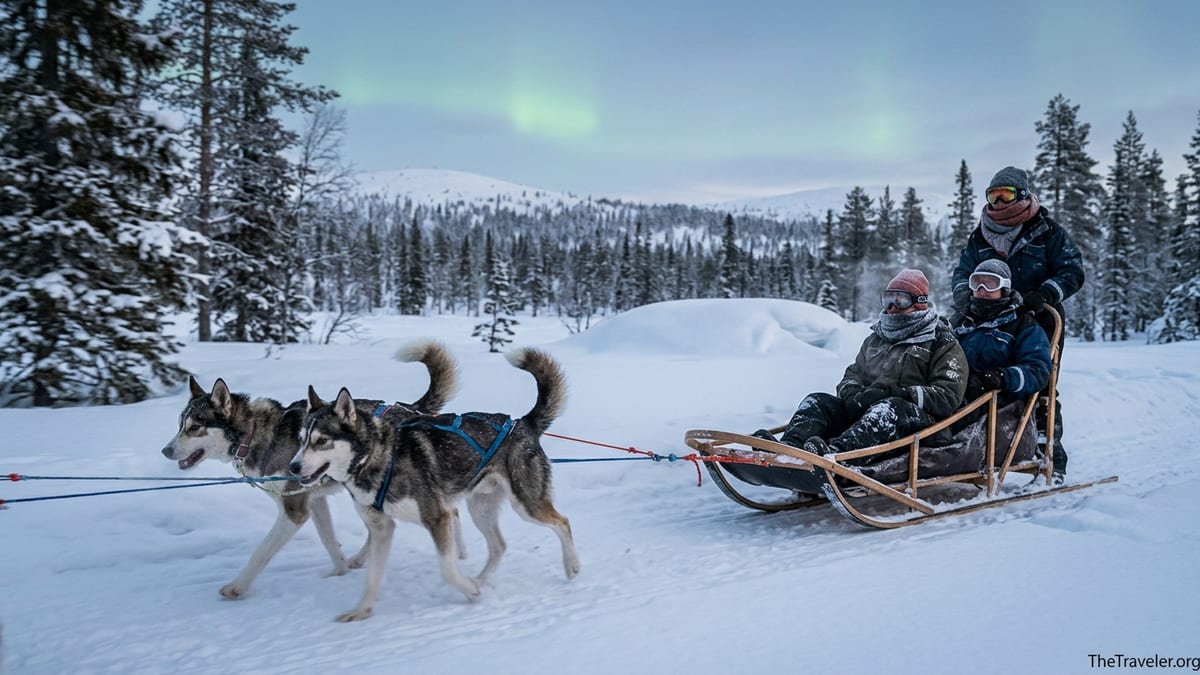
The Magnetic Appeal of a Husky Safari
Across Lapland, husky safaris regularly top post‑trip surveys and traveler reviews as the single best activity of a winter holiday. Local operators from Rovaniemi to Levi and Saariselkä report that many guests book a short introductory run and then immediately upgrade to a longer tour for later in their stay. Part of the appeal is that these experiences are multi‑sensory: you feel the speed as the sled glides over packed snow, you hear the dogs panting and the runners hiss, and you smell the clean, resinous air of spruce and pine forests. All of this combines into a vivid memory that is easy to relive and hard to replicate elsewhere.
In practical terms, a husky safari is also more hands‑on than many other Lapland activities. On a typical two to three hour kennel safari near Rovaniemi or Levi, guests drive the sled themselves for a substantial part of the route instead of simply being passengers. Operators like Bearhill Husky outside Rovaniemi or Wild Nordic around Levi describe how first‑time mushers learn basic commands, braking techniques and how to read the dogs before heading out onto dedicated trails. That sense of personal involvement helps transform the outing into an achievement rather than just a sightseeing trip.
There is also a strong emotional dimension. Many travelers arrive in Lapland with a childhood image of huskies racing across the Arctic. Meeting the dogs in real life – usually gentle, excitable Alaskan huskies bred for endurance rather than show‑ring looks – bridges that gap between fantasy and reality. Kennels such as Bearhill, Empyrean Husky in Levi or small family outfits like Pohjolan Huskies describe guests sitting in the snow after the tour, simply stroking their favorite dog and asking about its history, character and retirement plans. That connection often stays with people longer than a glimpse of the Northern Lights.
From Tourist Loop to Wilderness Journey
Not all husky experiences are equal, and the style you choose strongly shapes whether it becomes the highlight of your trip. In and around Rovaniemi, for example, there are short two to three kilometre circuits near Santa Claus Village that last less than 15 minutes. These quick loops are convenient for families rushing between activities, but many visitors later describe them as “a taster” rather than a true safari. You sit as a passenger, the guide drives, and the trail circles back quickly through a busy tourism zone.
By contrast, a standard self‑drive kennel safari of 6 to 10 kilometres, common with outfitters such as Bearhill Husky or Huskypoint near Rovaniemi, typically means 30 to 50 minutes on the sled and around two and a half hours door to door. Guests travel to a quieter kennel in the forest, are given proper thermal clothing, learn how to harness and steer, and then head out on trails that feel distinctly wilder. Slightly longer runs of 12 to 18 kilometres, offered by operators from Rovaniemi to Levi and Muonio, can provide 60 to 90 minutes of continuous sledding with moments where you see nothing man‑made on the horizon.
Further into the interior, destinations such as Muonio and Enontekiö specialize in full‑day and multi‑day expeditions, where husky sledding becomes a journey rather than an excursion. At large wilderness bases around Muonio, kennels with more than 200 dogs run overnight programs in which guests mush between simple cabins, eat local food around the fire and help feed or check the dogs each evening. Routes might cover 30 to 40 kilometres per day through frozen marshes, lakes and low fells, and mobile signal can be weak or non‑existent. Travelers who choose these trips often describe the feeling of being “off the grid” with the dogs as the moment their Lapland holiday truly begins.
Real‑World Costs and How Husky Safaris Fit a Lapland Budget
While prices vary between resorts and seasons, husky safaris typically sit in the middle of the Lapland activity price spectrum: more expensive than a simple reindeer sleigh ride, broadly comparable to snowmobiling and usually less than a glass‑igloo night. As of the 2025–2026 winter season, a standard 5 to 10 kilometre self‑drive safari near Rovaniemi, booked through an operator such as Safartica or a dedicated kennel, commonly costs in the region of 120 to 170 euros per adult, including transfers, guide, winter clothing and hot drinks.
Shorter passenger‑only rides of around 2.5 kilometres near Santa Claus Village are often advertised in the 45 to 80 euro range per adult, with discounts for children. These can be good for families with very young kids or travelers on a tight schedule but rarely deliver the depth of experience described by returning visitors as a highlight. At the other end of the spectrum, full‑day safaris of 20 to 30 kilometres can cost around 200 to 300 euros per adult, and multi‑day expeditions with overnights in wilderness cabins often range from roughly 800 to 1,500 euros per person depending on duration, group size and inclusions.
Crucially, many guests report that the perceived value of a good husky safari is high compared with other big‑ticket experiences. You are paying not just for the sled time, but for the year‑round care of the dogs, specialized guiding skills and limited group sizes. Ethical kennels usually cap groups at around 4 to 8 sleds per departure to avoid crowding the dogs and trails. In Rovaniemi, for example, some of the more welfare‑focused operators advertise small‑group departures that sell out quickly even outside peak Christmas weeks, precisely because travelers see them as worth planning around.
Why Husky Safaris Feel More Authentic Than Other Activities
Many Lapland activities are memorable, but husky safaris often stand out as more authentic. Snowmobile tours, for instance, can cover longer distances and provide an adrenaline rush, yet the experience is mediated by engines, noise and helmets. Reindeer sleigh rides offer deep cultural roots, especially in Sámi regions, but tourist versions are typically short and scripted. By contrast, husky safaris combine a tangible working tradition with active participation and long stretches of natural quiet where the loudest sound may be the sled runners on snow.
In areas like Inari and Saariselkä, some operators integrate soft cultural elements into their husky experiences, serving traditional stews or coffee by an open fire in a laavu shelter after the run. Yet the central focus remains the partnership between human and dog. You learn how the lead dog watches the trail, how wheel dogs do most of the heavy pulling and how each animal has a specific personality. Guides from kennels across Finnish Lapland frequently come from competitive mushing backgrounds, bringing stories of long‑distance races and wilderness expeditions that give context to what you are doing on a relatively short tourist trail.
Another factor is the setting. Many husky kennels are located well outside resort centers, at the end of forest roads where light pollution is low and the snow stays crisp. An operator such as Arctic Borealis Huskies, on the border of Rovaniemi and Ranua, runs safaris that begin right from a rural kennel gate, quickly entering a landscape of frozen lakes and spruce forests. In the Levi region, small kennels like Empyrean Husky emphasize spending unhurried time on the farm as well as on the sled, letting guests see daily life rather than a staged performance. These details help foster a sense that you are glimpsing real Arctic routines.
Meeting the Dogs: Ethics, Welfare and Choosing the Right Kennel
As husky safaris have grown in popularity, questions around animal welfare have become more prominent. Savvy travelers increasingly ask how many days per week dogs work, what happens when they retire and whether the kennel has external welfare certification. In Finnish Lapland, several operators now highlight third‑party audits, transparent retirement plans and small pack sizes as a point of differentiation. Rovaniemi‑area kennels such as Bearhill Husky publicly discuss their off‑season routines and rehoming programs, while Empyrean Husky in Levi positions itself around the slogan “where dogs matter” and details its care standards.
From a visitor’s perspective, there are a few practical signals to look for when choosing a safari that you can feel good about. Ethical operators limit sled loads to safe levels, typically pairing two adults per sled plus perhaps a small child, and will openly decline bookings if weight or health factors could compromise dog welfare. They schedule regular rest days, avoid running in unsafe weather and allow guests to meet and interact with the dogs calmly before and after the tour. Smaller family kennels like Pohjolan Huskies, based in wilderness villages, often emphasize that the dogs live on site year‑round and that guiding staff stay for multiple seasons, building long‑term relationships with each animal.
Academics at the University of Lapland and other Nordic institutions have begun studying husky tourism as part of human‑animal relations in business, noting that responsible kennels increasingly see the dogs as stakeholders rather than equipment. While that language may sound theoretical, it has practical consequences for travelers. It shapes everything from how many tours a kennel runs per day to whether they limit operations in very mild winters. When guests ask informed questions and book with operators that prioritize welfare, they help reinforce these better practices and ensure that husky safaris can remain a sustainable highlight for future visitors.
Designing Your Trip Around a Husky Safari
Because husky safaris are so frequently remembered as the best part of a Lapland trip, it can make sense to plan around them rather than treat them as an afterthought. Availability in peak weeks from mid‑December to early January and around school holidays can be tight, especially for small kennels that keep group sizes low. Travelers staying in Rovaniemi often find that quality half‑day tours with respected operators sell out weeks in advance, while more commercial tourist loops may still have last‑minute space. Booking the safari first, then building other activities around that date, reduces the risk of compromising on the experience.
Your base also matters. Rovaniemi offers the easiest access, with multiple kennels reachable within 30 to 45 minutes’ drive and plenty of package tours that bundle husky rides with Santa Claus Village visits. However, those who prioritize a quieter environment often prefer Levi, Ylläs, Muonio, Inari or Saariselkä. In Muonio, for example, husky farms sit near vast areas of protected wilderness, so trails feel more remote even on relatively short runs. Around Saariselkä and Inari, a safari might cross frozen lakes with views of low fells, and the darker skies increase the chance of catching the Northern Lights on an evening departure.
Timing within the season influences the character of your safari. Early winter, from late November into December, can bring limited daylight but fresh powder and magical blue hours, especially on morning tours. January and February often offer the most reliable snow and colder, drier conditions, which many mushers consider ideal for the dogs. March and early April bring longer days, stronger sun and more comfortable temperatures for families with children, though trails may be slightly softer. Some kennels also run autumn “cart rides” on wheels before the snow arrives, letting guests experience the dogs’ enthusiasm even in the shoulder season.
How a Husky Safari Interacts With Northern Lights Dreams
For many travelers, the original motivation for a Lapland trip is the Northern Lights, but it is common to hear people say afterward that the husky safari eclipsed even a good aurora display. One reason is control. The aurora is unpredictable, and several clear nights in a row can still yield only faint activity. In contrast, a husky safari is a tangible experience that reliably happens at a specific time and place. Travelers who build itineraries solely around aurora chasing often come home remembering the waiting; those who balance that with daytime husky tours tend to feel they have lived the Arctic rather than merely watched the sky.
That said, combining the two can create exceptional memories. Some kennels and tour companies in Rovaniemi, Levi and Saariselkä offer evening or night safaris where, if conditions allow, you might see the Northern Lights from the sled. These tours usually begin in late afternoon, when there is still some light for photography, then continue into darkness. Because husky teams run most comfortably in colder temperatures, winter nights can be ideal. Guides typically adjust routes to include open sections, such as frozen lakes or marshes, where the sky is wide if the aurora appears.
Even without Northern Lights, the atmosphere of a night‑time husky safari is distinctive. Headlamps pick out ice crystals sparkling on tree branches, and the beam of the guide’s snowmobile or lead sled creates long shadows over the snow. Temperatures can feel far lower than the daytime forecast, so operators issue heavy overalls, boots and mittens and recommend additional layers. Many guests describe the shared ritual of warming up afterward in a kota hut or cabin, sipping hot berry juice around a small fire, as the moment that cements the experience as the emotional high point of their trip.
The Takeaway
When you look at what makes a holiday memorable, it is rarely the number of sights ticked off a list. Instead, it tends to be the one or two experiences that combined physical sensation, emotional connection and a sense of place. Husky safaris in Lapland deliver all three. You actively participate, steering your own sled and working with the dogs. You engage emotionally by meeting individual animals and seeing the care that goes into their training and welfare. And you gain a direct, unfiltered encounter with the Arctic landscape that goes far beyond what is visible from a resort window or tour bus.
For travelers planning a first Lapland trip, treating the husky safari as a central pillar rather than an optional extra can shift the entire tone of the journey. Choosing an operator that prioritizes animal welfare, small group sizes and meaningful time on the sled increases the chance that this will be the moment you talk about for years to come. Northern Lights may or may not cooperate, but the dogs almost always do. That reliability, combined with the quiet intensity of gliding through snow behind a team that loves to run, explains why so many visitors leave Lapland saying that their time with the huskies was the true highlight of their Arctic adventure.
FAQ
Q1: How long is a typical husky safari in Lapland?
Most first‑time visitors choose a 5 to 10 kilometre self‑drive safari, which usually means 30 to 50 minutes on the sled and about 2 to 3 hours total including transfers, clothing, instruction and kennel time.
Q2: Is husky sledding suitable for children and older travelers?
Yes, many operators welcome children and older guests, but they may recommend passenger‑only rides or guided sleds for young kids, people with mobility issues or anyone uncomfortable driving; age limits and policies vary by kennel, so checking in advance is important.
Q3: Do I need to be very fit to drive a husky sled?
Moderate fitness is usually enough, as most of the work is done by the dogs, but you will need to balance, brake and occasionally help push on uphill sections, so people with serious back, knee or heart problems should discuss suitability with the operator beforehand.
Q4: What should I wear on a husky safari?
Layered clothing works best: thermal underwear, a warm mid‑layer, thick socks, hat and gloves; reputable operators then provide insulated overalls, boots and mittens designed for Arctic conditions, so you can stay warm even at temperatures well below freezing.
Q5: Are husky safaris ethical?
They can be, provided you choose a kennel that prioritizes dog welfare, limits working hours, maintains proper rest and retirement plans and is transparent about care practices; asking about certifications, group sizes and how often each dog runs is a good starting point.
Q6: Can I combine a husky safari with seeing the Northern Lights?
Yes, several operators offer evening or night‑time husky tours during the main aurora season from roughly late August to April, and while the lights are never guaranteed, being out on a sled in dark, open areas gives you a better chance if the sky is clear and the solar activity is favorable.
Q7: How far in advance should I book a husky safari?
For peak weeks around Christmas, New Year and school holidays, it is wise to book several months ahead, especially with small kennels that keep group sizes low; outside these periods, a few weeks’ notice is often enough, but last‑minute spaces can be limited in popular resorts.
Q8: What happens to the dogs when they retire?
Responsible kennels have clear retirement plans, which may include keeping older dogs on site as “greeters,” moving them to lighter work such as short children’s rides or rehoming them with staff and trusted local families; you can ask about this before booking if it is important to you.
Q9: Can I take photos while driving the sled?
Guides generally advise drivers to focus on steering with both hands during motion and to stop the sled, apply the brake and then take photos, or to let the passenger handle photography so that safety and control are never compromised.
Q10: Which Lapland areas are best for husky safaris?
Rovaniemi offers convenience and many operators, Levi and Ylläs combine skiing with good kennels, while Muonio, Inari and Saariselkä appeal to those seeking quieter, more wilderness‑oriented trails and a greater sense of remoteness.