


More news on this day
Drivers heading between Colorado’s mountain communities and Denver International Airport should plan for weekend slowdowns later this month, as extended work on Interstate 70 near Wheat Ridge is set to create detours and delays that can ripple across the region’s main east-west corridor.
Get the latest news straight to your inbox!
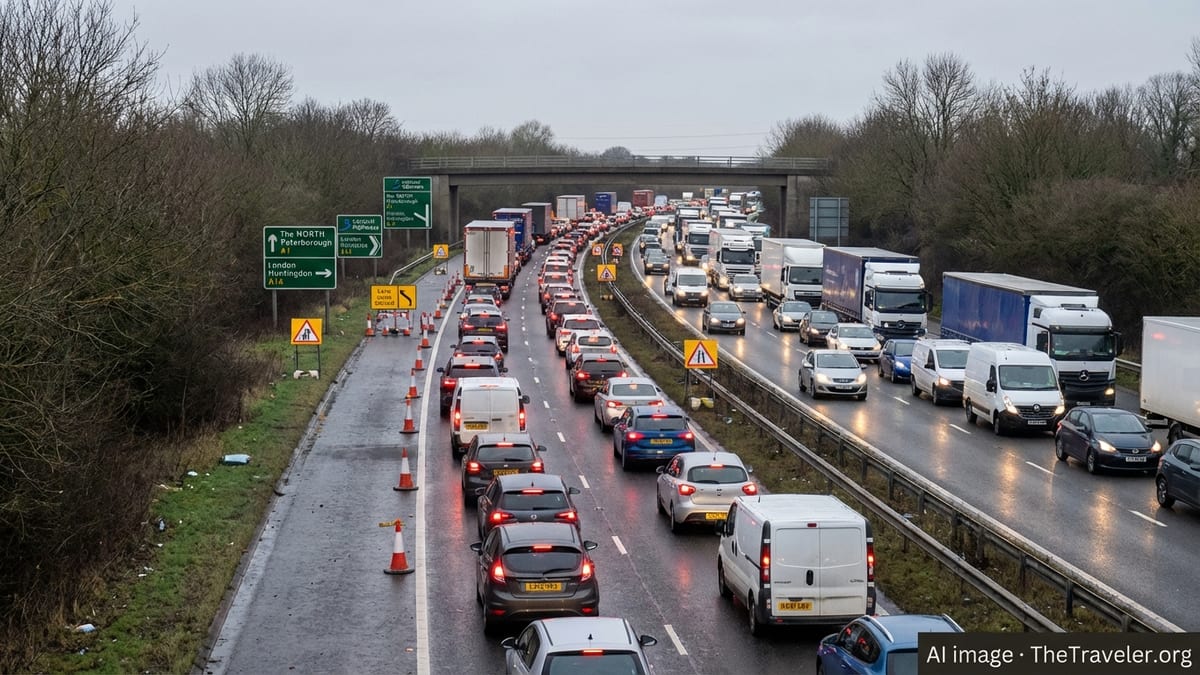
Two extended weekend closures set for I-70 near Kipling Street
Publicly available information from the Colorado Department of Transportation shows two extended weekend closures are scheduled to support bridge repairs on I-70 over Kipling Street (Colorado Highway 391) in Jefferson County. The work focuses on critical repairs on both the eastbound and westbound I-70 bridges at the Kipling Street crossing.
The first closure targets westbound I-70, beginning at 7 p.m. Friday, Sept. 18, 2026, and running until 6 a.m. Tuesday, Sept. 22, 2026. The second targets eastbound I-70, from 7 p.m. Friday, Sept. 25, 2026, until 6 a.m. Tuesday, Sept. 29, 2026.
Coverage and project materials indicate each closure is planned as an extended, continuous work window, with construction activity expected around the clock until the roadway reopens. Planning documents also indicate a backup weekend has been identified if weather or other issues delay completion: 7 p.m. Friday, Oct. 2, through 6 a.m. Tuesday, Oct. 6, 2026.
What travelers should expect: ramp restrictions, detours, and 30-minute-plus delays
During the closures, I-70 traffic is scheduled to be routed through the Kipling Street interchange using on- and off-ramps as temporary travel lanes before returning to the interstate. Because those ramps are expected to function as through lanes, normal access to Kipling Street from I-70 is scheduled to be unavailable during the closure windows.
Reports indicate Kipling Street will be closed in both directions at the interchange during the work. A signed motorist detour is expected to route local traffic via West 44th Avenue, Ward Road, West 58th Avenue and Ralston Road, and Wadsworth Boulevard. A separate signed bicycle and pedestrian detour is expected to use Garrison Street.
Published guidance indicates drivers should anticipate delays of 30 minutes or more and consider alternate routes when possible. Even for travelers who are not headed directly through Wheat Ridge, congestion in this area can spread quickly, particularly during weekend peak periods when mountain traffic and airport traffic overlap.
Why this matters for airport trips and mountain returns
I-70 and Peña Boulevard form the backbone of many trips between the Front Range and Denver International Airport, especially for travelers coming from mountain communities who aim to reach the terminal without cutting through downtown streets. When I-70 slows near the western metro area, the effect can extend beyond the work zone, pushing more drivers onto surface streets and impacting travel-time reliability for flights.
At the same time, the airport approach itself has ongoing construction activity. Denver International Airport materials describe outbound Peña Boulevard traffic west of Gun Club Road being shifted around a work zone, with that configuration expected to remain in place until the end of November 2026. That means some travelers could face a one-two punch: congestion on I-70 closer to the foothills and a constrained segment on Peña Boulevard closer to the airport corridor.
For weekend itineraries, the highest-risk scenarios tend to be mountain-to-airport runs timed tightly around flight departures, and airport-to-mountains drives that start during afternoon or evening arrival banks. When an I-70 bottleneck is layered on top of normal weekend recreation traffic, the buffer travelers typically rely on can disappear quickly.
Direction-specific impacts: what changes on each closure weekend
The westbound closure weekend is expected to affect travelers leaving Denver and heading toward the foothills and mountain towns. Project information indicates the Wadsworth Boulevard northbound and southbound on-ramps to westbound I-70 are scheduled to be closed during that westbound closure period, with a detour set via West 44th Avenue to Ward Road.
The eastbound closure weekend is expected to hit mountain-return traffic most directly, including drivers aiming to connect with eastbound I-70 toward Denver and the I-70 interchange with Peña Boulevard for airport access. Published materials indicate the Ward Road on-ramp to eastbound I-70 is scheduled to be closed during the eastbound closure period, with a detour set via West 44th Avenue to Wadsworth Boulevard.
Travelers should also be prepared for heavier volumes on parallel routes as drivers attempt to bypass the work zone. Depending on timing, that can include increased pressure on surface arterials in Wheat Ridge, Arvada, and neighboring areas, and longer queues feeding into I-70 approaches on either side of the closure limits.
Planning tips for the weekend: timing, alternates, and real-time updates
For travelers with flights, the most practical approach is to build extra time into the drive and avoid arriving at the airport during the same windows that typically see mountain traffic peaks. When possible, scheduling departures earlier in the day or adding a larger buffer between hotel checkout and terminal arrival can reduce exposure to sudden backups near interchanges and detour points.
Drivers can also consider shifting their route choices based on the direction of travel and where they are starting. For some itineraries, remaining on surface streets around the closure area before rejoining I-70 beyond the work zone may be more predictable than entering the interchange and waiting through ramp-channelized traffic. Travelers should keep in mind that detour routes can become congested as well, especially when many drivers make the same choice.
Road-condition and travel-time tools are expected to be especially useful during these weekends. CDOT’s statewide traveler-information resources, including its trip-planning and road-condition platforms, are designed to show real-time impacts, which can help drivers decide whether to delay departure, reroute, or pause before committing to the corridor.