


I thought I understood luxury hotels. I knew the soft touchpoints at Four Seasons, the sleek minimalism at a newer Mandarin Oriental, the exuberance of a W. But it was only after a string of stays at Ritz-Carlton properties over the past year that I realized this brand plays a very different game. The surprise wasn’t the chandeliers or the marble. It was the way the entire experience felt choreographed around one old-fashioned idea: personal dignity.
Get the latest updates straight to your inbox!
The Moment It Feels Different: Arrival and First Impressions
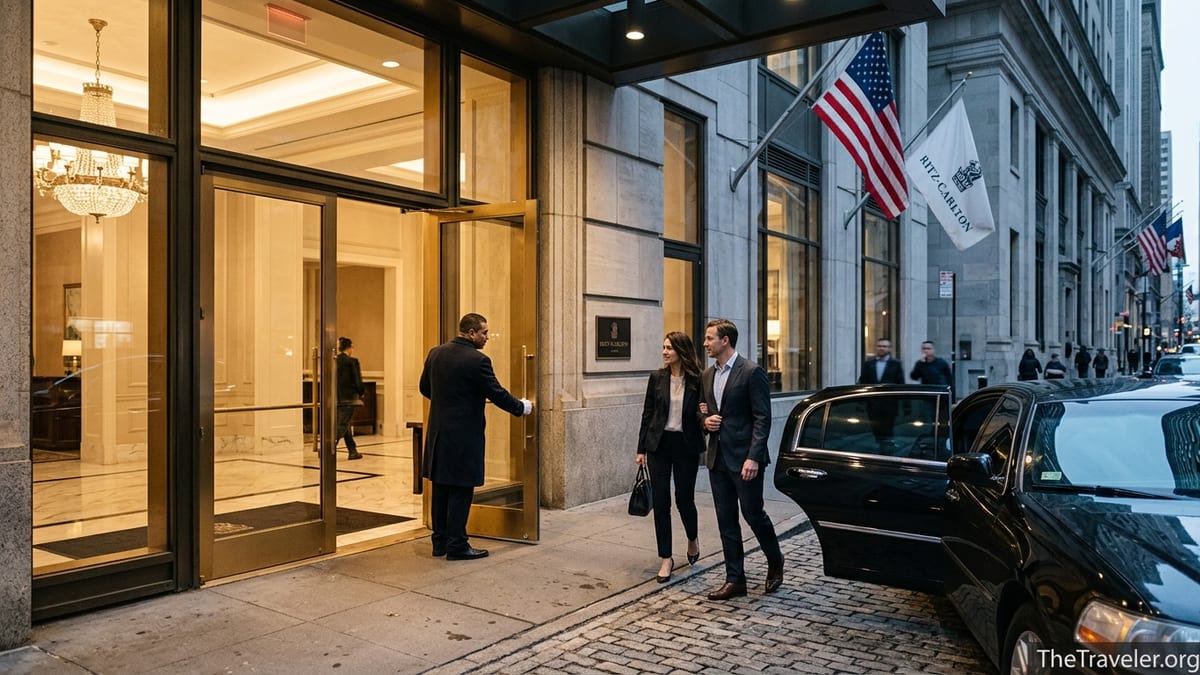
The difference at Ritz-Carlton reveals itself before you even reach the front desk. At The Ritz-Carlton, Georgetown in Washington, D.C., arrival happens through a cobblestoned drive framed by a converted industrial smokestack. There is no blaring background music, no attempt to be a social club. A doorman steps forward, makes eye contact, uses your name if it has been shared in advance, and the tone is immediately more ceremonial than at many contemporary luxury hotels.
Compare this with a typical urban luxury check-in, where the lobby is often designed to double as a co-working space or cocktail lounge. At a trendy five-star in New York, I watched guests queuing at a communal check-in counter while a DJ set competed with the front desk staff. At Ritz-Carlton, the lobby is not a stage. It is closer to a reception salon, often with classical music at low volume and staff who move with a sense of deliberate calm.
This formality is not about stiffness. It is about signaling that, from the first interaction, the guest is the protagonist. At The Ritz-Carlton, Tokyo, for example, staff often step out from behind the desk to present room keys in both hands. It is a small, almost old-world gesture that stands in contrast to the tablet-driven, “help yourself” aesthetic emerging at many luxury competitors. In practical terms, it slows the pace just enough that arrival feels like a welcome rather than a transaction.
Even the scent profile and lighting at many Ritz-Carlton properties lean toward understated elegance. Where other brands may spotlight edgy artwork, bold colors, and nightclub-level illumination, Ritz-Carlton typically opts for soft neutral palettes and warm lighting that flatter travel-worn faces rather than Instagram feeds. You register not just that you have arrived at a high-end hotel, but that you have stepped into a more formal, almost ritualized idea of hospitality.
“Ladies and Gentlemen”: A Service Philosophy You Can Feel
Most luxury hotels talk about service. Ritz-Carlton operates on a codified philosophy you can actually feel in day-to-day interactions. The brand’s long-standing credo, “We are Ladies and Gentlemen serving Ladies and Gentlemen,” is more than a marketing line; it shapes how employees speak to each other, not just to guests. In practice, that means conversations at the front desk or in the corridor are often surprisingly polished, even when staff think guests are out of earshot.
Contrast this with other top-tier brands where service may be technically excellent yet more casual. At a resort under a competing luxury flag in Hawaii, for instance, breakfast service was warm and chatty, with staff referencing their own weekend plans and joking about local gossip. It felt friendly, but it also felt like entering someone else’s social circle. At The Ritz-Carlton, Kapalua on Maui, the tone during breakfast is noticeably more reserved. Staff remember a guest’s coffee order and the fact that you prefer papaya over pineapple, yet they rarely turn the interaction back toward themselves.
This formality becomes especially apparent in how Ritz-Carlton manages mistakes. The brand is known in hospitality circles for empowering employees to resolve guest issues without climbing a chain of approvals. While the exact details evolve over time, the underlying idea is consistent: front-line staff are trusted to make things right in the moment. If your in-room espresso machine at The Ritz-Carlton, Naples is leaking, the housekeeper who discovers it may quietly arrange a replacement and send up complimentary coffee drinks, rather than simply logging a maintenance ticket and moving on.
In an era where some luxury hotels lean hard on technology and centralized apps, Ritz-Carlton’s approach can feel almost analog. Room preferences are remembered across stays where possible. A guest who mentions during a stay at The Ritz-Carlton, Tokyo that they are training for a marathon may find route cards waiting in their room at a later stay in Boston or San Francisco. That continuity between properties, driven by human notes and internal communication, is where the brand’s philosophy shows its real weight.
Consistency vs. Personality: How Ritz-Carlton Compares to Other Luxury Names
Ritz-Carlton occupies a distinctive position among global luxury brands. It shares price territory with names like Four Seasons, Mandarin Oriental, and Rosewood, yet the feel is subtly different. Frequent travelers often describe Four Seasons as more residential and relaxed, Mandarin Oriental as sleek and Asian-influenced, and Rosewood as boutique and sense-of-place driven. Ritz-Carlton, by contrast, leans into classic prestige: high ceilings, polished marble, and a sense that you are in an institution rather than a design experiment.
Take a simple city comparison. In Madrid, travelers deciding between a Ritz-heritage property under another brand and a newer luxury competitor often talk about the difference between staying in a grand hotel and staying in an upscale lifestyle property. The Ritz-influenced hotel delivers formal breakfast in a light-filled dining room, with crisp table linens and a hushed tone. The competitor may offer a fashionable rooftop brunch with a DJ and small plates. Both are luxurious, but they appeal to very different definitions of what luxury should feel like.
This plays out across continents. At The Ritz-Carlton, Hong Kong, one of the highest hotels in the world, the drama comes from altitude and views, but the public spaces still read as quietly traditional: dark woods, deep carpets, and attentive yet unobtrusive staff. A few subway stops away, a design-forward competitor might feature exposed concrete, bold artwork, and casual staff uniforms that borrow from streetwear. Travelers moving between these worlds in the same trip quickly notice that Ritz-Carlton is far less interested in being fashion-forward than in being timeless.
There is a trade-off. Because Ritz-Carlton is part of a major global portfolio, experiences can vary by property. Urban hotels like The Ritz-Carlton, Chicago or The Ritz-Carlton, Los Angeles feel quite different from leisure resorts in destinations such as Lake Tahoe or the Cayman Islands. Yet even when the architecture and amenities differ, the underlying ritual of service tends to feel more consistent than at many design-led luxury brands, where staff culture can shift dramatically from one city to another.
Inside the Room: Traditional Luxury in a Trend-Driven Era
Step into a standard guest room at many Ritz-Carlton properties and another important difference emerges: the aesthetic. Where some of the most talked-about luxury brands now champion minimalism, dark color palettes, or loft-style open bathrooms, Ritz-Carlton rooms often skew toward classic comfort. Think plush carpeting instead of bare concrete, generous writing desks instead of sculptural side tables, and fully enclosed bathrooms with marble vanities and deep soaking tubs.
At The Ritz-Carlton, New Orleans, for example, even entry-level rooms feature heavy draperies, upholstered headboards, and a palette of creams and muted blues. The design may not be the most avant-garde in the city, but it instantly reads as a retreat. Contrast that with a chic rival where the bed may be separated from the bathroom by only a glass partition and where storage is sacrificed for clean lines. Many travelers find Ritz-Carlton’s more traditional approach easier to live in for several nights, especially on business trips when they need a reliable workspace and generous lighting.
Amenities tell a similar story. While newer luxury brands might emphasize bluetooth speakers, in-mirror televisions, and mood lighting systems controlled entirely by tablet, Ritz-Carlton tends to focus on tactile quality: high-thread-count linens, weighty bath towels, and robes that feel more country club than spa lounge. The minibar might be less of a curated local-artisan display and more of a classic lineup of Champagne, top-shelf spirits, and international snacks. For some guests, this restraint is a relief in a market obsessed with novelty.
Pricing typically aligns with other marquee luxury names in each destination. In major U.S. cities, lead-in rates at Ritz-Carlton properties often hover in the same bracket as Four Seasons and Mandarin Oriental, with occasional shoulder-season deals that bring them slightly below the very top-tier competitors. While these rates shift constantly, the important point is that Ritz-Carlton is not trying to undercut its peers. Instead, it offers an alternative definition of what a well-spent 800 dollars or 1,000 dollars per night can feel like: less trend-focused, more classically indulgent.
Stories You Hear in the Hallway: How Personalization Shows Up
What ultimately convinced me that Ritz-Carlton operates differently were the stories, both my own and those swapped in lounges and airport terminals. A corporate traveler returning to The Ritz-Carlton, Dallas after a year away mentioned to a front desk agent that she had once celebrated a promotion there with a specific Texas red wine. When she returned from meetings that evening, a bottle of the same label was waiting in her room with a note: “Welcome back to where you celebrated your last big win. Here’s to the next one.”
At a beachfront Ritz-Carlton in Florida, a family arrived to discover that their toddler’s favorite stuffed animal had been left on the previous night’s flight. The concierge team not only contacted the airline but also placed a small plush toy from the hotel boutique on the child’s pillow with a handwritten card introducing it as a “new travel friend” for the night. By morning, the airline had located the original toy, but the parents were most struck by how quickly the hotel had stepped in to solve the emotional part of the problem.
These gestures are not unique in the luxury world. Other brands excel at personalization too, especially on the ultra-luxury end. What felt distinct at Ritz-Carlton was how consistently front-line staff seemed empowered to act on small pieces of information without waiting for managerial approval. A housekeeper noticing open guidebooks on hiking in Colorado might arrange for trail maps to be placed in the room at The Ritz-Carlton, Denver. A bartender overhearing an anniversary conversation could quietly send out a small dessert with “Congratulations” scripted in chocolate, without adding it to the bill.
Critically, these touches are rarely inflated into grand performances. Unlike some lifestyle properties that announce surprises tableside or on social media, Ritz-Carlton staff tend to step back once the gesture lands. The pleasure for the guest is in realizing someone was paying close attention, not in becoming part of a brand moment. That restraint feels increasingly rare in luxury hospitality, where experiences are often designed with shareability in mind.
When Things Aren’t Perfect: Imperfections and Critiques
No brand, even in the top tier, is immune to criticism. In recent years, frequent travelers and loyalty members have debated whether some Ritz-Carlton properties, especially older ones within large cities, have kept pace with newer competitors. Common complaints include dated room décor, maintenance issues such as worn carpeting, or limited elite benefits compared with independent luxury brands that include breakfast or resort credits as standard.
Guest feedback from busy resort locations tells a similar story. At peak periods, some travelers report slower responses to requests, housekeeping timing challenges, or food and beverage pricing that feels aggressive relative to quality. A stay at a tropical Ritz-Carlton where the posted nightly rate exceeds 1,000 dollars can feel less than flawless if pool loungers are hard to secure after 10 a.m. or if dining venues are overwhelmed at sunset.
What remains notably strong, however, is the expectation that when guests speak up, staff will attempt to resolve issues quickly and respectfully. While a worn piece of furniture cannot be replaced overnight, it is not unusual for a Ritz-Carlton front office manager to adjust charges, offer a room move, or extend late checkout in response to a well-founded complaint. That culture of recovery, more than the physical product itself, is what keeps many long-time guests loyal even as competition intensifies from newer brands like Bulgari Hotels, Rosewood, and Aman in certain markets.
For travelers deciding where to spend their money, understanding these nuances is key. Ritz-Carlton is rarely the edgiest hotel in town. In some cities, it may not even be the newest or the most design-forward. But for guests who value a particular kind of dignity in how service is delivered, the brand’s strengths can outweigh its occasional aesthetic shortcomings.
How to Decide if Ritz-Carlton Is the Right Kind of Luxury for You
If you are planning a trip and considering whether to book a Ritz-Carlton or a competitor like Four Seasons, Mandarin Oriental, or a well-regarded independent hotel, start by asking what kind of luxury you want this trip to embody. If you are seeking a sanctuary where formality, predictability, and a strong sense of ceremony matter, Ritz-Carlton is likely to resonate. The experience is especially well-suited to milestone celebrations, multigenerational family trips, and business travel where you want staff to anticipate needs without inserting themselves into your day.
On the other hand, travelers who crave bold design, buzzy social spaces, or deeply immersive local aesthetics may find more of what they are looking for at brands that build each property as a unique statement. In cities like London, Paris, and Hong Kong, independent grand hotels and newer ultra-luxury names increasingly compete head-to-head with Ritz-Carlton, often offering larger spa complexes, destination restaurants with star chefs, or more overtly curated cultural programming.
One practical approach is to look beyond the brand name and study individual properties. In markets such as New York, Tokyo, and Dubai, the Ritz-Carlton may be the most traditional option at the top of the market. In smaller destinations, a Ritz-Carlton resort might represent the area’s only fully international-standard luxury choice. Travelers with loyalty points in the Marriott ecosystem may find that a points redemption or elite upgrade tips the balance toward Ritz-Carlton, while those booking entirely with cash might compare packages that include airport transfers, breakfast, or spa credits across brands.
In the end, what surprised me most was not that Ritz-Carlton is luxurious, but that its version of luxury feels proudly out of step with some of the prevailing trends. It is less about spectacle, more about steadiness. If you are used to equating the “best” hotel with the flashiest lobby or the most Instagrammable pool, a stay here may reframe what high-end travel can feel like.
The Takeaway
Ritz-Carlton does not try to be all things to all luxury travelers. Instead, it focuses on a tightly defined vision: a world where service is formal but warm, where staff are empowered to solve problems quietly, and where the rituals of hospitality still matter. Marble, chandeliers, and skyline views are easy to copy. What sets this brand apart is the human choreography behind the scenes.
For some travelers, particularly those who prefer informality, hyper-local design, or cutting-edge amenities, this approach may feel restrained, even old-fashioned. For others, especially frequent travelers who are tired of performative cool, the predictability and graciousness of Ritz-Carlton can feel like a relief. The surprise is not that Ritz-Carlton is luxurious, but that in a crowded field of five-star names, it still manages to feel distinct.
The next time you scroll through hotel options for a big trip, look at Ritz-Carlton not just as another dot on the map but as a deliberate choice of atmosphere. If the idea of being quietly looked after by “Ladies and Gentlemen” appeals more than being seen in the lobby of the latest hotspot, you may find, as I did, that this venerable name in hospitality has a few unexpected lessons left to teach about what luxury can mean.
FAQ
Q1. Is Ritz-Carlton more formal than other luxury hotel brands?
Yes, generally. Ritz-Carlton leans into a more traditional, ceremonial style of service and design compared with many modern luxury brands, which often feel more casual or lifestyle oriented.
Q2. How do Ritz-Carlton prices compare to Four Seasons or Mandarin Oriental?
In major cities and resort destinations, base rates at Ritz-Carlton usually sit in a similar range to Four Seasons and Mandarin Oriental, though exact pricing varies widely by location and date.
Q3. Are all Ritz-Carlton hotels at the same luxury level?
No. Like most large brands, quality and style can vary by property and age. Newer or recently renovated Ritz-Carlton hotels tend to feel more contemporary than some older urban locations.
Q4. Is Ritz-Carlton a good choice for families with children?
Often yes. Many properties offer kids’ clubs, connecting rooms, and family-friendly pools, while still maintaining the formal service style that defines the brand.
Q5. What kind of traveler will enjoy Ritz-Carlton the most?
Travelers who appreciate classic interiors, calm public spaces, and attentive but discreet service typically enjoy Ritz-Carlton, whether on business trips or special-occasion vacations.
Q6. Do Ritz-Carlton hotels feel connected to local culture?
It depends on the property. Some incorporate local art, flavors, and rituals, but overall the brand emphasizes a consistent sense of classic luxury more than highly localized design.
Q7. How does Ritz-Carlton handle guest complaints or problems?
Staff are generally empowered to resolve issues quickly, with solutions such as room moves, adjustments, or thoughtful gestures, often without lengthy approval processes.
Q8. Are Ritz-Carlton hotels suitable for remote work or business travel?
Yes. Rooms usually feature comfortable desks, ample lighting, and reliable internet, and many properties have business centers and quiet lounges ideal for remote work.
Q9. Does staying at Ritz-Carlton provide good value for money?
Value is subjective. For travelers who prioritize dignified service and classic comfort over trend-driven design, the experience often feels worth the premium price.
Q10. Should I choose Ritz-Carlton for a honeymoon or anniversary trip?
Ritz-Carlton can be an excellent choice for milestone trips, particularly if you want a sense of occasion, personalized touches, and a calm, polished atmosphere.