


Flying into Tokyo Narita Airport, I thought I knew what to expect: a big, slightly aging international hub that most travelers treat as a stepping stone to the city. Instead, my recent connection through Narita turned into a crash course in how different one airport can feel from another. From unexpectedly calm security lines to a capsule hotel tucked beside the terminal, Narita kept surprising me in ways both practical and oddly charming.
Get the latest updates straight to your inbox!
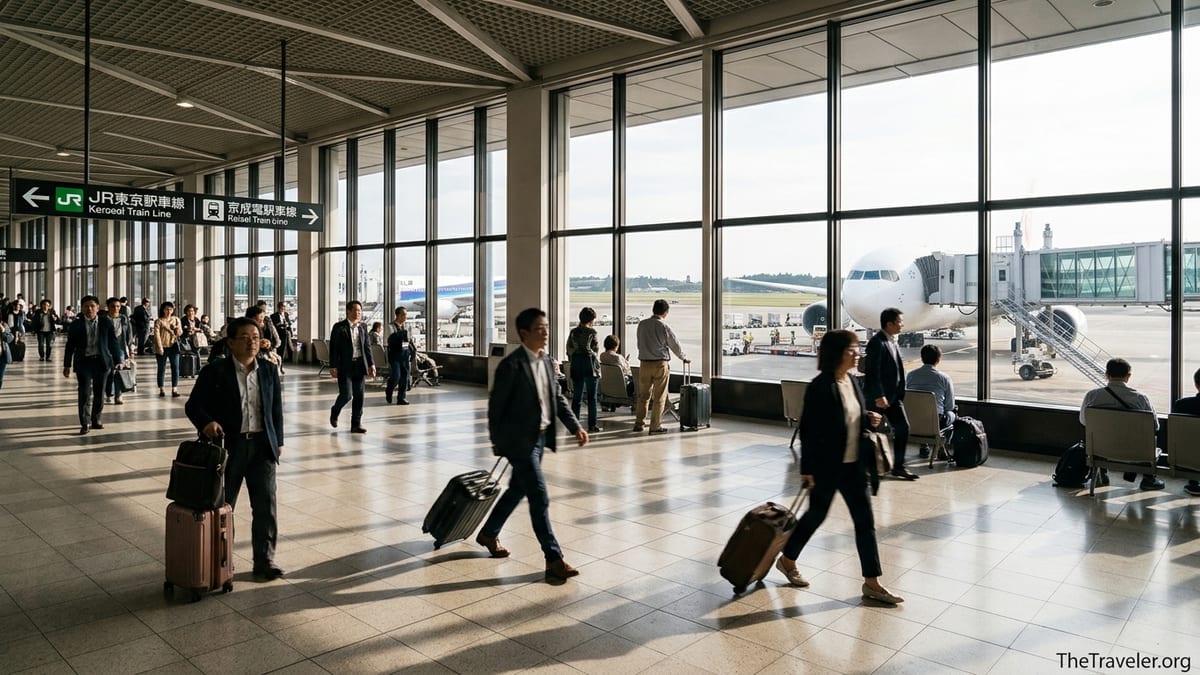
The First Surprise: Calm After a Long-Haul Storm
My flight from the United States landed in the early afternoon, the classic long-haul zombie hour when most airports feel chaotic. At Narita, I braced for a crush at immigration and a long shuffle through crowded corridors. Instead, Terminal 1 felt almost measured. Lines were steady but not overwhelming, and signage in English, Japanese, and often Chinese and Korean helped funnel passengers in a way that felt organized rather than hectic.
Immigration officers worked quickly but politely, with a level of quiet efficiency that stood out after overnight turbulence and cabin noise. Even the fingerprint and photo booths were clearly marked and well staffed. I have waited longer at smaller European airports on a random Tuesday; at Narita, I was through passport control in roughly 25 minutes, including the time I spent double-checking that I had not filled out the wrong form.
The calm extended into customs. Luggage carousels had large overhead displays in multiple languages, and staff moved through the area guiding passengers with unobtrusive gestures rather than whistles or shouting. After a nine‑plus hour flight, the lack of stress was its own kind of culture shock. Narita might not have the newest terminal interiors in Asia, but it delivers something more valuable to tired travelers: predictability.
What also surprised me was the sound level. Even with multiple wide‑body arrivals, there was no blaring music or looping video ads turned up to maximum volume. Announcements were clear but not constant, and the overall atmosphere was closer to a quiet train station than a typical big‑city hub. You notice it most when you stop walking and realize you are not shouting to be heard.
Getting Around: A Three-Terminal Puzzle That Mostly Works
On paper, Narita’s layout sounds intimidating: three separate terminals, multiple levels, and different train stations serving different buildings. In reality, navigating it was easier than I expected, especially with color-coded signage and repeated English labels. Terminal 1 and Terminal 2 both have direct rail links in their basements, while Terminal 3, the low-cost carrier hub, sits a short walk or shuttle ride from Terminal 2.
I had to move from Terminal 1 to meet a friend arriving on a low-cost flight into Terminal 3. What looked daunting on the map turned out to be a simple route: follow the “Terminal 2 / 3” arrows, ride a clearly marked free shuttle bus, then walk the final part under a covered walkway lined with painted running-track stripes on the ground. The whole transfer took about 15 minutes at a relaxed pace. Compared with sprawling airports where airside and landside transfers can easily devour an hour, Narita’s system is surprisingly straightforward once you commit to following the signs.
The terminals themselves are distinct in character. Terminal 1 feels like the traditional international gateway, with legacy carriers and long‑haul flights. Terminal 2 mixes full-service and some oneworld airlines, along with direct access to the Nine Hours capsule hotel complex. Terminal 3 is more utilitarian, catering to budget airlines, but still has a selection of convenience stores and casual eateries that put many Western low-cost terminals to shame.
The real surprise is how compact each building feels relative to its traffic. You can walk from check‑in to security in a matter of minutes, and the distances from security to most gates are manageable, especially compared with mega‑hubs where a 25‑minute power walk is normal. It still pays to check your departure gate early, but Narita is one of the few major airports where I did not feel compelled to sprint as soon as my boarding pass appeared.
Transit Shock: So Many Ways Into Tokyo
The biggest surprise came when I stepped into the arrivals hall and started looking for transport into the city. Many airports offer a train and a bus. Narita offers a small menu that reads more like a strategy game: Narita Express and other JR trains, the Keisei Skyliner and Sky Access services, slower but cheaper local trains, multiple airport limousine buses, and highway buses that can cost less than a casual lunch. Each option targets a different kind of traveler, and suddenly the choice of how to reach central Tokyo felt as significant as choosing a hotel.
For speed and comfort, the Narita Express and the Keisei Skyliner are the headline acts. The Narita Express runs directly from Narita to key hubs like Tokyo Station, Shibuya, Shinjuku, and Yokohama, with reserved seats, luggage racks, and onboard restrooms. Typical journey times to Tokyo Station are just under an hour, with one‑way fares in the ballpark of 3,000 yen depending on promotions and seat class. The Skyliner focuses on the Ueno and Nippori areas on the northeast side of central Tokyo, with travel times in the 40‑minute range and fares that are usually slightly lower than the Narita Express for a similar level of comfort.
Then there are the buses. Airport limousine coaches and other highway buses run between Narita and major hotel districts such as Shinjuku, Ginza, and Tokyo Disney Resort. Travel times vary with traffic, but fares are often under what you would pay for a high‑speed train ticket, and the big advantage is being dropped closer to your hotel lobby rather than wrestling luggage through a commuter train at rush hour. One popular budget bus route between Narita and Tokyo Station has historically offered advance online fares that can feel almost suspiciously low for the distance, especially compared with airport transfers in Europe or North America.
For travelers on a tight budget, the real revelation is the ordinary commuter rail. Keisei’s slower trains into Tokyo cost significantly less than the Skyliner or Narita Express, at the price of extra stops and more crowded conditions, particularly during rush hours. On my own trip, I ended up choosing the Skyliner for the outbound journey to Ueno and a slower, cheaper local train back to Narita, just to experience the contrast. The difference in comfort was noticeable, but both options were punctual and clearly labeled in English. Narita is one of the few airports where you can treat ground transport as part of the travel experience instead of a financial hit you endure on autopilot.
Quiet Corners, Showers, and a Capsule Hotel
Like many long‑haul passengers, I arrived at Narita feeling less than human. What surprised me was how many small facilities exist purely to make you feel human again. Showers are available in both Terminal 1 and Terminal 2 in landside rest areas, typically on a time-limited basis with fees set per 30 to 60 minutes, including basic toiletries and a towel. After a night crossing the Pacific, the ability to take a proper hot shower before even thinking about trains was worth every yen.
The real discovery, though, was the capsule hotel connected to Terminal 2. Branded under the minimalist Nine Hours concept, the complex offers sleep pods you can book by the hour or overnight, along with standalone shower access for those who just want to freshen up. Capsules are separated into male and female zones, with lockers for luggage, communal sinks, and a sleek, white interior that feels more like a design experiment than a traditional hotel. For travelers facing an early‑morning departure or an awkward long transit, it is a remarkably practical way to rest without committing to a full city hotel stay.
Outside the obvious sleep and shower facilities, Narita hides a scattering of “relaxation” corners: padded benches with power outlets, relatively quiet seating areas overlooking the apron, and observation decks where you can breathe fresh air while watching ground crews marshal jets into position. During a mid‑day layover, I set up camp near a large window in Terminal 1, plugged in my phone, and realized I could hear the rumble of engines more clearly than any background music. For aviation geeks and weary parents alike, it is an unexpectedly soothing place to pass an hour.
One underrated perk is that these amenities are not restricted to business‑class passengers. While premium lounges at Narita do offer extra comfort for those flying with status or higher cabin classes, ordinary economy travelers can still access showers, nap rooms, and the capsule hotel by paying directly. It is a refreshing contrast to airports where rest and privacy are functionally paywalled behind airline memberships that most travelers will never have.
Food, Convenience Stores, and Small Cultural Clues
Japanese airports have a reputation for good food, but I still expected the usual fast‑food chains and generic pan‑Asian options. At Narita, what surprised me first was the presence of full‑fledged convenience stores inside and around the terminals. Major chains operate branches in arrivals and landside areas, selling everything from rice balls and bento boxes to travel-sized toiletries and hot canned coffee. After a long flight, grabbing an onigiri and a bottle of green tea for the price of a metro ticket felt like stepping back into normal life faster than any sit‑down restaurant could offer.
The sit‑down choices are worth exploring too. Terminals 1 and 2 include ramen shops, curry counters, sushi bars, and casual cafes where you can eat a proper Japanese meal at airport‑inflated but still reasonable prices. Soup bowls and rice dishes commonly sit in the 1,000 to 1,800 yen range, which is not far off what you might pay in central Tokyo for a meal of comparable quality. If you arrive hungry, it is entirely possible to make your first meal in Japan a steaming bowl of tonkotsu ramen overlooking the runway lights.
There are also distinctly Japanese touches that go beyond food. Prayer rooms accommodate travelers of different faiths. Children’s play areas appear near some gates, stocked with soft mats and simple toys. Vending machines sell everything from bottled matcha to small character goods, while souvenir shops overflow with regional sweets packaged in a way that could double as gift boxes. Even if you only have an hour between flights, you can walk a short loop through a departure concourse and get a condensed preview of the orderliness and design sensibility that many travelers associate with Japan.
Yet Narita remains a working airport rather than a theme park. Staff move quickly, announcements are concise, and there is little of the “experiential” gimmickry that some newer terminals lean on. The result is a place where cultural clues and conveniences quietly support the core function of getting people onto airplanes, instead of competing for attention with it.
Surprises for Different Types of Travelers
What stood out most, as I watched families, solo backpackers, and business travelers thread their way through the terminals, was how differently Narita can feel depending on your trip style. For families with children, the combination of convenience stores, free seating, and relatively calm corridors can make the first hour in Japan far less stressful. You can pick up snacks, find a corner with a view of the runway, and let toddlers unwind from the flight before braving trains into Tokyo.
For budget travelers, the airport’s infrastructure offers a mix of savings and temptation. On the one hand, local trains and highway buses can cut the cost of reaching the city dramatically compared with express services. Basic takeaway food from convenience stores is affordable, and water fountains are easy to find if you bring your own bottle. On the other hand, the capsule hotel, pay‑per‑use showers, and specialized souvenir shops can quickly turn into add‑ons that nibble at your budget if you do not set clear priorities.
Business travelers and frequent flyers will probably appreciate Narita’s predictable processes the most. Check‑in counters tend to open and close on consistent schedules, security staff move passengers through efficiently without theatrics, and the layout between immigration, security, and lounges is logical once you have seen it once. If you are arriving on a morning flight with an afternoon meeting in Tokyo, the combination of showers, express trains, and clear English signage makes it entirely realistic to step off a long‑haul flight and walk into a boardroom a few hours later feeling reasonably composed.
Even aviation enthusiasts find their own surprises. The observation decks, the mix of Japanese and international carriers, and the sight of high‑speed trains gliding into the basement stations give Narita a layered transport‑hub feel that is increasingly rare. It is one of the few airports where you can watch a wide‑body jet rotate into the sky and, a short while later, be watching rice fields blur past your window on a train into one of the world’s largest cities.
The Takeaway
Before this trip, Narita existed in my mind as “the faraway Tokyo airport,” the one that requires a longer ride into the city and sometimes gets overshadowed by its closer, sleeker cousin, Haneda. Flying through it in 2026 reset that impression. Narita is still a serious international hub, and parts of its architecture date back decades, but it delivers a quietly impressive blend of efficiency, comfort, and choice.
The real surprise is not any single feature, but the way the pieces fit together. You can step off a long‑haul flight, clear formalities in a reasonable time, shower or nap if you need to, choose from multiple realistic price points for getting into Tokyo, and eat something that feels distinctly Japanese instead of default airport fare. Whether you are a first‑time visitor or a returning traveler using Narita as a transit point, it rewards a bit of curiosity.
If you are planning a trip that takes you through Tokyo Narita Airport, approach it as more than a necessary inconvenience. Check where your train options go before you land, factor in the possibility of a shower or capsule nap, and leave a little room to wander the concourse instead of beelining straight from gate to exit. You might be surprised, as I was, at how this slightly out‑of‑the‑way airport quietly becomes one of the more memorable parts of your journey.
FAQ
Q1. How long does it usually take to get from Narita Airport to central Tokyo?
Most travelers reach central Tokyo in about 40 to 90 minutes, depending on whether they take the high-speed trains, buses, or slower local services.
Q2. Is the Narita Express or the Keisei Skyliner better for getting into the city?
The Narita Express is best if you are heading to Tokyo Station, Shibuya, Shinjuku, or Yokohama, while the Skyliner is ideal for Ueno or Nippori on the northeast side of the city.
Q3. Are there showers available for transit passengers at Narita?
Yes, paid shower facilities are available in Terminal 1 and Terminal 2, and the capsule hotel connected to Terminal 2 also offers shower-only options.
Q4. Can I sleep at Narita Airport overnight?
Overnight options include the Nine Hours capsule hotel near Terminal 2 and, for some travelers, quiet seating areas, though rules on overnight stays in public zones can change.
Q5. Is Narita Airport a good place to buy last-minute souvenirs?
Yes, the terminals have numerous shops selling Japanese sweets, regional snacks, character goods, and duty‑free items that work well as last‑minute gifts.
Q6. How early should I arrive at Narita before an international flight?
Arriving about two and a half to three hours before departure is generally recommended, especially if you need to check bags or claim tax refunds.
Q7. Is it easy to navigate Narita if I do not speak Japanese?
Yes, signage is consistently provided in English and other major languages, and most staff handling passengers have enough English to assist with basic questions.
Q8. Which terminal will I use at Narita Airport?
Your terminal depends on the airline and route; full-service international carriers typically use Terminals 1 or 2, while many low‑cost carriers operate from Terminal 3.
Q9. Are there vegetarian or halal food options at Narita?
Vegetarian dishes are increasingly common in cafes and restaurants, and some outlets clearly label halal or Muslim‑friendly options, though selection can vary by terminal.
Q10. What is the cheapest way to get from Narita Airport to Tokyo?
The cheapest options are usually slower local trains or certain highway buses, which trade extra travel time for significantly lower fares compared with premium express services.