


I booked Welcome Pickups in Athens expecting a slightly pricier taxi. What I got instead felt closer to being greeted by a local host: a driver who knew my name, tracked my delayed flight without complaint, handed me chilled water, and had already marked my hotel and must-try bakeries on a map. It was still an airport transfer, but it did not feel like just a ride.
Get the latest updates straight to your inbox!
From “Just a Ride” to a Proper Welcome
I first tried Welcome Pickups on a late-night arrival at Athens International Airport. Normally I would roll the dice at the taxi rank, hope the driver took cards, and watch the meter climb while I refreshed my email for my hotel booking. This time, while still taxiing to the gate, I opened my phone and saw a notification in the Welcome app: “Your driver Panos is waiting at Arrivals with a sign.” My flight had landed forty minutes late; he had already adjusted, thanks to the built-in flight tracking the service advertises in its app and on its website.
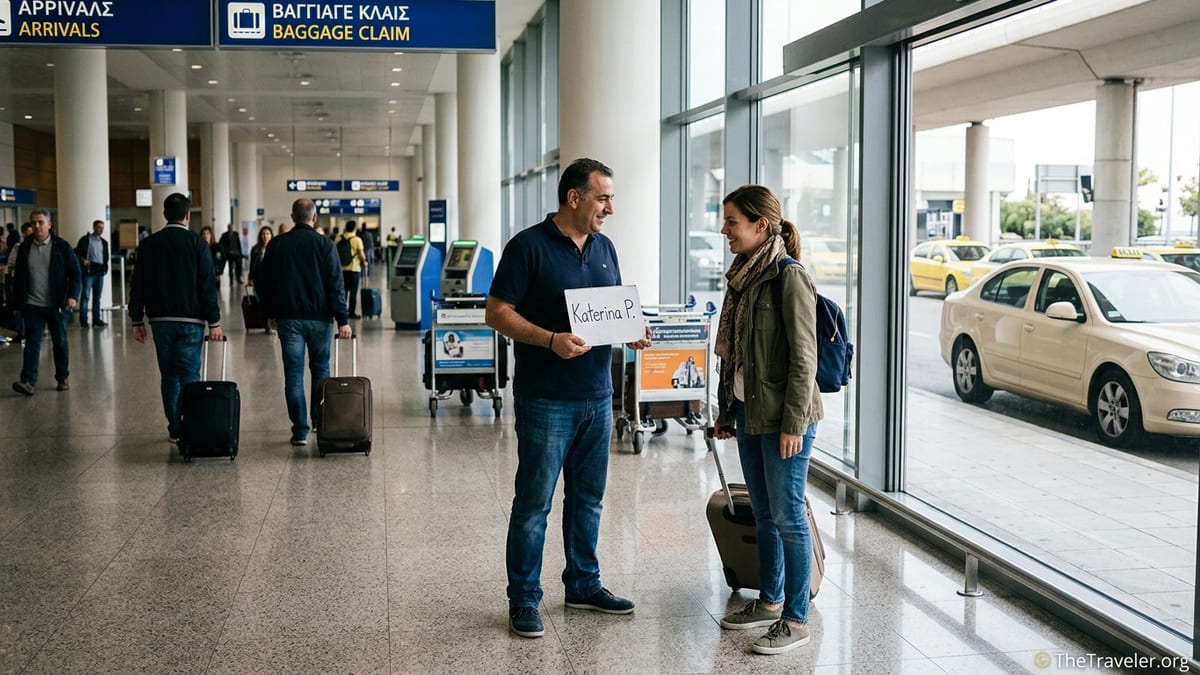
Instead of hunting for the taxi queue, I walked into the arrivals hall and immediately spotted a driver holding my name. He introduced himself in fluent English, insisted I did not rush, and steered my trolley toward a clean sedan parked in the official pickup area. Inside, there were two small bottles of water and a printed card with the Wi-Fi password for Athens airport, along with a simple map of central neighborhoods and a few starred landmarks. It was the sort of small gesture you rarely find in a random taxi, and it changed the tone of the ride from transactional to hosted.
On the way into the city he did something else that felt different from a standard cab. Rather than staying silent or making small talk about traffic, he asked what kind of stay I wanted: “More food, more history, or more nightlife?” When I answered “food and quiet streets,” he tailored his advice to that, suggesting a bakery in Koukaki for koulouri on my first morning, a low-key wine bar in Pangrati, and a walking route that avoided the worst of the summer crowds around the Acropolis. By the time we reached my hotel, I had a mental first-day plan and a sense that I had already connected with the city through a real person.
Welcome Pickups markets itself as a hybrid between a private transfer and a local concierge, and that positioning was obvious from this first ride. The car itself felt like any newer-model taxi you might hail from the rank. What made it feel personal was the preparation: my name on the sign, the flight monitoring, the questions about my plans, and the sense that my driver saw himself as a host rather than just a driver.
How Welcome Pickups Actually Works
Although the experience feels more personal, the mechanics are familiar to anyone who has used a ride-hailing app. You create an account or go through a hotel partner link, plug in your flight number, arrival time, and destination, and instantly see a fixed fare. In Athens, for example, a daytime transfer from the airport to central neighborhoods like Plaka or Syntagma is usually quoted in the same ballpark as the official flat-rate taxis to the city, though prices can be slightly higher at busy times or for larger vehicles.
The company, founded in Athens in 2015, has grown into a global network. By 2025 it was promoting coverage in more than 90 destinations, and its own app store listing now advertises transfers in over 360 cities worldwide, with particularly dense coverage in European hubs like Paris, Rome, Barcelona, and Istanbul, along with long-haul gateways such as Dubai and Bangkok. That scale matters because many travelers first discover Welcome through a hotel’s “book your transfer” email; once they have used it in one city, they often look for it in the next.
Crucially, the service sits somewhere between a classic pre-booked car service and a rideshare app. You do not open the app and “hail now” in most cities; you schedule a pickup at least a few hours in advance, often days or weeks before arrival. On the day, you receive the driver’s name, photo, vehicle details, and contact options in the app, along with a real-time status update as they approach your pickup point. At airports, drivers are instructed to wait at a clear meeting spot with a name sign and to include at least an hour of free waiting time after your scheduled landing.
The company emphasizes that its drivers are vetted, English-speaking, and trained to offer local recommendations. That is not unique in the world of private transfers, but it is more structured than a random taxi. In practice, some drivers are more outgoing and talkative than others, but the baseline expectation that they will help orient you to the city helps shape the entire interaction.
The Personal Touch: Small Gestures That Add Up
The most striking difference between my Welcome rides and standard taxis is not the car itself but the small, human touches that accumulate into a feeling of being looked after. On that first Athens transfer, beyond the basics like water and a clean interior, my driver noticed the stamp on my passport from a recent trip to Istanbul and asked how I had liked it. That led into a conversation about the way Athenians spend their evenings, which areas feel more local than touristic, and which beachfront tram stop he takes his own children to in the summer. It felt like chatting with a knowledgeable local acquaintance, not making forced small talk with someone watching the meter.
Other travelers report similar experiences in very different cities. A couple arriving in Dublin on a morning flight described a Welcome driver who had a child seat already installed for their toddler, unprompted Irish weather tips, and a list of pub recommendations near St. Stephen’s Green that would still welcome a sleepy three-year-old in the early evening. In Paris, a solo traveler who had been anxious about airport scams recounted how her Welcome driver explained how the official taxi queue worked so she could confidently use it on her return trip instead of rebooking a private transfer. The driver essentially coached her into being more self-sufficient.
In Barcelona, where late-night arrivals are common, Welcome fans often mention feeling safer and more organized. One traveler landing around midnight described how their driver messaged through the app with a photo of the meeting point, waited patiently while they cleared an unexpectedly long passport-control line, and still greeted them cheerfully an hour later with no hint of frustration. For women traveling alone, or for anyone arriving with kids and multiple suitcases, that patient, predictable presence in the arrivals hall can feel significantly more personal than flagging down whatever cab is next in line.
None of these gestures is revolutionary on its own. Plenty of excellent independent taxi drivers hand out local tips or a bottle of water. What Welcome does is standardize that expectation: the map or recommendations card in the seat pocket, the pre-installed child seat when you request it, the proactive messages about traffic or delays. It turns the ride into the first short chapter of your trip rather than a dead zone between airport and hotel.
What It Costs Compared With Taxis and Rideshares
Of course, the question most travelers ask is whether this extra level of service is worth paying more than a regular taxi. In many cities, Welcome’s fixed fares are close to, but not always identical with, local taxi rates. In Athens, for example, a standard daytime taxi from the airport to central districts typically runs around 40 to 45 euros at the official flat rate, while a pre-booked Welcome sedan might quote something in the same range, sometimes a few euros higher depending on demand and the specific neighborhood. At night or for minivans that can carry five or six passengers with luggage, the gap widens, but that is also when the benefits of a pre-arranged ride can matter more.
In Rome or Paris, where airport taxi tariffs are also regulated, travelers often find Welcome roughly comparable to an official cab when booked for one or two people in a standard car, but perceptions vary. Some online reviews praise the service as “only a few euros more than a taxi” given the peace of mind, while others, especially on peak dates or for large vehicles, complain of quotes that feel significantly higher than what they later paid for a meter-based ride or rideshare. The reality is that Welcome is a premium product, and in some markets that premium is small while in others it can be noticeable.
Comparing with rideshare apps adds another layer. In cities like Athens, Barcelona, and Dublin, platforms such as Uber or FreeNow can sometimes undercut both taxis and pre-booked transfers, especially during off-peak hours. However, surge pricing, vehicle availability, and the hassle of handling your phone and luggage after a red-eye flight all affect the equation. Welcome’s main value proposition is not the cheapest possible fare, but a fixed price that you see at booking, without last-minute surcharges, plus the predictability of a named driver waiting at a specific place.
If you are a budget-first traveler comfortable navigating local buses and metros, you may decide that 40 or 50 euros for a private transfer is unnecessary in cities where an airport train costs under 15 euros. On the other hand, if you are arriving with family, multiple bags, or limited mobility, or you simply want to eliminate the cognitive load at the end of a long journey, the small premium over a regular taxi can feel quite reasonable.
Where the Personalization Shines the Most
Welcome’s strengths are most obvious in three types of scenarios: complicated arrivals, nervous or first-time visitors, and multi-stop itineraries. For complicated arrivals, consider a family landing in Athens on a long-haul flight with two young children, a stroller, and jet lag. Instead of navigating the metro across town, then hauling luggage through crowded stations, they step into a van with two child seats already installed, water waiting, and a driver who has checked their flight and shifted the pickup time after a delay. That degree of planning and predictability is hard to replicate with a standard taxi rank.
For nervous or first-time visitors, the personal touch can be even more valuable. A solo traveler arriving in Istanbul after reading too many stories about unofficial taxis at the airport might book Welcome simply for reassurance. When the driver meets them inside the terminal, walks them past the hawkers toward the official parking area, and explains how to recognize licensed yellow taxis for shorter rides during their stay, that person walks away with practical knowledge, not just a safe ride. The transfer becomes a gentle primer in how to navigate the city with confidence.
Multi-stop itineraries are another area where Welcome can feel less like a taxi and more like a private guide. The company sells “sightseeing rides” that chain together transfers and short stops: Athens Airport to the city with a one-hour break at the Temple of Poseidon, or a drive from Florence to Siena with a winery stop en route. These are not full-fledged guided tours, but the drivers are encouraged to share stories and local context, and you pay by the trip rather than hitting a meter at every pause. Travelers with tight schedules, especially cruise passengers or short city-break visitors, often use these rides to make the most of otherwise dead travel days.
Even on simple city-to-airport runs, there is room for personal nuance. In Dublin, for instance, one business traveler described how their driver automatically checked live traffic for the M50 ring road, suggested leaving fifteen minutes earlier than originally planned because of a match at Croke Park, and gave a quick explanation of the security layout at Dublin Airport. Those small adjustments based on local knowledge are exactly what you hope for from a good hotel concierge, but here they happen in the car.
Not Always Perfect: When It Still Feels Like a Taxi
To be fair, not every Welcome ride will feel transformative. The company’s rapid expansion means quality can vary between cities and even between drivers in the same destination. While the brand promises English-speaking hosts and a warm welcome, in reality some drivers are more reserved, or simply treat the ride as a standard transfer with minimal conversation. If you are expecting a quasi-tour guide on every journey, you might be disappointed.
There are also occasional reports of missed pickups, last-minute vehicle changes, or opaque pricing at very busy times. Some travelers have described being asked to pay a supplement for a larger vehicle when their luggage did not fit in the originally booked car, or discovering after the fact that a taxi from the airport would have cost significantly less on that particular route. Others recount excellent inbound transfers but frustrating return trips to the airport where the coordination felt less polished or communication from the driver was delayed.
From a traveler’s perspective, it is important to remember that Welcome is a platform that partners with local drivers rather than employing them directly in every city. That creates flexibility and scale, but it also means human variability. In cities where Welcome has been operating for years and has a deep pool of highly rated drivers, such as Athens or Barcelona, experiences tend to skew very positive. In newer or smaller destinations, things can feel less consistent. The backbone of flight tracking, app-based support, and fixed pricing remains, but the “wow” factor can rise or fall with the personality and professionalism of your individual driver.
That said, the overall satisfaction trend remains strong. The company has repeatedly earned Travelers’ Choice recognition on major review platforms, which means that across thousands of reviews it performs well above average. For every anecdote of a lackluster ride, there are many accounts of seamless, friendly, and highly personalized transfers that left travelers relieved and grateful.
How to Decide if Welcome Pickups Is Right for Your Trip
Whether Welcome will feel like a worthwhile upgrade over a regular taxi comes down to your priorities for a given trip. Start by considering your arrival context. If you are landing in a city you know well, at a reasonable hour, with only a carry-on bag, then heading to the official taxi rank or opening a rideshare app may be perfectly adequate. The marginal benefit of having someone holding your name on a sign is lower when you are comfortable and awake.
If, however, you are arriving for the first time in a busy or unfamiliar city, especially after a long or late flight, the balance shifts. A pre-booked Welcome transfer can remove several stress points at once: no queue at the taxi stand, no negotiation over payment methods, no uncertainty about whether the driver understands your hotel’s location, and no anxiety about being overcharged. For travelers with mobility issues, older relatives, or small children in tow, that peace of mind can easily justify a moderate premium.
Also consider who in your party is traveling. For a solo backpacker watching every euro, public transport will nearly always be the best deal. For a group of four splitting the cost of a van from Barcelona airport to a central apartment, the per-person price of a Welcome transfer can be surprisingly reasonable when compared with four single train tickets plus the effort of navigating with luggage. In some destinations, Welcome’s family-focused extras like booster seats and the ability to request a roomier vehicle make the service particularly attractive.
Finally, think about how much you value that first human interaction on arrival. If you enjoy having a local point of contact as soon as you land, someone you can pepper with questions about tipping norms, quiet neighborhoods, or authentic places to eat near your hotel, then Welcome’s emphasis on host-like drivers aligns well with your travel style. The right driver can set the tone for your entire stay and help you avoid missteps in those crucial first hours.
The Takeaway
Going into my first Welcome Pickups ride, I expected a slightly shinier version of an airport taxi. What I found was something more personal: a driver who had studied my flight details, waited without complaint after a delay, and treated the journey as my introduction to the city rather than a simple point-to-point transfer. That experience has since repeated, with variations, in other cities where the company operates, from Dublin to Barcelona.
The cars themselves are not dramatically different from standard taxis, and the service is not always the cheapest option in town. What you are paying for is preparation, predictability, and the likelihood of a human connection during a part of the trip that is often anonymous and stressful. For many travelers, especially those arriving tired, anxious, or with family in tow, that combination can be worth far more than the modest extra cost.
Welcome Pickups will not replace every taxi or train you take. There will always be journeys where the metro is quicker, a local cab cheaper, or a rideshare more flexible. But if you value feeling personally welcomed into a destination, and you like the idea of your airport transfer doubling as a friendly briefing on the city you are about to explore, then it is easy to understand why so many people come away saying, “I thought it would feel like a taxi. It felt like a host.”
FAQ
Q1. What is the main difference between Welcome Pickups and a regular taxi?
The biggest difference is predictability and personalization. With Welcome you pre-book a fixed-price transfer, see your driver’s details in advance, and are met inside the terminal with a name sign. Drivers are vetted, usually speak good English, and are encouraged to offer local tips, so the experience feels more like being greeted by a host than hopping into whichever taxi is next in line.
Q2. Is Welcome Pickups always more expensive than a local taxi?
Not always, but it is generally positioned as a premium service. In some cities, like Athens, daytime fares to the center can be close to the official taxi flat rate, while in others you may pay a noticeable premium, especially for larger vehicles or at peak times. The trade-off is that you see a fixed price at booking, avoid haggling or surprise surcharges, and gain the personal meet-and-greet service.
Q3. In which cities does Welcome Pickups operate?
Welcome started in Athens and has expanded widely, with dozens of destinations across Europe, the Middle East, and beyond. It is commonly available in cities such as Athens, Rome, Paris, Barcelona, Dublin, Istanbul, Dubai, and Bangkok, among many others. Availability is strongest in major tourist hubs, so smaller or less-visited cities may not yet be covered.
Q4. How far in advance should I book a Welcome Pickups transfer?
It is wise to book as soon as your flight times and accommodation details are confirmed, especially during busy seasons. While the platform can sometimes accommodate same-day or next-day bookings, popular time slots and larger vehicles may sell out. Booking a week or more in advance gives you better choice of vehicle type and pickup time.
Q5. What happens if my flight is delayed or arrives early?
When you enter your flight number at booking, Welcome monitors the flight’s status. If it is delayed or arrives ahead of schedule, your driver adjusts the pickup time accordingly, and a period of waiting time after your confirmed landing is typically included. This reduces the risk of being charged extra or missing your ride because of routine airline schedule changes.
Q6. Can I request extras like child seats or a larger vehicle?
Yes. During booking you can usually specify if you need child seats, extra luggage space, or a van that seats more than four passengers. These options may cost more than a standard sedan, but they are popular with families and small groups who would otherwise need multiple taxis. Having the correct setup ready on arrival is one of the main reasons families choose Welcome.
Q7. Do Welcome Pickups drivers expect tips?
Tipping customs vary by country, but drivers generally appreciate a small gratuity if you feel the service was especially good. Because you pay a fixed fare through the platform, there is no obligation to tip, yet many travelers round up a bit in cash or add a modest percentage as a thank-you for help with luggage, local recommendations, or extra waiting time.
Q8. Is Welcome Pickups suitable for solo travelers arriving late at night?
Yes, late-night arrivals are one of the situations where Welcome can be most reassuring. Knowing a named driver will meet you inside the terminal, with your route pre-planned and payment handled through the app, can feel safer and less stressful than searching for a taxi line or waiting for a rideshare at an unfamiliar airport after dark.
Q9. How does customer support work if something goes wrong?
Welcome offers app-based and online customer support, typically available around the clock. If your driver cannot be found, if there is a last-minute change, or if you experience an issue with the ride, you can contact support through the app or your booking confirmation. Response times and resolutions vary by situation, but having a central support channel is a key advantage over dealing with an individual taxi on your own.
Q10. When is a regular taxi or public transport a better choice than Welcome Pickups?
A regular taxi or public transport is often a better choice for very short distances, when you are traveling light, or when budget is the top priority. In cities with excellent airport trains or metros that cost a fraction of a private transfer, independent travelers may prefer to save money and move at their own pace. Welcome is most compelling when you want a smoother, more personal arrival or when you are managing complex logistics such as family travel, late-night landings, or tight connections.