


More news on this day
Travelers bound for Dubai, Abu Dhabi, Riyadh’s King Khalid International Airport and other Gulf hubs are facing fresh disruption as a patchwork of cancellations and short-notice schedule changes by Indian carriers including Air India and Akasa Air affects more than 40 flights from major cities such as Hyderabad, Delhi, Mumbai, Bengaluru and Ahmedabad.
Get the latest news straight to your inbox!
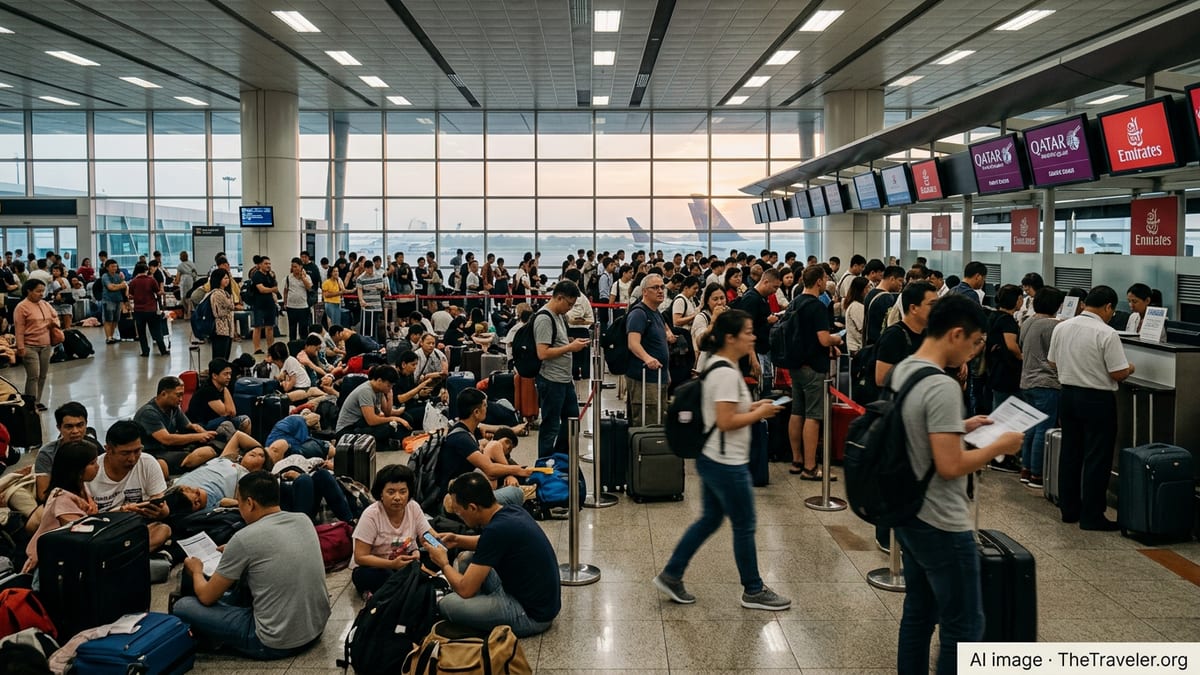
Wave of Cancellations Links India’s Metros to Gulf Hubs
Recent operational snapshots and published coverage show a renewed wave of flight cancellations and delays on India–Gulf routes, particularly those serving Dubai International, Abu Dhabi’s Zayed International and Riyadh’s King Khalid International airports. While Middle East carriers have attracted much of the early attention, Indian airlines are now visibly tightening schedules as airspace restrictions, crew availability and aircraft rotation challenges converge.
Reports indicate that more than 40 flights touching Gulf gateways have been removed from schedules or heavily retimed over the past several days, with India’s busiest metros feeling the brunt. Services linking Hyderabad, Delhi, Mumbai, Bengaluru and Ahmedabad to Dubai, Abu Dhabi and Riyadh have seen a mix of outright cancellations, reduced frequencies and same day time changes that make planning increasingly difficult for travelers.
Publicly available flight data and airport boards suggest that the disruption is not confined to a single carrier. Air India and its low cost affiliate Air India Express have trimmed or consolidated departures on select Gulf routes, while newer entrant Akasa Air continues to adjust its international schedule around Abu Dhabi and other regional points. Together with cuts by foreign airlines, the net effect is a significant contraction in options for India based passengers heading to or transiting through the Gulf.
Although the headline number of cancellations varies by day and source, the pattern is consistent: a cluster of affected services on core India–UAE and India–Saudi sectors, often announced close to departure and accompanied by rolling delays on flights that do operate.
Air India, Akasa and Others Reshape Networks Under Pressure
The current round of disruption follows months of heightened volatility in Middle East airspace and continued operational constraints at several Indian carriers. According to recent press statements and airline network updates, Air India and Air India Express have periodically suspended or reduced flights to Gulf destinations when airspace closures or security alerts made standard routings unviable or extended flying times beyond crew duty limits.
Akasa Air, which has been expanding beyond its domestic network, has also taken a cautious approach on Gulf routes. Industry updates in April and May describe temporary suspensions and phased resumptions on sectors linking Indian cities to Abu Dhabi, Doha, Riyadh and Kuwait, with the carrier conducting ongoing assessments before restoring full timetables. That approach has resulted in short term cancellations but is intended to prevent day of travel disruption from last minute airspace changes.
Other Indian airlines with substantial Gulf footprints, such as IndiGo and Air India Express, have likewise been shuffling capacity between markets. When airspace restrictions require longer detours or holding patterns, aircraft and crew that would normally operate quick turnarounds to Dubai or Abu Dhabi may instead be redeployed to domestic or Southeast Asian routes, further tightening the India–Gulf supply of seats.
For passengers, this network reshaping means that even flights that still appear in booking systems can be vulnerable to late schedule adjustments. Travel agents and online booking platforms have started flagging higher than usual disruption risk on select Gulf bound departures from north and south India, particularly on peak travel days.
Hyderabad, Delhi, Mumbai and Bengaluru Emerged as Key Trouble Spots
India’s largest aviation gateways have become focal points for the latest cancellations. Delhi and Mumbai, which together handle a large share of India’s long haul and Gulf traffic, have seen multiple round trips to Dubai, Abu Dhabi and Riyadh withdrawn from schedules on certain days, reducing redundancy for travelers who might normally switch to a later departure if plans change.
Hyderabad and Bengaluru, two of the country’s fastest growing international hubs, are also prominently affected. Flight tracking boards from Hyderabad show a dense pattern of Gulf bound services in the early morning hours, and even a small number of cancellations or retimings has a cascading effect on domestic connections feeding those flights. Passengers arriving from smaller cities to connect onto the Gulf legs may find their onward service delayed, consolidated onto another flight or cancelled outright.
Ahmedabad and other tier two metros are not immune. Airlines that previously operated daily or near daily flights from these cities to Dubai or Abu Dhabi are, in some cases, running thinner schedules or temporarily suspending selected rotations. This can leave travelers with fewer same day alternatives and force them to route through Delhi or Mumbai at short notice, adding cost and complexity.
Across all these airports, visible crowding in rebooking queues, longer call center wait times and sporadic gate changes have become common complaints. While some passengers are successfully shifted to later departures or partner airlines, others are being asked to accept full refunds and make their own alternative arrangements.
Knock-On Effects at Dubai, Abu Dhabi and King Khalid Airports
On the Gulf side, Dubai International, Abu Dhabi and Riyadh’s King Khalid International are dealing with the cumulative impact of cancellations from multiple countries. Recent analyses of movement data at these hubs show that even when the majority of flights operate, a cluster of cancellations on India bound services can distort gate allocation, baggage handling and connection windows for wider networks.
At Dubai and Abu Dhabi, long haul passengers connecting from Europe or North America onto India flights are particularly exposed. When an onward sector to Delhi, Mumbai or Hyderabad is withdrawn or heavily delayed, customers may face overnight stays, rerouting through alternative Indian gateways, or lengthy waits for the next available seat in the same cabin class. Airlines are responding with a mix of voluntary rebooking policies and case by case waivers.
King Khalid International in Riyadh has experienced its own set of challenges as regional tensions periodically affect Saudi airspace and airline rostering. India bound routes from Riyadh, Jeddah and Dammam have already been operating in a tighter regulatory and operational environment, and the latest cancellations from Indian carriers add another layer of unpredictability for workers and families commuting between India and Saudi Arabia.
As a result, travel patterns are shifting. Some passengers are opting for itineraries that avoid known bottlenecks, choosing Sharjah or Doha as alternates to Dubai and Abu Dhabi when possible, while others are rescheduling non essential trips until schedules appear more stable.
What Affected Passengers Should Watch Now
With disruption levels still elevated, publicly available guidance from regulators and consumer advocates in India suggests that passengers should focus on two things: staying informed and understanding their rights. Airlines are under pressure to provide timely notifications of cancellations and significant delays, but same day changes continue to catch many travelers off guard, especially those who booked through third party platforms and have not updated contact details.
Experts in air passenger rights point out that India’s civil aviation regulations set out minimum standards on rebooking, refunds and care in the event of airline initiated cancellations. In practice, outcomes can vary by carrier and route, particularly when disruptions are linked to airspace closures or security situations that airlines classify as circumstances beyond their control. Passengers are still encouraged to retain boarding passes, booking confirmations and receipts for any additional expenses incurred.
For upcoming trips between India and the Gulf, travelers are being advised to monitor flight status closely in the 24 hours before departure, check for schedule updates directly with the operating carrier, and consider longer connection times at major hubs such as Dubai and Abu Dhabi. Those with urgent travel or fixed onward plans may wish to favor airlines and routings that currently show more stable operations, even if fares are higher.
The broader outlook for India–Gulf air links will depend on how quickly regional airspace conditions normalize and how effectively airlines can rebuild predictable schedules. For now, however, passengers from Hyderabad, Delhi, Mumbai, Bengaluru, Ahmedabad and other Indian cities are likely to continue facing a fluid travel environment on routes to Dubai, Abu Dhabi, King Khalid and neighboring hubs.