


More news on this day
India’s capital is bracing for more weather turbulence as heavy rainfall and thunderstorms forecast for Delhi prompt fresh travel advisories, with IndiGo warning passengers of potential flight disruptions and delays at one of the country’s busiest airports.
Get the latest news straight to your inbox!
Fresh Alerts as Stormy Weather Targets Delhi
Recent forecasts for Delhi point to a spell of unstable conditions, with meteorological bulletins flagging heavy rainfall, thunderstorms, lightning and gusty winds over the region. Weather updates in May 2026 have highlighted a pattern of storm systems brushing the National Capital Region, bringing short but intense bursts of rain and strong winds that have periodically slowed air and road traffic.
According to publicly available information from national weather agencies, alerts such as “yellow” warnings for thunderstorms and light to moderate rain have been issued several times this pre-monsoon season. These alerts typically signal the possibility of localised flooding, fallen trees and visibility issues, all of which can affect safe aircraft operations and ground handling at Delhi’s Indira Gandhi International Airport.
The current round of warnings builds on a season where the capital has experienced sharp swings between heatwave conditions and sudden storms. Reports indicate that this volatility has made operational planning more complex for airlines, which must respond quickly when storm cells form around the airport and along busy flight corridors connecting Delhi with other major Indian cities.
Travel coverage notes that similar patterns across north and central India have already triggered disruptions at other airports this month, underscoring the risk that even relatively brief weather events can ripple through wider domestic and international networks.
IndiGo Cautions Passengers Over Possible Delays
IndiGo, India’s largest carrier by market share, has issued a series of public advisories in recent weeks as rain and thunderstorms affected Delhi and other hubs. In its latest guidance focused on the capital, the airline warns that departures and arrivals could be impacted when thunderclouds and heavy showers move over the city, resulting in slower aircraft movements and schedule changes.
Advisories shared on the airline’s social media channels emphasise that safety and regulatory weather minima take precedence over punctuality, which can lead to short-notice holding patterns, diversions or ground delays. The carrier has urged passengers to monitor their flight status closely and to keep contact details updated in booking records so that any schedule adjustments or gate changes can be communicated quickly.
IndiGo’s Delhi-specific alerts follow earlier weather-related notices for cities such as Mumbai, Bengaluru and Jaipur, where heavy rain and low visibility have recently disrupted operations. Publicly available reports indicate that when storms are forecast for multiple hubs at once, the impact on IndiGo’s extensive domestic network can be magnified, with late-arriving aircraft and crew affecting subsequent rotations.
Aviation analysts quoted in local coverage suggest that the airline’s repeated advisories reflect a broader attempt by carriers to reset passenger expectations during India’s increasingly erratic seasonal transitions, when thunderstorms can develop rapidly and make precise timing difficult.
Government and Meteorological Guidance for Delhi Travellers
Alongside airline notices, national meteorological updates and government advisories have highlighted potential travel risks tied to Delhi’s stormy conditions. Recent weather bulletins focused specifically on the capital and its adjoining districts have warned of thunderstorms, lightning and bursts of heavy rain, with recommended precautions that include avoiding unnecessary travel during peak storm hours.
In at least one recent pre-monsoon weather press release, official guidance for the Delhi region pointed to possible impacts such as damage to trees and power lines, waterlogging in low-lying areas and temporary disruption to transport. Travellers have been advised to remain alert to real-time updates, particularly when strong winds and heavy showers are expected to coincide with morning or evening rush periods.
Publicly available information from aviation regulators and airport operators also stresses the need for flexible travel planning on days marked by significant weather alerts. Ground congestion at Delhi’s airport, combined with slower security and boarding processes during storms, can lengthen the time it takes for passengers to move through terminals even when flights themselves remain on schedule.
Travel news outlets note that these advisories are part of a wider effort in India to improve public awareness around weather-related risks. In practical terms, this means more frequent bulletins, clearer colour-coded alerts and joint messaging designed to reach both residents and the large volume of domestic and international visitors using Delhi as a gateway.
What Passengers Should Expect at Delhi Airport
For travellers heading to or through Delhi during this unsettled period, current guidance suggests planning for a less predictable airport experience. Heavy showers and thunderstorms can force temporary suspensions in take-offs and landings as air traffic controllers create safe spacing between aircraft and pilots navigate around storm cells. Even when cancellations are avoided, these pauses often translate into rolling delays across the day’s schedule.
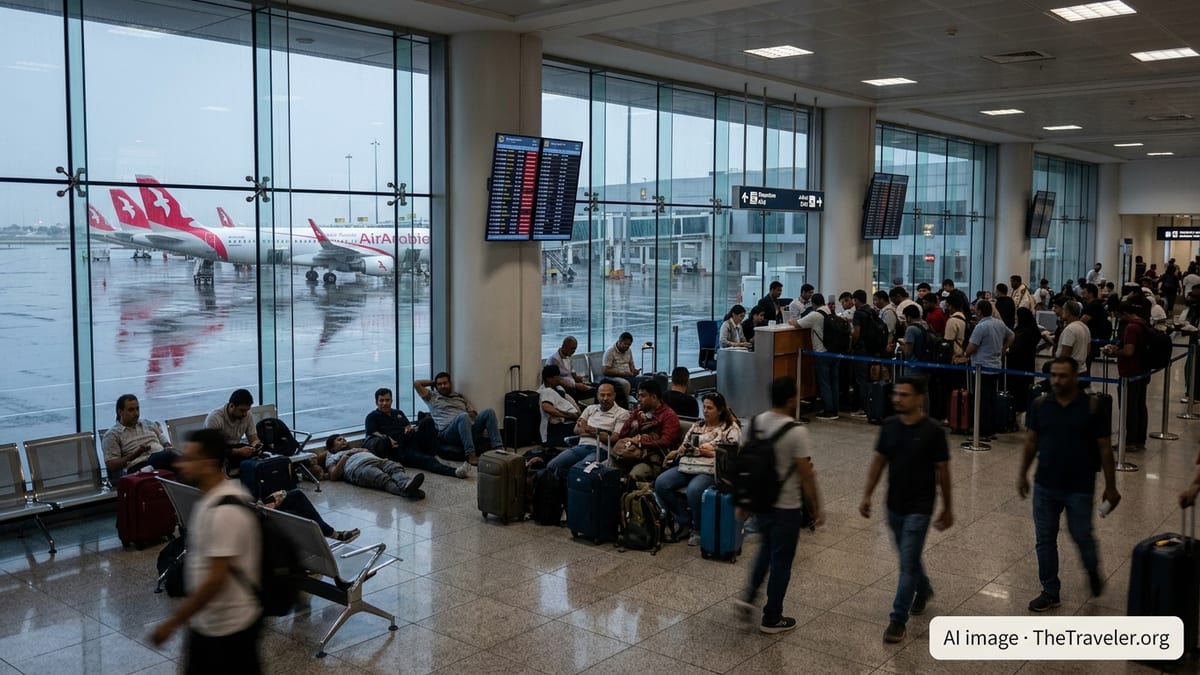
Passengers may also encounter longer queues at check-in, security and boarding when weather triggers bunching of flights or late gate changes. Ground reports during recent storms have described crowded terminal areas, busy airline service counters and increased demand for rebooking assistance as some travellers seek alternative connections after missing onward flights.
According to published coverage, airlines operating from Delhi have been encouraging passengers to allow extra time for travel to the airport, as heavy rain and waterlogged roads can slow taxis, metro services and buses. Some advisories recommend arriving earlier than usual, especially for early morning and late evening departures when visibility issues tend to be more pronounced.
Industry observers point out that while modern aircraft are designed to withstand turbulent conditions, the combined impact of weather on airspace capacity, ground handling and surface transport can be significant on peak travel days. Passengers are therefore encouraged to build flexibility into their plans, keeping layovers generous where possible and being prepared for last-minute gate or timing changes.
Wider Implications for India’s Peak Travel Season
The latest Delhi-focused advisories arrive just as India moves toward one of its busiest domestic travel periods, with school holidays, religious festivals and early monsoon tourism all contributing to high passenger volumes. Flight disruption at a critical hub such as Delhi can quickly affect routes across the country, from leisure destinations in the hills and along the coasts to key business corridors.
Recent coverage of weather-linked disruption in other Indian cities suggests that airlines are under pressure to maintain reliability while also adapting to more frequent and intense weather events. IndiGo’s messaging around safety, advance planning and passenger communication reflects a wider industry trend, as carriers try to balance operational resilience with growing demand.
Travel specialists tracking India’s aviation market note that passengers have become more attuned to the possibility of storm-related interruptions, particularly after high-profile fog and rain disruptions over recent winter and monsoon seasons. Many now factor weather risk into their itinerary decisions, choosing earlier flights in the day, building in buffers before international departures or opting for flexible fares where budgets allow.
With thunderstorms and heavy rain again in the forecast for Delhi, advisories from weather agencies, airlines and travel platforms all point to the same core message for passengers: keep informed, plan ahead and be prepared for possible delays as India’s capital negotiates another bout of unsettled skies.