


More news on this day
India’s rapidly growing aviation network is set to gain a new layer of protection as plans for a dedicated aviation meteorological center take shape, promising sharper localized forecasts and enhanced all-weather flight safety across an expanding grid of airports.
Get the latest news straight to your inbox!
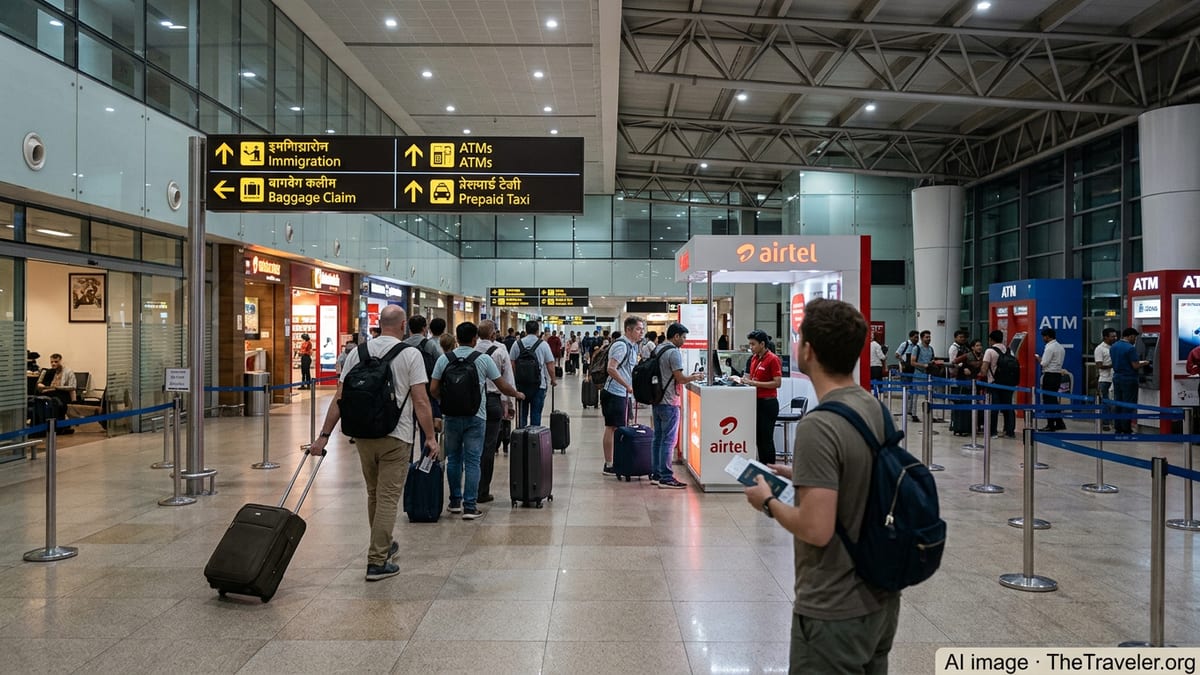
New Weather Hub for an Expanding Airport Network
India’s civil aviation system has been on an extended growth trajectory, with new greenfield airports, expanded regional services and rising passenger volumes reported by the Ministry of Civil Aviation and sector regulators. Within this broader infrastructure push, publicly available information from meteorological and aviation agencies indicates that a dedicated aviation-focused meteorological center is being positioned as the next strategic building block.
Recent coverage of the Noida International Airport project highlights how this trend is unfolding on the ground. Reports indicate that the India Meteorological Department has cleared a dedicated weather monitoring station at the upcoming airport, which has received an aerodrome license for all-weather operations. The new station is expected to operate around the clock to feed near real-time data into airport systems, addressing long-standing gaps in high-resolution weather information in the wider National Capital Region.
Sector analysts point out that this kind of purpose-built aviation meteorology hub aligns with India’s efforts to raise its safety and oversight profile in line with international standards. Regulatory material from the Directorate General of Civil Aviation already frames meteorological services as a core component of safe and efficient air navigation, and the creation of a dedicated center devoted to aviation-grade forecasting is being viewed as a logical extension of this framework.
The planned center is expected to be integrated into India’s existing grid of regional meteorological facilities, but with a mandate more tightly oriented to aircraft operations. This includes emphasis on low-visibility events, convective storms, wind shear, turbulence and other phenomena that can disrupt takeoffs, landings and en route flight paths across an increasingly busy airspace.
All-Weather Operations and Dense Fog Challenges
India’s ambitions for all-weather airport operations are unfolding in a climate marked by persistent seasonal hazards. Published weather bulletins regularly document winter fog across northern India, bringing reduced runway visibility and knock-on delays at major hubs. During peak fog periods, airlines have issued advisories about potential disruptions, underlining the operational and economic impact of meteorological uncertainty on the aviation value chain.
In this context, the combination of Category I and higher instrument landing capabilities with a dedicated meteorological center is seen as critical to achieving reliable all-weather operations. Meteorological documentation shows that specialized runway visual range systems, upgraded surface instruments and automated observation suites have already been deployed at several Indian airports to conform to international civil aviation standards. A centralized expert unit focused on aviation conditions would build on these hardware investments by improving the quality, granularity and timeliness of the forecasts that pilots and controllers rely on.
Observers note that accurate short-term predictions of fog onset, dissipation and vertical structure are particularly important for busy northern airports. A localized aviation meteorology center, supported by high-resolution numerical models and dense surface networks, can help refine these estimates, potentially reducing instances where flights are dispatched optimistically or, conversely, canceled conservatively in the face of ambiguous forecasts.
Monsoon-related risks add another layer of complexity. Heavy rainfall, embedded thunderstorms and low cloud bases routinely affect both metro and regional airports during the summer season. A specialized center is expected to enhance early identification of convective cells that pose hazards such as hail, lightning and sudden wind shifts along critical approach and departure corridors.
Localized Regional Forecasts for Tier 2 and Tier 3 Airports
India’s regional connectivity drive has created a more distributed aviation map, bringing scheduled services to smaller cities and remote regions. Many of these Tier 2 and Tier 3 airports operate in complex microclimates, from coastal belts and river valleys to hilly and plateau terrain, where weather can vary sharply over short distances and time scales.
Information published by the India Meteorological Department describes a network of regional centers responsible for localized forecasts and warnings, complemented by specialized aviation meteorology divisions at national level. The proposed dedicated center for aviation forecast support is expected to plug into this grid, with the goal of translating regional-scale model output into airport-specific guidance that is more directly usable by operators and dispatchers.
Industry watchers highlight that regional routes are especially sensitive to weather-related disruption because aircraft often operate on tighter turnaround windows and with fewer alternate airport options. Even modest improvements in the accuracy of localized forecasts for wind, visibility, cloud ceiling and storm timing can help operators make more efficient go or no-go decisions, limit diversions and improve schedule reliability.
For communities newly connected by air, more reliable operations have social as well as economic implications. Improved meteorological support reduces the likelihood that medical flights, emergency evacuations or seasonal travel peaks are derailed by conditions that could have been anticipated with higher-resolution forecasting tools.
Digital Integration, Data Sharing and Emerging Technologies
The emergence of a dedicated aviation meteorological center comes as India’s weather agencies expand their digital infrastructure. The India Meteorological Department’s unified data gateway consolidates real-time observations, forecasts and specialized bulletins into a single platform, and aviation-focused documentation describes online briefing systems that already support pre-flight planning from major hubs.
Analysts expect the new center to act as both a producer and integrator of these digital resources, synthesizing satellite imagery, radar mosaics, automatic weather station feeds and numerical model output into tailored briefings for the aviation community. Over time, this could include machine-learning tools to identify patterns associated with fog onset, storm genesis or low-level wind shear in specific airport environments.
There is also growing attention on aligning India’s aviation meteorology services with international best practice. Comparative analysis with overseas aviation weather centers and regional specialized hubs shows how integrated warning platforms, standardized products and continuous feedback from users can improve the usability of meteorological information. The planned Indian center is expected to adapt these lessons to local climatic realities and airspace structures.
As air traffic grows and infrastructure expands, data sharing between agencies is becoming more central to risk management. Publicly available material from meteorological and civil aviation authorities emphasizes the need for seamless exchanges between forecasting units, air traffic management, airport operators and airlines. A dedicated aviation meteorology center could serve as a focal point for that information flow, reducing fragmentation and supporting more coherent responses when weather threatens to disrupt the system.
Safety, Regulation and Long-Term Capacity Building
The establishment of a specialized aviation meteorology hub is also being viewed through the lens of safety regulation and long-term capacity building. Academic and policy studies on India’s aviation oversight note that meteorological services are integral to how the system manages risk, from flight planning to terminal-area operations and contingency procedures during extreme events.
Recent technical papers from Indian meteorological institutions describe incremental upgrades in radar coverage, wind profiling, visibility monitoring and automated dissemination of aviation weather codes. A dedicated center is expected to organize these capabilities more systematically around aviation needs, while also helping India meet international obligations related to tropical cyclone advisories and other regional hazards that affect cross-border air traffic.
Training and human capital are likely to become a parallel focus. Course material and exam syllabi for pilots and dispatchers in India already devote significant attention to weather systems, codes and climatology. A more visible and specialized meteorology center for aviation could create additional pathways for technical specialization, joint exercises and scenario-based learning that connect forecasters more closely with operational decision-makers.
For India’s aviation sector, the emerging meteorological center represents one of the quieter but strategically important investments underpinning its infrastructure expansion. As runways, terminals and navigation systems multiply, the ability to anticipate and manage weather risk in a granular, location-specific way may prove as crucial to the passenger experience as any physical upgrade on the ground.