


More news on this day
Indian Railways is moving to expand operational capacity on heavily used southern corridors, approving new electrification and electric traction upgrade projects that target strategic routes in Andhra Pradesh, Telangana, Tamil Nadu and Karnataka at a time when the national network is on the verge of complete electrification.
Get the latest news straight to your inbox!
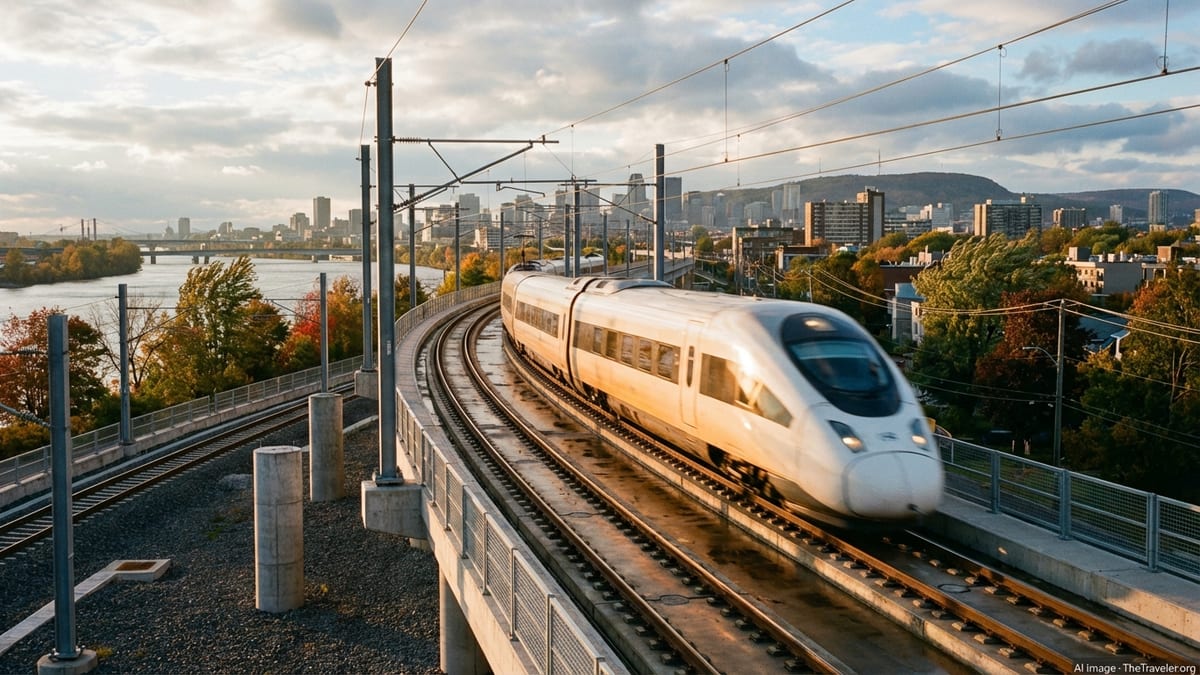
Fresh Investments Target Strategic South India Corridors
Recent approvals reported in industry and business media indicate that Indian Railways has cleared projects worth around ₹448 crore focused on strengthening electric traction and related infrastructure on key routes in South India. Coverage points to priority sections in Andhra Pradesh, Telangana and Tamil Nadu, where passenger and freight demand have grown sharply in recent years and existing capacity is under sustained pressure.
One cluster of works involves enhancing electric traction systems on busy stretches of the South Central Railway network, including sections such as Mahbubnagar to Secunderabad and onward to Medchal, which connect Hyderabad’s fast‑expanding hinterland with mainline corridors. These links play a central role in both commuter and long‑distance traffic, and higher traction capacity is expected to support longer, heavier trains and denser schedules without compromising punctuality.
The latest sanction follows a broader capital push in the 2025–26 and 2026–27 budget cycles, in which publicly available documents show Indian Railways assigning record levels of capital expenditure to electrification, signalling, and route decongestion. Analysts note that the new southern projects fit into this national pipeline while responding to long‑standing calls for stronger connectivity in rapidly urbanising belts around Hyderabad, Chennai, Bengaluru and key industrial clusters.
Reports on sector allocations also highlight that the works are bundled with associated upgrades such as improved power supply arrangements and, in select areas, integration with advanced communication systems. Together, these steps are intended to create a more resilient backbone for electric operations throughout the southern grid.
Southern Railway Nears Full Electrification
Even as new projects are cleared, Southern Railway and adjacent zones in the region are already among the most advanced in terms of electrification coverage. Financial and infrastructure publications citing railway data state that Southern Railway has electrified more than 95 percent of its broad‑gauge network, with some reports placing the figure closer to 98 percent by late 2025. Only limited stretches, often in ghat or environmentally sensitive areas, remain to be converted.
Nationally, official fact sheets and independent compilations suggest that Indian Railways has achieved around 99 percent electrification of its broad‑gauge network by early 2026, leaving only a few hundred route kilometres pending, much of it in challenging terrain. Within this context, the southern projects are less about basic coverage and more about deepening capacity, eliminating bottlenecks and ensuring that power supply keeps pace with new train introductions.
Observers of the sector point out that high‑density southern routes hosting new long‑distance services, including Amrit Bharat Express trains originating or terminating at Nagercoil and other junctions, can place significant demands on traction power. Incremental capacity additions on these corridors, combined with ongoing strengthening of substations and feeder lines, are expected to reduce the need for operational compromises such as speed restrictions or tight power blocks during peak periods.
The near‑complete electrification also allows Southern Railway to standardise operations around electric locomotives and trainsets, reducing diesel dependence to a minimal level. This is seen as a key step toward aligning regional operations with the national objective of operating one of the world’s largest green railway networks.
Electric Traction Upgrades Aim to Unlock Capacity and Reliability
The newly cleared works in South India are focused heavily on enhancing electric traction capability rather than simply stringing new overhead wires. Publicly available project descriptions emphasise components such as additional traction substations, uprated transformers, and higher‑capacity feeder lines, all of which contribute to the ability of a route to support more trains at higher speeds.
Infrastructure analysts explain that as traffic grows, existing substations can become load constrained, limiting how many trains can draw power simultaneously without risking voltage drops. By reinforcing traction infrastructure on core corridors that feed metropolitan regions and ports, Indian Railways is seeking to keep headroom for both passenger and freight growth over the rest of the decade.
Upgrades to electric traction are frequently paired with improvements to signalling, telecommunications and safety systems under broader modernisation programs. In the southern zones, this has included funding for optical fibre communication backbones and preparation for larger scale deployment of train protection technology such as Kavach, which relies on robust, uninterrupted power and data links along each section.
Sector watchers note that such integrated packages are especially important on mixed‑traffic lines where slow freight, premium passenger and regional commuter services all compete for limited paths. Strengthened electric traction infrastructure reduces delays linked to power constraints and supports more consistent acceleration, helping maintain tight timetables.
Operational and Environmental Payoffs for Southern Routes
The acceleration of electrification and traction upgrades on southern routes carries both operational and environmental implications. On the operational side, electric traction typically offers better acceleration and higher sustained speeds than comparable diesel traction, particularly on gradients or where frequent stops are required. This allows operators to reduce journey times, add additional services or lengthen trains to increase capacity without major civil works.
Electric traction also simplifies fleet deployment. With more sections equipped for electric operation and sufficient traction capacity in place, locomotives and trainsets can run end‑to‑end on electric power without time‑consuming locomotive changes. For busy through routes that connect South India with central and northern regions, this can translate into better asset utilisation and improved punctuality.
From an environmental perspective, policymakers have presented near‑total electrification as critical to efforts to cut railway emissions and local air pollution. While overall climate impact depends on the generation mix feeding the grid, electric operations enable easier integration of renewable energy into the traction supply over time. Government fact sheets on railway electrification have repeatedly framed the shift as a cornerstone of India’s target to develop a large, low‑carbon public transport backbone.
For communities along the upgraded southern corridors, reduced diesel usage can mean lower noise and fewer particulate emissions around stations and dense urban stretches. Combined with the rising share of long‑distance and regional services running under electric traction, these changes are expected to enhance the perception of rail as a cleaner, more modern mode of travel across South India.
Positioning South India Within a Nearly Fully Electrified Network
As Indian Railways approaches full electrification of its broad‑gauge network, the southern zones occupy a pivotal position in the emerging national grid of high‑capacity electric routes. The corridors radiating from Chennai, Bengaluru, Hyderabad and coastal gateways in Tamil Nadu and Karnataka serve as vital links between industrial clusters, ports and population centres across multiple states.
Analysts following recent project approvals argue that the latest southern electrification and traction works will help ensure these routes can absorb future growth in containerised freight, bulk commodities and long‑distance passenger traffic without being held back by power constraints. The upgrades also align with ongoing investments in station redevelopment and line capacity enhancement along the same axes.
With only a small fraction of route kilometres nationwide still awaiting electrification, attention is now shifting toward making the best use of the nearly complete electric network. For South India, that means continuing to reinforce power and signalling infrastructure on the busiest corridors, while finishing remaining last‑mile and ghat sections that pose engineering challenges.
Transport commentators note that the combination of near‑universal electrification, targeted traction upgrades and the introduction of new service categories has the potential to reshape travel patterns across the southern states. As these projects are implemented over the coming years, their impact is likely to be measured not just in route‑kilometre statistics, but in more frequent services, improved reliability and a progressively lower carbon footprint for one of the world’s largest railway systems.