


More news on this day
Indonesia is recalibrating its energy diplomacy across Russia and a web of global shipping corridors as a worsening Gulf conflict and soaring oil prices threaten the fuel lifelines that underpin the country’s transport network and tourism economy.
Get the latest news straight to your inbox!
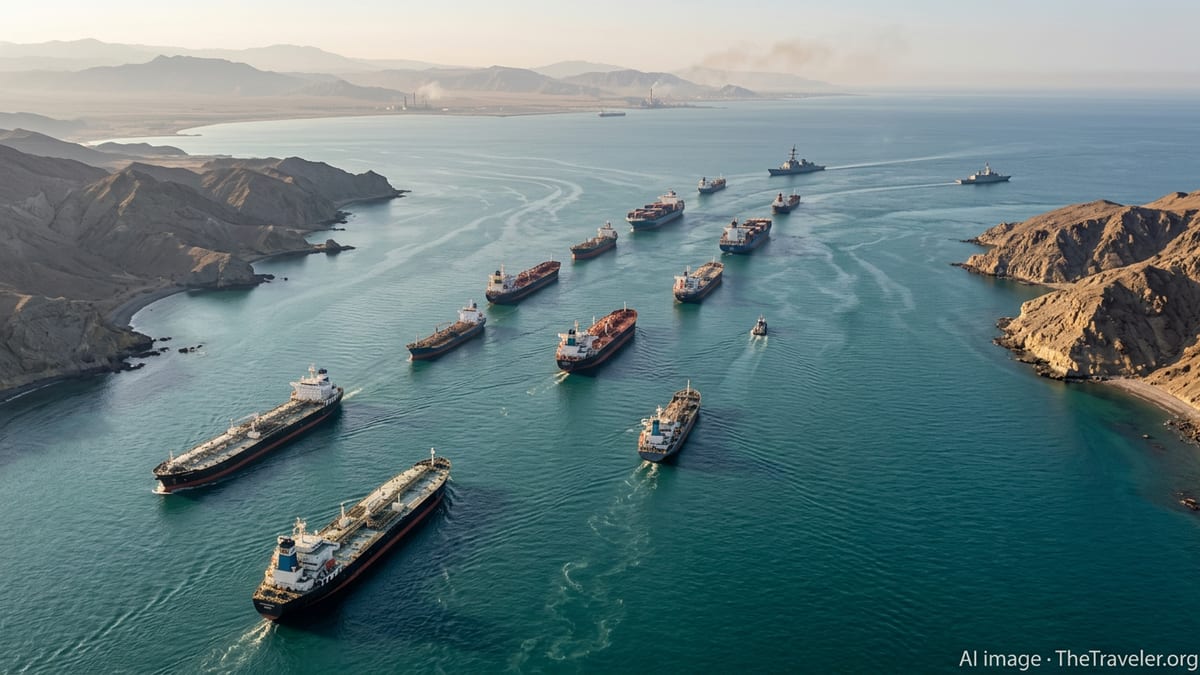
Energy Shock Forces a High-Stakes Recalculation
The latest surge in oil prices triggered by conflict around the Strait of Hormuz has exposed Indonesia’s dependence on imported fuel at a moment when the state budget is already stretched by record subsidies. Publicly available analyses show that Jakarta spent the equivalent of tens of billions of dollars supporting energy prices in 2024, with fossil fuels absorbing the vast majority of that outlay. The combination of volatile benchmarks and a weak rupiah has sharpened the search for cheaper, less politically exposed barrels.
The government has pledged to hold subsidized fuel prices steady through the end of 2026 in an effort to protect households and keep domestic travel demand intact. That commitment is becoming more expensive as Brent crude trades well above assumptions built into the national budget, prompting officials to consider cuts elsewhere in public spending. Behind the scenes, policy planners are increasingly focused on diversifying crude origins to cushion the impact of further price spikes or shipping disruptions in the Gulf.
The travel sector sits at the heart of this recalculation. Aviation fuel and diesel for buses, ferries and ride-hailing fleets are the arteries of Indonesia’s tourism economy, from Bali to Labuan Bajo. With jet fuel prices having climbed sharply on global markets, authorities face mounting pressure to keep aircraft flying and tickets affordable without blowing through fiscal limits.
From Singapore Hub to a Patchwork of New Oil Partners
For years Indonesia has relied heavily on refined fuel supplies sourced through Singapore, a regional trading and storage hub. Government directives now signal a deliberate shift away from that model toward a broader mix of suppliers, including the United States, Russia and Middle Eastern producers outside the conflict zone. State energy company Pertamina has been instructed to diversify both crude and product imports as part of a broader effort to enhance energy security.
Energy industry reporting indicates that Jakarta has been weighing larger volumes of US crude and liquefied petroleum gas, attracted by contractual flexibility and the possibility of tying supply deals to wider trade negotiations. A recent trade pact with Washington features expanded US energy exports to Indonesia alongside lower tariffs on Indonesian goods, underscoring how fossil fuels are increasingly entwined with broader economic diplomacy.
At the same time, Indonesia continues to explore investment and supply partnerships with Gulf producers, Russia and East Asian refiners. Plans for new domestic refineries, including projects that have sought Russian participation, aim to reduce long-term reliance on imported fuels. In the near term, however, the country remains exposed to seaborne flows, making route diversification as critical as supplier diversification.
Russia’s Re-Routed Oil and the Northern Corridor Bet
The European embargo on Russian oil has redirected vast volumes of crude and refined products toward Asia, with cargoes increasingly routed through the Red Sea, around the Cape of Good Hope and along Russia’s Arctic coastline. Data compiled by shipping analysts show a steady rise in Russian fuel oil and naphtha shipments to Indonesia over the past two years, including cargoes loaded at Arctic ports for delivery in Southeast Asia.
These flows fit into a broader pattern of Russia leaning on the Northern Sea Route to reach Asian customers. Studies of Arctic trade routes highlight that oil now accounts for the majority of cargo along this corridor, which can shorten voyages between European Russia and East Asia by up to a third compared with traditional passages via Suez. For Indonesia, tapping into this redirected Russian supply offers an opportunity to negotiate discounts relative to Middle Eastern grades whose prices have been inflated by the crisis.
The strategy is not without risk. Attacks on so-called shadow fleet tankers carrying Russian crude, as well as heightened insurance costs along contested routes, have raised concerns about the reliability and safety of these shipments. Any escalation affecting Arctic or Black Sea export terminals could reverberate across Southeast Asia’s fuel markets, tightening supplies just as travel demand picks up.
Travel and Tourism Caught Between Cheap Fuel and Fiscal Strain
Indonesia’s aviation sector is already feeling the pressure. Government statements point to a surge of around 70 to 80 percent in aviation fuel prices over recent months, a jump that is particularly painful for airlines because fuel accounts for a large share of operating costs. To prevent a collapse in domestic connectivity, Jakarta has moved to temporarily reduce value-added tax on economy-class fares, effectively subsidizing ticket prices while it searches for more affordable jet fuel.
For travelers, the measures are designed to keep archipelago-spanning routes viable, preserving links between major gateways such as Jakarta and Denpasar and emerging destinations in eastern Indonesia. Tour operators report resilient interest from both domestic and regional tourists, but warn that any sharp fare increase could quickly cool demand, especially among price-sensitive Indonesian holidaymakers.
On the fiscal side, the government faces a trade-off between shielding travelers from higher costs and maintaining space for infrastructure spending. With energy subsidies already consuming a significant portion of the budget, the latitude for further support is finite. If international oil prices remain elevated into 2027, policymakers may have to consider more targeted assistance or risk pulling back on support that has kept fares and bus tariffs in check.
Geopolitics at 30,000 Feet: What It Means for Future Routes
The reconfiguration of Indonesia’s oil supply map carries long-term implications for global travel patterns. As Russian barrels move east through Arctic and Indian Ocean routes and US cargoes cross the Pacific, aviation and shipping planners are reassessing refueling hubs and backup options for long-haul flights connecting Southeast Asia with Europe and North America. Alternative corridors that bypass the Strait of Hormuz and the Red Sea are attracting renewed interest, even when they add distance and cost.
For Indonesia, deeper energy ties with Russia, the United States and Japan sit alongside stepped-up investment in domestic refining and storage. Public documents outlining new refinery projects suggest that officials aim to secure more stable supplies of jet fuel and diesel for the transport sector, reducing vulnerability to single chokepoints. If those plans succeed, carriers serving Indonesia’s booming tourism destinations could enjoy greater insulation from geopolitical shocks than they do today.
In the meantime, Jakarta’s diplomatic outreach from Moscow to Washington illustrates how critical fuel has become to its broader development agenda. As the world’s largest archipelagic state navigates the current energy storm, its quiet pursuit of discounted Russian cargoes, diversified shipping routes and new refinery partners is emerging as a form of travel shock diplomacy, executed not in press conferences but in the shipping manifests that keep aircraft and ferries moving.