


More news on this day
China is rolling out a fresh package of incentives aimed at travelers, students, and businesses from Taiwan following a landmark Beijing summit between Chinese leader Xi Jinping and Kuomintang chair Cheng Li-wun, signaling a new phase of cautiously warming cross-strait engagement that visitors will feel most directly in the skies, on ferries, and at immigration desks.
Get the latest news straight to your inbox!
From Historic Summit to Practical Travel Shifts
The April 10 meeting in Beijing between Xi Jinping and Cheng Li-wun, the first encounter between top leaders of the Chinese Communist Party and Taiwan’s Kuomintang in a decade, has quickly moved from symbolism to policy. Published coverage across Chinese and international media indicates that Beijing has tied the political outreach to a series of concrete steps designed to entice more people and capital from Taiwan to the mainland.
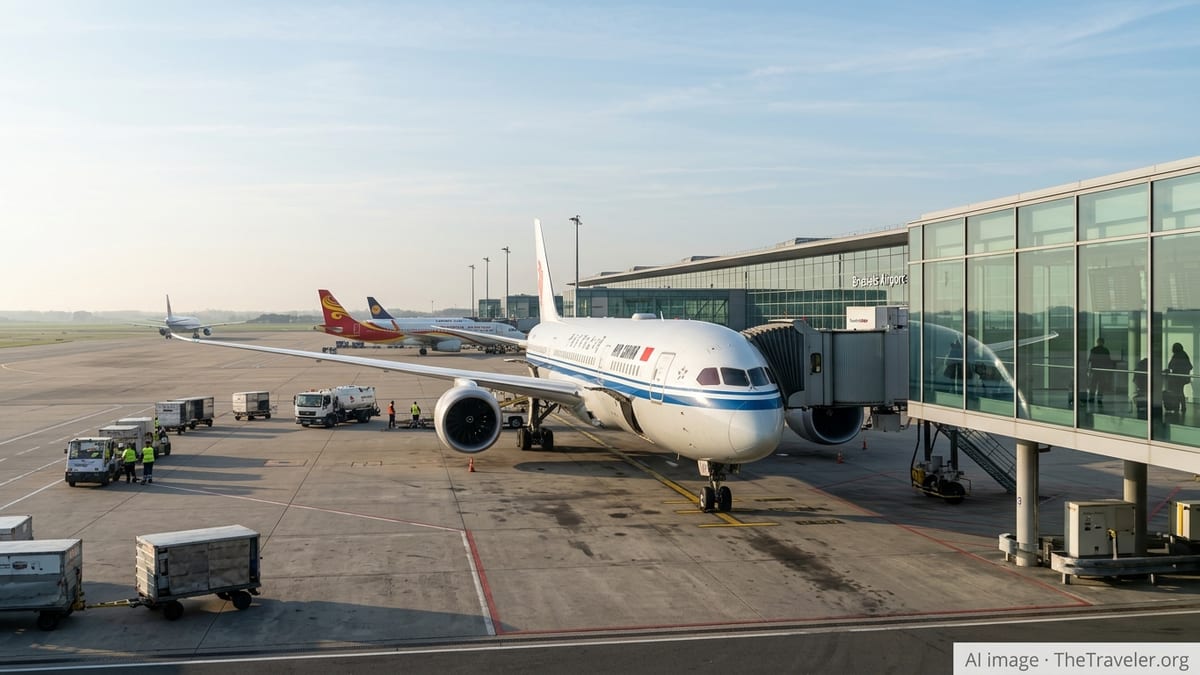
Initial announcements highlight the resumption and expansion of certain cross-strait links that had been reduced or frozen in recent years. Publicly available information shows that Chinese authorities are moving to restore more direct flights between mainland cities and Taiwanese destinations and to revive select maritime connections, including routes that matter for both tourism and small-scale trade.
For travelers, this means that routes which once required awkward detours through Hong Kong, Macau, or regional hubs may gradually become more direct again. While precise timetables and frequencies are still being clarified, industry observers are already flagging likely increases in capacity on popular corridors such as Shanghai to Taipei and Fuzhou to Kaohsiung, along with more charter-style services around major holidays.
Travelers planning cross-strait trips in the coming months are being advised by regional aviation analysts to check airline schedules frequently, as carriers on both sides react to evolving approvals. The policy trajectory appears oriented toward making it easier, cheaper, and more predictable for Taiwanese residents to enter mainland China for leisure, family visits, and business.
New Incentives for Business, Study, and Longer Stays
Beyond transport links, the measures emerging from Beijing are framed as part of a wider drive for what official mainland commentary describes as “peaceful development” and “integrated development” across the Taiwan Strait. According to state-linked economic reporting, new and renewed incentives target Taiwanese entrepreneurs, professionals, and students willing to base themselves in mainland cities.
Available documentation points to streamlined processes for Taiwanese investors in sectors such as advanced manufacturing, tourism services, e-commerce, and cultural industries. Various local governments on the mainland are expected to compete for Taiwanese projects with discounted office rents, tax breaks, and access to industrial parks, often clustered in coastal provinces like Fujian, Guangdong, and Zhejiang that already host sizable Taiwanese communities.
For students and academics, the evolving package appears to include expanded scholarship slots, simplified application procedures to mainland universities, and easier short-term research exchanges. While the details differ by institution, Taiwanese applicants can expect more targeted outreach and, in some cases, preferential tuition arrangements or dormitory guarantees designed to lower the barrier to cross-strait study.
Longer-stay visitors, such as remote workers with Taiwan residency who choose to base themselves in major mainland cities, may see clearer guidance on residency permits, social insurance participation, and access to local services. However, analysts stress that regulations can vary sharply from city to city, making it essential for travelers to verify local requirements before relocating.
What Changes for Leisure Travelers Right Now
For short-term visitors, much of the immediate impact will be felt in flight options, pricing, and the range of packaged tours. As aviation and ferry links are restored, tour operators on both sides of the Strait are beginning to rework itineraries that connect Taiwan with mainland cultural and natural highlights, from historic quarters in Xiamen and Quanzhou to city breaks in Shanghai and Beijing.
Travel professionals monitoring fare data expect a gradual softening of prices on popular routes as more capacity returns to the market. Taiwanese travelers booking multi-city trips that include mainland stops are likely to see more competitive bundles that combine flights, hotels, and local transport, particularly if carriers and hotel chains launch cross-strait promotional campaigns tied to the new policy mood.
At the border, reports suggest that immigration and customs processes for Taiwanese passport holders are being reviewed in some mainland ports of entry with an eye to efficiency. While no sweeping overhaul has yet been formally codified, small procedural adjustments, such as additional dedicated counters or improved electronic pre-clearance, could shave time off airport arrivals and departures.
Leisure travelers should nonetheless remain alert to the political sensitivities that continue to surround the Taiwan issue. Travel advisories from various governments still flag the potential for periodic military activity or diplomatic tension in the region, and experts recommend monitoring official travel guidance and reputable news outlets when planning or undertaking cross-strait journeys.
Risks, Reactions, and the Political Weather
Despite the upbeat language that has accompanied the announcements from Beijing, reaction in Taiwan has been mixed. Commentaries from Taiwanese media and policy research institutes point to concerns that the incentives could be used to deepen economic dependencies that might later become leverage in times of political disagreement.
For travelers, these geopolitical debates translate into practical questions about stability and predictability. While there is no immediate sign of disruption to civilian air or sea traffic linked directly to the new measures, the wider security environment in the Taiwan Strait remains tense, with periodic military exercises and sharp rhetoric from multiple sides. Travel planners continue to recommend flexible booking conditions and robust travel insurance that covers political and security-related disruptions.
There is also an undercurrent of domestic debate within Taiwan about whether engagement in areas such as tourism, education, and business exchange might blunt the risk of conflict over time or instead increase exposure to economic pressure. For now, the incentives unveiled after the Xi–Cheng summit are proceeding alongside ongoing disagreements over sovereignty and defense posture, creating a complex backdrop for even routine family or leisure trips.
International observers note that cross-strait travel trends are likely to be watched closely in foreign capitals, where policymakers see tourism flows, student numbers, and business missions as informal indicators of the broader temperature in China–Taiwan relations. A sustained rise in Taiwanese visitor numbers to the mainland would be read as a sign that the new incentives are gaining traction despite political skepticism at home.
Practical Planning Tips for Future Cross-Strait Trips
For travelers contemplating journeys that cross the Taiwan Strait in the coming year, the emerging policy landscape calls for both optimism and caution. On one hand, more flights, smoother procedures, and expanded opportunities for short-term study or business scouting trips could make itineraries that once felt cumbersome significantly more attractive.
On the other hand, the legal and political framework underpinning cross-strait ties remains unsettled, and policy adjustments can arrive with limited advance notice. Travel specialists advise that Taiwan residents heading to the mainland keep digital copies of key documents, monitor airline and ferry operator announcements frequently, and stay informed through official statements from relevant government agencies regarding entry rules and consular support.
Visitors from third countries who plan to combine Taiwan and mainland China in a single itinerary should pay close attention to visa requirements and entry conditions for each jurisdiction separately. The new incentives are primarily aimed at Taiwanese citizens, but they may indirectly affect route availability, connection times, and pricing for foreign travelers using cross-strait sectors as part of longer Asia itineraries.
As the post-summit policies take shape, the overall message for the travel community is that cross-strait connectivity is moving back toward center stage in the region’s transport and tourism map. The coming months will show whether the incentives launched in the wake of the Xi–Cheng meeting can deliver a sustained period of smoother, safer, and more predictable journeys across one of Asia’s most politically charged stretches of water.