


More news on this day
As cruise lines ready ever larger ships for Alaska’s 2026 season, a very different way to see the 49th state is quietly gaining momentum: glass-domed trains rolling through the backcountry on Alaska Railroad’s new Grande Alaska rail tour.
Get the latest news straight to your inbox!
From Trackside Terminals to a 12-Day Epic
Publicly available information from Alaska-focused travel outlets indicates that the Alaska Railroad is entering summer 2026 with one of its most ambitious lineups yet, centered on a new 12-day Grande Alaska Tour. The itinerary strings together Anchorage, Seward, Talkeetna, Denali and Fairbanks, positioning the train not as a simple transfer between ports but as the backbone of a full-scale Alaska holiday.
The new program coincides with infrastructure upgrades along the route, including a modern Seward dock and terminal intended to smooth handoffs between rail and small-ship or day-cruise operators. Schedules published for 2026 show expanded summer frequencies on core routes such as the Denali Star and Glacier Discovery, making it easier to stitch together multi-day rail journeys that reach deep into Southcentral and Interior Alaska.
While some Grande Alaska departures are being packaged by tour companies, Alaska Railroad’s published schedules and tourism board materials highlight a broader shift: more itineraries that begin and end on the rails, without requiring a conventional large-ship cruise at all. For many travelers, that opens the door to an overland loop that feels less like a shore excursion and more like an expedition.
The timing is significant. Cruise lines are unveiling 2026 itineraries that lean heavily on classic Inside Passage routes, but the new rail-centric programs emphasize a different kind of access, particularly to Denali National Park and lesser-visited river valleys that lie far beyond the reach of deep-draft vessels.
Glass Domes, Wilderness Grit
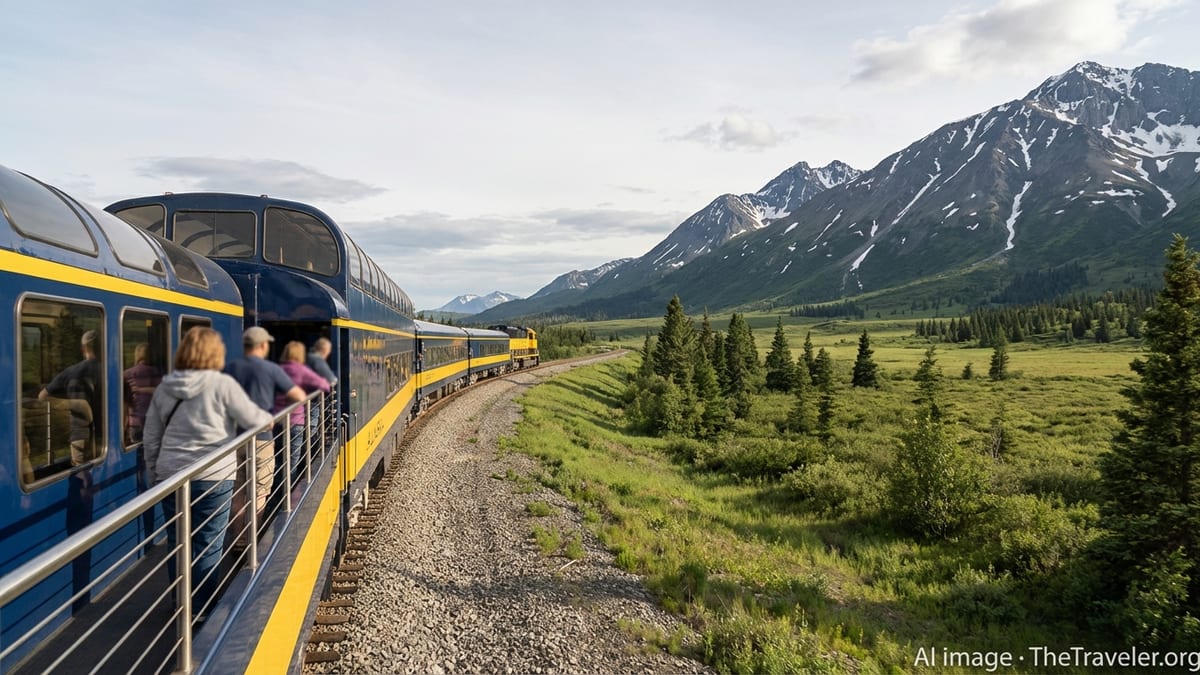
The visual signature of the Grande Alaska experience is the glass-domed railcar. Dome cars used on Alaska routes feature sweeping curved windows, upper-level seating and, on some services operated in partnership with tour companies, outdoor viewing platforms that allow passengers to step into the open air between photo stops. Travel features published this year describe hours-long segments where passengers watch boreal forest, braided rivers and the Alaska Range scroll past in near-panoramic view.
Onboard service leans into comfort, with assigned seating, at-your-chair dining and hosts who provide commentary on history, geology and wildlife. However, the tone of the new 2026 offerings is notably more active than in previous decades, when rail was often used simply as a scenic link in a cruise tour. Package descriptions now foreground off-train adventures that range from glacier hikes and rafting to guided backcountry walks in places like Spencer Glacier and the Indian River canyon.
The contrast with traditional cruising is stark. On a large ship, passengers typically experience Alaska at a remove, watching fjords pass by from balconies and venturing ashore for tightly timed excursions. By comparison, itineraries built around Alaska Railroad’s dome cars are designed so that the most dramatic moments happen after the doors open: stepping off at request stops on the Hurricane Turn flag-stop route, hiking near Denali’s front country, or joining small-group rafting trips that start directly from rail-accessed trailheads.
This blend of glass-dome comfort and wilderness grit appears central to the brand positioning of the Grande Alaska rail tour. Marketing language from rail specialists and tour aggregators consistently merges the language of luxury rail with that of expedition travel, appealing to a growing segment of travelers who want immersive experiences without sacrificing creature comforts.
Why Travelers Are Rethinking the Classic Alaska Cruise
Travel industry reports suggest that demand for Alaska cruises remains strong for 2026, but that a subset of travelers is looking for alternatives to the standard seven-night Inside Passage loop. Factors include concerns about crowding in marquee ports, the environmental profile of mega-ships and a desire for longer stays in interior destinations such as Denali, which a ship cannot reach.
By design, rail-focused programs address several of these pain points. Rail itineraries typically spend multiple nights inland, allowing unhurried time in Talkeetna, Denali and Fairbanks instead of single-day calls. Published package outlines for 2026 show two- and three-night stays paired with rail segments that run in broad daylight, taking advantage of Alaska’s long summer evenings for sightseeing both on and off the train.
Price comparisons circulating in consumer travel coverage indicate that per-day costs for a glass-domed rail tour can be similar to or slightly higher than a midrange cruise, but advocates point to the smaller group sizes and included land excursions as justification. With rail cars carrying a fraction of the passengers found on a large ship, days feel more like a guided overland journey than a floating resort vacation.
Environmental considerations are also playing a role. Analysts note that travelers weighing their options for 2026 are increasingly asking about fuel use, shore power and community impact. Rail journeys are not impact-free, but the combination of existing track infrastructure and lower passenger density per departure has made them an appealing choice for visitors who want to see glaciers and wildlife while minimizing their time on large vessels.
Key Stops: Seward, Talkeetna, Denali and Fairbanks
The Grande Alaska concept leans heavily on Alaska Railroad’s established north-south spine, linking several communities that have long been fixtures of cruise-tour brochures. In Seward, the upgraded terminal and dock area are expected to streamline transfers to wildlife and glacier day cruises in Resurrection Bay and Kenai Fjords, with passengers returning directly to the railhead rather than reboarding a large ship.
From Anchorage northward, Talkeetna continues to serve as the charming rail village gateway to the Alaska Range. Travel planners highlight 2026 offerings that pair glass-domed rail segments with flightseeing over Denali, river floats and guided hikes, many of which can be added as optional components to rail packages. The compact town center, located a short distance from the tracks, allows passengers to explore cafes and galleries between train arrivals.
Farther along the line, Denali remains a marquee draw. Alaska Railroad schedules for 2026 show the Denali Star operating through the core summer season, providing daylight access to the park entrance. Rail-based packages commonly bundle in a park road tour or shuttle, enabling visitors to go beyond the front-country visitor center. Two-level dome cars used on some segments allow travelers to watch for wildlife and mountain views en route, before they ever board a park bus.
At the northern end of many itineraries, Fairbanks offers a contrasting perspective on Alaska life, with riverboat excursions, gold rush history sites and access to the Interior’s boreal landscapes. For some Grande Alaska departures, Fairbanks serves as either the starting point or finale, giving travelers the chance to book additional nights to chase late-summer auroras or explore local museums before or after their rail segment.
How to Ride the Trend in 2026
Tour operators and rail specialists are already advising travelers to plan early for peak 2026 departures. Alaska Railroad’s own schedules show limited daily capacity on key routes, especially for dome car seating that is in high demand during the height of summer. Industry coverage notes that some multi-day rail packages, particularly those tied to major events or holidays, are expected to reach capacity months in advance.
For travelers accustomed to cruise-first planning, the shift to rail-centered itineraries can require a different mindset. Instead of choosing a ship and then adding port excursions, prospective passengers are encouraged to start with the core rail route they want to ride, then build in overnight stays and off-train adventures around those dates. Publications focused on independent Alaska travel stress the importance of aligning rail segments with limited-availability activities such as bear viewing, glacier hikes and guided rafting.
There is also growing interest in hybrid trips that combine a short coastal sailing with a longer inland rail loop. Cruise and rail planners for 2026 are promoting pairings that use Seward or Whittier as handoff points, allowing travelers to disembark a smaller ship and continue north under glass domes rather than returning south by sea. These hybrid options may appeal to first-time Alaska visitors who want both fjords and interior mountains without committing to a full season on either train or ship alone.
As the 2026 season approaches, the message emerging from Alaska-focused travel coverage is clear: for those willing to trade buffet lines and balcony cabins for panoramic railcars and nights in mountain lodges, the Grande Alaska rail tour and its counterparts are shaping up to be one of the defining ways to experience the state’s wild heartland.