


More news on this day
The sudden cancellation of a four night Disney Adventure cruise from Singapore after an apparent propulsion failure has turned a showcase sailing for Disney Cruise Line into an unplanned global test of how transparently and compassionately a major travel brand responds when its magic falters.
Get the latest news straight to your inbox!
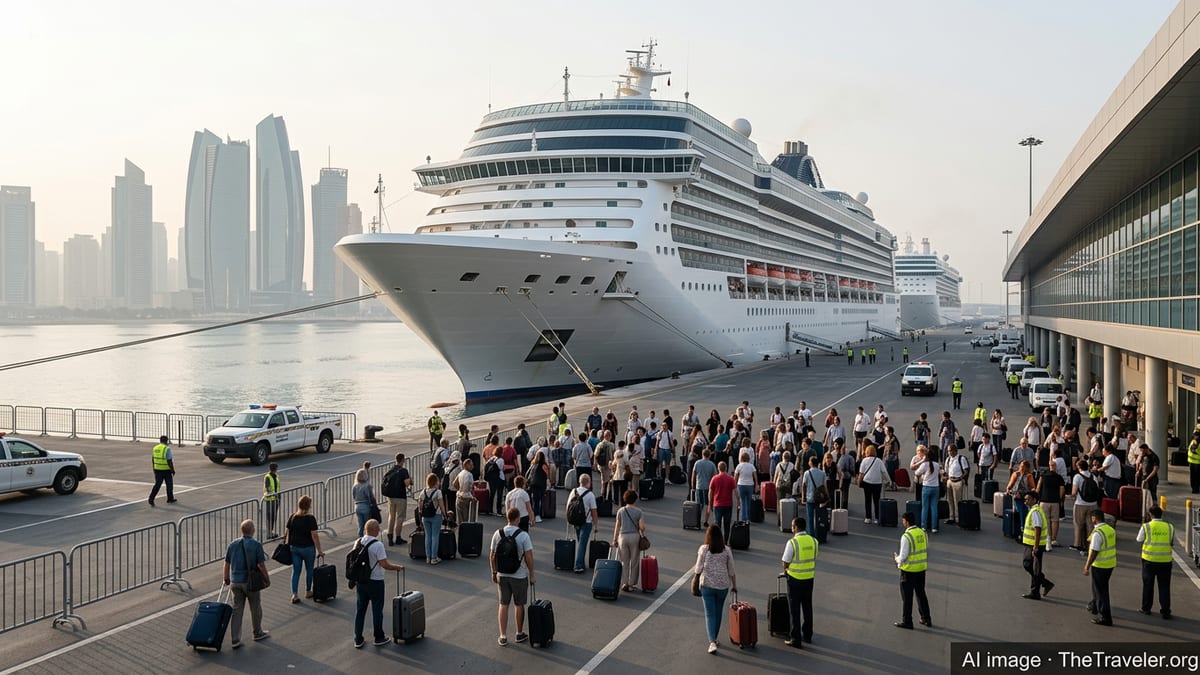
A flagship voyage stalls in Singapore
The Disney Adventure, Disney Cruise Line’s newest and largest ship, was scheduled to depart Marina Bay Cruise Centre on 7 May 2026 for a four night itinerary from Singapore. Instead, passengers remained alongside the pier overnight as engineers worked on what reports describe as a propulsion or engine related issue. By the afternoon of 8 May, publicly available coverage indicates that the cruise was cancelled and guests were instructed to disembark.
Reports from regional outlets describe how thousands of passengers had already settled into cabins, begun exploring the ship and taken part in dining and entertainment when announcements about a technical problem first emerged. Initial updates suggested a delayed departure while repairs were attempted. As the delay stretched from hours into a full day, expectations shifted from a late sailing to the possibility that the ship might not leave port at all.
Published coverage from Singapore based media characterises the cancellation as a significant blow to the rollout of Disney’s first homeported ship in Asia. The vessel, rebuilt from the unfinished Global Dream hull and designed to carry thousands of guests, had been promoted as a new anchor for regional cruising. Instead, its early season is now defined by a high profile mechanical setback.
The decision to terminate the voyage before leaving Singapore waters, however disruptive for holidaymakers, avoided the more complex scenario of a ship at sea experiencing propulsion difficulties. Travel industry observers note that remaining alongside allowed ready access to technical support and straightforward arrangements for passenger disembarkation, transport and accommodation on land.
Compensation and communication as measures of integrity
As images and first hand accounts circulated online, attention quickly turned from the technical fault itself to the way Disney Cruise Line handled compensation and communication. Passengers posting on public forums describe being offered a full refund of their cruise fare along with a substantial future cruise credit, reportedly equal to half of the original fare, valid for a later sailing.
Publicly available reports indicate that onboard spending and certain pre purchased items were also addressed in the compensation measures. Many guests recounted that food, entertainment and character meet and greets continued during the delay, framing the overnight stay as a truncated but fully serviced Disney experience rather than a simple wait in port.
The level of financial redress is being viewed by some analysts as an attempt by Disney to go beyond minimum contractual obligations and demonstrate goodwill at a sensitive moment for the brand’s expansion in Asia. In the competitive cruise sector, generous compensation packages following operational disruptions are increasingly used to preserve loyalty, particularly for first time customers who have invested in destination travel to reach a home port.
At the same time, passenger comments compiled in regional and specialist cruise coverage point to frustration over the pace and clarity of updates in the hours before the final decision was announced. Some accounts describe repeated revisions to prospective departure times, while others say the possibility of full cancellation was only made clear relatively late in the process. For many families who had flown in from across the region specifically for this sailing, uncertainty compounded disappointment.
Safety first or broken promises
The mechanical issue on Disney Adventure highlights a tension at the heart of modern cruising. Companies are expected to deliver uninterrupted, meticulously scheduled holidays on highly complex vessels that operate as floating cities. When something goes wrong, there is pressure to protect both safety and brand promises simultaneously, even though those aims can pull in different directions.
By cancelling a voyage that had never left the pier, Disney Cruise Line aligned its actions with a conservative safety culture increasingly emphasised within the maritime industry. Technical faults related to propulsion or engines can be difficult to diagnose and may require extended dockside work. Sailing away from ready access to parts, engineers and shore side infrastructure while an unresolved issue remains would introduce additional risk for passengers and crew.
From a public perception standpoint, however, the optics are less straightforward. Guests who took unpaid leave, booked flights and prepaid hotels so children could experience Disney’s first Asia based ship now confront the reality of an abruptly lost holiday. For these travellers, the fact that the problem surfaced before departure, not mid ocean, offers limited consolation.
Whether the episode is ultimately seen as an example of responsible caution or a failure of reliability may depend on the transparency of subsequent explanations and the smoothness of rebooking and refund processes in the weeks ahead. Clear timelines for repairs, honest assessments of what went wrong and visible follow through on promised credits and reimbursements will shape that judgment more than the mechanical fault itself.
Global scrutiny of Disney’s crisis playbook
Because Disney Adventure is positioned as a flagship for the company’s growth in Asia, its early difficulties carry outsized symbolic weight. The ship’s cancellation in Singapore has attracted coverage not just from regional outlets but also from specialist cruise media and international travel news platforms that closely track the performance of big brand vessels.
Observers note that Disney’s wider reputation for tightly controlled guest experiences amplifies interest in how it manages disruption. The company has built a decades long image on consistency, themed storytelling and operational polish across parks, resorts and ships. A mechanical issue on a much promoted new vessel challenges that narrative and provides a rare public look at how the organisation responds when expectations are not met.
Published analysis in cruise industry commentary suggests that Disney’s response could serve as a benchmark for how premium lines deal with high profile operational failures. Elements under scrutiny include the speed of decision making around cancellation, the balance struck between engineering assessments and guest relations, and the degree to which the company proactively communicates with booked passengers for upcoming sailings.
In a hyper connected environment where passenger experiences are shared widely in real time, the ability of a travel brand to demonstrate humility, accountability and practical support during a crisis can resonate far beyond the immediate group of affected customers. For Disney, the Singapore episode is testing whether its internal crisis playbook translates effectively to a new market and a ship with a unique construction history.
Can a failed cruise still inspire confidence
The core question emerging from the Disney Adventure incident is whether a voyage that never left port can still, paradoxically, strengthen trust in the long run. The answer will depend on what unfolds after the headlines fade. If future sailings proceed reliably, if guests who lost their holidays report smooth refunds and successful rebookings, and if the company communicates candidly about corrective actions, the cancellation may be framed as evidence that safety and ethics took precedence over revenue.
Travel analysts point out that modern consumers often judge brands not on the absence of problems but on the quality of the response when problems occur. In that sense, Disney’s handling of the Singapore disruption has the potential to demonstrate professional integrity to a global audience of current and prospective cruisers. The combination of keeping the ship in port, offering extensive compensation and maintaining full service onboard during the delay aligns with a guest focused posture that many travellers say they expect from premium operators.
Yet the same episode also underlines how fragile trust can be in the early phases of a major new deployment. For families who saved for a once in a lifetime trip or for first time cruisers who chose Disney specifically for its reputation, the experience of an aborted holiday may linger. Their stories, shared in person and online, will influence how others interpret corporate statements and future marketing around the ship.
The Singapore cancellation has therefore become more than a technical footnote in the life of a new vessel. It is an unfolding case study in how a globally recognised entertainment company confronts failure in real time and whether actions taken in the aftermath can transform a mechanical setback into a broader reaffirmation of values that resonate well beyond one disappointed shipload of guests.