


Few hikes in the American Southwest deliver as much scenery for as little mileage as Queen’s Garden in Bryce Canyon National Park. Dropping from the rim at Sunrise Point into a maze of orange hoodoos, windows, and sculpted fins, this short trail feels like stepping into another world. But is the Queen’s Garden Trail really worth carving out time for on a crowded Utah road trip, and what exactly do hikers love most about the experience?
Get the latest updates straight to your inbox!
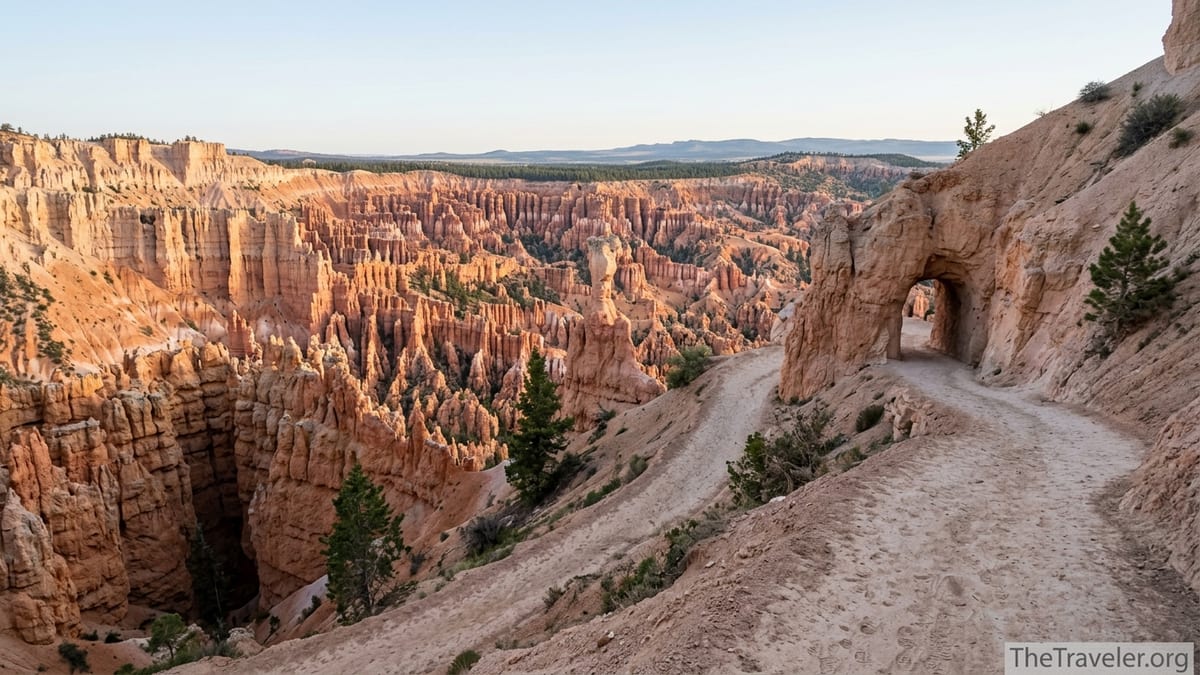
Understanding the Queen’s Garden Trail Experience
Queen’s Garden is one of the signature hikes in Bryce Canyon National Park, and for many first-time visitors it is their very first step below the rim. Starting at Sunrise Point, the trail descends into the Bryce Amphitheater, weaving among the park’s famous hoodoos before reaching the Queen Victoria rock formation that gives the trail its name. According to recent National Park Service descriptions, the route is about 1.8 miles round trip with roughly 450 feet of elevation gain on the return climb, typically taking one to two hours for most visitors.
What sets Queen’s Garden apart is how quickly you transition from viewpoints to immersion. On the rim, you look down on a sea of orange and pink rock; a few switchbacks later, the same formations tower above you. Hikers frequently compare it to walking through a stone cathedral, with walls of layered limestone, narrow passages through arches, and windows carved by wind and melting snow. Even people who have only a few hours at Bryce often report that this trail changed their impression of the park from “pretty overlook stop” to “must-return destination.”
The trail is officially rated moderate, but among the six routes that drop into the main amphitheater, park staff consistently describe Queen’s Garden as the least strenuous option. That makes it especially appealing to mixed-ability groups. A family staying at Ruby’s Inn or the Bryce Canyon Lodge, for example, might spend the morning strolling the flat Rim Trail from Sunrise to Sunset Point, then send more eager hikers down Queen’s Garden while others linger at the viewpoints and visitor center.
Because it is so approachable and directly below one of the main parking areas, Queen’s Garden is also one of the busiest trails in the park, especially from late May through September and during long holiday weekends. That popularity has a practical upside: the path is well signed and well trodden, and in summer you will rarely find yourself hiking alone. For many visitors nervous about hiking in an unfamiliar high-desert environment, that sense of company adds to the comfort and enjoyment of the experience.
What Hikers Love Most: Iconic Hoodoo Scenery up Close
The number one reason hikers call Queen’s Garden “worth it” is the sheer density of world-class scenery in such a compact distance. The Bryce Amphitheater holds one of the largest concentrations of hoodoos on the planet, and this trail dives straight into the heart of it. Within the first ten minutes of hiking down from Sunrise Point, you pass slender spires, mushroom-topped columns, and delicately layered fins glowing orange in the morning light.
A highlight for many visitors is the sequence of tunnels and doorways cut directly through the rock. Children in particular tend to race from arch to arch, posing for photos in the round windows that frame distant ridges. Adult hikers often mention these arches as the moment the trail feels truly immersive, as if you have left the modern world behind and stepped into a labyrinth of stone. In spring and early summer, patches of snow lingering in shady corners can add a striking white contrast against the vivid sandstone.
The endpoint of the classic out-and-back route is the Queen Victoria hoodoo, a formation that, with a bit of imagination, resembles a seated monarch wearing a rocky crown. While some hikers find the resemblance clearer than others, most agree that the spur path to this viewpoint is one of the best short detours in the amphitheater. From here you can look back up at the rim, tracing your path among the spires, and gain a better sense of how deeply the trail has carried you below the overlook railings filled with tourists.
Another aspect hikers rave about is the changing light. In the early morning, when the sun rises behind the amphitheater, the hoodoos catch soft, pinkish light that feels almost pastel. By late afternoon, the same formations glow deep orange and red, with long shadows carving extra definition into every ridge. Photographers carrying mid-range zoom lenses, such as a 24–70 mm on a full-frame camera, often come away with portfolio-worthy images after spending less than two hours below the rim.
Is It Really “Easy”? Difficulty, Elevation, and Weather
Queen’s Garden is frequently described as the easiest route down into the amphitheater, but that label can be misleading if you are not used to hiking at altitude. Bryce Canyon’s rim sits around 8,000 feet above sea level, which means even a modest 450-foot climb back to Sunrise Point can leave sea-level visitors breathing hard. Hikers who report the trail as “tougher than expected” often mention that the grade felt manageable, but the thin air turned the last switchbacks into a real workout.
The surface of the trail is generally wide and well maintained, alternating between smooth packed dirt and sections of fine, dusty gravel. After dry spells, that loose surface can be slippery on the descent, especially if you are wearing city sneakers with worn-out tread. In wet or shoulder-season conditions, the same dirt can turn to sticky mud that clings to shoes. Travelers visiting in April or November commonly encounter icy patches on shaded corners, making traction devices a smart addition to a daypack, even for this “easy” hike.
Summer weather introduces a different set of challenges. Afternoon thunderstorms are common from roughly July through early September, and lightning is a serious concern given the open terrain. Park rangers repeatedly advise starting Queen’s Garden early, ideally between sunrise and mid-morning, both to avoid the highest UV exposure and to be back on the rim before storm clouds build. Carrying at least one liter of water per person, even for this short trail, is heavily emphasized in current visitor guides, and many hikers also bring a brimmed hat and lightweight, sun-protective clothing.
For visitors with cranky knees or limited mobility, the descent can be as taxing as the ascent. A practical compromise some travelers use is to hike only partway down, to the first tunnel or the top of the main switchbacks, then turn around rather than committing to the full drop to Queen Victoria. Because the views are spectacular almost immediately, even a half-mile down-and-back stroll can deliver a satisfying below-the-rim experience without overreaching physically.
Queen’s Garden vs. Other Bryce Canyon Hikes
One of the most common questions travelers ask when planning a short visit is whether Queen’s Garden is the best use of limited time compared with other headline trails like Navajo Loop, Fairyland Loop, or the longer Figure-8 Combination. The consensus among recent trip reports and park publications is that if you can only do one hike that actually descends into the hoodoos, the Queen’s Garden & Navajo Loop combination is often considered the top choice. However, as a standalone trail, Queen’s Garden holds its own for those who prefer a gentler outing.
Compared with the Navajo Loop, which drops steeply from Sunset Point through dramatic, tight switchbacks and sections like Wall Street, Queen’s Garden offers a more gradual descent with wider turns. Many hikers nervous about heights or steep drop-offs find they are more comfortable starting on Queen’s Garden, then deciding at the bottom whether to continue onto the connector trail toward Navajo or simply return the way they came. During seasonal closures of parts of the Navajo Loop, such as winter shut-downs of the Wall Street section, Queen’s Garden often becomes the primary below-the-rim option for visitors who want something moderate and scenic.
For strong hikers with a full day, trails like the 5.5-mile Peekaboo Loop or the 8-mile Fairyland Loop deliver more solitude and a greater sense of journey. Yet those routes also involve significantly more elevation gain and time commitment. In contrast, Queen’s Garden can fit into a half-day stop on a wider Utah “Mighty 5” road trip that might also include Zion, Capitol Reef, Arches, and Canyonlands. For example, travelers driving from Zion National Park to Moab sometimes plan a mid-day detour at Bryce, hike Queen’s Garden plus a stretch of the Rim Trail, and still reach their overnight stop before dark.
If your primary goal is sunrise or sunset photography, the flat rim viewpoints at Sunrise, Sunset, Inspiration, and Bryce Points are more forgiving, allowing you to set up a tripod and watch the light change without worrying about hiking in low visibility. But many photographers still choose to hike Queen’s Garden shortly after sunrise, when the low-angle light reaches deeper into the amphitheater and the trail is relatively uncrowded compared with late morning.
Planning Your Hike: Logistics, Timing, and Costs
Because Queen’s Garden starts directly from Sunrise Point, planning the logistics is relatively simple. Most visitors either drive into the park and park near Sunrise Point or use the seasonal Bryce Canyon shuttle, which stops at the main viewpoints and trailheads. The shuttle is particularly helpful during busy summer days and holiday weekends, when parking lots at Sunrise and Sunset Points can fill by late morning.
In terms of cost, there is no separate fee for Queen’s Garden beyond the standard Bryce Canyon National Park entrance fee, which is typically valid for several days per vehicle. Travelers staying in nearby communities such as Bryce Canyon City, Tropic, or Panguitch often enter the park early in the morning, hike Queen’s Garden, then return to town for lunch. Budget-conscious visitors frequently pack simple trail meals instead, buying groceries at regional supermarkets in towns like Cedar City and using the picnic areas near the rim for breaks.
Timing your hike can significantly affect how “worth it” the experience feels. Early morning departures, between sunrise and about 9 a.m., usually offer the best combination of soft light, cooler temperatures, and thinner crowds. Midday in July or August, when temperatures are highest and the sun sits overhead, the trail can feel hot and washed out for photography, although the high elevation generally keeps it cooler than nearby desert destinations. Late afternoon and early evening can be pleasant in terms of temperature, but hikers must allow enough time to climb back to the rim well before dark.
Seasonally, Queen’s Garden is typically accessible year-round, but conditions vary widely. In winter, the amphitheater often transforms into a spectacular tapestry of snow-capped hoodoos under bright blue skies, and the park sometimes rents traction devices at the visitor center to help with icy trails. In shoulder seasons like March and April, hikers should expect mixed surfaces of snow, slush, and mud, and check the park’s current conditions page the morning of their hike. During peak summer, the main concern shifts to sun exposure and potential thunderstorms, making early starts and generous water supplies especially important.
Making It Even Better: Combining Queen’s Garden With Other Experiences
While Queen’s Garden is rewarding on its own, many hikers find the experience becomes truly memorable when they connect it with other short routes or activities. The most popular option is the Queen’s Garden & Navajo Loop combination, a roughly 2.9-mile loop that descends from Sunrise Point, crosses the amphitheater floor, and climbs back up via the dramatic switchbacks at Navajo before returning along a flat half-mile stretch of the Rim Trail between Sunset and Sunrise Points. This loop showcases both the open, garden-like feel of Queen’s Garden and the slot-like canyon walls and iconic formations like Thor’s Hammer on Navajo.
Another way to enhance the day is to pair Queen’s Garden with one or two rim viewpoints by car or shuttle. A realistic half-day itinerary for many visitors is to catch sunrise at Sunrise Point, hike Queen’s Garden as the light drops into the amphitheater, then ride the shuttle or drive to Bryce Point and Inspiration Point for elevated perspectives. This sequence helps you understand the scale of the amphitheater from above and then feel its detail from within.
Travelers with limited hiking ability in their group sometimes mix Queen’s Garden with a non-hiking activity so everyone gets a taste of the hoodoos. For example, while one or two fitter family members hike down Queen’s Garden, others may book a guided horseback ride that descends into the amphitheater on designated horse trails operated by concessionaires from roughly April through October. Meeting back at the lodge or general store, the group can compare views and experiences while still respecting individual comfort levels.
Some visitors also build Queen’s Garden into a broader Southern Utah itinerary that includes destinations like Kodachrome Basin State Park or Red Canyon along Scenic Byway 12. These nearby areas offer additional sandstone formations and shorter, quieter hikes. Compared with those, Queen’s Garden stands out for its amphitheater setting and density of hoodoos, but many travelers find that exploring a mix of popular national park trails and lesser-known state park routes creates a more rounded trip.
The Takeaway
So, is the Queen’s Garden Trail worth it? For most travelers, the answer is a clear yes, especially if you want to do at least one below-the-rim hike without committing to a full-day trek. In under two miles, you move from panoramic overlooks into the heart of Bryce Canyon’s hoodoo wonderland, threading through arches, windows, and sculpted columns that feel almost impossibly intricate. The scenery-to-effort ratio is exceptionally high, which is why so many visitors cite Queen’s Garden as the single experience that made Bryce Canyon unforgettable.
That said, “least strenuous” does not equal easy for everyone. The combination of altitude, sun exposure, and the climb back to the rim means the trail still demands respect. Planning your hike for early or late in the day, carrying adequate water, wearing solid footwear, and being honest about how far down you want to go are all key to enjoying the trail rather than suffering through it.
If you have the time and fitness, linking Queen’s Garden with the Navajo Loop and a stretch of the Rim Trail delivers one of the best three-mile hikes in the national park system. If your schedule or energy is tighter, a partial descent to the first tunnels still provides a powerful sense of Bryce’s unique landscape. Either way, Queen’s Garden remains one of the most rewarding introductions to the canyon’s geology, light, and scale, and a highlight that most hikers are glad they made space for on their Utah itinerary.
FAQ
Q1. How long does it take to hike the Queen’s Garden Trail?
Most visitors complete the classic out-and-back route to the Queen Victoria hoodoo in about 1 to 2 hours, depending on fitness, photo stops, and trail conditions.
Q2. How difficult is the Queen’s Garden Trail really?
The trail is rated moderate. It is the least steep route into the Bryce Amphitheater, but the 450-foot climb back to the rim at around 8,000 feet elevation can feel strenuous if you are not used to altitude.
Q3. Is Queen’s Garden safe for children and older adults?
Yes, many families and older travelers hike it, but caution is essential. Keep children away from drop-offs, watch footing on loose gravel, and be prepared for a slow, steady pace on the uphill return.
Q4. What is the best time of day to hike Queen’s Garden?
Early morning is ideal for cooler temperatures, softer light on the hoodoos, and smaller crowds. Late afternoon can also be pleasant, but allow enough time to finish before dark or any forecasted storms.
Q5. Do I need special gear for the Queen’s Garden Trail?
No technical gear is needed, but sturdy walking or hiking shoes, at least one liter of water per person, sun protection, and a light layer for changing temperatures are strongly recommended. In winter or icy conditions, traction devices are very helpful.
Q6. Can I combine Queen’s Garden with other trails?
Yes. The most popular combination is Queen’s Garden with the Navajo Loop and a short section of the Rim Trail, creating a roughly 2.9-mile loop that showcases many of the park’s most iconic views.
Q7. Is Queen’s Garden open year-round?
It is generally accessible year-round, but surface conditions vary. Winter can bring snow and ice, while spring and fall can be muddy. Always check current park alerts and trail conditions before starting your hike.
Q8. Is the trail crowded?
In peak season, especially from late morning through mid-afternoon, Queen’s Garden can be quite busy. Starting early, hiking in the off-season, or choosing a weekday visit can help you avoid the largest crowds.
Q9. Is Queen’s Garden suitable for people afraid of heights?
Many hikers who dislike exposure find Queen’s Garden manageable because it generally lacks sheer drop-offs right beside the path. However, there are still edges and open slopes, so those with severe fear of heights should turn around whenever they feel uncomfortable.
Q10. Is the Queen’s Garden Trail worth it if I am short on time?
Yes. Even hiking only partway down to the first tunnels can provide an impressive taste of Bryce Canyon’s hoodoos in less than an hour, making it a worthwhile stop on a tight schedule.